
How to Write Powerful Scenes that Engage Your Readers
Last month I discussed how story structure was the beating heart of your story. In that blog post, I reminded you that structure is much more than a plot. Structure provides a large framework that shapes how readers understand and experience the story, but structure alone does not put the reader inside the story. You also need powerful scenes.
If story structure is the beating heart of a story, scenes are the muscles that make it move. A scene is more than a part of storytelling. It is a unit of story movement. Through scenes, readers experience what your characters want, fear, discover, decide, and do.
What is a Scene?
The definition of a scene sounds simple, yet every how-to-write book adds its own nuances. Some are specific to a particular genre. Others are more nuts and bolts. Some are simplistic, telling you that a scene has a beginning, middle, and end. But that’s not a definition — it’s a description of the structure of a scene.
These attempts to define what a scene is are useful—as far as they go, but they don’t necessarily allow the reader to experience what your characters experience. For me, clarity came when I read Dwight V. Swain’s book.
According to Swain in Techniques of the Selling Writer, “a scene is a unit of conflict, of struggle, lived through by the character and the reader.” Ah ha, I thought. That’s what I needed to know. But I thought about the stories I don’t find engaging and the ones that I love. Swain’s definition hints at something more but doesn’t give enough practical information for a writer to understand how to create story movement. After all, we’ve all read unpublished manuscripts (and perhaps some published) with scene after scene of arguing and fighting and worrying, but by the end of the story the character doesn’t feel, or know, or risk anything that wasn’t risked on page 30.
So conflict and struggle lived through by the character and reader aren’t quite enough to help a writer deliver a scene that creates story movement. I had to look past the definition of a scene and examine its function.
What is the Function of a Scene?
You know what a scene’s function is. We writers certainly hear it and say it often enough. The function of a scene is to
1. keep the reader reading and
2. to move the story forward.
And that’s exactly right. Except it’s also pretty darn vague.
How do we keep the reader reading? How do we move the story forward?
Both come down to the same thing: something has to change. An emotional state, a relationship, what the character knows, an internal belief, or a situation—for the character, the reader, or both. Change keeps the reader turning pages. Its absence can make a reader skim or quit. So let’s discuss how we can accomplish this movement.
How Does a Scene Create Change?
One scene of change isn’t enough muscle to power movement through the entire story. But to make every scene demonstrate a change, you must know what each scene needs and how to introduce the “muscles” of the next scene.
What Does a Scene Need?
You’ve heard a variation of the formula for a scene hundreds of times. Swain refines his definition of a scene by saying a scene is “a blow-by-blow account of somebody’s time-unified effort to attain an immediate goal despite face-to-face opposition.”
These events—goal->conflict->disaster—set up an outcome that leads to change. The character attempts to get something, meets a conflict that prevents her from obtaining her goal, and faces a loss or learns something she is unprepared for, or faces a new obstacle. The “disaster” forces her to change something in order to continue pursuing her goal.
What makes this formula (goal->conflict->disaster) more complicated is that none of those descriptive words (wants something, conflict, and disaster) mean just one thing.
Goals
In a story, wants or goals cannot be vague or passive. They must be specific, something that one can pursue, something that is actionable and observable, and be an immediate need.
For example:
Goal: A young woman of privilege wants to convince her father to give her legal clearance to travel out of town with her cousins.
Conflict: Her controlling father keeps avoiding her until the last minute. She confronts him, and they argue.
Disaster: He refuses to sign the documents, warning her that he will stop all her financial support if she leaves without his permission.
Categories of Goals
In stories, wants (aka goals) usually fit in one of five categories: emotional, relationship, informational, internal, or situational.
Emotional Goals
To be an emotional goal, the goal must be an emotional state that one can take action to achieve. An emotional goal asks, “What does the character want to feel?” For example:
- to feel accepted (a tangible/actionable goal would be—> seeks acceptance into a group of peers).
- to feel competent (a tangible/actionable goal could be—>attempts to complete a difficult task).
Relationship Goals
In this case, relationship goals are seeking relationships or changes in relationships with other people. For example:
- Wants to earn her partner’s respect->attempts to demonstrate she is capable by doing something her partner thinks she cannot do.
- wants to reconnect with her estranged sister->calls her sister
Informational Goals
Informational goals are those seeking new knowledge about something or someone. For example:
- seeks to learn who the murderer is.
- attempts to understand a foreign culture.
Internal Goals
Internal goals differ from emotional goals. These represent a deeper psychological need or belief. An internal goal asks, “What does the character need to believe about herself, or become, in order to change?” For example:
- Wants to prove herself competent-> volunteers to handle a task she has previously avoided.
- Wants to prove she’s worthy of the role she’s inherited->seeks ways to learn about and to behave in a way that fits the role she’s expected to fulfill.
Situational Goals
A situational goal arises from the character’s immediate circumstances or situation. For example:
- must find physical shelter from a storm
- needs to secure medical supplies
The list of goals in each category is endless. And they aren’t mutually exclusive. A single scene can have more than one kind of goal. In fact, you may give your story more for your reader to resonate with if you layer different types of goals.
Make sure each goal is specific, actionable, observable, and immediate (something that must be resolved now).
It is by seeking those goals, your character sets off on a journey through obstacles and conflicts.
Conflict in Scenes
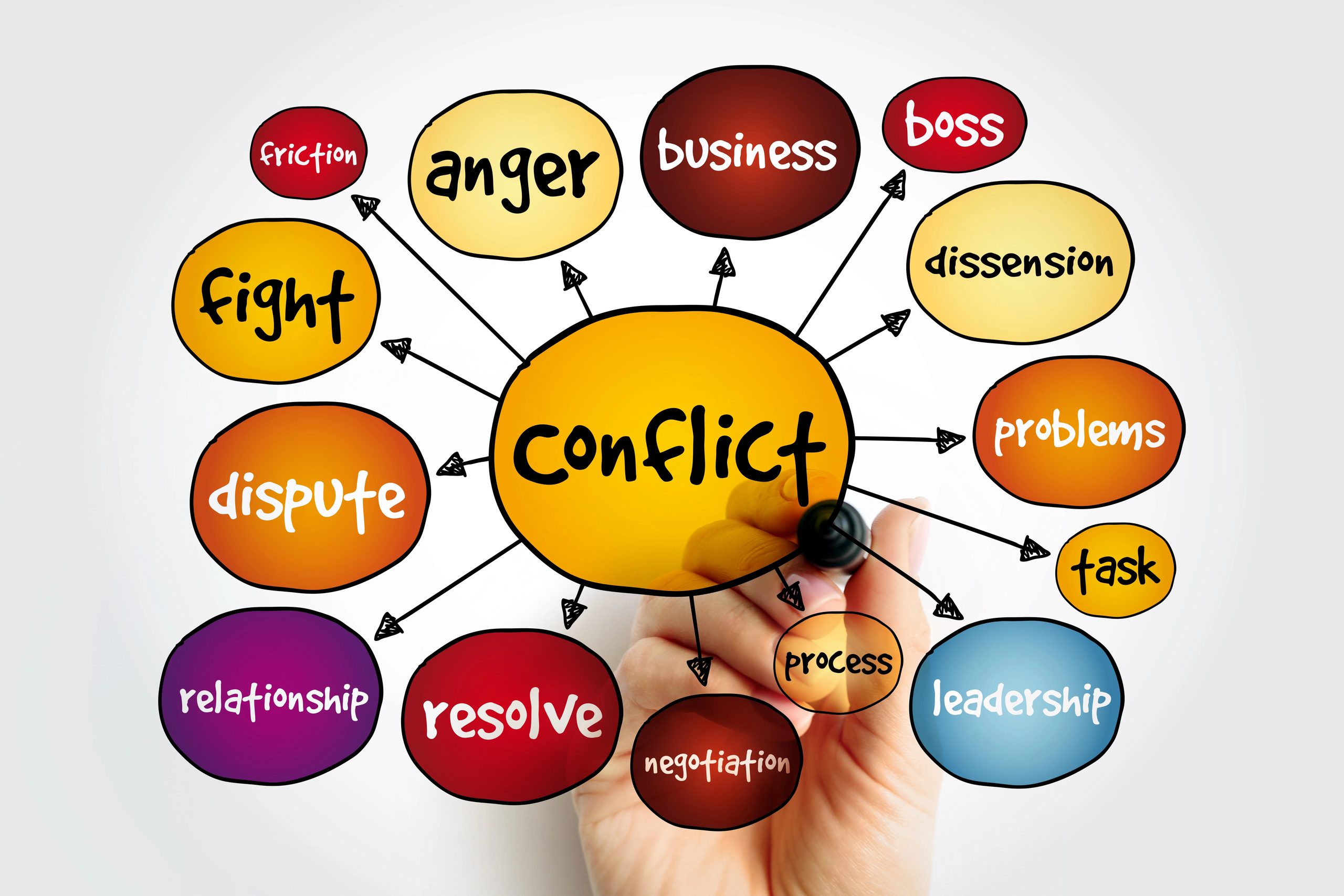
Not only is there a nearly endless list of goals the writer can choose, but there are as many conflicts. A conflict is more than a fight, battle, or war. The three core categories of conflict are:
External Conflict—
Another person or physical force that actively opposes the character is an external conflict.
- Characters standing between the protagonist and her goal
- The person with the necessary knowledge refuses to divulge that information
Internal Conflict —
For an internal conflict, the opposition comes from within the character (internal beliefs, fears, etc.)
- self-doubt
- personal flaws that keep the character from achieving the goal
- new information that forces the character to rethink or change her goals
Situational Conflict —
In a situational conflict, circumstances, other than those created by an actor opposed to the main character, that prevent the main character from succeeding.
- running out of resources
- unexpected time constraints
Two keys to effective conflict:
- Your protagonist (or antagonist) faces this on the page (not in a summary or flashback)
AND
- The conflict must be strong enough to make achieving the immediate goal difficult.
When you allow the conflict to happen off the page, you’ve denied the reader the opportunity to see how far your character will go to obtain her goal.
If the conflict isn’t strong enough to make the character’s goal difficult to obtain, you risk losing your reader’s interest.
When the conflict prevents the character from achieving the immediate goal, the result is “disaster.”
Disaster
Swain’s use of the word disaster can be confusing.
A story disaster isn’t necessarily a loss or something bad happening. It’s a result that prevents the character from continuing pursuit as she has been.
Think of it like a dead end or a T-intersection in the road. Your character sets out believing she is on the right track. She follows the road, but it’s not a straight shot. She cannot continue as she has been.
Just as with goals, there are categories of “disaster.”
Informational
- The character breaks into a building to prove her brother did not enter it, but learns while her brother’s signature is not on the security log, his pass card shows he entered the building.
- She searches for the person she believes killed the victim, but finds the suspect dead of the same wounds as the victim.
Loss
- She finally reaches the pharmacy, but someone had stripped it of all the medicine she needs to save her daughter.
- The ally she is relying on for help has been arrested.
Resistance
- The character’s father refuses to sign the papers that would allow her to leave town with her cousins and threatens to cut off her financial resources if she leaves.
- The key witness, who had agreed to cooperate, is on the stand and suddenly remembers nothing.
The goal gives your character something to pursue. The conflict prevents your character from obtaining her goal. The disaster must change the character’s circumstances, knowledge, emotions, relationships, or situation so she cannot simply pursue her goals the way she was. That change produces a corresponding change in the reader’s experience of the story. It is the story movement that we writers need to keep our readers turning pages.
The combination of a goal, conflict, and disaster creates tension. Tension alone can make our readers turn the page, but unless we use that tension to propel the character into the sequel, the story's movement will stop cold.
What is a Scene Sequel?
Swain calls a scene sequel a unit of transition between scenes.
A scene sequel is the character’s response to the disaster of the previous scene. It includes a reaction, a dilemma, and a decision. Unlike a scene, a sequel’s primary function isn’t to pursue a goal, confront a conflict, and experience disaster. Its job is to process what just happened and to determine what happens next.
The scene (goal->conflict->disaster) allows your reader to live the story with your character. Omit any of those parts, and your reader cannot experience the story with your character. In fact, your reader may lose track of what’s going on and quit reading.
The same is true if you do not understand and use the parts of a sequel. To make the story “muscles” work properly and move the story forward, start with reaction.
What is Reaction?
The reaction is your character’s emotional and physical state after the disaster. That disaster and how it affects her and her goal preoccupies her. This does not mean it must go on for pages and pages. It means that the reader gets a glimpse of how the disaster affected her. There are two ways to react: immediate or delayed.
For example:
Your character, who has finally worked up the courage to ask her father to sign a legal document allowing her to leave and confronted him, but he refused and threatened to cut off all financial support if she leaves.
Her immediate reaction may be to stand in stunned silence and watch her father leave the room. She gasps for air, unable to believe he just did that. Her hands shake, then her legs tremble, and she has to sit down.
A delayed reaction can occur after she’s joined her cousins and left town. When her cousins get hotel rooms, she tells them to go ahead, slips outside and sleeps in the alley behind the hotel. She realizes she has no place to sleep and nothing to eat. She can’t ask her cousins for help because they’d tell her father or, worse, take her back. Her tears course down her cheeks.
Remember, enormous or tiny, this is a reaction to the disaster. And the disaster means she cannot continue pursuing her goal in the same way she has been. So she faces a dilemma.
Dilemma
A dilemma involves facing two or more different and difficult choices. It has to be difficult to choose between them because each has an unacceptable cost.
For example:
- The character’s father refuses to sign the papers that would allow her to leave town and threatens to cut off her financial resources if she leaves. This character’s dilemma might be: she stays home, she will be financially secure but still under her father’s dominating will, but if she leaves without financial security, she will put herself at the mercy of fate.
- She can’t choose. If she stays, her father will force her to live with him until he dies, never allowing her the opportunity to learn to do things on her own. And if she leaves town anyway with no financial support, she will take a chance of falling victim to criminals or being arrested for vagrancy.
- She doesn’t want to choose. None of her choices allow her the freedom she wants. She wants her father to sign the papers, but that will not happen. What she wants must be important enough to her that she is willing to accept the consequences of choosing to leave.
Why is this important? First, it allows your reader to squirm and worry with the character. What will happen to her if she stays? What will happen to her if she leaves?
Second, it gives the reader an opportunity to consider choices that the reader would never make.
Third, it shows the reader why the character cannot quit pursuing her goal. The alternatives are all unacceptable.
The key to a successful dilemma is to make it as hard on your character as possible. Narrow her choices down to the ones that will cause her the most distress and force her to choose one.
Decision
Your character decides will travel out of town without her father’s permission and find a way to support herself. Now she has a new goal: find a way to support herself…and the next scene begins.
The decision stops the story from stalling out. It rebuilds tension in the reader who sees that the character has made a difficult choice, and now the reader wants to know what that choice will cost the character. Finally, it strengthens the connection between the reader and the character. The reader has lived with the character through an attempt to gain her goal, watched her face the conflict and meet disaster. The reaction->dilemma->decision sequence lets the reader understand how committed the character is to her goal, to her choices, and who she is under pressure.
Put it all together and you have
Goal->Conflict->Disaster->Reaction->Dilemma->Decision->New goal
These are not necessarily seven distinct beats that must appear in every scene. They are the functions that create movement from one scene to the next. The muscles present beneath the skin.
String them together and you have story movement, which engages your reader.
Put It Into Practice
Sometimes it is much easier to see these story functions in a story you have read rather than in one you wrote.
Remember the favorite read you looked at for structure last month? Now look at it again. This time look at three or four scenes in sequence. What functions does that scene serve? Does it have a goal? A conflict? A disaster? How does it move from disaster to the next scene? Is there a reaction? A dilemma? A decision?
If you want to, examine your own work in the same way. How much does your writing parallel the story you love to read?
Story Movement
Master how to write scenes and sequels as muscles for your story. Define those muscles sharply, and your story will carry your readers forward. Your readers will experience what your character does, feels, and chooses. They will worry and cheer and follow your character because they want to know what happens next. The pages turn almost by themselves.
Looking back at a scene you’ve written, can you identify the Goal->Conflict->Disaster->Reaction->Dilemma->Decision->New goal pattern? Is there one part you skip or shortchange in your first drafts?
* * * * * *
About Lynette

Lynette M. Burrows is an author, blogger, writing coach, and Yorkie wrangler. She survived moving seventeen times between kindergarten and her high school graduation. Her stories weave her experiences into speculative fiction stories that balance character growth with thrilling action and social themes.
Her Fellowship Dystopia series is the story of a young woman of privilege who doesn’t want to lose her identity to the rules of 1961 Fellowship America. She escapes and learns that her government and her family judge her, one of the elite, an unbeliever. She will be a rebel even if the merciless Azrael hunt unbelievers. The trilogy is complete. Book One, My Soul to Keep, Book Two, If I Should Die, and Book Three, And When I Wake are on sale anywhere books are sold online. Fellowship is a companion book to the series and tells the origin tale of a pair of young rebels Miranda meets in the series.
When Lynette’s not writing, she avoids housework like it’s the end of the world and plays with her Yorkie. They live in Dorothy’s home state of Kansas. You can follow Lynette on her website or her Facebook page or Sign up for her newsletter.
Image Credits
images purchased from depositphotos.com
Leave a Reply
One comment on “How to Write Powerful Scenes that Engage Your Readers”
Tagged as:
Subscribe to WITS



Recent Posts
- How to Write Powerful Scenes that Engage Your Readers
- What Does Your Swag Say?
- Don’t Just Sit There. Do Something with Dialogue Beats!
- Writing Without Following the Rules Too Closely
- The Jo Lallo Short Story Method: Theme, Intro, Climax, Concept
I look forward to posts by you, Lynette! They are not only informative, but give multiple examples to make the points clear and understandable. Thank you!