
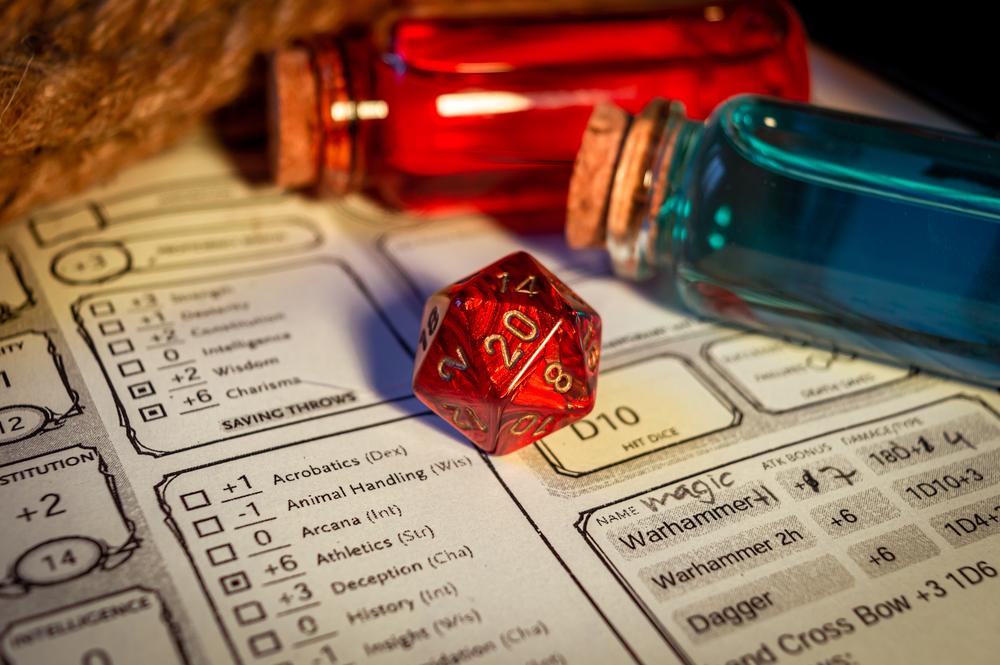
St. Patrick’s Day is here, and l have the honor of supplying the WITS post this year. Luck of the Irish, right? To be perfectly honest I’m mostly Scottish and Nordic, but I prefer Irish whisky. I think that qualifies me to write today’s blog.
Refreshing my memory about the history of this particular saint got me thinking. How much of what we hear about historical figures is true and how much is made up? How and why does it happen?
How Myths and Legends are Born
Most myths, legends, and heroes have their roots in actual people and events. St. Patrick is no exception. He was a real person who did a lot for Ireland. Funny thing is, he wasn’t even Irish. He was brought there as a slave during Roman rule. The color that was originally associated with him was blue, not green. Most of the traditions and symbols we associate with the holiday came centuries after his death.
So, how did things change? Let’s take a look at a few ways it can happen.
Word of Mouth
The tradition of storytelling predates the written word—it was the way history was preserved for future generations. As stories were passed from one generation to the next by the elders, details were lost, added, or embellished.
Every storyteller had their own particular style and would often alter the details to teach a lesson. Ordinary people grew into heroes and strangers were painted as villains. Tweaking the details could turn an everyday occurrence into a cautionary tale and get the heart racing.
Stories evolved through retellings by ordinary people as well. Have you ever heard of the Telephone Game? One person whispers something to the person next to them, who then passes it on to the next one in line. By the time things come back around to the original teller the message will be completely different. It works the same way when a story makes its way around a village or even the world.
Artistic License
As authors we understand the need to make a story more interesting. If you want to get your point across you have to keep the audience engaged. One way to accomplish this is to add a few juicy details here and there to spice things up.
Historical fiction is fertile ground for taking real events and people and stretching the truth for the sake of art. If the story becomes popular enough, some people will start to believe bits of the made-up details and pass them on as gospel.
I’ve actually had a debate with someone who thought “Hamilton” was pulled straight out of the history books. I can assure you that the founding fathers did not sing and dance their way through the events leading up to the revolution.
Propaganda
We’ve all heard it said that history is written by the winners. This is more or less true, whether it be governments, warriors, or major corporations. The ones left standing will be the ones telling the story, so the details will generally support their point of view. Some figures and events will be blown out of proportion, while others are buried deep. Other accounts may still exist as well but will be less popular and thus less accepted.
Some sources will flat out change history to benefit their causes, completely ignoring facts in the process. I can’t think of a single government that hasn’t done this at one time or another to sway the masses in their favor. They push their chosen narrative until it becomes the de facto truth.
Finding the Truth
As writers of fiction, we make our living by making things up, but the truth is usually the best foundation to build our stories on. So how do we find it? Honestly, sometimes we don’t, but there are ways we can sift through history and end up a bit closer to the actual facts.
Common Threads
My favorite method to search for the truth came from my father. What he taught me was to read historical accounts of the same events written at different times by different sources, then look for the common threads. If you pull on the threads that are shared by the majority of accounts, you are more likely to be closer to the truth in the end.
The other thing he taught me was to look at what’s missing as well. What the authors of the historical accounts chose to include and exclude may tell you more about society at the time the piece was written than the event itself.
Final Thoughts
Man has been telling stories and leaving a record since the first drawings were scratched into the walls of caves. Who’s to say the size the beasts those early hunters drew aren’t a bit inflated? I’m sure the truth is out there somewhere. We just have to dig it out and piece it together.
So, what does all of this have to do with St. Patrick’s Day? Not a whole lot, but then St. Patrick’s Day really doesn’t have a lot to do with the real St. Patrick either, does it?.
What methods do you use to sort out the truth from the myths? Let us know in the comments.
Have a happy and safe St. Patrick’s Day!
About Eldred
Eldred Bird writes contemporary fiction, short stories, and personal essays. He has spent a great deal of time exploring the deserts, forests, and deep canyons inside his home state of Arizona. His James McCarthy adventures, Killing Karma, Catching Karma, and Cold Karma, reflect this love of the Grand Canyon State even as his character solves mysteries amidst danger. Eldred explores the boundaries of short fiction in his stories, The Waking Room, Treble in Paradise: A Tale of Sax and Violins, and The Smell of Fear.
When he’s not writing, Eldred spends time cycling, hiking, and juggling (yes, juggling…bowling balls and 21-inch knives).
His passion for photography allows him to record his travels. He can be found on Twitter or Facebook, or at his website.
Writer’s block is the ever-present spector that hangs over the head of every writer. It is so notorious that it is the one pitfall of the writing profession that non-writers seem to know about. You can talk to someone about the trouble you’re having developing realistic character flaws that last for an entire six book series without getting tedious, but you’ll get nothing but blank stares. One mention of writer’s block will get knowing nods from anyone regardless of their relationship with literature. It is “that thing that happens to writers.” And, like most job-specific maladies, writer’s block has as many folk cures as the hiccups, with about the same success rate.
I’m not going to claim I have the silver bullet solution, with all of the confidence of someone telling you to hold your breath, look up, and count to fifteen. But I am going to talk a bit about what writer’s block is (for me) and what can get you on the road to getting unstuck.
What Kind of Rut?
The first problem with writer’s block that makes its cure so elusive is the simple fact that writer’s block isn’t just one thing. In its rawest form, writer’s block is a blanket term for any issue that keeps the words from flowing, but isn’t actively keeping you from writing. If there is a grizzly bear between you and your keyboard, that’s not writer’s block, and you should probably call animal control. If you have a cat sleeping on your lap and you can’t reach the keyboard, that’s not writer’s block, that’s just cat ownership. (Though it can be just about as insurmountable an obstacle as the grizzly bear.) If you don’t have time to write, that’s just life. But if you find yourself sitting at the pad or word processor with the time and intention to write and nothing comes out? Congratulations, you’ve got a case of writer’s block.
Simple?
In these cases, writer’s block is usually either a lack of motivation, a lack of inspiration, or a lack of resolution for some sort of riddle you need to solve before moving on. Each of these has a myriad of potential treatments. Inspiration can be refilled with something as simple as reading a book, watching a movie, or listening to music. Motivation can be restored with something as simple as a pep talk. Plot riddles are often untied by talking them through out loud, either to a friend/family member or to yourself. But if you’ve found your way to this article, chances are the simple, obvious solutions haven’t done the job.
To over-simplify a complex problem, writer’s block is often a case of you merrily puttering along a well-worn rut in the road, only to realize that you need to make a turn. People talk about being stuck in a rut as if it is a bad thing, but it’s only bad if that rut isn’t leading you where you need to go. “Flow State” or “being in the groove” is just “finding the right rut.” Writer’s block is the state of being in the wrong rut. And if there’s one thing that’s certain to fail at hauling yourself out of a rut, it’s trying the same thing again and again. (That is, in fact, how ruts are MADE.) What you need, even if it’s just for a moment, is something new.
Would You Repeat That?
How about we take a brief, hopefully illustrative tangent? Have you ever said something to someone and had them ask you to repeat it? The instinct for many is to say it again in precisely the same way. Almost without fail, you end up having to repeat it again. And if you say it in the same way again, you’ll need to repeat it yet again. Eventually, often out of frustration, you’ll change it up, speaking louder or slower or more distinctly or more angrily. Then they get it. That’s often because their brain had already grappled with the sequence of sounds and rejected it as unintelligible. Giving them the same sequence of sound is just going to get the whole mess instantly labeled as “that thing I just tossed in the trash” rather than something new to try to process. As often as not, you’ll be understood when you change things up not simply because you’d corrected the faults in your prior comment, but because you’d actually presented something properly new that the listener will thus need to process anew.
A change doesn’t always need to make things better, sometimes it just needs to make things different.
Enough with the Preamble! Make with the Solutions
What I have always found to work for me, and what I suggest you try, is a little bit of novelty. You can’t spell “novelty” without “novel,” right? So try doing what you’ve been doing, but do it in a new way.
Switch Gears
We’ll start with the absolute most basic. Pen and paper. If you are finding the word processor page stays empty, grab a pen and paper and just start writing. It doesn’t have to be plot or dialogue. It could be an outline, or some bullet points that encapsulate what you want to do, what you plan to do, what you need to do, or what you just can’t seem to do. Heck, you could even simply write down precisely what you’re thinking. A stream of consciousness rant could be all it takes. It might seem pointless at first, but all of this will be tracing its way along a different route through your gray matter. You will, by definition, not be rolling along in that same rut. It’ll increase the odds that you will find something new along the way. And if you need to change direction, it’ll be that much easier, once you’ve thrust yourself into unfamiliar territory.
What’s that, you say? You already do your writing in pen and paper, or you’ve tried pen and paper and it didn’t work? Well, you could skip ahead to the software section, or you could open the door to the harder stuff. Try a different pen, try a different paper. And if you’re ready for the truly arcane… ink up a fountain pen.
Old is New
If the goal is novelty, there is always another new thing to try in the ancient world of fountain pens. I am writing the first draft of this article with a fine nib, TWSBI Eco-T, inked with Diamine Oxblood ink. The experience is entirely different from the old pilot rollerball I usually use. Ever since I got a fountain pen for Christmas, I have been filling notebooks. It’s just interesting and new! And when the novelty wears off? There is always another ink color, another nib size, another pen. It’s the gift that keeps on giving. Just, you know, don’t get carried away. Budget is a factor. A fountain pen that costs more than your car is probably not going to do any better getting you unstuck than the $4 one from the drugstore.
But What about Software?
Software is the second half of the equation, and easily runs the same risk of breaking the bank, so I’m going to suggest you tread with caution. Throwing money at a problem seldom reliably solves anything beyond the rare issue of having too much cash. So we’ll focus on some free options. Whatever word processor you use? Check if it has a focus mode or a dark mode.
Anything that radically changes the visual nature of your writing environment will get those novelty juices flowing. You might even get a little jolt out of the rut just from changing the font or color. (Side tip: Changing the font and/or the font size is actually a really good idea when doing a second revision. It’ll move the line breaks around and help reveal those problems that were masked by straddling two lines.)
Budget Friendly
While there are plenty of people who already use them, I would be remiss if I didn’t mention LibreOffice/OpenOffice. These are free alternatives to Microsoft Office and the like that are every bit as capable. This matching level of capability actually makes them a poor choice for this particular technique, as switching to them won’t feel like much of a shakeup, and thus might lack that rut-dislodging jolt. For that, I’d recommend going the other direction. Use something less capable, like Notepad, or something differently capable, like Notepad++. These things will drastically change your writing experience. Not necessarily for the better, but more than enough to force you out of your calcified writing habit.
Transportable
Another excellent thing to try, for potentially non-obvious reasons, is Google Docs. While the different appearance/nature of the program might be enough to get the novelty-juices flowing, the real value here is portability. Google Docs will run on just about anything with a web browser, and will seamlessly deliver the same document to each device. This means, not only can you try typing on your phone or tablet for a change of pace, you can type on the bus, at the park, at the library, in the basement, etc. This is a method that offers a change of scenery. (Which is, by the way, a change also made possible with pen and paper. You would never believe the battery life on a spiral notebook.) Moving to an entirely new space can really get the brain moving in new directions.
Industry Standard
If you want to invest some money in your software solution, Scrivener is the industry standard for a reason. It is worlds away from using something like Docs or Word. You may find that the ability to thumbnail scenes and drag and drop them to change their order will force your brain out of its box enough to get the new ideas blooming once more.
Going Nuclear
Everything I’ve listed thus far has been recognizably “writing.” Either typing or handwriting. If you really want to start working different chunks of your brain, consider dictation. For the same reason that talking your way out of a plot knot can work, talking the plot itself onto the page is a huge departure from writing it down.
At its simplest, you could just be talking into a phone or pocket recorder with the intention to transcribe it later. (This, it should be noted, is yet another thing that can be done portably, and thus another thing that can be paired with a change of scenery or multitasking.) A higher tech option that also streamlines the drafting process is the use of voice typing or automatic transcription. Most phones and word processors, including Word and Docs, have this available in some form.
Making a change this drastic may not appeal to you. You may try it for 20 seconds and decide it isn’t for you. But even in this there is value. Back when I first started resorting to longhand to get unstuck, I typically found myself getting frustrated and retreating back to the old ways, but almost invariably I rushed back and did something. It was like a splash of ice water to my brain. Likewise with dictation. “If that’s the alternative, I’d rather do the other thing.”
In Conclusion
As I hope I’ve hammered home by this point, nothing is a surefire solution to curing writer’s block. And even though the old adage “The definition of insanity is doing the same thing over and over and expecting different results” is false–that’s called practice and it’s how you get the results you’re after–it’s true that trying the same solution to a problem is probably not the most efficient way to solve it.
Your brain has gotten you this far. It’s full of all sorts of inventive solutions. The problem is, if you’ve been picking all of the low hanging fruit, eventually the really tasty stuff will be out of reach. So get yourself a ladder. Maybe grab a long stick and start swinging it. And if all else fails, bang your head against the tree a few times. If nothing else, it’ll give you a change of pace, and who knows, maybe you’ll knock down a couple more fruits.
Have you ever been stuck in your writing? What solutions did you try and what worked for you?
About Joseph
Joseph R. Lallo took a crooked path to authordom. He was educated at NJIT, where he earned a master’s degree in Computer Engineering, and paid his bills in the world of Information Technology until Sept of 2014, when he finally became a full-time storyteller. The international bestseller The Book of Deacon defined his early career, and he has since written dozens of novels, short stories, and novellas. These include the critically acclaimed Steampunk series Free-Wrench and the thrilling sci-fi adventure saga, Big Sigma.
Outside of writing, he has co-hosted multiple self-publishing podcasts over the years, including the Six Figure Authors podcast with Lindsay Buroker and Andrea Pearson and the Science Fiction and Fantasy Marketing podcast.
First and last images in this post were purchased from DepositPhotos.
I went to an art party once. The kind of party where I showed up with friends, a bottle of wine, and zero artistic talent. When I first stood in front of that blank canvas, brush in hand, I froze. I couldn’t even produce a stick figure that didn’t look like a throwback to preschool.
But by the end of the evening, not only did I make memories with my BFFs, I took home a painting I actually wanted to hang on the wall—where people could see it. The trick? Creating the picture one piece at a time. One color at a time. One section at a time. One brush stroke at a time.
A Blank Canvas
Constructing a new scene is like working with that blank canvas. Blank is scary. Blank is intimidating. Blank sometimes makes me want to turn off my laptop to watch reruns of Buffy. But writing a new scene doesn’t have to bring anxiety. Not if you have a plan.
For most of us writers, an unwritten scene plays like a blockbuster movie in our minds, complete with sights, sounds, smells, and emotions. Coming up with ideas isn’t usually the problem. We’re living the full cinematic experience inside our heads. It’s translating that cinematography onto the page that can be daunting. And it doesn’t come in a first draft. But that’s okay.
Construct Your Scene
Like crafting a painting, getting the movie out of your mind and onto the page works best in pieces. Below, I’ll show you how I build a scene and in what order. I’ll bold the additions as we go, so you can see exactly what I’m doing.
Remember, we’re all different, and we each have our strengths and weaknesses. So pick the order that feels comfortable to you. I like to start with dialogue, which is what comes easiest to me.
Dialogue
I begin with a conversation. Sometimes it’s just a straight back-and-forth between my characters. No action. No setting. But you don’t have to be that strict. Just know as you keep building your scene, anything extra you write here will probably change.
Example:
“I can drive myself downtown,” I say.
“Vi’s already here to pick you up,” Dad says.
“If you let me drive, I’ll text you the second I get there,” I say.
Choreography
Next, I go back and add the action beats around my conversation. What are they doing? What’s going on in the background? I don’t worry too much about adding in anything else just yet.
Example:
Without knocking, Dad opens the door and walks into my bedroom toward the suitcase on the end of my bed. Pushing down the top, he zips it on the first try and grabs the handle.
I resume last night’s argument. “I can drive myself downtown.”
“Vi’s already here to pick you up.” He walks out my door.
Pushing my feet into my flip-flops, I hurry after him. Gripping the railing, I try again. “If you let me drive, I’ll text you the second I get there.”
All I get is a grunt as he heads down the back staircase with my suitcase.
Setting and Description
This is where I struggle and where I have to be the most deliberate. What are my characters wearing? Where are they? What time of day is it? Is it a new place that I need to describe in more detail or is it a revisit to a place I’ve already set up? If yes, what hints do I need to remind the reader of the setting? And can I be more descriptive in my characters’ actions to better show who they are?
Example:
Without knocking, Dad opens the door and strides into my bedroom toward the bursting suitcase on the end of my four-poster bed. Pushing down the top with his huge hand, he zips it on the first try and grabs the handle.
I resume last night’s argument. “I can drive myself downtown.”
“Vi’s already here to pick you up.” He walks out my door.
Pushing my feet into my flip-flops—one pink, one purple—I hurry after him. Gripping the railing, I try again. “If you let me drive, I’ll text you the second I get there.”
All I get is a short grunt as he tramps down the back staircase looking out of place with my neon purple suitcase. Trained by decades of marine posture, his wide shoulders stay at attention, while his wardrobe falls at ease. Retired five years, he’s replaced the starchy uniform with wrinkled tees and faded jeans, clung to his buzz cut, and cried rebel with a single hoop earring—giving him an odd vibe of uptight casual.
Here’s where I add emotion and tension. How are my characters speaking to each other? Acting toward each other? What does their body language look like? Their expressions? How can I show what’s happening between them instead of telling? Can I add humor? What ways can I build out personalities and relationship dynamics? This is the frosting (polish) on the cake (word picture). And who wants to eat cake without frosting? To me, the polish is the most important piece.
Example:
Telling the truth. Dodging drama. Staying invisible. Painting butterflies on my toes. Things I used to be good at. I glance at my perfect pedicure. I’m down to one out of four.
Without knocking, Dad opens the door and strides into my bedroom. He heads to the bursting suitcase on the end of my four-poster bed. Pushing down the top with his huge hand, he zips it on the first try and grabs the handle.
Feeling reckless, or maybe just desperate, I resume last night’s argument. “I can drive myself downtown.” Or stay home and spare my life a few thousand skid marks.
“Vi’s already here to pick you up,” he says the words as he walks out the door. The only words he’s said to me all morning. Not words I want to hear. Riding and rooming with my literary agent leaves me no escape when my first writers’ conference spirals south. And it will spiral south.
Pushing my feet into my flip-flops—one pink, one purple—I shove my laptop and the diary into my backpack and tuck my earbuds into my pocket. Then hurry to run after him. Gripping the railing, I try again. “If you let me drive, I’ll text you the second I get there.”
He tramps down the back staircase looking out of place with my neon purple suitcase. Trained by decades of marine posture, his wide shoulders stay at attention, while his wardrobe falls at ease. Retired five years, he’s replaced the starchy uniform with wrinkled tees and faded jeans, clung to his buzz cut, and cried rebel with a single hoop earring—giving him an odd vibe of uptight casual.
Flow
Last, I read the entire scene through out loud (the ear catches what the eye misses) and check for flow. Will the reader be clear on who is speaking and who is reacting? Do the actions make sense? Have I shown where everyone is and what they’re doing? Are they more than cardboard characters? Does the tension build as I go down the page?
I try to put all these pieces together in the same writing session as a first draft. That way, all the crucial scene elements are present and accounted for, and I won’t forget to add them later. When I’m not sure exactly what to write or I know I can do better, I draft a simple version inside parenthesis as a reminder to come back to it later. Once my scene is complete with all the pieces, I put it away for a day or two. That gives it time to marinate. Usually when I come back to something, my creativity has new things to add.
Your Turn
Let’s chat in the comments. How do you construct a scene? What’s hardest for you to write? Easiest? Share you own tips and tricks to make the blank page less daunting.
About Lori
Lori Freeland wrote her first story at age five. It wasn’t good. But it left her with a firm belief that everyone has a story to tell. An author, editor, and writing coach, she holds a BA in psychology from The University of Wisconsin and lives in the Dallas area. She’s presented multiple workshops at conferences across the country and writes articles, novels, and everything in between. When she’s not curled up with her husband and dogs drinking too much coffee and worrying about her adult kids, she loves to mess with the lives of the imaginary people living in her head. You can visit her at lorifreeland.com or lafreeland.com.
Some accidents were meant to be.
Gabe isn’t a werewolf. He just plays one on TV.
Jess isn’t a guy magnet. She just writes about teen romance.
TV heartthrob Gabriel Wade has never met a party he couldn’t rock, a problem he couldn’t dodge, or a crowd he couldn’t play. Homeschooled Jessica Thorne has never met a party she couldn’t wallflower, a problem she couldn’t stress over, or a crowd she couldn’t escape. But they both know what it’s like to lose someone—someone who’s still here.
After a hotel escalator dumps Jess into Gabe’s spotlight and he unknowingly hijacks her first kiss, he decides she’ll be the perfect decoy for the paparazzi—if he can convince her to play his “girlfriend of the week.” Jess wants nothing to do with TV’s Hottest Hairball or his Hollywood ego. And by the time she figures out he isn’t who she thought, it might be too late to admit she needs him as much as he needs her. Even if he wants her for real.


