Writers in the Storm

A blog about writing

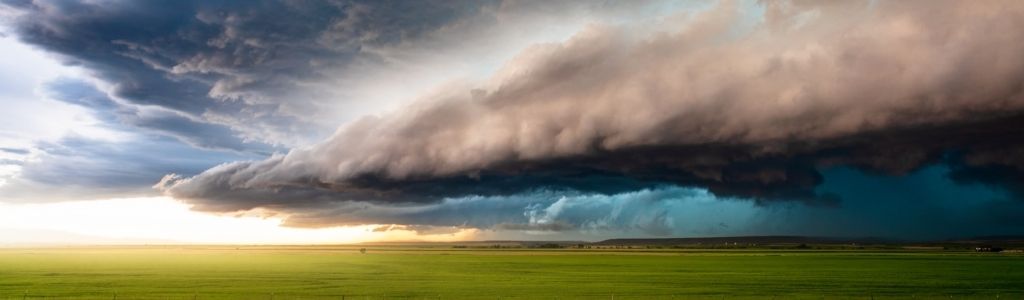
storm moving across a field
Writing Locations as Characters

by Eldred Bird

Where we choose to set our stories is an important decision. It can inform everything that happens in the story, from plot points and character development to pacing and mood. For this reason, I like to treat my locations as I would the characters in my stories.

Just like people, locations can have certain traits that bring out their personalities and influence the way our characters interact with them. Each location we choose has its own unique set of physical characteristics as well as a general feeling or mood that it gives off.

Let’s explore some of these traits and how we can use them to enhance our stories.

Character Traits of Locations

Setting Type

Setting type is the physical location where your story takes place. It can be a real location or a fantasy world. Maybe it’s all happening in your main character’s head, like a dream. Every location has its own personality. Even dream worlds have characteristics that impact the narrative and are often reflective of the person dreaming.

Another example might be an urban setting as opposed to rural. Both have their own obvious characteristics, such as population density, that sets them apart, but there are similarities as well. A big city might have a small-town feel, whereas a small town could be laid out to exude more of a big city attitude. The architecture and street layouts also lend character to a particular location. Narrow avenues with old-world cottages might add warmth and feel like an old friend, whereas tall glass-shrouded buildings and a maze of traffic clogged streets could feel cold, inducing stress and anxiety.

Terrain

The physical terrain of a story’s location can have a major influence on how the characters interact with it and with each other. If a character is familiar with the terrain, they may see it as an ally working to give them an advantage over an opponent. On the other hand, it may be a hindrance, throwing obstacles in the protagonist’s path. Sometimes the terrain itself is the antagonist and the thing that must be overcome to reach a satisfying ending.

Climate and Weather

Climate and weather may sound like the same thing, but they are different animals. Climate is the long-term average of the atmospheric behavior of a particular place, whereas weather is more isolated—it’s what’s happening right now. I like to think of climate as a location’s overall personality and weather as its current mood.

Most writers use weather almost instinctually. We all know how a raging storm, or a gentle rain can set a mood, but there are so many other things we can accomplish if we anthropomorphize things a little. Fighting an angry wind or beating back the cruel rays of the Sun breathe life into weather and set it up as an opponent that must be vanquished if our hero is to succeed. Weather can also be fickle and turn on a dime, lashing out like a scorned lover or throwing a tantrum like a three-year-old child who doesn’t want to take a nap.

Climate is a little trickier and requires more thought. The long-term nature of climate is what dictates things like flora, fauna, and seasons. It also sets expectations in the same way a parent might explain what to expect to a child before entering a museum or attending a funeral. Of course, we all know expectations and reality don’t always line up. It’s in that gap where the best stories are born.

Just like terrain, climate and weather can become the main antagonist. Look at Jack London, for example. In many of his stories the main character is fighting with the physical world rather than another person.

Inhabitants

The general attitude of the average resident adds to the personality of a location as well. Small towns can be friendly and welcoming, or gossipy and suspicious of strangers. A big city might have streets filled with a mass of worker drones moving as one, but hardly noticing each other as they pass. Here we’re assigning terms like friendly or suspicious to the collective, rather than the individuals.

Flora and Fauna

The other forms of life in a location also add to its personality. Is the vegetation sparse or plentiful?  Does it provide food and shelter, or create a barrier? Does your protagonist know how to take advantage of it? More importantly, does your antagonist know? What about the animals? Ask yourself the same questions.

Putting it all Together

When we combine the different aspects of a setting and treat them as different facets of a personality, we can see our location’s character start to emerge. As I’ve stated above, anthropomorphize different aspects to breathe life into the setting. This allows for a more personal interaction with the human (or alien) characters in your tale.

Now that our setting is a character, we can use it more effectively to help or hinder our characters. It can become an ally or an enemy. A great example of this is The Martian, by Andy Weir. Not only is the setting (Mars) hindering the main character, but it is also the antagonist. At times it seems like the planet is doing everything in its power to kill Mark Watney. It almost feels personal. Mars has become a character in the story, not just a setting.

Some Final Thoughts

This is by no means a complete list of location traits, but it should give you a general idea of how to look at your story’s location from a new perspective. Think of the ways you would build and describe one of your characters and apply those same filters to your location.

Every location has something that makes it unique. What sets your story’s location apart from others? Why does your story or scene have to take place in this particular location? Is there something here that is imperative to the narrative? Ask yourself these questions and you’ll be on your way to discovering your setting’s personality.

How do you treat your locations? Do you have any special tips or tricks for bringing out the setting’s personality? Share them with us in the comments!

About Eldred

Eldred Bird writes contemporary fiction, short stories, and personal essays. He has spent a great deal of time exploring the deserts, forests, and deep canyons inside his home state of Arizona. His James McCarthy adventures, Killing Karma, Catching Karma, and Cold Karma, reflect this love of the Grand Canyon State even as his character solves mysteries amidst danger. Eldred explores the boundaries of short fiction in his stories, The Waking Room, Treble in Paradise: A Tale of Sax and Violins, and The Smell of Fear.

When he’s not writing, Eldred spends time cycling, hiking and juggling (yes, juggling…bowling balls and 21-inch knives). His passion for photography allows him to record his travels. He can be found on Twitter or Facebook, or at his website.

Read More
10 Self-Editing Tips

By Ellen Buikema

I often feel that my first drafts are like the first cooked pancake in a batch, otherwise known in my family as the doggy-pancake—tasty but with issues.

Although it is said that Shakespeare never crossed out a line, most published books have very different first drafts. Good writing takes time, along with some wailing and gnashing of teeth.

At my author visits in school libraries, I’d ask the students to take a quick glance at all the books on the shelves. Then I told them, “When the authors began writing those books they made all kinds of mistakes. So don’t worry. Get your thoughts on the page and worry about fixing the errors later. Everyone makes mistakes.”

These ten self-editing tips can help shape your next manuscript.

1. Read out loud

Using text-to-speech programs, reading aloud to yourself, or listening to someone else read helps you find errors in grammar, sentence structure, and flow. When those lines don’t look quite right, hearing them is a quick way to zero in on needed edits.

2. Search for empty words and gestures

Sometimes we use empty gestures as a pause to separate dialogue, like a scene where two people are chatting in the kitchen over coffee. Someone says something and takes a sip, pausing before the next line of dialogue. This is an empty gesture because it doesn’t advance the scene.

My editor told me about a late night rant on an agent’s blog, listing words and gestures that she hoped never to see submitted again. The list went something like this:

  • One
  • Smile
  • Laugh
  • Nod ( I am guilty of using this one—big time)
  • Look
  • Frown
  • Walk

These words are on the list because they don’t show attitude, character, or further the scene—which is what actions and reactions should do.

3. Find verbs that give attitude, set the mood, or add to the character

Take a good look at your verbs and decide if you can use a more vivid one. The words, saw, looked, walked lack spark. Rather than saw use eyed, studied, peered, glared at. And rather than looked at, use a visual: The clouds formed a dark silhouette against the fiery sunset.

4. Use an active voice

In an active sentence, the subject ‘does’ the action. Writing in the active voice is clear, concise, and direct. In passive sentence construction, the object is the subject of the sentence.

Examples:

The chicken crossed the road. (active)

The road was crossed by the chicken. (passive)

There is a place for passive sentence construction in writing, but more for stylistic purposes. This choice should be intentional.

When writing blogs in WordPress, one of the notices given for Search Engine Optimization (SEO) is the percentage of active versus passive sentences. The more active constructions you compose, the better.

5. Edit line by line—backward

Line editing is painstaking work, but will help you find typographical and grammar errors. I tend to edit by chapter, line by line. Editing from the last sentence in a chapter to the first one fine tunes the focus to the individual sentence and keeps you from being carried by the stream of content. It’s easier to catch errors going backward.

6. Have a break

To do your best work you must take breaks. The ability to attend to a task drops if you’re at it for too long. Short breaks help you keep focused and productive. When the brain is in a relaxed or daydreaming state, the mind solves problems with less effort. Sitting in front of the laptop, forcing yourself to figure out the next scene creates stress—the killer of creativity.

7. Re-read

You will need multiple read-throughs to find errors in spelling, punctuation, and grammar.

8. Create Mood

When an ample mood is created--place, atmosphere, sensory images--the characters respond to those details.

Effective mood words create magic in a scene.

When a character stalks instead of walks, the reader’s attention is piqued.

Characters’ dialogue can enhance the mood in scenes. Are there interruptions? Moments when someone whispers in anothers ear? Situations where the world goes mad?

The pace of your sentences and their construction affect mood. Varying the length of sentences and paragraphs increases the pace and tension. A paragraph may be a single line.

When the action is fast, use partial sentences. “Had to reach the roof.”

9. Reduce Prepositions

Because prepositions need many buddies--they can’t stand alone--they make sentences unnecessarily lengthy. Instead, try possessives. Use my neighbor’s house, rather than the house of my neighbor.

10. Choose a style guide

Style guides have a set of standards for writing and designing content. They help to maintain a consistent voice, style, and tone across your writing. The guidelines give information, such as comma placement, which words need to be italicized, and how to format quotes.

Here are several style guides:

  • The AP Stylebook (Associated Press) is used by newspapers, magazines, and public relations firms.
  • The MLA Handbook  Modern Language Association of America (MLA style) offers some style and usage recommendations, but is most often used for documentation and citation. It is great for academic writing.

Editing is an essential part of the writing process. There will be many, many drafts, but editing is a worthwhile endeavor. It brings out the very best in your story.

What are your experiences with editing? Which experience was the biggest challenge during the editing process?

* * * * * *

About Ellen

Author, speaker, and former teacher, Ellen L. Buikema has written non-fiction for parents and a series of chapter books for children with stories encouraging the development of empathy—sprinkling humor wherever possible. Her Works In Progress are, The Hobo Code, YA historical fiction and Crystal Memories, YA fantasy.

Find her at http://ellenbuikema.com or on Amazon.

Top Image by Alan Levine - Flickr

Read More
Book Cover 101: Covering A Cross-Genre Novel

by Melinda VanLone

Here on Writers In The Storm we’ve talked about putting the promise of your genre on the cover and how vital it is for selling your novel. As I've said before, a good cover is a contract with the reader that this story fits in the genre they’re looking for.

Note: For more information see Book Covers 101: Your Cover Sells Your Book.

But what if you’ve written a cross-genre story? 

Here’s the short answer: it’s almost impossible to do both at once. You have to lean one way or another, or you’ll miss both sides.

Let's say, for example, you've written a sci-fi/romance novel. Think carefully about the main story elements. Is the romance really front and center? Or is it more interstellar shenanigans with strong romantic elements?

My latest series, Raegan Reid, is a blend of urban fantasy and sci-fi. When I look at it objectively I see that it’s heavier on the urban fantasy elements. If I put a typical urban fantasy cover, a badass female protagonist standing in a sinister city landscape, and then tried to insert a futuristic element into the background, I would end up with a confused cover and no one would buy my book. It would leave both urban fantasy and science fiction readers scratching their heads, and their main thought would be: “I don’t know what that is, but I’m pretty sure it’s not for me.”

You do not want that reaction for your book.

Steps to a successful cross-genre cover.

1. Take a step back and analyze the major story elements in your novel.

  • What genre do they belong to?
  • Which reader is it going to appeal to more?

Typically, you’ll find you’ve got more elements of one genre than the other.  

For instance, I did not lean into the science elements hard enough in my story to market it to science fiction readers. If your cover incorrectly promises your genre, you’ll end up with angry readers, bad reviews, and a mental cross beside your name when it’s seen on future books.

As a side note, some genres are more accepting of experimentation, while other genres are more purist. If you’ve read within the genres you’re publishing in—as you should have—you’ll know which is which.

2. If your story is truly evenly balanced and you can tip either way, consider which genre has the biggest audience. You are seeking the largest pool of potential readers, because a bigger pool means more potential customers.

For instance, if your sci-romance is equal parts science fiction and romance, I’d lean romance. Biggest. Genre. Ever.

If you're still not sure, take a look at the covers from your comp authors, and see which genre they've chosen to highlight. If they've been selling well...it's a smart move to mimic their approach.

3. Once you’ve picked the genre you think is the primary focus of your story, cover your book accordingly (see previous Book 101 posts for more advice on what graphics go with which genre).

Keep in mind, if your book isn’t selling you can always change your cover to lean into the other genre. Maybe you got the dominant genre wrong. Maybe the smaller genre is hungrier and more willing to try a new type of story. 

Remember, the two basic mottos of indie publishing are: if at first you don’t succeed, try again, and don’t be afraid to change your approach. The power is in your hands.

Have you seen a cross-genre book with a great cover? Share it with us in the comments!

About Melinda

Melinda VanLone writes urban fantasy, freelances as a graphic designer, and dabbles in photography. She currently lives in Florida with her husband and furbabies.

When she's not playing with her imaginary friends, you can find Melinda playing World of Warcraft, wandering aimlessly through the streets taking photos, or hovered over coffee in Starbucks.

Her elementary fantasy series, House of Xannon, begins with Stronger Than Magic. For more information on covers, visit BookCoverCorner.com.

Read More

Subscribe to WITS

Recent Posts

Search

WITS Team

Categories

Archives

Copyright © 2026 Writers In The Storm - All Rights Reserved