

The most popular post here at WITS is a very early post from Sharla Rae on writing descriptively about hair. This post is so amazing, we pulled it up from the archives and buffed it up a bit for you. What's included? Everything from basic descriptions and colors to word choices and hairstyle names. and descriptions.
Let's have a hair party!
A few basic do's and don't's.
The #1 thing about hair descriptions is Do Not overuse them. You do not want to be known as "hair girl "or "hair boy!"
#2 on the essential List: Hair descriptions are a part of the character so make them work harder by using them to describe the person “inside,” not just what the person looks like outside.
Examples:
- A tomboy might have a very short, non-nonsense haircut. Then again, she might hide long tresses under a ball cap, because secretly she’d like to be noticed as the girl she really is.
- A man who works as an executive might conform to a short, and very tailored look. Or, he wears expensive suits but he wears his hair a little too long because on the weekends he caters to his passion and joins his buddies for motorcycle road trips.
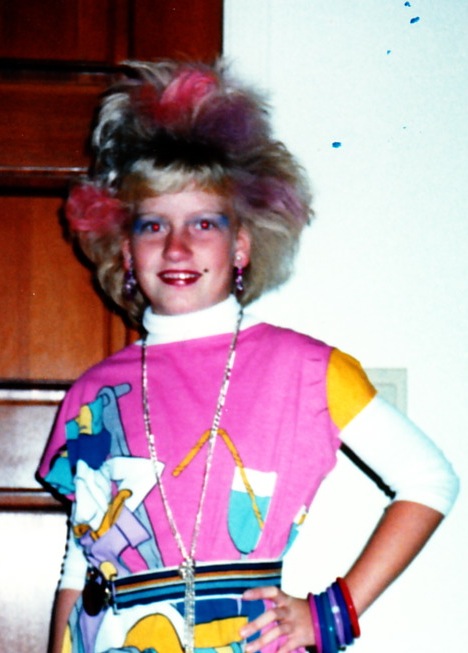
Alternative Generic Names For Head Hair
| Coiffure | Locks | Strands |
| Curls | Mane | Tresses |
| Down | Mop | Tufts |
| Fringe | Ringlets | Wig |
| Fuzz | Shock | Wool |
Descriptive Hair Phrases
Bangs obscured her eyes like a sheepdog
Flaked with snowy dandruff
Bleached, bottle baby
Braid like a thick black rope
Bundled at the nape
Bun resembled a cow patty
Cascading down her back
Chemically damaged
Coiled in a top-knot
Crowning glory
Curls foamed luxuriously
Tendrils danced on the breeze
Disheveled
Downy hair sprinkled her arms
Dramatic widow’s peak
Elaborately dressed with ribbons
Electrified
Kewpie curls
Smelled like burnt chicken feathers
Snow drifts of dandruff
Veiled her expression with
Greased into a ducktail
Flaming locks fluttered to the floor
Fluffy
Frizz job, bad perm
Glossy locks lifted on the wind
Grew like a thatch of straw on a roof
Grizzled, gray hair
Hair drooped around pale cheeks
Hair like Rapunzel
Hairy as a dog
Hung like a dark river
Kinky perm
Knotted
Left unbound to tumble
Like a clown wig, artificial red, plastic shine and fuzzy
Like a thatched roof
Like she put her finger in a light socket
Limp and lifeless
Long, shaggy hippy look
Lustrous as onyx stone
Marcelled into fingerwaves
Matted to the scalp
Perm fried
Prematurely gray
Puffed like a bubble around her head
Ragged bangs
Rat’s nest
Ringlets
Shock of hair stood straight up
Slapped her face like wet worms
Sleek and chic
Smooth honey dripped over her shoulders
Spiky Mohawk style of a punk rocker
Spilled out of the hat
Spread like feathers on a pillow
Standing on end
Stiff in front like a cockatoo
Straight as a wire
Streaked, highlighted
Stuck to her sweaty nape
Tangled mane
Tousled pixie
Two-toned dye job
Unconquered curls sprang loose
Unruly swirl
Old-lady blue rinsed hair
Vibrant color and shine
Wet with sweat
White Pigeon Wings at temples
Wispy ringlets
Wondered what rubble lay beneath that mess
Wreathed her face
Hair Texture Phrases
Baby fuzz
Bleached hair like mushy wet works
Blue feather hair of old lady
Bristle top
Broom chopped
Cat-fur fine
Cotton candy hair, fine
Cottony
Dandelion fuzz
Down
Gummy
Horsetail coarse
Moldy hay
Short-cropped and stiff
Soft and lush
Soft curls and waves
Yellow straw
Descriptive Hair Color Words & Phrases
Black
| Coal | Jet | Obsidian |
| Crow's wing | Indian Ink | Onyx |
| Ebony | Midnight | Raven |
Grays and Whites
| Battleship gray, dull gray | Maltese gray (blue gray) | Smoke |
| Blue dandelion fuzz | Mineral | Snowy white |
| Blue rinse gray | Mousy (gray) | Swan's wing |
| Faded glory | Pewter | Steel |
| Flint | Salt and Pepper | Wood ashes |
| Grizzled (gray) | Shale | |
| Gunmetal | Silver cloud |
Brown
| Amber (reddish) | Dirt |
| Ash brown | Fudge cycle |
| Auburn (reddish) | Glazed ginger |
| Baked Clay | Maple Sugar |
| Bison | Mink |
| Brunette | Mousy |
| Burnished | Muddy |
| Camel | Nutmeg |
| Caramel | Pecan |
| Chestnut | Rawhide, dark reddish |
| Cinnamon | Root beer |
| Clove | Russet |
| Dark beer | Tobacco |
| Dark Earth | Tortoise Shell |
| Dark toffee | Walnut |
Reds
| Auburn | Carrot top | Garish |
| Berry | Cinnabar | Orange |
| Brassy | Clown wig red | Russet |
| Brightest | Cognac | Scarlet |
| Burgundy | Dull brick | Strawberry |
| Burnished Copper | Flame | Wine |
Here is a wonderful link, shared with us by Erin Michelle (see comment below) from Writing With Color: Describing Natural Hair.
Professional Hair Color Descriptions
Ash blond -- Lacks red or gold highlights (verges on green tones); light mousy blond, medium and dark blond, dishwater, beige
Ash brown -- Browns lacking warm/red tones tones; light mousy brown, medium and dark brown
Black -- Different shades of black vary according to the amount of highlighting or pigmentation shadings present in the hair; black lacking all highlighting will be duller, ash shade; black containing a lot of red may appear as deep burgundy
Red -- Warm shades; berry, russet, strawberry (red-blonde), rusty orange, wine, carrot top, etc.
Towhead -- Whitish blond; usually an ash blond lacking warm tones but not always
Warm blond -- Blond with touch of gold and red; whiskey, wheat, honey, strawberry, brassy, golden etc.
Warm brown -- Brunette, dark or light brown that contains red or gold tones; varies from light to nearly black; reddish brown, chestnut, dark amber, auburn etc.
Hair Styles Modern And Historical
It’s impossible to name all the hairstyles but the selection here should be a good start. Many listed here also are known by other names.
[See of some these hairstyles here.]
Afro -- Unisex style borrowed from African-Americans; short and very curly, forming a bowl shaped profile; a pick is used to pull the hair away from the head and shape it
Asymmetric -- Hair is cut long on side of the head and short on the other.
Bedhead -- Popularized in 1990s by starlet Meg Ryan; short to mid-length shaggy cut worn jelled or moussed in tossed fashion
Beehive -- A 60’s French twist coiled at the back of the head and rising above it to form a cone shape (see upsweep)
Bob -- Introduced in 1915 this short cropped hair style was popular during the 1920’s; also called the shingle bob, the shingle, the Eaton crop. It is often cropped at the jawline and aligned close to the face.
Bouffant -- Puffy hair style’ hair is backcombed or ratted then barely smoothed, resulting in a bubble affect
Bowl -- Most commonly worn by young boys. The bang area cut straight cross the forehead as if measured by turning a bowl upside down on the head. The top layers are longer and cut along the this bowl line around the head.
Braid -- Plaited hair
Bubble -- 60’s hairstyle, short to mid-length, ratted/backcombed to appear like a football helmet or bubble surrounding the head
Butch/flattop/crewcut -- A man’s style; usually cut with electric shears; very short and stands on end at the front of the head and his shaved close to the head on the sides; sometimes called a GI cut.
Buzz - Modern slang for a hair shaved close to the head
Chignon -- Bun, usually at the nape or top of head; topknot
Conk -- African-American textured hair that is straightened
Cornrows -- Small tightly braided rows of hair that hug the scalp
Duck tail -- 50’s style worn by girls and boys alike; hair on either side of nape combed toward the center of the head; reminiscent of Elvis Presley, Fabian, Doris Day, Debbie Reynolds etc.
Farrah Fawcett -- Long layered hair flipped or feathered back off the face with a bang that feathers or rolls off the face as well; made popular by the TV star of the same name; late 70’s and early 80’s
Finger waved -- Usually short haircut in which a stylist uses lotion and her fingers to create deep waves that circle the head. Popular in the 1920s and 30s.
Flip -- Feminine hair style of the 50’s and 60’s; long hair usually shoulder length turned up at the ends, sometimes in a roll.
Fontange -- Worn 1690’s to 1710; a towering fountain of frills and complex, lacy intertwining shaped around a wire frame and considered the height of fashion; nicknamed by disdaining men, the “tower and the comet”
French twist/seam -- Hair swept back from both sides the head (front to back) and rolled down the center of the head into a roll or tucked to make a seam
Fringe -- Curly bangs worn in the 1880’s; in 1900’s worn straight; alternate name for bangs
Kiss curls -- Seen immediately after Civil War; ringlets of curls on the cheeks or forehead
London Cut -- Short female cut popular during the 1960s and early 70s. The hair was cut over the ears, leaving a fringe in front of the ears, often brushed toward the face or straight down. The nape hair was cut along the hairline like a boys but more rounded instead of squared off like a man’s neckline.
Mohawk -- Shaved head with a strip of hair growth down the center of the head from forehead to the nape
Pads -- Late 1830’s long coiled curls over the ears (looked like ear muffs); at the back of the head they were called a Grecian knot or psyche knot
Pageboy -- Introduced in late 1930s early 40’s; long, hair turned under, usually just touching the shoulders
Pigtails -- Same as pony tail only the hair is parted down middle and each section is cinched into its own tail above or below the ear
Pixie -- Female short cut; feathered around profile of face and onto cheek, short at the nape line; usually with full bang and combed forward onto face; also called an Italian cut; permed version called a poodle cut
Pompadour -- Style of wearing the hair high over the forehead usually in some type of rolled affect; in 1940’s women used rats (nylon mash) to roll the hair off the forehead and puff it; a version of this also worn during the 1700’s and early 1800’s by most and women; name comes from a lady of this era called Madame
Pompadour
Ponytail -- Hair gathered together and cinched with a rubber band or barrette to make a tail at the back of the head; worn high or low; worn low it’s sometimes called a George (referring to George Washington) or a Paul Revere
Poodle cut -- Short, curly haircut
Powdered hair/wigs -- Unisex style worn from about 1760’s to 1820; after 1740 men were wearing shorter, simpler wigs and began to powder their own hair
Punk -- Usually short on top and styled with lotion to stand up off the head; often a mohawk fashion from forehead to nape; sometimes dyed bright neon colors of pink, purple, blue, orange etc.
Queue -- Pigtail, esp. that of a Chinese. (Chinese queue was braided) Men of Colonial America wore these as well, usually tied back with a ribbon and in some cases men wore a periwig styled with a queue
Roach -- Hair brushed into a roll
Sausage curl -- Long tube-like coils of hair; popular in early 1800’s; in the early 1970’s these were piled on top of the head in a cluster, esp. for formal dress for teens.
Shag -- Like a pixie, only long at the nape. Lengths vary from short to long layered cut; popular during the early 70’s
Skin heads -- Group of radical racist youths, men and women alike, who shaved their heads
Spaniel’s curls -- Late 1840’s into the 50’s; long thick curls worn by the ear (as worn by Elizabeth Barrette Browning)
Spit curls -- First seen in 1831; flat curls on women in front of the ear
Tonsure -- Shaven part of a monk or cleric’s head
Updo/upsweep -- Generic term for long hair styled high on top of head; hair might petaled (layered curls), barrel curled, arranged in a chignon, backcombed into a beehive or styled in French roll etc.
Wedge cut -- Also called Dorothy Hamill cut; short cut worn mostly by women; sides feathered off the face, back cut longer from the drown to the occipital bone, where its layered into a wedge; nape is trimmed close the head and short; a late ‘70’s and early 80’s style.
Do you see anything missing from this list? Are there modern styles we need to add? How do you decide what kind of hair to give your characters?

Sharla Rae passed away earlier this year, but she (and her amazing lists) live on at WITS. She published four amazing historical romances. The latest, How To Fell a Timberman, is available on Amazon.
You can read more about her here.




