

by Kristen Lamb
Book sales. This is what everyone wants to learn about, so Writers in the Storm has been kind enough to let me proselytize here.
Most of us are continuously asking the same question. How do we get readers to find, love and buy books? Over on my blog I posted one answer The Single Best Way to Become a Mega-Author, which is---in a nutshell: write a LOT of (good) books.
One (obvious) key is being prolific, and this applies no matter what type of publishing we choose. If you browse a local used bookstore (which is almost pure legacy press), you will see the same names over and over and over and over.
Scan Amazon and the top indie faves and you'll see the same names. Same authors with lots and lots of books.
Which Makes Sense
As readers, we tend to find a writer we like and stick like glue until we've exhausted their titles. Why? Because reading a book is a HUGE investment of our most precious commodity—TIME.
We don't want to spend an average of 12-15 hours of undivided attention with just anyone. We also are in an age of human history where we're inundated with choices, which tends to short circuit the brain cells.
But many writers want the magic for selling a lot of books and frankly, that doesn't exist. Huge success with such a subjective commodity is still, to an extent, trying to capture lighting in a bottle.
Ah, but we can improve our odds. First with, as mentioned, multiple good books. Then there is social media, building a platform, and cultivating our future audience (fans).
Our Foundation Matters

The foundation for all goods and services (brands) is the relationship. Nothing sells without establishing, building and improving the relationship. Relationships take time, effort, energy, trust and patience. They can take years to build and moments to destroy, so we must always value that relationship.
This applies to ALL commodities from restaurants to grocery stores to soap to shoes to electronics. Samsung was and is a strong brand, but the Galaxy 7's exploding battery also exploded consumers' trust. That lost faith has taken years to rebuild.
The same goes for authors. One of the many reasons I advise authors to have a blog is that it is an excellent way to create a relationship and build trust. You guys visit WITS because you trust that you'll be educated, enlightened and entertained. This site is known for quality. No one comes here only to get frustrated with a sea of typos, poor grammar, etc.
I work to do the same on my personal blog.
But There's More to It...
As authors, we are wise to remember what sort of consumer we want to attract so we can then coax them into becoming a follower, then a fan.
Sure, every social platform has value for selling books. But not all platforms attract our ideal audience. Books require people who (a) like to read, (b) have longer attention spans and (c) are seeking content that is information/stories (what writers offer).
Blogs do that better than, say, Instagram, which is highly visual and perfect for those times we have the attention span of a goldfish.
Regardless of which medium we choose, books will only connect with fans if we establish rapport.
I work hard to create relationships on all the platforms I use. The key to these relationships? I give first.
Yes I mention classes, my books and upcoming events, but no one is required to buy. Because I give first and often, no one is offended that I have books for sale because I'm not just taking, taking, taking.
Those who follow me know what to expect. Most of the time, I share funny memes, content from others, or engage in conversation. I comment on posts to show the relationship is truly going both ways. Small acts of giving every day add up.
Thus, when I finally DO post something about a class or a book or a conference, it's way less weird. I have a base of people who know me and who hopefully enjoy my company and so when I "advertise" the response is more positive with far better returns.
Because I don't act like this...
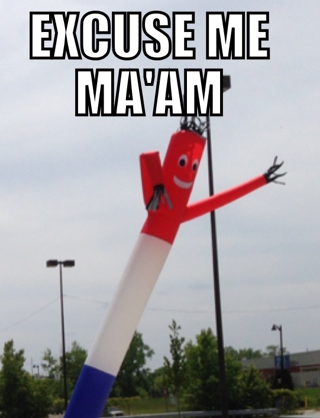
Yet so many writers only join the online conversation to blast people with ads and free books and giveaways. They only get on their author page to talk about themselves, their signing, their event, their book. Many don't even give their time. Rather they cheat with automation, but they want OUR time?
Sure. Right on that.
The social media methods I teach (some call it tribal marketing) really aren't "marketing" at all. They're about understanding people and building relationships.
A Little Goes a LONG Way
The most interesting part is that we really don't need to give all that much for it to matter. For instance, if someone emails me with a question of a favor, and I recognize that name from comments on my blog, I will move heaven and earth to help, and often for free.
Yet, I can't count the number of people who email me with a copy of their book for me to review or edit when they've never taken two seconds to say hello.
So I am supposed to part with my money and twenty hours of time I don't have because you bought my e-mail on a list?
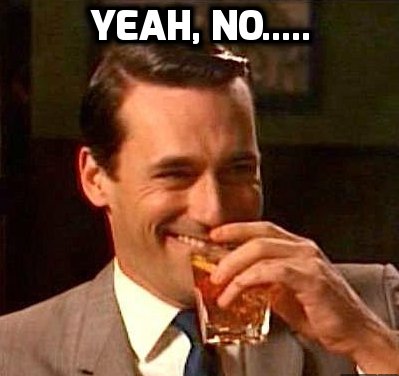
Same on Facebook. Folks IM me to vote for their book or buy their book or for me to promote their book, and they have never taken two seconds to so much as comment on a post, say hello or talk to me.
These people are TAKERS.
But the people who always post comments or share or promote me? Again, it is ridiculous the hoops I will jump through to help a giver.
Newsletters are the same deal. My email is absolutely flooded with lazy writers who paid some company to somehow get my email. 99% of newsletters instantly go in the trash.
Ain't Nobody Got Time for That.
My book, Rise of the Machines, focuses on the day to day building of the brand and platform, including recommendations about time. Writers always assume I spend vast amounts of time on social media.
Nope.
Aside from the blogs? I pop in randomly throughout the day on various platforms for a few minutes and that's it.
If we don't have those small everyday actions that accumulate into a relationship of depth, then it is a crapshoot. It becomes a race to the bottom of who can give away the most books and for the cheapest or FREE. That is the price of wanting the fruits without the roots and perks without the works.
Marketing & Advertising

All marketing and advertising works better with an established relationship. Why are we more inclined to actually use a Starbucks coupon? Because Starbucks has created a relationship with its product and service. Their coupon is far more likely to be used than Joe's Joe Shack because we don't know Joe from Adam.
Unless Joe offers us a coupon so ridiculously cheap we cannot ignore it? It's far more likely to go in the trash or be forgotten. And even if Joe succeeds in getting us in the door, he is still starting from ground zero building our trust.
If his coffee sucks? It won't matter if he gives an even steeper discount the next time.
In the beginning almost all writers are like Joe's. Legacy gets a bit of a pass but not much. Most readers don't buy books by publishing house. In fact they might be hard-pressed to name one of the Big 5. But, if a book is on shelves at B&N, that book (author) is then using B&N's relationship (brand) to kindle its own.
*bada bump snare*
But since most readers aren't going to B&N? As I said, a small pass.
Trust Matters.
Even in a bookstore the writers we know will almost leap off the shelves at us. I can't count the number of times I bought books I hadn't planned on buying because I knew the author from Facebook, Twitter or their blog (the GIVERS).
The rest of us (indies in particular) have to do a lot of giving to establish the rapport, proving we are a good investment of TIME.

I did this with my blog. It represents my style, my voice, and readers can trust I produce enjoyable content. It's not a huge stretch to imagine my books (non-fiction and fiction) would be written in a similar manner. Thus when I have books for sale, I'm building off an established relationship (brand), which is SO much easier than pulling sales from the ether.
Free's Not What It Used to Be
Additionally, if I told you guys that one day next week, I was giving away my branding book for free, I guarantee more people would grab a copy than if I just popped out of the blue and ambushed you with free books.
Or if I announced my branding book was on sale for $2.99, I would almost assuredly have far better ROI than by plastering that on people's Facebook walls without permission. Wait, I could also send out a mass FB email and copy four hundred people! #GENIUS
Please don't do that. That was sarcasm.
See, once we build those relationships (platform), any marketing, ads, giveaways or sales for our books will work better because we're not just assaulting people from the ether with free/cheap books. That giveaway or freebie is just more value added to something already valuable to your audience.
There are a lot of wonderful book marketing people out there, but I promise you that the stronger that base platform and brand, the more they have to work with.
Come on, people. They're marketers not magicians.
Ads are a failure if no one clicks it and no one buys. I don't care if we get a million-member newsletter list. If no one opens it and no one acts and buys the book, again it is a failure.
We improve those odds by first creating the relationship online with our blog or social media. The books add to the relationship. If they trust us in a blog and we impress them with a book? We are golden so long as we keep nurturing those relationships. Our ads, marketing, newsletters and promotions work better.
But, skip the foundation? Skip the relationship building? Skip the day to day? It is a long, unpleasant, SUPER expensive and all too often unsuccessful battle. Ah, but do the little stuff day after day and your promotion/marketing person will hear angels sing.
Do you agree or disagree? Have you found marketing methods that translate into book sales? What are your questions while we have a social media Jedi in the house?
For those who want to meet in PERSON, I will be speaking at the San Francisco Writers Conference February 14-18, 2019 and I am offering an ENTIRE day of Masters Classes to up your game:
- Villians, Antagonists, and Other Baddies
- Setting is More Than a Place
- Sales for Those Who’d Rather Join Witness Protection
- The Art of Author Branding: When Your NAME Alone Can Sell
- The Novelist’s Journey Down the Scary Rabbit Hole (Panel with
Alessandra Harris, Mary Rakow) - Crime and Punishment (Panel with Rick Acker, George Fong)
* * * * * *
About Kristen

Kristen Lamb is the author of the definitive guide to social media for authors, Rise of the Machines--Human Authors in a Digital World in addition to the #1 best-selling books We Are Not Alone--The Writer's Guide to Social Media and Are You There, Blog? It's Me, Writer.
She has now returned to her first love, fiction. Her debut mystery thriller, The Devil's Dance is positive proof she watches way more Discovery ID than is probably healthy.
Kristen has helped hundreds of thousands of writers find success using social media. Her methods are responsible for selling millions of books. She's helped all levels of writers from mega authors to self-published unknowns attain amazing results.
Kristen is the owner and operator of W.A.N.A. International and creator of W.A.N.A.Tribe, the social network for creatives. She was the official Social Media columnist for Author Magazine for two years, and her blog was named one of the 101 Best Websites for Writers by Writer's Digest Magazine.




