Launching a book—especially a debut—is an utter whirlwind of excitement, sobering facts, and unknowns. (We won’t even touch upon the extreme terror that hits from time to time.) But within this chaos, there are ways to tackle it all and stay sane. Let’s take a look at a few ways I manage a launch.
KEEP A CALENDAR Use this calendar for guest posts, interviews, FB or Twitter chats, in-person events, giveaways, etc, ONLY. I buy a paper planner (though some prefer an online calendar—fine), highlight different categories in different colors, and make daily lists of things to accomplish. (I know—once a teacher, always a teacher.) But this type of organization offers me clarity and helps keep me on top of due dates. I have a family calendar for everything else.
SET ASIDE MONEY IN ADVANCE You have to spend money to make money. This is the most basic marketing manifesto. It’s also the truest. If you aren’t willing to shell out some dough to give your book a push, chances are it won’t go anywhere. If you’re one of the lucky lotto winners at your publishing house, more power to you, but there are so few of these—even for many big, established authors. It’s best to look at your market placement realistically so you can give your book its best chance in the saturated reader-sphere.
DEVISE A PLAN What will you need all that money for? Ads in papers, magazines, bookish websites, and also for blog tours. Seek out a professional to help you with this. There are some very knowledgeable and reputable organizations that help promote writers. (BUT BE CAREFUL. Do your research. Ask for final numbers, click-throughs, impressions and also take a look at their client lists. There are loads of Mickey Mouse operations out there robbing authors of funds.) Also, I’d recommend not going overboard with in-person tours. They’re expensive, rarely covered by your publisher, and hardly ever sell enough books to make it worthwhile. Plus it can be truly humiliating sitting there all afternoon with a stack of books, only to have people walk by you all day and avoid your gaze. I say this with three books under my belt worth of experience.
GO AFTER THE MEDIA, but be realistic. You have limited time so make it count by doing the things most comfortable for you. Start by making a list of all outlets you’d like to approach. Gather the emails and phone numbers you need. Work through your list, with a professional press release in hand. Remember to be polite and give them solid reasons why your book is appropriate for their station/channel, etc. In other words, find the true HOOK in your work that will speak to people, not just the byline you have on the cover copy. If you have a publicist already, you may want to talk with them about how you can split the work. If your publisher doesn’t assign you one, there are many companies and freelancers out there, but again BE CAREFUL. Research. I’m not entirely convinced a publicist is worth it. Some sing their praises.
DESIGN PARAPHERNALIA like book marks or postcards—something you can sign. (People like that.) Keep them in your purse, your car, your computer bag. Give a stack to your mom to give out. I’m serious. My mom papered an entire grocery store parking lot. (This is why I call her mom-ager)
GIVEAWAYS Remember that Goodreads and LibraryThing prompt readers to add your book to their TO READ list when they enter a giveaway. On release day, those platforms email everyone on that list to announce the release. This is crucial to getting the word out.
REACH OUT TO BOOK CLUBS interested in hosting you. There are wonderful online book clubs and also in-person clubs, of course. Look to them as they may become your biggest supporters. One note here. Not all books are good for every single book club. For example, my in-person group gravitates toward literary fiction, historicals, and the occasional thriller. An online group I belong to is mostly women’s fiction and romance. Still another is young adult. Once again, do your research. OH! And don’t forget to bring the cupcakes. Everyone likes cupcakes.
CHAT A LOTCreate a hashtag related to your book, genre, or topics in the novel and set up chats on Goodreads and Twitter, maybe FB as well, depending on which makes you the most comfortable. Another word of caution here. It’s fine to promote your book, of course, but do not rely on social media to sell much. Plus, people get sick of hearing about it. New figures just came out that shows less than 1% of books are sold through social media avenues that are author-driven. Something to chew on.
DON’T REFRESH your Amazon and Barnes & Noble ranking every five minutes. It will drive you insane, and really doesn’t mean all that much. Go play with some friends instead on your release day.
STAY CALM Going completely ape shit crazy won’t change the massive amount of work ahead of you OR help you sell more books. Go for a run, do some meditation, get drunk—for the love of all that’s holy, take the edge off. There’s only so much of this entire process we can control. Besides, the day your book releases will feel strangely anti-climactic. Also, later down the road comes the post partum. but that’s a post for another day.
CELEBRATE I promised ten points, but this is too important to ignore! Despite all the pressure, despite things not going exactly as you imagined, despite the many balls dropped along the way on your end and/or your publisher’s, remember that you’re LIVING THE DREAM! You’re published, people are reading YOUR words, and loving them. Also, you’ve worked your tail off to create something meaningful or entertaining. Bask in the excitement and be proud of yourself. Celebrate like it’s 1999.
Do you have a tip to share that you learned during your book release? Maybe you're getting ready for your debut release and have a question?
About Heather
Heather Webb writes historical novels for Penguin and HarperCollins,which have been translated to three languages and have been featured in the Wall Street Journal, Cosmopolitan magazine, France magazine, and Reuters News Book Talk. BECOMING JOSEPHINE follows the life and times of Josephine Bonaparte set to the backdrop of the French Revolution, and RODIN’S LOVER released Jan 27th, chronicles the passionate and tragic story of Camille Claudel, sculptor, collaborator, and lover to the famed Auguste Rodin. A FALL OF POPPIES releases in 2016.
Heather is also a freelance editor and contributor to award-winning writing sites WriterUnboxed.com and RomanceUniversity.org. She is a member of the Historical Novel Society and the Women’s Fiction Writers Association.
“But Kelly, why did you wait three years between books?”
Three. Long. Years.
That’s how long I went between publishing my first book, THE GOOD LUCK GIRLS OF SHIPWRECK LANE, and the one coming out now, THE MATCHMAKERS OF MINNOW BAY.
Not because my publisher jerked me around—they’ve been wonderful. Not because of an agent switch—do not be crazy. Not because I wasn’t writing. I was writing. Because three years is how long it took to bring my absolute best to press. And I’m here to tell you, no amount of self-flagellation was going to change that. Trust me, I tried.
In that time I wrote two really really crappy first drafts of other books. The ideas had no legs, the characters had no eyes, and the settings had no heart. I was writing, and I was learning, but I wasn’t making a book.
In that time I got divorced from a very sad marriage. I cried a lot; I tried to put on a brave face. I gave myself pep talks about being better off on my own that I didn’t quite believe. I was surviving, but I wasn’t making a book.
I took care of a beautiful baby who became a beautiful toddler and then a beautiful kid. I showed him enough love for seven parents. I fed him organic quinoa which was probably unnecessary. I was a making a great human, but I wasn’t making a book.
I said goodbye to my father, who died of liver cancer. I cried a lot and didn’t even try for a brave face. I kept my mom close and hurt when she hurt, and then over time started to feel better. But I wasn’t making a book.
But these events, and there were a lot of events, are not the real reason this book took so long. The reason this book took so long is because the whole time I was doing all these things, I was also yelling at myself. “Write more! Write faster! Write better!” And my self looked back at me and rolled its eyes and simply said, No. I fought and I fought and I fought but nothing good came out. I couldn’t fake it. I couldn’t push through. I gave myself lots of strong talks about how other writers COULD push through, but this did not actually help, it turns out.
Finally, at some point, a friend told me to write something on a post-it and put it by my bed. It said, “It takes as long as it takes.” I made lots of protesting noises about tautologies. But of course she was right. When I gave myself permission to take as long as I needed—not to quit, not to slack, not to go work at the Home Depot as I often fantasize about—but to just to settle in for the long haul, a book came along. And as I wrote, the book got better and better and better, until one day, I was proud enough to share it with my amazing agent, and my wonderful publisher and my incredible readers.
And when will my next book come out after all this?
I guess it will take as long as it takes.
Hopefully it takes fewer than three years.
What's your default self-talk when your life and your writing stop getting along? Do you have any useful mantras for these moments?
About Kelly
Kelly Harms is celebrating the $2.99 promotion of her first book, is halfway through a new book she’s thrilled about, and is proud mother of a little boy who swims like a fish and fishes like a bassmaster. Her new novel, THE MATCHMAKERS OF MINNOW BAY, comes out August 9th and is available for preorder now.
You’ve heard about it. You’ve been in it. You may have even gotten lost in it.
The writing cave. The mystical hole we decorate with junk food and tea and bury ourselves in to meet deadlines.
It’s comfortable. We have our favorite, overstuffed chair and a wash-worn blanket we cuddle in. A candle flickers in the corner and soft music drifts around our shoulders like a mesmerizing piece of gauze, fluttering in the breeze that sneaks in through the cave’s opening. It reminds us there’s an outside world, so we turn our back and furiously type away at the keys.
The writing cave is a necessary place. When we have a deadline.
But not for all time.
A cave is not a place for a soul that is living and breathing and thrives in the light.
Because you know what else you find in caves?
Bats, skeletons, moles. Creatures that shrivel and shrink from lack of sun and fresh air. They become deformed and shadowed. Things that crave the darkness and the stillness and the being-alone-all-the-time.
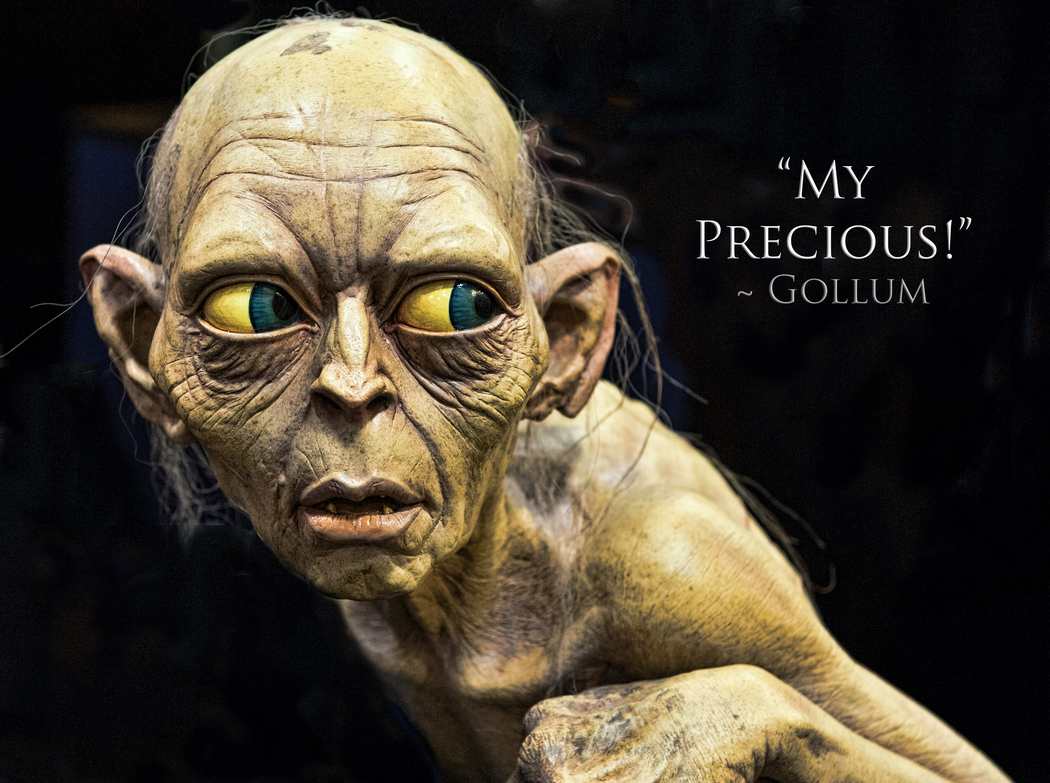
Think about Gollum. He was once a Hobbit-like creature. He loved playing in the sun, being with other creatures, until he found that ring. It was so shiny, so special, and it sent him into the darkness to keep to himself, keep the ring safe, keep the ring hidden. Until the ring was no more than a whisper of a dead tale and Gollum was forgotten and wiped from memory.
Our stories are like the One Ring.
Our stories are very much like a shiny, magical ring. They call to us, they sing to our minds and hearts and make us want to shout what we have to the world. But we don’t. Because it’s special. Our story is precious. It begs us to crawl into the cave, under the, sometimes very real, guise of a deadline and keep to ourselves to do our creative work. Keep our story safe. Keep our story hidden.
Until our stories are no more than a whisper of the tale it once could have been and we become forgotten within our own community.
Writers are solitary creatures.
Yes, writers crave being alone in our writing space and doing our creative work and it is completely necessary to do so.
But…
(you knew there was a but coming)
…when we stay in our writing space and we don’t experience and interact with the world, we shrivel. Our stories become stagnant and depressed and unoriginal because we don’t have the new experiences to feed the little creative creature that lives inside us.
I could bore you with scientific facts about how creativity thrives in a new environment, but I’ll resist. I could preach proven psychological tidbits about how it is imperative that a creative personality have new experiences to make the synapses fire that feed the creative center in the brain, but I won’t. I could recite lists of innovative thinkers and world-famous authors who attribute their creative problem-solving and master storytelling to their travels around the world, but I’ll refrain.
Because you know this. It’s the whisper on the breeze that sometimes sneaks into your cave. You turn your back, because deadlines! Sacred creativity! Fear.
Ouch.
That breeze is a little warm, compared to the coolness of the cave. Warmer than you’re used to.
It speaks of the outside world. Friends ready to welcome you back to the writing tribe. Cultures you’ve never experienced. A salty sea breeze and the call of a seagull. Sand that begs you to dig your toes in deeper and build a sand castle. The musical sound of native French spoken in a café.
It’s time to come out of your cave.
Don’t be scared. The writing tribe always wants new members. We’re here. Waiting with open arms.
You can start with a small tribe. Your local writing chapter, some friends who also write. You can go to a writing conference or even a small writing retreat (on land or on the water - more about that below) where you all experience something new, together. Maybe even go to a place you’ve never been before that will breathe fresh life into your struggling story.
Soon, you’ll slowly stop crouching in a hunched over position. You’ll stand, stretch, and for the first time in a long time, be able to deeply breathe.
And you’ll be with others who are doing the Exact. Same. Thing.
And maybe, that story that is wiggling around inside you will finally break from its cocoon and spread its wings.
Are you a cave dweller or do you get out regularly? Do you attend conferences or retreats? Meet with local groups?
About Christina
Christina Delay is the hostess of Cruising Writers and an award-winning author represented by Deidre Knight of The Knight Agency. When she's not cruising the Caribbean, she's dreaming up new writing retreats to take talented authors on or writing the stories of the imaginary people that live in her heart.
About Cruising Writers
Cruising Writers brings aspiring authors together with bestselling authors, an agent, an editor, and a world-renowned writing craft instructor together on writing retreats. Cruise with us to Belize this October (almost sold out!) or go to France with us in 2017 and stay in a historic chateau with Margie Lawson, Louise Fury, Shelley Adina, Kobo Writing Life, and Literary Translations.