Writers in the Storm

A blog about writing

storm moving across a field
10 Tips for a DIY Author Website

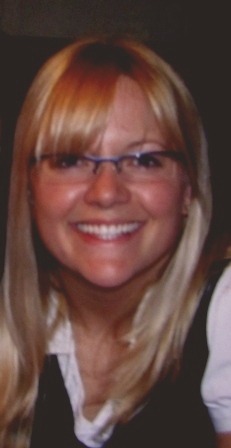
By Laura Drake

I am NOT a techie. I don’t know software, I’m not a graphics designer. Heck I can’t even use a camera well!

I’m an accountant. That translates to: I’m cheap. Too cheap to pay someone to build a website for me.

Besides, I have to admit, turning my website over to someone I didn’t know felt kind of like having a new hairdresser with a mohawk say, “Oh, trust me – I have a great idea!” Besides, how could I convey my vision, when I didn’t know it myself?

Desperation pushes you places you wouldn’t normally go. I jumped in.

CAVEAT: I learned one microscopic ort of what is out there in cyberspace. I only learned what I needed, to get what I wanted. I have no doubt there’s better ways to do things; the purpose of this blog is not to tout my method – it’s only to prove that you CAN do it yourself.

10 TIPS for a DIY Website:

1. Find out what “feel” you want.

I looked at a ton of author websites. Best one stop shop is to go to a large literary agency website. They list their clients, with links to their websites. Odds are, they’ll have authors that write all genres.

Your website should be a reflection of what you write. A paranormal, historical, and inspirational author website will look very different. The website of an author with a comedic voice should look much different than a literary one. Your visitors should get a feel for your books the minute your splash page opens.

I wanted a emotional feel, with photos of people enjoying a Western lifestyle. My settings are western, and my current series is about Pro Bull Riding – so it had to be featured prominently as well.

2. Do not get intimidated.

Most platforms have “templates” you can choose from to start, then you can customize from there.

3. Platform.

You’re going to need a company to host your website, and supply the shell for you to work in (described above.) There are quite a few of them out there.

The two I heard the most about, that were easy and fairly inexpensive, were Wordpress and Network Solutions. I chose the latter. I think it cost me $220 for two years, and it included email (you’ll want people to email you there, so you’re not broadcasting your personal email address.)

4. Photos.

This was my favorite part. I can spend hours, choosing just the right photo to convey the feeling I want. Google Images is great for browsing. Write "Beach" novels? Maybe a close-up of a weathered boardwalk in the sand. Fantasy? Maybe a clipart fairy. Let your creativity soar!

5. Pay for the photos you put on your website.

We want to be paid for our novels, so it’s only fair we compensate the photographers. But remember, I’m cheap. I used Big Stock Photos.com. Most photos were $5 apiece, and they had  a quadzillion of them -- all you do is type in a term (ex: bull riding.) There are other inexpensive sites as well.

6. Decide what ‘pages’ you want.

While you’re perusing author websites, notice what pages they have. Do you want a blog? A calendar? Book review page? Excerpts and teasers from your books?

Besides your splash screen, at a minimum, I think you need a Bio, and a way for readers to contact you. Oh, and don't forget, even if you haven't finished a novel, you need to at least tell visitors about what you write -- after all, isn't that the reason for a website?

7. This is going to take longer than you think it will. 

A lot longer. Plan on it. Begin waaaaay before you need it!

8. This is addicting.

I set up a simple site. Then I saw a website with “flash” – photos that fade in and fade out. Ohhhhh, I want that! So I bought a piece of software that would create this (Coffee Cup Firestarter, for like $40.) It took awhile to figure it out, but I’m SO happy with the result.

9. You’ll never be done.

You’ll need fresh content every once in awhile (monthly updates are recommended). Besides, I found I love to tinker with it to try to make it better. I take ideas I see other places and adapt them.

10. Have fun with it.

Once I got over being intimidated, I realized this was another outlet for my creativity. When I got stuck in my WIP, I'd work on the website. I was still being productive, and it used a different part of my brain while the writer part rested.

Your website has a feel. Think about when you visit someone’s house for the first time. Doesn’t it tell you a lot about them? Does it look like a movie set created by an interior designer? Or is it one of those rare houses that you feel at home in, the minute you walk in?

I’m not saying I’ve built the best, or the most beautiful website (you can see it here.) But I like it.

By doing it myself, I ended up with one that looks like me, and I think, gives potential readers a feel for my books. Isn’t that what a website it supposed to do?

And guess what?  I found I loved doing it!

Have you built a website, or are you thinking about one? What lessons have you learned? Are there any tips you want to share?

Read More
Plot Fixer - Part 2: How To Fix A Weak Opening

Writers In The Storm welcomes back Kara Lennox, a.k.a. Karen Leabo for some more plot-fixing magic.

Kara is an award-winning, bestselling author of more than sixty novels of romance and romantic suspense for Harlequin and Random House.

OMG, excuse the interruption, but I just realized we hadn't posted Kara's BIG news!  She is NOT just a 2012 RITA Finalist - she's a DOUBLE RITA Finalist!

So listen up, Peeps, she knows what she's talking about!

You can read Kara’s blogs here at WITS on the first Friday of each month.  Don’t miss out, stop by every month and get your plot fix.

By Kara Lennox

Are you ready to fix your plot?

This is the second in a series of blogs based on my “Plot Fixer” workshop. I’m attacking the seventeen most common problems—based on my years of rejections, contest judging, and critiquing. Last month, we discussed Plot Problem #1: Your Premise Isn't Compelling

Plot Problem #2: A cute meet does not a plot make.

It's essential to have a riveting opening scene. Whether it's the scene where your hero and heroine meet, or another scene involving your central character in some kind of trouble, you must present at least one problem.

Conflict on every page--that's the mantra of super-agent and writing guru Donald Maass. However, it's also essential that the first scene suggest what this book is about. That scene has to set the tone and even plant the seeds of future conflict.

A mistake I see often is a hum-dinger of a first scene, complete with conflict, sparkling dialogue and all sorts of problems. But then the story drops off, and the scene seems to have no relation to the rest of the plot. It serves only as a cute way to get the hero and heroine together or otherwise suck the reader into the book.

Example: The hero and heroine are both eager to buy a certain toy for their respective children for Christmas. But the store has only one left, and they both grab it at the same time. Witty banter ensues, but eventually one of them wins.

The hero invites the heroine to dinner. They go to dinner and get to know each other ... she has some kind of legal problem and he is a lawyer and offers to help her out ... and they work ... together ... to ... solve .... ARE YOU ASLEEP? I am.

A cute meet has to go somewhere.

If you're going to have a first scene where the hero and heroine are arguing about a toy, make darn sure the overall story has something to do with children and parenting. Maybe the hero is a single dad under fire from child welfare, and the heroine is the social worker who must investigate him. To make the meeting less coincidental, maybe the child somehow motivated both of them to get the toy. Shoot, I'm just making this up on the fly!

For a romance, it's really best if the hero and heroine are brought together for the first time by something other than a chance meeting. (We'll talk more about coincidence and chance on another day.)

One more example: HELL WEEK by Rosemary Clement-Moore is a YA paranormal about a girl with psychic powers who must fight the evil that has infiltrated a college sorority (also spun into a successful series). The first scene is a rush party. The author focuses on the snobbery, the pretention, the cruelty, and the blinding white teeth--evil, certainly--but also a hint of the other-worldly evil the heroine will eventually uncover.

A little later, the author writes about the heroine's reunion with her love interest, which was also filled with conflict and great dialogue, and romance is an integral part of this book. But because this is a book about sororities, she opened--brilliantly--with the rush scene.

Another technique I’ve seen—and I personally don’t like it at all, though I’ve seen it in published books—is to open your novel with the climax. Then you flash back to reveal the story of how the protagonist got him/herself into such a dire situation. It can work, but I think it’s lazy. If the real opening of your story is so dull that you have to mine some other part of it for an exciting first page, rethink your story!

Look at your first scene.

  • Does it grab the reader, thrusting the protagonist into some trouble?
  • Is there conflict, either obvious, or implied future conflict? If it meets these criteria, analyze farther.
  • How does your first scene relate to the rest of the story?
  • Does it set the stage, establish the right tone, or hint at what’s to come?

Plot Problem #3: Starting in the Wrong Place

This problem relates back to my previous blog, which talked about boring beginnings. But it is so common it deserves a number all its own.

This is something new writers often do. They start too early.

They want to lay the groundwork, to offer up some backstory, so they start with the heroine in a car, or in the bathtub, THINKING about what has happened in her life and what is about to happen. No, please no. Start in medias res, in the middle of things.

You want to start at the moment of change. Depending on the story, sometimes it is okay to set the scene. The Hero's Journey (read up on Joseph Campbell if you are unfamiliar with this) requires the hero to be in his normal world at first--think Luke Skywalker on his aunt and uncle's boring farm, longing for excitement. But in a modern novel, this is usually very short or not there at all.

I once attended a Donald Maass intensive weekend workshop, and he got volunteers to read the opening line of their novel. Then he asked the class if they would keep reading. If the majority said yes, the volunteer read the next line. And again, we were asked if we wanted to continue hearing more of the story. For most of the volunteers, this experience was extremely humbling, as interest dropped off quickly.

Donald Maass says no back-story for the first twenty pages. None. The idea is to give your reader some credit. She will either go along with you, figuring the back-story will eventually be explained, or she will feel challenged to try to figure out what is going on. Either way, it's all good. So long as you don't hopelessly confuse the reader, you're okay.

If you are guilty of extensive scene-setting and back-story-dump, very often you can simply lop off the first chapter and start with chapter two. (My second published book, I had to do this. In my first version, the heroine was on a plane headed for the Virgin Islands, ruminating about what had brought her there. In the second version, she was already in the islands, waiting on the dock for her scuba instructor to show up, when a cold, wet hand comes out of the water and grabs her ankle.)

Whatever was in chapter one that you absolutely must include, you can filter in as needed. Learning to feed in needed facts about back-story and setting is an art. Motivate the reader to read on to find out what the terrible dark secret is in the hero's past, or the humiliating incident from the heroine's high school days.

One more time, look at your opening.

  • Does it start where conflict begins?
  • Does it start with a call to adventure?
  • Does it at least start with your protagonist in some kind of trouble?

Now, look at the first sentence of your novel (or come up with one now). If read aloud in a roomful of avid readers, would they want to hear more? Would you want to post it publicly? Post it here, if you want.

Something else you can try: Experiment with starting your book in a different place. Could you move forward or backward in the timeline just a bit, to start at a place of higher conflict?

Next time, we’ll talk about how to advance your plot through your character's goals.

Don't miss Kara's latest book, Outside The Law  (part of the Project Justice series for Harlequin Super Romance) and her soon to be re-released classic Bantam Loveswept novels, written as Karen Leabo.

Kara's website

Read More
5 Stellar Bits of Wisdom from a New York Times Besteller

by Jenny Hansen

Today, I’m delighted to bring you some tips from New York Times Bestselling Author, Susan Mallery. If you haven’t read her Fool’s Gold series, you are missing out!

Click here to download one of her books really quick so you have something wonderful to dive into when you’re done being inspired by her sage advice.

It’s OK, we’ll wait… *whistling*

Groovy. Do you have a nice cup of something you love? Then settle in to dream a little.

I warn you, Susan makes the world of publishing seem very accessible. When she’s done with you, I’ll bet you go leaping toward your current project. I know I did.

All of us met Susan at OCC/RWA’s 30th Birthday Bash last October. Those birthday meetings are always special, but this last year we turned the Big 3-0 and the day was magic.

We had Mary-Theresa Hussey, senior editor at Harlequin and long-time chapter friend, in the morning. Susan, a long-time honorary member of OCC, spoke in the afternoon. She shared the “4 Lessons She Learned From OCC” with us; now I’m going to share them with you. (My comments are in blue.)

1. Never Give Up

The only way to give up your dream of being a published author is to stop writing. The reality is that only one manuscript in a thousand is picked up by the publishing houses and less than 50% of those authors will sell another book.

So what? Getting published isn’t magic. It’s about showing up and doing the work.

No matter what you do, don’t give up. Getting published results directly from your willingness to sit down, do the work, and reach out to help other writing friends along the way.

OCC’s motto is “One hand reaching forward, one hand reaching back, in a continuous chain.” I thought of this during Susan’s talk, especially as I glanced around the room at some of the women who have been her friends for almost 20 years.

2. Visualize Your Goals

You aren’t going to achieve your goal if you don’t know what it is.

Susan recommends that you buy a whiteboard and create what she calls a “vision board.” This is where she does things like taking an existing check and Photoshopping it until it reads the amount of her dream advance. She puts this board in her office where she sees these visual pictures of her goals every day.

Susan stressed that you must be focused on what you want. Set a goal and plot a course and stick to it. It’s very easy to say yes to things that have nothing to do with your goal. You need to resist.

3. Never Stop Learning

She had so many gems here, I’m going to sum them up in a bulleted list. Plus, I’ve divided her advice into two sections because, according to Susan, when it comes to the craft and business of writing, you can never learn too much.

Writing Craft

  • Susan recommended that you master as much craft as you can so you don’t disappoint your readers.
  • Figure out what you’re good at and what you’re bad at. Focus on your strengths and shore up your weaknesses.
  • If you bring your passion and enthusiasm to a project, it will show up on the page.

The Business of Writing

  • You MUST know what’s going on in the publishing world so you can make good decisions. She highly recommends subscribing to Publisher’s Lunch so you know what deals are being made.
  • Her successful self-published author friends spend an hour and a half for every hour of writing time, handling the business of self-publishing. Consider this before you dive into self-publishing with no preparation.
  • Susan doesn’t believe publishing is going anywhere, though the business will have to continue to adapt.
  • Her personal stance is that you must first meet your page count. Then you write the next book. After THAT you do social media. (She does admit that she is in the position to hire an assistant to help her manage some of the social media tasks.)

Take it from someone who loves Twitter enough to throw parties there, social media is a wiggly, rambunctious puppy that must be disciplined or he’ll get completely out of control. Here's a great post from August McLaughlin on the subject: The Truth About the Social Media Time Suck.

4. Be A Good Friend

When Susan first started writing, she didn’t have people she could call to talk to about the worries and woes associated with living the writing life. At OCC, she found a published author network that included her in their fold, and she found writing friends.

Susan describes writing friends as:

  • People who will hold your hand through all stages of a book.
  • Friends who will share their chocolate and  their wine with you.
  • Writers who cheer you on and celebrate your success.

She warns that “not every friendship will survive you being published so ‘make a LOT of friends.’”

One last piece of advice

After her keynote speech, Susan answered questions that ranged from her writing day to how she plots. Someone asked her about writer’s block and, just like Nora Roberts, she doesn’t believe in it. Both of them believe you just keep writing and push through it.

The statement below was my most favorite, in a long list of wonderful nuggets for the day. I believe she actually credited this remark to Nora Roberts while explaining her views on writer’s block:

If your toilet is stopped up and you call a plumber, you don’t want to hear that he’s not in the mood. By golly, if your plumber comes to work, he’s there to work.

While it’s true that writing is potentially more creative than plumbing, there’s a lot to be said for just showing up.

So, Tip #5 is: Show up to the page and do the work.

Susan will tell you that she’s taken a modicum of talent and a whole lot of drive (and focus) to get to where she is today. I’m here to tell you she’s loaded with a whole lot more than “a modicum” of talent. She was modest and witty and wise – a “writer’s writer” who was a pleasure to meet.

What are your “bestselling tips” for a writer inching down the path toward success? These can be from a person you met, a book you read or a speech you heard. Regardless of the source, we'd love to hear about it!

Jenny

About Jenny Hansen

Jenny fills her nights with humor: writing memoir, women’s fiction, chick lit, short stories (and chasing after her toddler Baby Girl). By day, she provides training and social media marketing for an accounting firm. After 15 years as a corporate software trainer, she’s digging this sit down and write thing.

When she’s not at her blog, More Cowbell, Jenny can be found on Twitter at jhansenwrites and here at Writers In The Storm. Every Saturday, she writes the Risky Baby Business posts at More Cowbell, a series that focuses on babies, new parents and high-risk pregnancy.

Read More

Subscribe to WITS

Recent Posts

Search

WITS Team

Categories

Archives

Copyright © 2026 Writers In The Storm - All Rights Reserved