
Building a Writing Ecosystem
What If Your Book Isn’t Your Whole Dream?
by L.A. Mitchell
As writers, we’ve been conditioned to think of our entire future in this industry as dependent upon the success of our books. What a nasty little trap. If your book doesn’t sell, you feel like you’ve failed. If you haven’t yet caught the attention of an agent or editor, you feel like your dream is idle. And if you need another job to pay the bills? That must be evidence you’re not really a writer, right?
I see you. I see you circling that drain of I love writing. I want this to be my life, my everything, but I’m not making enough money from it, and I haven’t published yet. I don’t know how to make a sustainable living doing this, and I’m starting to wonder if this is a sunk-cost fallacy. I don’t want to choose between this thing that I love and financial stability.
To this, I say, “Hold up. Who says your books have to fund your writing life?”
You can have the writing life you want, before or after publication. Believe me when I say that your writing life can be so much bigger than one book or series or even twenty releases. This is your invitation to look sideways. There’s a whole writing ecosystem out there, waiting for you.
Your Writing Ecosystem Isn’t a Straight Line
Most authors imagine the path to success as a linear grind that looks something like: write – publish – write the next book – publish again – write again. We’ve been conditioned by the old industry, a kind of Pavlovian exercise, that forward is the only way. That if your cycle is broken, if publishing doesn’t happen for you or you don’t produce income from it, your dreams are dead. Even if you successfully repeat the cycle several times, it can begin to cannibalize the joy you once felt in the process.
If all you want to do is write books, if you thrive inside this cycle, go for it. That’s amazing and completely valid. I love that you’ve found what works for you.
But if you’re wondering if this is all there is of this writing life, this self-flagellation of drafting and disappointment, release and reviewlessness, launches and losses, if you’re open to possibilities to create a life where your writing has the wiggle room to thrive, this is the post for you.
The Modern Writing Ecosystem
Yesterday, I discovered a new site in beta that’s poised to gamify reading from the reader’s perspective, and they want genre authors to join them. Simon & Schuster just gave us a way to steer around literary agents. Authors are testing ideas on short-format sites and developing novel ideas and story worlds from their reader behavior and feedback—the audience before the book. And there’s at least one historical author who has gone old school with her novel. Her subscription model delivers chapters, one at a time, via snail mail each week, with vintage aesthetics included in the envelope.
Absolutely extraordinary.
Never has there been a broader mosaic to explore with our creativity.
Your personal writing ecosystem is the collection of things you do, the people you work with, and the skills you develop that support the writing life you’re trying to create. The publishing world is expanding every day. Boundaries around what it means to be a storyteller have exploded. You don’t have to only be the one who writes the books. You can help build the world, shape it, package it, visualize it, record it, design it, perform it, market it, research it, adapt it, teach it, expand it, merchandise it, map it, score it, or turn it into a full-on experience.
Some examples
Someone who loves travel and hospitality could put together writing retreats. A crafty person could create merch for a USA Today bestselling author and run her Redbubble or Etsy shop. A numbers or law genius could assist authors with the business side of this life. Someone organized could be a virtual author assistant. Another with culinary talent could team up with an established author of chef-themed rom-coms to develop a cookbook. Heck, even a Lego enthusiast could be commissioned to create story worlds.
You may think your talents don’t have anything to do with publishing, but there are authors out there who need your skills. Whatever you’re into, there’s a place for it in the modern writing ecosystem.
Build Toward the Life You Want
One goal here is to construct a professional life in which all your creative activities nurture each other. But this is more strategic than just an ecosystem cluster.
The genius is in proximity.
If you want to be a romance author, working with and for an established romance author will likely give you far more than a paycheck. Even if you’re only running street teams for a handful of accomplished authors, imagine the networking, the market exposure, and the knowledge you’ll gain along with that sideways opportunity.
Access to people who are already doing what you want to do is your sweet spot.
Help them do what you want to do better than they can alone.
If your ultimate dream of success in this industry is to host the most-listened-to horror podcast in history, and you know the ins and outs of the equipment and distribution already, it wouldn’t make much sense to develop your ecosystem in the direction of being a sensitivity reader for historical novels. Someone who has a master’s degree in anthropology of the Old South probably wouldn’t know punch and roll from audio compression. And it doesn’t have to be precise. Helping authors record their audiobooks is a much closer side quest than knitting the hoods that characters wear in a romantasy set in the underworld.
Nine years into my serious author journey, I took my first ghostwriting gig to make money. I added editing when I saw the demand on the Elance platform (This was before editors at major houses started freelancing). One of my editing clients, an entrepreneur in his day job, suggested a more lucrative writing-coach model that guaranteed my income. I diversified for financial reasons, but I remained inside this ecosystem I’d created because of the interplay. Editing feeds my ghostwriting. Coaching feeds my editing. And ghostwriting feeds my ability to travel the world and deduct those expenses. Different clients and services become symbiotic because they’re all connected to the same greater purpose: getting stories out into the world that deserve to be told. I was an English teacher before I was a writer, so these components of my ecosystem are a natural fit for me.
Your talents don’t have to be so on-the-nose as mine to fit into the writing world.
I get goosebumps thinking about someone who composes music creating a playlist for a NY Times author’s readership, or an artist creating a limited-edition deck for a famous romantasy author whose heroine dabbles in tarot. A genealogist who maps out fictional family histories or a scent designer pairing with an author to create a sensory reader experience. A miniature artist who constructs bookshelf miniature scenes in a book. And if you specialize in any kind of visual medium, a Renaissance of authentic and organic cover art is coming, so start building your ecosystem in that direction now.
Seven years ago, I met my formatter when she enrolled in my ghostwriting class. Ghostwriting wasn’t for her, but she’s a powerhouse with interior book design. She’s so talented at layout that a major publishing house is courting her right now. She hasn’t abandoned her author dreams. She simply used her other talents to build out her ecosystem, where she can make bank and keep pursuing publication.
What Might Your Writing Ecosystem Look Like?
Start with self-reflection.
- What do you have?
Think existing skills, obsessions, knowledge, fandoms, hobbies, relationships
- Who already has the thing you want?
Established authors, publishers, keynote speakers, narrators, designers, readers, podcasters, production companies
- Where do these two intersect?
Your sweet spot. This is where your opportunities appear.
Most importantly, it’s okay not to have all the answers now. Experiment. Start small. You may discover that something you thought would be just a side quest might lead you down a new professional path or teach you something that makes your writing even better.
Permission and Possibility in Your Writing Ecosystem
I didn’t have a master plan when I started taking on side quests and building my ecosystem. I tried out spaces where my skills, curiosity, and love of stories intersected. Over the years, they’ve evolved to include publish assist, audiobooks, special-edition hardbacks, and indie documentary development, shifting in emphasis and in what supports me emotionally and financially.
My ecosystem makes my ideal writing life more sustainable, more connected, and more expansive than I ever imagined. And I want that for all the writers I touch.
Remember, you don’t have to build an ecosystem at all. But if you’ve been trapped into thinking of your writing career as one narrow road, filled with stops and starts that map out book after book, I encourage you to look sideways. You might find that what accelerates your writing career is the fun little diversion sitting right next to it.
What ways have you found to expand your writing ecosystem?
Curious what that sideways look could mean for you? I’ve pulled together 100+ writing ecosystem opportunities, some familiar, some unexpected, to help spark your brainstorming.
* * * * * *
About L.A. Mitchell:
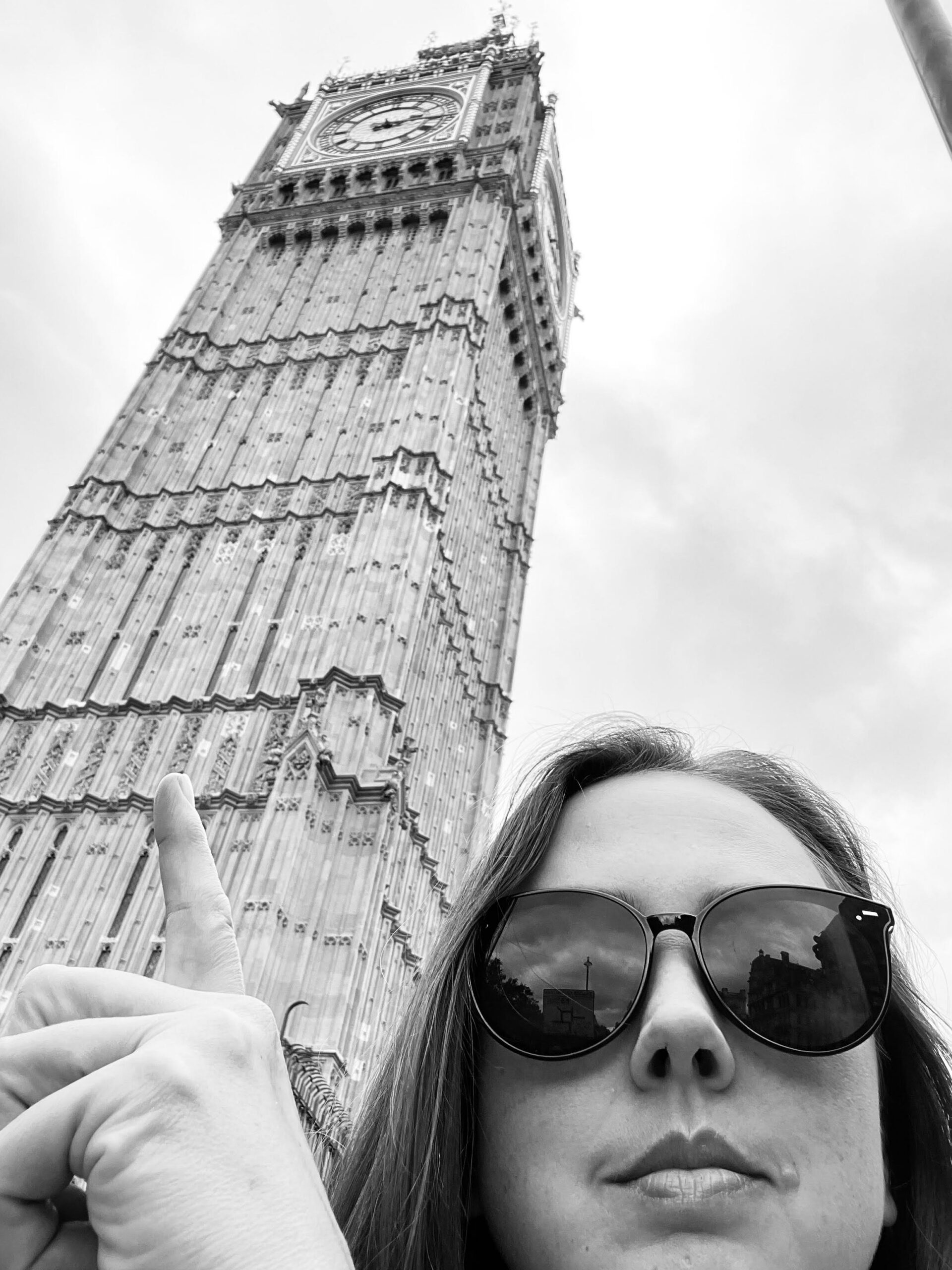
L.A. (Laura) Mitchell is a ghostwriter, editor, writing coach, and publishing consultant who has built a career around the many ways writers can turn ideas into books. She is currently writing her 47th book as a ghostwriter, with genres spanning memoir, business nonfiction, self-help, young adult, women’s fiction, and romance.
A true multi-hyphenate, Laura sees her different creative roles as interconnected. Ghostwriting keeps her immersed in other people’s voices and stories; editing sharpens her eye for craft; coaching keeps her thinking about how writers learn and grow; and publishing gives her a practical understanding of what happens after the manuscript is finished. Each hat informs the others and keeps her work fresh.
Laura also teaches writers through her Draft to Dreams community, where she shares what she has learned about craft, creativity, and building a sustainable writing life.
Two years ago, she became an international digital nomad who fully supports herself through her writing ecosystem. Making the jump was a little scary, but the view from the other side? Breathtaking.
Leave a Reply
14 comments on “Building a Writing Ecosystem”
Tagged as:
Subscribe to WITS



Recent Posts
- Struggling with Character Voice? Check Your Point of View
- Conflict in Fiction Writing, 7 Main Types
- Author Blind Spots: The Gaps You Can't See
- When Is It Okay to Quit a Story?
- Living at the Corner of FEAR and FINE
wow, this has been such a helpful post, thank you.
You're welcome. Glad you found it helpful!
This article makes me think bigger, more strategically about my writing, it requires that I call myself a writer, and it reminds me that I don't need all the answers. I love the concept of a writing ecosystem because it connects my writing to the rest of my world. Helps make sense of the different pieces. I see I have some exploring to do to answer your ecosystem questions, Laura. Fortunately, the questions are not meant to show need for growth but rather demonstrate assets! Not a worksheet to show holes at all. Phew!
What an important point, Ellen. That long before we feel like we have permission to call ourselves writers, we own that we are creatives, in so many wildly different directions. And the term "asset" is fab. I encourage everyone to think about jobs they've had, previous jobs, previous obsessions...all the way back to youth. Anything that lights you up is fair game in the writing ecosystem 🙂
I began working as a freelance author and editor in the educational markets for this reason. I want to write for children, and I have a teaching background. I was always picky with the assignments I took: first because I had to have a sense I could complete them well and on time, and second to fit my ecosystem. I think the second piece kept this from taking off in the way it might have. In the past couple of years, I've seen some work dry up as AI has moved in too. I also always wanted to make sure I still had some time in the year to write my novel.
I have picked up private editing contracts also that are for books. I love that work. But none of this has ever paid the bills. (Thank God my husband has a good job and my work can supplement.)
The rest of my ecosystem is an occasional speaking engagement and volunteer work with author organizations. Everyone is happy to work with you when you volunteer to help them.
I am looking at other options though. Maybe I'll teach writing in an adult ed program. And I need to get my act together for school visits though that is daunting and has up front costs. In my area, you need insurance first.
My point is it can be quite difficult to put together an ecosystem that pays the bills, especially if you'll need to purchase health insurance. Sometimes having a completely separate day job is the answer. If it gives you the security you need to feel comfortable writing, that counts for a lot.
I love that you brought up having a day-job component to your ecosystem, Debbie. One with benefits that reduce overall stress in our lives. I was also a teacher before I was a writer. Looking ahead, if I needed to shift my ecosystem because work dried up, I would likely not shift it all the way back to being a third-grade classroom teacher because that would pull my ecosystem into circles and dynamics that don't feed where I want my writing to go. Would I take a job as a phone rep for Delta? Yeah, maybe. If I could get the minimum hours to reach that benefit threshold, I'd leverage it for travel and give myself unabashed permission to work only on writing I wanted to do. And to be clear, my nomadic life may look nothing like those who read this. My kids are grown, and I'm no longer married. Our ecosystems must be fair and respectful to our spouses and families. In fact, we can benefit greatly from having our ecosystem linked to another's.
Volunteering is admirable, and it sounds like it's adjacent to your ecosystem (at least author-adjacent). That's great, but it does amount to unpaid labor. I've done a lot of work as a solo female entrepreneur, uncovering my past money blocks that had me undervaluing what I put out into the world. I think women, especially, are often conditioned to be business professionals who put others first. I'm happy to share the resources that helped me if anyone is interested.
My best advice is to reverse-engineer this process. In your deepest desires, be honest about what a slam-dunk writing life looks like for you, and then work your way backward to build out your ecosystem that feeds it.
Thank you so much for your thoughts!
I am curious about your resources. I think some of my issue is in overcoming my own inertia and balancing time. I want to get this book done, but I also want to be earning some money this year. At the same time, I should be doing school visits, but I haven't built a program yet. I'd also love to teach writing instead of just coaching writers as a volunteer. If only time weren't a limited resource. Perhaps something you have will help me figure it out. (I think some of this will happen as soon as my novel is out to agents, but it's been a slow process as I'm learning what it needs and have had life interruptions.)
One of my writer friends introduced me to Denise Duffield Thomas...she's an Aussie who wrote the Get Rich, Lucky Bitch book. She has courses and learning opportunities to help women entrepreneurs. I just listened to her books for free on Spotify and her free podcast and hopped on her mailing list, and I've learned so much about my own hang-ups around money.
You bring up such an important point...it really is a balancing act, and I didn't always get it right. I still don't, but it does get easier with mini-successes. I hope you'll stay in touch. I'd love to follow your ecosystem journey. You can do this, Debbie. 🙂
Thank you. I'll look her up. For now, I think I'm going to focus on the manuscript. Once it goes to beta readers as a full, I will start building a school visit program and get my insurance in order and look into adult ed programs that might take a writing course. Then I'll begin revising picture books and advertising my program. (I also need to redo my resume.) If work comes to me from clients I have a relationship with, I'll still take it. Once I have revision notes from Betas, I'll need to research agents while doing edits. It's good to have a plan. Now I just have to carry it out. (I often comment on posts on the blog, so you should be able to follow my journey here and on my website debbievilardi dot com.)
Would love to. I appreciate the conversation, Debbie. Good luck building out your ecosystem!
Love this post, Laura! Exactly. What's so very special about this field at this time is that we have so many opportunities to create the writing ecosystem that works for us on an individual basis. What works for me, won't work for someone else and that's okay. Thank you for making this clear. You've reminded me I can do this next thing I am working on. It's part of my writing ecosystem!
I love that you have a *next thing*! That makes me so excited for you. And you're right...there are as many ways to go with this idea as there are writers who can dream it. And for all of you, I love to network, so do keep in touch about that next component to your ecosystem. I may have your next customer in mind!
Laura - this is so important and helpful. As someone whose ecosystem has grown... I love all of the ways that writing comes together into a system that provides for me!
Thanks, Lisa. Your ecosystem is robust! So glad to be part of it. 🙂