Conflict in Fiction Writing, 7 Main Types
by Ellen Buikema
The seven main types of conflict in fictional stories are Individual versus:
- Fate
- Individual
- Nature
- Self
- Society
- Supernatural
- Technology
Each type of conflict illustrates a struggle between forces that move the story forward. These conflicts are important in storytelling as they are essential for character development as well as driving the plot.
The Conflicts Defined
Individual versus Fate
- Characters deal with destiny.
- Explores themes of free will versus what is predetermined.
- Examples in literature: the Torrance family and the Overlook Hotel in The Shining; Geralt of Rivia and destiny in The Witcher series
Individual versus Individual
- A struggle between two characters, frequently the protagonist and antagonist.
- Examples include battles, disputes, or rivalries.
- Examples in literature: Javert and Jean Valjean in Les Misérables; Dorothy and the Wicked Witch in The Wizard of Oz.
Individual versus Nature
- Characters face challenges from natural forces.
- Examples include survival against natural disasters, weather, or wild animals.
- Examples in literature: Martin Brody and the great white shark in Jaws; Pi and the tiger in Life of Pi
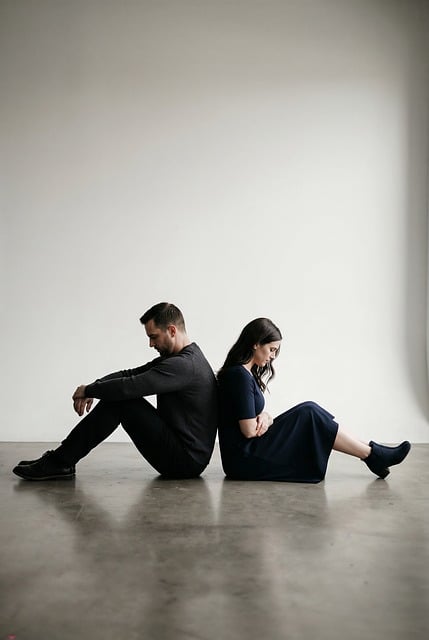
Individual versus Self
- This internal conflict occurs when a character struggles with their beliefs, emotions, or thoughts.
- Frequently involves moral dilemmas or personal growth.
- For example, Star Wars and the inner conflict between good and evil. Anikin gives in to evil—the dark side—to gain power. His son Luke takes the good path—choosing goodness over power—restoring balance to the galaxy. In Hamlet, Hamlet struggles with the morality of avenging his father's death.
Individual versus Society
- Characters confront cultural expectations, societal norms, or laws.
- Examples include stories about rebellion against traditions or oppressive systems.
- Examples in literature: Atticus Finch and his community in To Kill a Mockingbird; Offred and the Sons of Jacob in The Handmaid’s Tale.
Individual versus Supernatural
- Characters face otherworldly forces: ghosts, elementals, ghosts, goddesses, gods, or monsters.
- Examples include horror or fantasy stories with characters who encounter supernatural entities.
- Examples in literature: Eleanor Vance and The Hill House in the horror story The Haunting of Hill House; Diana Bishop and her unwanted powers in the fantasy/supernatural A Discovery of Witches.
Individual versus Technology
- Characters struggle against technological forces or tech advancements.
- Examples include battles against machines or moral dilemmas posed by scientific breakthroughs.
- Examples in literature: The Murderbots and the people/corporations who use them for security purpose in The Murderbot Diaries; The onboard computer HAL and the astronauts en route to Jupiter in 2001: A Space Odyssey
Understanding these types of conflict can make stories more appealing. Readers love conflict.
Lack of Conflict
Consider a hero. This individual is given a goal and warned that the road to get there will be hard. The hero, gifted in all ways, swats away each challenge confronted with, easily slaying all monsters in the path, reaching the goal. Huzzah. Well, that was anticlimactic.
If the story isn’t compelling, why bother to read it?
Consider the same hero. Don’t make the road smooth. Give it lots of twists, turns, bumps, and pot holes. Natural conflicts.
Try applying all seven main types of conflict.
Fate
The hero’s destiny is to save the village from a shapeshifter whose goal is to enslave the villagers.
Individual
Shapeshifter and hero know at least one of each other’s weaknesses, but it’s the same one. Both are enamored of the same person. A healer who lives in the village.
Nature
The shapeshifter lives in an area surrounded by plants that the hero has allergies to, and is located in difficult terrain.
Self
The hero is conflicted, one - the shapeshifter is the brother of an old friend, and two – the hero planned to leave the village for a better, more comfortable situation.
Society
The hero has always adhered to the society’s rules but the shapeshifter feels above all rules. The hero must decide whether to bend or break rules ingrained from a lifetime to achieve the goal of saving the village.
Supernatural
Being an empath, the hero feels but does not see the elemental spirits that live just outside the village, on the way to the shapeshifter's lair. The elementals are often tricksters.
Technology
The shapeshifter’s lair is sheltered by a cloaking technology unknown to the villagers. The hero must learn how to pierce the cloak to enter the lair.
Consider genre when choosing conflict types.
If you’re writing a romance, individual vs. individual and/or individual vs. society are typical types of conflict. For horror, individual vs. the supernatural, individual vs. technology, and/or individual vs. nature works well.
Individual vs. self fits in any genre.
Whatever your genre, it’s important to decide which conflicts matter most to your story. For example, if you’re writing romance that takes place in a haunted Airbnb you may discover that the individual vs. individual conflict matters more to your story’s goals than the individual vs. the supernatural. So, you’ll spend more time writing the love angle than the spooky vacation rental.
But, if you’re writing a horror story that has a bit of romance in the subplot, you may end up spending more time exploring the person vs. the supernatural conflict than the person vs. person. It’s your creation, so you get to decide which way to go.
Final Thoughts
Take a look at your story and find the types of conflict that appear naturally. Consider the following:
- Who or what is threatening your character? Why?
- What is your character’s main goal, and what happens if the goal is not attained?
- Does your character need to choose between two or more things? If yes, what is the internal and external reaction to these choices?
- How will the character change over the course of the story?
* * * * * *
About Ellen

Author, speaker, and former teacher, Ellen L. Buikema has written Parenting ... A Work in Progress, non-fiction for parents, and The Adventures of Charlie Chameleon chapter book series with stories encouraging the development of empathy—sprinkling humor wherever possible. Her Works in Progress are The Hobo Code, YA historical fiction and The Crystal Key, MG Magical Realism/ Sci-Fi, a glaze of time travel.
Find her at https://ellenbuikema.com or on Amazon.
Top Image by Gerd Altmann from Pixabay
Leave a Reply
5 comments on “Conflict in Fiction Writing, 7 Main Types”
Tagged as:
Subscribe to WITS


Recent Posts
- Believable Character Decisions: How to Make Readers Trust Your Characters
- Writer Self-Doubt: What We Notice When It Hurts
- The Decline of Creativity: What Happened to Our Creative Mojo?
- Author Marketing Burnout: My Shouldshank Redemption
- Self-Publishing Tools: Your Publishing Pipeline
What a great post! I love the succinct categories of conflict. Easy to understand, easy to use. This blog post is one to save.
Thank you, Diana!
I had great fun putting together the shapeshifter conflicts and am considering fleshing them out at some point.
I'm pleased that the article is useful.
Thank you for this, Ellen. A reference resource when I'm stumped on my protagonist's conflicts. I can already see potential to enrich my current story.
Not sure whether to say this here, but to all those who have shared their wisdom so freely with us through Writers in the Storm (and elsewhere), I have learned so much. And this week, as I watched the new movie on the 1944 D-Day landings, 'Pressure', it was as if all I had learned here was being rolled out in a master class in front of my eyes. Thank you all. Now I see how it's done, just like you said.
Hi Julia!
The writing community is a wonder. We are all in this together. The writers I've met through WITS and elsewhere are inspiring--always happy to share.
I'm happy the article on conflicts is useful. Cheers!
I love how you laid this out, Ellen. My brain is better at exploring more types of conflict when I see a list laid out like this. So, that list of 7 is GOLD.
Thanks for breaking it down, and for giving me something so useful!