(Even When You’re Using Deep POV Correctly)
By Susan Watts
Recently, I found myself staring at a scene in my current work-in-progress, wondering why it wasn't working.
On paper, it should have been one of the strongest emotional scenes in the chapter. The stakes were high, and I'd woven visceral reactions and interiority (click here to read my blog on interiority) throughout the scene. If you're unfamiliar with those terms, visceral reactions are the body's immediate, involuntary response to emotion, while interiority reveals the character's private thoughts and interpretation of what's happening. Together, they create the emotional closeness that makes deep POV so immersive.
Those techniques helped transform my writing, which is why the problem I was having with this chapter surprised me.
Every time I reread it, I found myself strangely disconnected. The emotion was obvious, yet the scene never quite came alive. My first instinct was to do add more internal thoughts, more physical reactions, and more explanation about why the moment mattered.
The chapter grew longer, but it didn't become more engaging.
Only later did I realize I wasn't dealing with a lack of emotion. I had become so focused on making sure readers understood what my character felt that I'd stopped paying attention to whether those emotions actually changed as the scene unfolded.
That realization completely altered the way I approach scene revision.
The Problem Wasn't a Lack of Emotion
When critique partners say a scene needs more emotion, we often assume the character lacks feeling. Occasionally that's true. Stronger visceral reactions, deeper interiority, or more specific emotional language can absolutely strengthen a scene.
But I've started noticing another problem. Sometimes the emotion is already on the page, yet it never changes.
Looking back, my character spent nearly the entire scene with the same emotion. She began the chapter afraid and ended it in much the same emotional place. Only then did I realize I'd never stopped to ask whether that fear was evolving. Every meaningful scene needs its own emotional arc because those small shifts eventually build the larger character arc readers remember.
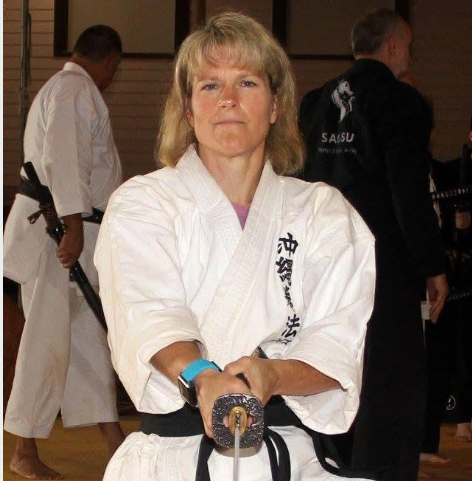
That discovery reminded me of something I've watched hundreds of times while teaching martial arts.
Students spend a great deal of time perfecting their stance, as they should. However, standing in a technically perfect stance isn't enough to win a fight. As your opponent changes distance, rhythm, or strategy, your body should adapt. If you remain frozen in the same position simply because it's technically correct, you eventually lose the exchange.
The stance exists so you can move.
Emotion works much the same way.
I've come to think of this as emotional movement—the gradual change in a character's understanding that reshapes how they experience events. A scene's emotional arc isn't about changing emotions for the sake of variety but allowing that understanding to evolve. A character may begin and end a scene feeling fear, yet if they understand that fear differently by the final page, the emotional arc has moved.
Interestingly, I rarely think about emotional movement while drafting my manuscript. At that stage, I'm still discovering the story. It's during revision that I begin asking whether the emotion changes from the beginning of a scene to the end, because that's when I can finally see whether the emotional arc is actually working.
Real Emotions Rarely Stay Still
Think about the last time you waited for news that mattered. Maybe it was a response from an agent, medical test results, or a difficult conversation you couldn't avoid.
Did you experience one emotion the entire time?
Probably not.
Hope gave way to doubt. Confidence slipped into worry. Every new possibility subtly changed how you interpreted the situation, even before anything actually happened.
Real emotions rarely remain fixed because our understanding keeps changing.
Readers respond to characters in much the same way. They aren't seeking stronger emotions. They're looking for emotions that evolve.
The Question That Changed My Revision Process
As I worked through that problem scene, I realized I'd been asking the wrong revision question.
For years, I'd asked myself:
How does my character feel?
It had always been a useful question because it pushed me toward deeper interiority.But this time, it wasn't enough. So I replaced it with a different question:
What is my character discovering?
That simple shift transformed everything.
Once I dug beneath the surface, I realized the scene wasn't really about immediate danger. It was about a previous failure my character had never forgiven herself for. The external conflict hadn't changed, but its meaning had. Suddenly the fear had somewhere to go because her understanding had shifted.
Meaning Creates Emotion
That revision taught me something I hadn't fully appreciated before.
Readers connect more with the character’s interpretation of events rather than the events themselves. Meaning acts like a filter between the event and the emotion. Two characters can experience exactly the same situation and leave with completely different emotional responses because each brings unique fears, beliefs, expectations, and history into the moment.
I've started thinking about emotional scenes as a simple progression:
Event → Meaning → Emotion → Action
As the character’s perception changes, so does the meaning. And the emotion naturally follows. That's where emotional movement begins.
Imagine two writers receiving the same rejection letter. One shrugs, files it away, and immediately sends another query. The other stares at the email long after the screen goes dark.
The rejection itself isn't different.
The meaning is.
Perhaps the second writer has spent years wondering whether they're talented enough. Or they promised themselves this manuscript would finally prove they belonged. The emotional weight comes from everything the rejection represents rather than the rejection itself.
Characters experience events the same way. A missed phone call, a failed test, or a broken promise only becomes emotionally significant because of what they represent to that particular character.
Sometimes the Emotion Is Hiding in the Character's World
One of my favorite revision techniques is to stop looking at the character for a moment and start looking at what they're noticing. Emotion changes perception.
A recently divorced woman notices the empty chair at the kitchen table.
A grieving father notices the school photograph attached to the refrigerator.
A detective notices the unlocked window.
The room hasn't changed. The character has.
I've found that what a character notices often reveals more emotion than a detailed explanation of their feelings. It also allows readers to participate in the experience by drawing conclusions for themselves instead of being told exactly what to think.
What Finally Fixed My Scene
The solution wasn't adding more visceral reactions, another paragraph of interiority, or stronger emotional language. It was allowing the character's emotional understanding to change.
That didn't mean rewriting every sentence. It meant looking for the places where her new awareness should naturally appear. Once I knew what had shifted internally, I found myself revising her thoughts, her observations, her decisions, and even the way she interpreted other people's words. Those changes weren't separate revisions. They all grew out of the emotional movement happening beneath the surface.
Although I added very little emotion to the page, the emotional impact rose dramatically. What changed was the direction the emotion moved.
If Readers Want More Emotion...
My scene revision process now begins with one question: Has the character's understanding changed from the beginning of the scene to the end? Once I know that answer, revising the prose becomes much easier.
When a scene feels emotionally flat, these are the questions I return to:
- What is my character discovering in this scene?
- How has their understanding changed by the end?
- What does this event now mean to them personally?
I've found those questions far more useful than simply trying to add more emotion. Once I understand the character's emotional movement, the rest of the revision usually follows naturally.
Have you ever revised a scene that contained plenty of visceral reactions and interiority, yet still felt emotionally flat?
If so, what finally unlocked it?
About Susan

Under the pen name Michelle Allums, Susan Watts has authored a young adult urban fantasy titled, The Jade Amulet and is currently writing the sequel. Her short stories are also included in the anthologies Christmas Roses and Forever and Always.
Susan has dedicated over four decades to training in multiple martial arts styles and holds the impressive title of a five-time US Karate Alliance world black belt fighting grand champion. Through her karate school, she is able to impart martial arts and life skills. Susan also incorporates her martial arts knowledge into her writing.
An avid triathlete, she keeps in shape by running, biking, and swimming. She lives in the country with her husband, where they raise animals and enjoy being outdoors. Susan also has three grown children and numerous grandchildren. In addition, she is a CPA and VP of finance for a company in her hometown.
You can connect with Susan on social media or her website.
Featured picture from Canva Magic Media. Extra picture: Susan Watts