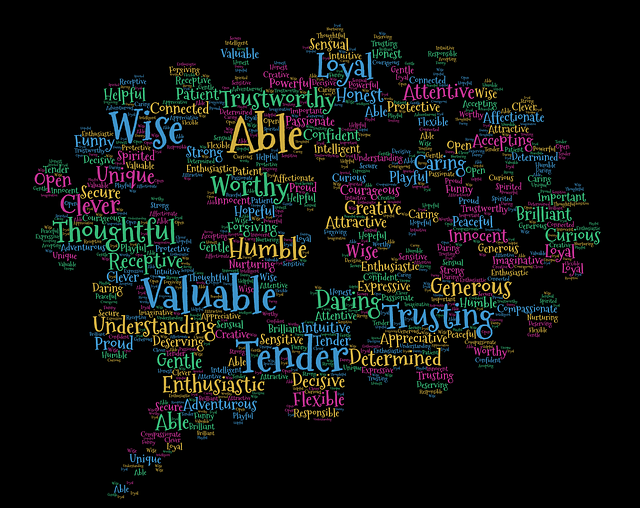
A character's strengths and flaws are an important part of who they are. Well-rounded character need both. These qualities make a character unique and can have a major impact on the story.
It's important to find the balance between a character's strengths and flaws. Flawless characters may seem unrealistic and unrelatable, while characters who are too flawed can be hard to connect with.
Strengths are a character's positive qualities–not just things they’re good at. Also, strengths can help a character achieve their goals and overcome challenges. I think of strengths as a form of intellectual and emotional intelligence. Having a strong set of strengths can make a character more relatable.
When developing characters, consider these 24 cross-cultural strengths.
Courage
Courageous characters have emotional strengths that allow them to achieve goals despite the oppositions they may face—whether an inner struggle or an external one.
The character strengths related with courage are:
Honesty: Speaking truth, genuine, characters take responsibility for their actions and feelings. Atticus Finch in Harper Lee’s To Kill a Mockingbird
Bravery: Accepting challenges, difficulties, or pain, not running from threats. Matilda in Roald Dahl’s Matilda
Physical bravery (public servants of all kinds) Psychological bravery (facing self-painful aspects)
Moral bravery (speaking up for what's right, even if it's an unpopular opinion)
Persistence: Doggedly, completing things once they’re started. Forrest in Winston Groom’s Forrest Gump
Zest: Facing life headlong with energy and excitement. Ted in Stockman and Cogniglio’s Ted Lasso
Humanity
Characters who are strong in their own humanity have a variety of interpersonal character strengths that involve caring for and making friends. Humanity describes strengths displayed as caring relationships with others.
These character strengths are:
Kindness: Doing good deeds and favors without expectations. Albus Dumbledore in the Harry Potter series.
Moral reasoning
Empathy/sympathy
Social responsibility
Love: Valuing close relationships. Levi in Rainbow Rowell’s Fangirl
Social intelligence: Being aware of other people's motives and feelings. Eleanor Oliphant from Eleanor Oliphant Is Completely Fine by Gail Honeyman
Justice
Characters who are strong in justice usually have civic strengths that emphasize the importance of a well-balanced community. Justice describes strengths to help connect in group-based situations.
The character strengths in the justice group are:
Fairness: Treating all people the same, free of personal bias. Fairness involves two types of reasoning—Justice and Care. Grace in Amazing Grace by Mary Hoffman
Justice reasoning stresses logic and weighs principles to decide moral rights and responsibilities.
Care reasoning includes empathy and compassion. Putting on someone else’s shoes and walking around in them a while.
Leadership: Organizing and supervising group activities. Ned Stark in George R.R. Martin’s A Song of Fire and Ice
Teamwork: Playing well with others in a group or a team. Hermione Granger in J.K. Rowling’s Harry Potter series
Temperance
Characters who have temperance as a personal strength tend to protect against the excesses in life.
These strengths are:
Forgiveness: The ability to let go of the negative feelings from those who have wronged them. The art of mercy. Molly of Danny Parker’s Molly and Mae.
Distinguish forgiveness from:
condoning (removing the offense)
forgetting (removing awareness)
reconciliation (restoring of the relationship)
Modesty: Letting one's successes and accomplishments stand on their own. Samwise Gamgee in J.R.R. Tolkien’s Lord of the Rings.
Prudence: A strength of restraint, prudence is thinking before acting. Objectively examine the potential consequences of your actions and control yourself based on that examination. Sylvester of William Steig’s Sylvester and the Magic Pebble.
Self-regulation: A complex ability that helps manage habits and protects against excess, controlling needs and emotions. Severus Snape in J. K. Rowling's Harry Potter series.
Transcendence
Characters strong in transcendence can connect to the universe and appreciate the possibilities in life. They commune with nature, the Divine, the universe, or religions to better understand the joy of being. Character strengths associated with transcendence are:
Appreciation of beauty: Notice and appreciate the beauty and wonder in all of life.
Physical Beauty. This may include any of the senses, producing awe in the experiencer. Lucy Honeychurch in E.M. Forster’s A Room with a View
Talent. This is often energizing and compels a person to pursue their own goals. It inspires admiration. The blond-haired stranger inLightningby Dean Koontz.
Virtue. Virtuousness makes someone want to be better and creates feelings of great joy. Frodo Baggins in J.R.R. Tolkien’s Lord of the Rings.
Gratitude: Grateful people tend to experience positive emotions. Those emotions inspire them to be humbler, kinder. Gratitude encourages the character strengths of kindness and love and is closely associated with empathy. Professor Minerva McGonagall in J. K. Rowling’s Harry Potter series.
Hope: Expecting the best and having a willingness to work to make it happen. An optimistic, global point of view. Maathai in Wangari Maathai’s Unbowed.
Humor: Humor is an important strength for social interactions, can contribute to team/friendship building, and is an invaluable way to deal with difficult situations. Mark Watney in The Martian by Andy Weir.
Spirituality: The belief in a higher purpose and meaning of life. As a character strength, spirituality involves the belief that there is a dimension to life beyond our understanding. Siddhartha Gautama inSiddhartha by Herman Hesse.
Wisdom
Characters who exhibit wisdom have character strengths that lead them to obtain knowledge and utilize it in creative and useful ways. Core wisdom character strengths are:
Creativity: Pondering of new ways to do things. Thinking outside-the-box to make something original, but useful. Jack Reacher in Lee Child’s Jack Reacher series.
Curiosity: Actively seeking experiences with the intention of learning something new and interesting. Taking an interest in a wide variety of topics. Sherlock Holmes inSherlock Holmes series by Arthur Conan Doyle
Love of learning: Want to learn for learning’s sake. Motivated by expanding their breadth of knowledge. Hermione Granger in J.K. Rowling’s Harry Potter series
Open-mindedness: Willingness to look at things from all sides. Thinking things through. Luna Lovegood in J.K. Rowling’s Harry Potter series.
Perspective: Able to see the big picture in life. Characters that have a good grasp of perspective tend not to get wrapped up in the little problems and are good to go to for advice. Jubal T. Harshaw if Robert Heinlein’s Stranger in a Strange Land.
Final Thoughts
Having a firm grasp of characters’ strengths helps the writer know how their fictional people will act and react in the story. It’s helpful to see what makes characters unique. This understanding enables the writer to know how to help the characters use their strengths to improve their situations or outcomes as the plot goes forward.
What strengths do you use to help a character achieve their goals and overcome challenges? Is it possible for a character to have too many strengths?
* * * * * *
About Ellen
Author, speaker, and former teacher, Ellen L. Buikema has written non-fiction for parents, and The Adventures of Charlie Chameleon chapter book series with stories encouraging the development of empathy—sprinkling humor wherever possible. Her Works in Progress are The Hobo Code, YA historical fiction and The Crystal Key, MG Magical Realism/ Sci-Fi, a glaze of time travel.
Statistics are interesting. Statistics can provide us with valuable information. Like, right now, there are over 8 billion people on the planet and over 1 billion websites (most of which are inactive). One of my favorite teachers said that it only takes 5000 true fans to be famous, although I can’t find any proof for that statement. Thinking of the various authors I’ve worked with, I will say that once your fan base gets up in those numbers, you’re generally happy with the income level.
Build it and they will come.
Aside from being a misquote, that sentiment is particularly misleading when related to author websites. No, there isn’t any guarantee that anyone will find your website or your book. Even if you have the most beautiful website or the most amazing book, there’s no guarantee that anyone will ever find it.
“Wow, Lisa. That sounds really negative. Isn’t this a big part of what you do?”
Yep. Every day. And I’ve seen sites grow from nothing to amazing. Google sends you a special email when you get 1 million visits in a month. I’ve seen websites outgrow their hosting, email lists that explode in popularity, and sites that provide their owners with a very comfortable living.
But I’ve also seen some websites that just sit there. Alone. Abandoned. 82% of websites are abandoned. If you’ve paid for hosting, you know that is a lot of money to spend doing… nothing.
I’ve studied statistics from many author websites: new authors, established authors, NYT bestsellers. I’ve watched how their websites grow over time. It is a lot of fun to go back over the history of a long blog, watching how the author experimented, played, and learned how to turn their digital space into something amazing.
Content is king.
When we talk about physical real estate, we say, “Location, location, location…” because location makes a huge difference in the value of a property.
With digital real estate, content is everything. Okay, so I’ve seen some people arguing this point, so let me say it this way: giving something of value is the key to success. Yep, it’s the same as we say about everything. Site visitors want to know “What’s in it for me?”
If there isn’t anything there for them, they don’t care.
“So, great! All I need to do is put stuff on my blog and it’ll work!”
No. Sorry. It is more complicated than that. Because it isn’t just content. It is useful content that people want.
If your content is useful, you get rewarded by search engines and content aggregators*. Not useful? You get buried.
*Content aggregators, news aggregators, or news readers are apps that collect and display articles, blogs, podcasts, and other information. Content aggregators are a great way for entertainers to be discovered. Examples: Google News, Flipboard, Apple News, Smart News, and Feedly. Using tools like these is a great way to build a curated information source that will create a custom set of articles for you to read each day.
Entertainment has value.
I’ve mentioned this before, but it is important to remember: we’re in the entertainment industry. So “useful” for us means entertaining.
Write fantastic entertaining content on your website, and people will flock to it. Right? Maybe. I’ve seen some amazing growth with this method, but I’ve seen many people post once or twice and then stop. Why?
“It didn’t work for me.”
That’s usually the point at which I start screaming silently. (Because screaming loudly at clients is considered rude.)
Here’s the truth: one or two posts won’t do it.
In my years of teaching and coaching writers, I’ve only seen one person who went nearly viral with their first post. Their second post was fairly normal, and they didn’t post again. (Imagine me crying at the lost opportunity for that incredibly talented writer!)
That’s not how the internet works.
Why? Because it takes a while to really start connecting with your true fans. Most people don’t even know who their true fans ARE when they start their website. (What? You thought you were the only one who felt that way?)
I love looking at website statistics, because I can see when people start connecting and when things start getting shared around. Authors without stats often miss the early signs of growth entirely. My favorite moments are when authors tell me they want to stop, and then I show them the graph of people looking at their content.
Most authors start out with a long flat graph. They post and test content like it was pasta they are throwing at people’s social media walls. Sometimes something sticks. Most often, that sticky thing isn’t new, because it took a bit of time for people to find it. From my experience, I’d say most of the successful posts I’ve seen tend to be several months old. One of my most successful posts was years old before it was discovered.
Once an author realizes what their fans want, they start writing more of that, and you can watch the graph grow.
Some authors catch on really fast. Most take months or years.
Here are the hard numbers.
Neil Patel (a search engine optimization guru) compiled the analytics data of more than 1 million websites across different industries. (Entertainment is one of those industries, and the one we fit into.)
Of websites whose authors were writing consistent content each month:
Traffic increased 11.4% within the first 6 months
Another 9.58% traffic bump in months 6-12
The second year saw a 49.4% boost over Year 1
Year 3 was up 30.7% over Year 2
Year 4 grew another 13.5%
The takeaway here is that growth isn’t immediate. If you post once, decide nothing happened, and stop blogging, then there’s no point in having a blog. Create a business card website and go on with your life knowing that you have a site, you appear professional, and you can check that box off on your to-do list.
But if you want your website to find fans and bring them to you, plan on it taking years to bring results.
Do these numbers surprise you? Know someone who has stopped blogging after only a couple of months? Do you look at your statistics? What are your expectations and experiences with website growth?
About Lisa
Lisa Norman's passion has been writing since she could hold a pencil. While that is a cliché, she is unique in that her first novel was written on gum wrappers. As a young woman, she learned to program and discovered she has a talent for helping people and computers learn to work together and play nice. When she's not playing with her daughter, writing, or designing for the web, she can be found wandering the local beaches.
Working with young children provided me with a different way of viewing and understanding the world.Life lessons from children can serve as invaluable resources for writing and life.
1. Have Patience
When dictating stories for me to transcribe, children either spoke at lightning speed or slowly with great deliberation. The fast talkers needed to be patient with me. And they were. Each and every one of them. Patient to a fault.
Children at the writing table
A pair of fraternal twins, sister and brother, were prolific, creative storytellers. Both spoke at breakneck pace. Sometimes the duo’s words spilled forth with such speed that they tripped over syllables, making them difficult to understand. After hearing me ask several times, “Can you please say that again?” they chose a different method to get their stories across—one word at a time with a few “one Mississippi, two Mississippi” beats between words. I found this maddening, but eventually we developed a flow that worked for all of us. Plus, mutual respect allowed for greater student-teacher patience.
Rushing your book out to the public is tempting but unwise. Have patience. Art cannot be rushed.
Writing and “building a book” requires a lot of patience.
When composing, whether you are a plotter, pantser, or plantser, lack of patience leads to frustration that can hurl you smack into writer’s block. Having patience with oneself is not easy. Remember that a plethora of great writers took many drafts to get their stories just right. After all, first drafts are awful by definition.
2. Be Disciplined
Someone once told me that working with young students was like herding cats. I totally agree!
The attention span of a four-year-old is very short. We’re talking eight to twelve minutes on average if they’re interested in the project being presented. Unless you’re well organized with backup plans in case of emergencies, you are toast—burned extra crispy.
It takes discipline to have all the pieces-parts prepared for the day—as well as a bag of tricks.
Circle Time Disaster
I’d planned a fantastic lesson. It flopped big time. I could tell by observing the wiggling bodies sitting on the floor with me. Time to punt. Beside me, sat a bag containing several items of different shapes and sizes. I decide to call it The Mystery Bag. This went over very well. All forty eyes focused on the teacher holding a large, bumpy brown paper bag on her lap.
I asked the wiggliest student to come over and, without peeking, reach into the bag. “Describe the item for us, just from touching it,” I said. The student holding the hidden item chose each of her classmates in turn, following the customs of our classroom (preventative discipline). The students guessed what they thought the mystery item might be. After every classmate participated, the student pulled the item from the bag. The Mystery Bag activity continued until Circle Time ended.
What preparations do you make to be sure you're organized for your writing day? Some writers have specific goals, like word count or chapters to write per week. Others keep items in their writing area to use to trigger ideas. Maybe a Mystery Bag would help. Pulling items one-by-one to use as part of a suspense story. As for me, I like to start with coffee and quiet time to think about what happens next. Just like I'd ask the kids while dictating their stories, to move the plot forward.
Self-discipline or lack thereof, can make you or break you. It can:
Help form positive habits. Successful writers discipline themselves to write, making it habitual.
Assist you to be productive. Commit to a timeline for your writing projects. Be an achiever.
Help with focus. Focusing on the writing will get your work completed.
Increase your self-esteem. Achieving your writing goals boosts confidence.
3. Notice the Little Stuff
Children notice everything. When sitting on your lap to listen to a story, they may look up your nose and comment upon what they see. There is no such thing as a filter with young children. The social filter doesn’t start until around age seven, thanks to children’s increased capacity for empathy.
Everything a child sees and hears eventually makes its way to school, either with friends or trusted adults. Students write in pictorial form or dictate stories about things they’ve seen or heard that evoke emotion—both the good and the bad.
Observation is key to great scenes.
My favorite grade schoolteacher gave us a simple assignment, never graded nor asked about. Find one item on your walk home from school and really look at it in detail.Take time to observe the little things. I have never forgotten this assignment and have often used it over the years. There is beauty everywhere. Sometimes you need to look a bit closer.
Observation is much more than seeing.When writing scenes, the more senses used, the easier it is for your reader to become part of the story.
Choose what you want to observe.
Record your observations.
Use a cellphone camera, still or video camera, make a note on paper or an App like ColorNote, or audio recording App like Voice Recorder for future reference. Sensory memories are strong, but life is busy and it’s easy to forget.
4. Use Forgiveness
It’s okay to be angry. It’s not okay to hurt other people or yourself.
When my students hurt each other’s feelings in the classroom or playground, they were responsible to find a way to make the hurt person feel better. It’s easy to say, “I’m sorry.” Finding a way to make it better takes thought. Forgiveness was implicit in accepting that gift, whatever it may have been. This didn’t happen overnight, but over time made a huge difference in the way students treated each other.
No one has the same writing path.
Mentors can steer you toward new possibilities, challenge you, and expand your imagination, but no one can tell you exactly what your writing process should be. Forgive those that suggest the “right” way. You will develop a system that may borrow from many but become your own.
There will be fantastic days when your writing flows like a bubbly brook. Others are drought days with a blank screen or page. If you lose patience, forgive yourself.
5. Laugh Often
Once our school nurse fell ill and needed to spend time in the hospital. The students made a book for Nurse Rita to help her feel better. Each child received one page to draw a picture, write their names to the best of their ability, and dictate a sentence or two to cheer her.
Rita smiled throughout the book until she found the last page. Then she laughed hard enough to bring tears to her eyes. On the last page was a drawing of an Angry Bird with the caption, Angry Birds will make Nurse Rita feel better.
Laughter is good medicine. Nurse Rita agrees.
There is a healing quality to humor. Laughter releases feel-good hormones, and a jolly belly laugh is a good workout.
And remember that a day without laughter is wasted.
Happy writing!
What life lessons have you incorporated into your writing? Do you have a favorite recording device?
* * * * * *
About Ellen
Author, speaker, and former teacher, Ellen L. Buikema has written non-fiction for parents, and The Adventures of Charlie Chameleon chapter book series with stories encouraging the development of empathy—sprinkling humor wherever possible. Her Works in Progress are The Hobo Code, YA historical fiction and The Crystal Key, MG Magical Realism/ Sci-Fi, a glaze of time travel.