
When Your Characters Begin to Breathe
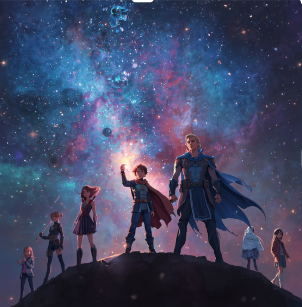
by Sarah Sally Hamer
A book becomes a universe the moment a character draws breath. Not the moment the plot begins, not the moment the setting takes shape, but the moment a presence stirs on the page and begins to exert its quiet pull.
Characters are the gravitational bodies of a story. They are the weather systems, the shifting seasons, the tectonic plates. They are the reason a reader steps inside and the reason they stay. A story without characters is a landscape without wind. A story with characters is a world in motion.
When we talk about the universe of characters, we’re not talking about a cast list. We’re talking about the ecology of a narrative. The way one person’s longing changes the temperature of a room. The way another person’s silence creates a pressure drop. The way someone’s wound bends the emotional space around them. A character is never just a person. A character is a force field.
And a universe is made of forces.
The First Law: Characters Create Gravity
Every character has a center of gravity — a pull that shapes the space around them. Some characters pull inward, drawing others close, creating intimacy, confession, and collision. Others push outward, creating distance, tension, or the sense that something is always just out of reach.
A protagonist’s gravity is often the strongest, but not always the most interesting. Sometimes the most powerful gravitational field belongs to the character who barely speaks, or the one who appears only in memory, or the one whose absence is the loudest presence in the room.
Gravity is not about page time. It’s about emotional mass.
A character with a wound, a longing, a secret, a contradiction — that character bends the narrative space. They make other characters react. They make the reader lean in. They create the sense that something is happening even when no one is moving.
When you build a universe of characters, you’re really building a map of gravitational pulls. You’re deciding who orbits whom, who collides, who escapes, who burns up on re‑entry.
The Second Law: Characters Generate Weather
Every character carries a weather system inside them. Some walk into a scene like a cold front, dropping the temperature by ten degrees. Others bring heat, humidity, the kind of air that makes everyone sweat. Some are lightning, some are fog, some are the stillness before a storm.
A character’s weather is the emotional atmosphere they create simply by existing.
Think of the friend who makes everyone relax the moment they enter the room or the colleague who makes everyone sit up straighter. Think of the relative who turns every holiday into a pressure cooker. These are weather systems. They are predictable, recognizable, and powerful.
In fiction, a character’s weather system is one of the most reliable tools you have. It lets you shift tone without changing setting. It lets you create tension without adding conflict. It lets you reveal relationships without a single line of exposition.
When two characters with opposing weather systems meet, the story experiences a front. A clash. Maybe even a storm. And storms are where stories crack open.
The Third Law: Characters Shape Time
Time in a book is not chronological. It is emotional, stretching, contracting, looping, fracturing, and freezing. It all depends on who is in the room.
A character who lives in regret pulls the story backward. A character who lives in fear pushes the story forward. A character who lives in longing suspends the story in a kind of shimmering present — a moment that feels like it could last forever or break at any second.
Characters shape time by the way they experience it.
A child’s time is different from someone older. Someone who is grieving a loved one experiences differently from someone in love. A character waiting for news experiences time differently than when they try to outrun it.
So, when you build a universe of characters, you’re building a universe of clocks — each one ticking at its own pace, each one telling a different truth about what matters.
The Fourth Law: Characters Carry Mythology
Every character is a myth in the making.
They carry origin stories, sacred objects, taboos, rituals, omens. They carry the stories they tell about themselves and the stories others tell about them. They carry the stories they refuse to tell at all.
A character’s mythology is the symbolic layer of their existence — the archetype they echo, the pattern they repeat, the shadow they cast. And, ultimately, the way the reader understands them.
We have characters who are heroes but don’t want to be heroes. Villains don’t always know they’re villains. Some are tricksters, healers, guardians, wanderers who guard the threshold over which the protagonist must pass.
When you understand a character’s mythology, you understand their purpose in the universe of the book. You understand what they awaken, what they challenge, what they protect, what they destroy.
You understand why they matter. And so will the reader.
The Fifth Law: Characters Create Ecosystems
A universe of characters is not a collection of individuals. It is an ecosystem — a living, interdependent network of needs, fears, desires, and histories.
Characters evolve in response to one another. They adapt. They compete. They cooperate. They form alliances, symbioses, rivalries. They create balance or imbalance. They create scarcity or abundance. They create harmony or collapse.
When one character changes, the ecosystem shifts.
A character who finds courage destabilizes the character who depended on their fear. An honest person destabilizes the character who depended on silence. Someon who leaves can destroy the character who depended on their presence.
This is why character development is never isolated. It is always relational. Always ecological. Always part of a larger system.
The Sixth Law: Characters Are Portals
Every character opens a door into a different way of seeing the world.
Some teach the reader to notice beauty. Another teaches them how to survive. The wise one, or better yet, the fool can teach them how to grieve, or hope, or forgive, or fight, or surrender.
Characters expand the reader’s emotional vocabulary.
They let the reader inhabit lives they’ve never lived, feel feelings they’ve never felt, and imagine futures they’ve never considered. They let the reader practice empathy, curiosity, courage.
A universe of characters is a universe of portals — each one leading somewhere the reader has never been.
The Seventh Law: Characters Are Alive
This is the law writers whisper about. The one that feels like magic.
Characters are alive.
Not in the literal sense, but in the creative sense — the sense that they surprise you, resist you, argue with you, refuse your plans, demand their own arcs, their own truths, their own endings.
A character who is alive will not let you write the wrong scene. They will not let you force them into a shape that doesn’t fit. They will not let you silence them when they need to speak.
Bottom line, a universe of characters is a universe that talks back.
And that is the moment a book becomes more than a book. It becomes a living world.
The Writer as Cosmologist
To write a book is to build a universe. To build a universe is to understand the laws that govern it. And to understand those laws is to listen — deeply, patiently, reverently — to the characters who inhabit it.
You are not their puppet master, you are their cosmologist. Their cartographer. Their witness.
Writers map their gravity, track their weather, listen to their clocks, study their myths. You observe their ecosystems. You open their portals. You honor their aliveness.
And in doing so, you create a universe that feels real enough for a reader to enter, wander, and remember long after they’ve closed the book.
Because the universe of characters is not just the world inside the story. It is the world the reader carries with them when the story ends.
What does your character universe look like?
Join Sarah Sally for a free video on this subject at this link: https://youtu.be/OmNaZLsmIjQ.
* * * * * *
About Sarah (Sally)

Sarah (Sally) Hamer is a lover of books, a teacher of writers, and a believer in a good story. Most of all, she is eternally fascinated by people and how they 'tick'. She’s passionate about helping people tell their own stories, whether through fiction or through memoir. Writing in many genres - mystery, science fiction, fantasy, romance, medieval history, non-fiction – she has won awards at both local and national levels, including two RWA Golden Heart finals.
A teacher of memoir, beginning and advanced creative fiction writing, and screenwriting at Louisiana State University in Shreveport for over twenty years, she also teaches online at both margielawson.com and nostresswriting.com with blogs for writersinthestormblog.com/ as well as her monthly blog for thewriteconversation.com. Sally is a free-lance editor and book coach at Mind Potential, with many of her students and clients becoming successful, award-winning authors.
You can find her at sa***@***********al.org
Featured picture from Canva Magic Media.
Leave a Reply
37 comments on “When Your Characters Begin to Breathe”
Tagged as:
Subscribe to WITS



Recent Posts
- When Is It Okay to Quit a Story?
- Living at the Corner of FEAR and FINE
- Could Your Novel Become a Microdrama?
- The Best PR Bait Is NOT Your Book
- Make Your Setting Work Harder
This is brilliant! One of the best, most comprehensive (& easy to understand) visual descriptions I’ve ever come across. I love this so much! It works even better for me right now, as I work on my lake-based mythic-mystery-fantasy. This one is a keeper for sure :D. Thanks for sharing.
Penny, you absolutely made my day. Thank you! You can probably tell that I deeply love talking about characters -- the "good" ones take ahold of my heart and stay with me as both examples of the person I'd like to be, or as the ones that make me cry. I think I'm very typical of the storytellers of our world -- we all love the characters most.
An amazing look at character and what it means in a story. A great insight that I will think about next writing session.
Thank you, Vivienne! Best wishes on your writing journey!
I do an extensive character interview, but it's explained it in a way I'm seeing new stuff. Then I saw the author, you, and thought, "That's why it's so good." Thanks, Sally!
Ane, you make me blush. 🙂 I am so glad that I can add something to your already great writing.
I love this! I'm definitely my characters' witness and historian. Yesterday my protagonist strode into a scene I wasn't quite sure how I'd handle and he totally owned it.
I love it when they do that! I also believe that once characters become independent of what we "want" them to be, we've truly become writers. Thanks, Diann!
This is excellent, Sarah! Thank you so much. I'm at a point in my story where I needed to see this!
Thank you, Jan! I was there too, which is probably why this blog came so easily for me. Making characters breathe is an amazing thing.
Thanks!
Fantastic post. I always say I write people not characters, and this leans into that. Each of us is each of these things too, but we don't often consider it. Looking at ourselves through this lens may help us see where within us each character comes from. Then we can let them breathe.
Debbie, I always laugh about how my psychology degree makes me dangerous and this is just another example of it. I am writing people too, of course, because we can't write characters without understanding people. Characters are just people on a page and digging into them makes all the difference. Thanks!!!
My grad work was in Clinical Psych. One time I wrote a blog post about how characters are like mental challenging diagnoses. The blog (for which I've written dozens of posts) refused it, worried it may hurt some. So I kept it to myself.
Quick note -- I am trying something new. I've taken the blog and expanded it into a hour-long video (too long -- I'll try to make them shorter next time). You can access it at the bottom of the blog. If you do get the time to look at even a little of it, I'd greatly appreciate a comment. You can make it either on the YouTube video or on this blog. That will help direct me when I do it from now on.
The video will be up and free for a couple of weeks, then will be loaded into the No Stress Writing Academy (Lisa Norman's school) for a fee.
Thank you all! Sarah Sally
Great post! It really makes you think about your characters as living beings. I also have enjoyed the video. It's a great way to expand upon what you've written here.
Thank you, Susan! Glad you enjoyed it. This is my first time to try it!
The Second Law reminded me of one of my characters. Hannah brings sunshine and storm.
Fantastic post. A real keeper!
I'll have a look at your video.
Thanks, Sally!
Thanks, Ellen! It's nice to recognize that our characters can bring both sunshine AND storm, because only a few are only one-sided.
I have never read anything like this, Sally. It was excellent and I can't wait to start thinking about my new WIP using these categories. MANY thanks. I'm off to share it with my writing community.
I'm so glad you like it and see some opportunities! Thank you!
Amazing take on characters - I've never read anything quite like this - but it is awesome, and so refreshing, vivid and so usable! Thank you for changing the way I see characters and the way I write them. Thank you so much, Sarah, for this incredible, 'out of this world' guide-fascinating and apropos!
Thank you! I love to play with characters -- to imagine what they would do in different situations -- so it was fun to look at them as forces of nature.
Interesting concept.
Thank you!
I really love this post, Sally! It's such a great way to conceptualize characterization. I get so focused on the dialogue, sometimes I forget all the rest of the magical things I can do.
I think of my pen or computer keyboard as my magic wand. We ARE magic!
Thanks, Jenny!
Now THAT was a brilliant post! I'm going to take this with me. So much weather for thought here. Great metaphor!
Thanks!
And a perfect tale for this blog!
Thank you, Karen!
Your article is brilliant in every respect and perspective - a wonderful insight into that world we love to inhabit of bringing characters to life and taking them on all sorts of adventures: both the good and the bad.
The following portion fully resounded with me:
“A character who is alive will not let you write the wrong scene. They will not let you force them into a shape that doesn’t fit. They will not let you silence them when they need to speak.”
‘Lara’, one of the two protagonists in my first series, would often ‘speak to me’ as I was writing. In two distinct places she took me down significant paths that were never part of my plans for her, and yet they were absolutely necessary to make her character and circumstances ‘real’ - both in simply telling her story, and also understanding the depth of the emotional, and often lonely, journey she endured learning to live without her soulmate.
When I had my husband read the first draft of that very long manuscript, as he reached the second one I heard his unhindered exclamation, “What did you do THAT for?”
I knew exactly what he was referring to and I’ve had several readers since state much the same thing in emails or text messages. Both decisions were necessary ‘evils’ that were both believable and yet took her down two distinctly different though significant paths for the eventual outcome.
A few years ago, I stumbled across a fabulous online ‘short expose’ written by Winston Graham, the author of the Poldark series, where he was walking down a Cornish lane one evening and suddenly encountered Demelza, his leading lady.
They had the must profound conversation as to why he had created her the way he did, what her life with Ross and all the other characters was like now, and simply a revealing of their thoughts of one another in this fictional scenario.
I absolutely adored the following paragraph and could imagine a similar scene if I was to ever meet my Lara or Adam by chance…
‘We stood there for a long time, smiling at each other, eye searching eye, in mutual recognition of a strange bond. I felt an extraordinary moving intimacy with this woman whom I had never met before. I felt as if I could understand her closest feelings, even her most personal bodily secretions, the stirring of her spirit within her, as well as I ever had my own.’
Every second of their encounter I could imagine as a real experience for him because of the way characters do become a part of you, even though they are still distinct individuals in their own right with their own thoughts and desires.
Thank you again.
Thank you, Jennifer. I feel the same way about my characters. They have to speak to me or they just don't work. I even have some still waiting in the corner of my mind who inhabit unfinished stories, scowling at me because I don't just get on with it. One day, I keep promising them! I really will allow them their days in the sun.
Those wretched hangers-on who just won’t let you write in peace 😜
It’s a wonderful world we disappear into whenever we enter our characters’ minds ✍️📚🙏♥️
It is! LOL!!
This was a wonderful,respectful look at the core of writing creativity. I will be keeping it for encouragement on the days my imaginary companions choose not to speak to me. Thank you so much for expressing this so well.
Thank you, Moya. I'm glad it "talked" to you.
Great post, Sally!
I loved the introduction before you even got to the Laws governing characters. Readers love characters who step off the pages and into their hearts.
As always, thanks for sharing your expertise. You rock!
Thank you, Jackie! I love how you create your characters -- layered and alive!
This is gold. It takes character development to a whole new universe. Clear, concise and brilliant. Thank you for sharing this with us.