I’ve always been fascinated by character names. I often wonder why the author chose a specific name for that individual. Is it a family name, or a reflection of their culture? Does it carry some deeper meaning, or was it just the first thing to pop into their head? Maybe it started as a placeholder and over time the name just stuck.
There are countless ways you can name your characters. Some authors keep a baby name book handy, or comb through old phone books (yeah, I’m that old). Here are a few ways I like to approach naming my characters.
Three Ways to get Started
I generally derive my character names in one of three ways:
Build the character first and name them based on their backstory, family history, or something specific about their personality.
Choose a name and build the character around it.
Slap whatever name pops into my head on the character and worry about it later.
Let’s take a deeper look at each of these and see what influences them.
Building the Character First
When I create a character, I want the name to tell you something about the individual. I usually build the character first before putting on a label. I often say that by the time I fully develop a character they’ve told me what their name is, but it’s not quite that simple.
Creating my main characters is something I put a lot of thought into. I know if the character doesn’t hold my interest, it’s not going to grab the reader either. They need to feel real to me before I can write their story. How do I get to know them? Backstory…
The first thing I do is open a new document and start dumping everything I think I want this character to be. I dig into their past and their dreams for the future. I explore their successes and expose their deepest fears. By the time I’ve free written a page or two, I start to see the character take shape in front of me.
This is when the character’s name starts to take shape. Geography can influence name choices. Different countries, states, and regions (like cities or rural areas) influence naming conventions. There are also things like ethnicity and religion that play a part. If you’re writing historical fiction, time period needs to be taken into account.
On occasion, a name will catch my attention and set my brain into motion. The sound and rhythm of it might paint a picture in my mind. When that happens, I feel inspired to create a character around the image. A perfect example is from my pulp inspired short story The Smell of Fear.
I was playing around with names one day and ended up with one inspired by my father. He was a junior and went by Jack all his life. When I put that in front of his middle name, I ended up with Jack Holloway. To me, the name had the ring of an old pulp detective. It didn’t take long for the character of Sgt. Jack Holloway to come to life.
When you hear an interesting name or one that brings a picture into your mind, make a note somewhere. You never know when it might come in handy. It may not fit into your current story but could inspire a memorable character (or even a whole story) in the future.
Placeholder Names
Let’s face it, there are times when we’re just not inspired to put a lot of effort into some of the secondary characters. We just want to get into the story and worry about those details later. We stuff any old name in and then move on. There’s no shame in doing this. It’s totally normal.
Placeholder names are a useful tool. They help us keep track of the players. Sometimes the name ends up sticking, sometimes not. The problem comes when we finally settle on a name and go back to change all instances of the placeholder. It’s very easy to miss a few. There’s an easy fix for this.
When you pick a placeholder name, don’t use common names. Pick something unique that you know will never be used anywhere else in the manuscript. That way you can simply use the search and replace tool to make your changes. This also helps if you get halfway through your book and decide to change a character’s name as they develop.
Final Thoughts
A lot of different factors go into naming your character and we’ve only scratched the surface here. If you’re writing fantasy or science fiction it can get even more complicated. Coming up with a consistent naming convention for these genres is a key part of world building.
The character’s name should say something about who they are, or who they want to be. In the end, the goal is to build a memorable character that your readers will relate to. The right name will go a long way toward reaching that goal.
What are some of your favorite ways to generate character names? Let us know in the comments!
* * * * * *
About Bob
Eldred Bird writes contemporary fiction, short stories, and personal essays. He has spent a great deal of time exploring the deserts, forests, and deep canyons inside his home state of Arizona. His James McCarthy adventures, Killing Karma, Catching Karma, and Cold Karma, reflect this love of the Grand Canyon State even as his character solves mysteries amidst danger. Eldred explores the boundaries of short fiction in his stories, The Waking Room, Treble in Paradise: A Tale of Sax and Violins, and The Smell of Fear.
When he’s not writing, Eldred spends time cycling, hiking, and juggling (yes, juggling…bowling balls and 21-inch knives).
His passion for photography allows him to record his travels. He can be found on Twitter or Facebook, or at his website.
As a writer, I understand that tools can make a difference in my productivity. This month, I found an opportunity to access a life account for AutoCrit and, seeing that it included a 60-day trial period, I decided to try it. Read on to see an overview of the components of this software, other writing products that have similar functionality, and the new features for 2024.
What is AutoCrit and what does it do for writers?
As I write this post, I am completely new to this software. When I heard about the new version of AutoCrit, I was skeptical. It seemed like another add-on that would distract me from writing, causing me to learn the intricacies of the platform only to abandon it after realizing it didn’t improve my writing process. But I was curious, too.
There are many claims that this set of tools can improve an author’s writing and save them time and money on editing. They say it can also help writers facing the crisis of writer’s block if they are stuck. Another benefit of AutoCrit seems to be the working space where writers can access all these tools and resources in one place. With these promises, I had to see if it was worth the time to learn how to use it and whether it was a good value for the money.
AutoCrit is a workplace that incorporates a place to either upload or write and organize your novel. It includes various editing reports and learning forums and now offers classes for writers. This provides writers with the community, learning, and editing tools you need to take your book from concept to polished product.
It has had a big overhaul from previous versions, and we will look at a few of these in this post. There are many software products that you may have already that seem to duplicate what AutoCrit offers. But what makes AutoCrit shine is how these tools are all in one place and can be used seamlessly with the book you are working on.
Writing Software with Similar Functionality
In my experience, I have found a variety of software tools that can help in all areas of writing and developing a book. Here are some of my personal favorites. I rely on them to make my book projects the best I can before sending them to readers. To support my 60-day trial, I wanted to explore how they overlap with functions found in AutoCrit.
This software program organizes your writing. It can export your work into various formats good for publishing. Scrivener is loved by many writers, but it has a steep learning curve. It is challenging to learn — so many features and a clunky interface. When they upgraded, I thought it would improve my experience, but it turned out I lost all my previous manuscripts.
One benefit of Scrivener was the ability to create ebooks from your files. I was never able to master that, especially since once I lost all my work. I didn’t feel like spending any more energy on it. The software, classes, and support that I took to learn how to use it were an investment, but I think I keep going back to Word because I can get a good work flow there.
AutoCrit has clean organization and easy ways to organize plots and files. It is simple and doesn’t require a depth of learning that detracts from your writing time. This is a benefit since there is less of a learning curve in AutoCrit than is necessary to understand all the features of Scrivener.
This is the editor I have used and enjoyed for years. Its reports give prompt feedback on chunks of my writing, helping me improve more than my grammar and spelling. It allows you to see style suggestions, finds sticky sentences, and helps you avoid redundancies.
Many of these reports are also included in the Grammarly editing software in AutoCrit. AutoCrit has more reports that can identify beta reader–type information, looking for flaws in the story and plotline. It will read your manuscript for places where the book doesn’t make sense, like when a child picks up an action figure from the ground, but they have already put away all the toys. Or when a character shades their eyes from the lights after they were dimmed on a previous page.
This type of feedback is a very valuable asset of the AutoCrit product, since it can help you identify simple mistakes and fix them before sending your work to human readers and editors. Having a cleaner copy can free up readers to give feedback on trickier issues.
Plottr has more options and more variety in story structures. It also has options for keeping notes on a series. AutoCrit offers a few general beat sheets and moveable cards to plan and store information on the basic plotline of your book.
This resource, created by Angela Ackerman and Rebeca Puglisi of the Emotional Thesaurus and other writer resource books, helps you plan and create story elements, from character flaws to plot actions that enhance the dynamics of the characters you’ve created.
AutoCrit has space to do this, but it doesn’t have the depth of character and story elements that the Thesaurus series has. It also doesn’t have the detailed structure of One Stop for Writers that can guide you through all the key pieces and details to flesh out a well-written story.
This online service allows you to upload a section of your writing to analyze the reading level. Hemingway is not capable of analyzing a whole book, but you can identify the reading level of a section.
AutoCrit can analyze a whole book once the chapters have been individually uploaded and checked using the dashboard reports.
Types of Reports on the AutoCrit Desktop
Analysis
This tab offers reports for fiction and nonfiction. There is a summary report that includes easy-to-read graphics with a clean interface. There is an option for a combination report as well.
Pacing & Momentum
This report can give you critical feedback on the length and variety within your sentences. This helps to keep a good flow in your story. Topics covered include sentence variation, pacing, paragraph variation, and chapter variation.
Dialogue
This report shares with you how much of your text is comprised of dialogue. It can compare your work to other bestsellers within your genre to give you an idea of whether you have used too much or too little conversation. It will analyze your dialogue tags and suggest stronger ones, ones using fewer adverbs, and give you a heads-up on simple tags like “he said,” to help you improve your writing.
Strong Writing
In Strong Writing, you can see the commonly used aspects of solid prose writing and how you can improve it. The navigation through your chapters is easy to use and allows you to change or keep a suggested correction. Content under this report includes adverbs, passive indicators, tense consistency, showing vs. telling, clichés, redundancies, and unnecessary filler words. These aspects of strong writing are compared to genre bestsellers, adding interesting information for you to interpret as you see how your writing is similar to popular styles of writing.
Word Choice
This report helps you to make decisions about wording and how it could impact your reader. Add variety or watch for consistency by looking through these reports. Aspects of word choice include initial pronoun and names, sentence starters, POV consistency, generic descriptions, personal worlds and phrases (helpful for fantasy and sci-fi writers, for sure!) and power words.
Repetition
You can see how many times you have repeated words and phrases. It offers suggestions as to how many would be acceptable according to popular writers within the genre you select.
Readability
This report helps you monitor your book’s reading level. You want to make it appropriate for the audience you are trying to reach, and you want to keep a consistent reading level throughout the book.
Inspiration Studio
Stuck? This area of the Writer’s Desk can help you generate ideas. This section is AI generative and will create suggested turns and plot ideas for your book. It will not form them into your story though, so note: the writing is still all you.
Can it improve my writing skills?
When you upload a document to the desktop, you get feedback quickly. There are lots of data points and simple graphics to explain how well your chapter is written. The different types of reports give you feedback that can help you become a better writer.
The Impact of Feedback on Your Writing
In many workplaces and in education, you may have noticed the Learning Loop Process in action. A common method for learning new concepts and deepening understanding, the Learning Loop has four stages that mark the progress you make when working on a new set of knowledge or skill set. Do you recognize these stages in your growth as a writer?
The four key elements, or stages, of the learning loop are:
Learning – obtaining, understanding, and retaining new knowledge.
Application – putting the knowledge learned into a context and trying it out.
Feedback – information on how well you used the new knowledge.
Reflection – thinking about the progress, evaluating what was learned, and planning what to learn next in the next cycle to deepen your understanding.
Writers engage in a learning loop like this all the time. We read blogs, take classes, and attend conferences to gain skills and to become better writers. Then we write and write and write some more, applying what we have learned. We get feedback from critique groups, self-editing, and beta readers. We look at the feedback and apply it to our work in progress. Then we start the cycle all over again and continue this process until the book is finished.
The Importance of Immediate Feedback
The tools in AutoCrit do have the power to provide valuable feedback to writers. The idea of immediate feedback is important. The sooner we get feedback on our project, the quicker we can apply the new knowledge, and the learning loop becomes more efficient. That means that the faster we see our mistakes or notice patterns in our writing that are not beneficial, the sooner we can fix these issues in our manuscripts, and the less likely we will be to make the same mistakes again. This is because we have closed the loop and completed the learning process.
This can happen with our critique groups and other human readers, but the speed and efficiency of computer editing systems has a place for teaching us how to be better writers as well. When we use the feedback from editing software, like Grammarly (the editing software used within AutoCrit) or ProWriteAid, we see improvements we can make quickly, which helps us to improve our writing skills.
Want More Information About the 2024 Version of AutoCrit?
Here is a lengthy, but informative YouTube video by an editor who is also an employee of AutoCrit. (Video is of her personal experience and use and is not sponsored by the company.)
Is AutoCrit Right for You? My Pros and Cons
This software has a clutter-free workspace that is easy to navigate. It incorporates tools from various other software commonly used by writers to plan a plot, to craft characters, to edit and analyze your work. The ability to use multiple tools in one place without uploading a document multiple times is attractive.
An area where this software shines is how it can identify flaws in the plot and pacing for the whole book. It offers beta-reader type feedback that catches simple errors that need fresh eyes. This saves the tricky stuff for your editor and human beta readers, allowing them to focus on deeper-level feedback to improve your book.
The cost may have been prohibitive for me if I were using the subscription method, but there is a free option worth trying. I was fortunate to come across it in a short window of time when they had a special offer for a lifetime account. Historically, it’s not something they do often, but you might keep an eye open if you’re interested.
The Not-So-Final Word
It is too early for me to tell whether AutoCrit will become a cornerstone part of my writing process. I’m still finding out if this will enhance my workflow or distract from it. Overall, there are many positives to using this software and I can see many applications to my writing. In particular it has potential to streamline my productivity and to focus my writing process.
Your turn! Tell us what you think about AutoCrit in the comments below.
What software do you use? Do you use AutoCrit? What can you share with our readers about your experience that can help us determine whether this product is right for us?
You can find her YA fiction, writing resources, and keep up with her author events at KrisMaze.com. Find her darker, scarier fiction at her sister-site KrissyKnoxx.com.
A recovering grammarian and hopeless wanderer, Kris enjoys reading, learning languages, and spending time outdoors where she ponders the wisdom of Bob Ross.
And sometimes she tries new software.
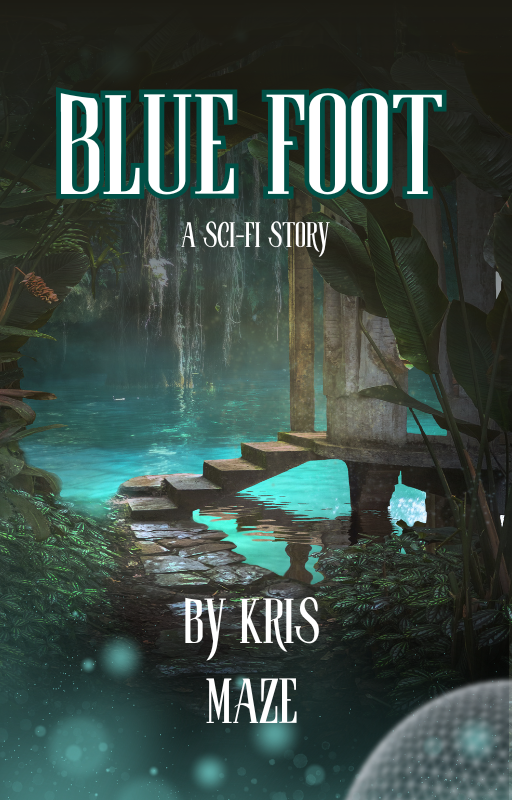
Blue Foot, A Sci-fi Story
Ernestina Après faces the destruction of her family and her bucolic life beneath the Dome. The Silver-Waters blessings are not in her favor, despite her warnings to the Counsel that the stream and its resources are running out. Caring for a stowaway, she must find a silver-lining in her dire circumstances.
The need for attention is a human trait we all share. It feeds our souls and validates our hearts.
... unfortunately, some become addicted and need a shot of rehab.
Morphiophelius Smith
❖
My little brother and I ran for cover once we saw the red and blue lights.
In the area we lived, Diablo California, the country club environment meant perfectly manicured lawns, trees and hedges...but what the adults didn’t know was a small network of crawl spaces for little kids like us.
I was 11 years old.
My brother and I hit the grass and started crawling.
...but something was horribly wrong.
“MATT!” I cried out, looking over my shoulder, “What are you DOING!?!”
My best friend was still standing in the middle of the road, bright lights from the cop car shining on him. ...as he unzipped his pants.
“We’re gonna get caught anyway,” he said matter-of-fact, “so why run?”
I gasped as his jeans and his underwear dropped around his ankles.
The police car slowly came to a halt, and the officer got out of the car, clicking on his Mag Light and drawing his black baton.
Oh crap, I thought to myself; the cops gonna beat him! My heart raced as thoughts of visiting Matt in the hospital, broken bones, and concussion from the brutal cop thrashing he was about to receive.
The officer walked up slowly, stood behind my best friend, who stood there with fists on his hips...
Then smacked him hard on the butt with the baton—hard enough for me to hear the smack...and hard enough for Matt to let out a yelp.
“Pull up your pants, son. I don’t take kindly to being mooned.”
As Matt did as he was told, the flashlight turned our direction.
“Now where did your little rat friends go?” The officer holstered the baton and said firmly, “I’ve got your friend, boys. Better you come out now...or we can do this the hard way.”
The hard way? Oh, NO! Not...the hard way!!
I had absolutely no idea what the hard way was—but I was pretty certain it was something I should fear, if the tone of the officer’s voice was any sign. Terrified I might get beaten myself, I crawled out from the shrubbery, my little brother in tow.
“And there they are,” the officer said smugly. “Now, what are three little boys doing out in the middle of the night?”
Luckily, our loyalty ran deep.
...as a sliver.
“That house over on Ranchero Drive with all the toilet paper all over the front lawn and trees — that wasn’t us!” my brother squeaked.
“It wasn’t, huh?” the officer replied cooly. He glared at each of us.
I bit my lip. Hard.
“It was ALL THEM!” my brother vomited, pointing his finger at me and Matt.
“Well, well, well,” the officer concluded, “I bet your mom and dad will be worried that you’re out in the middle of the night, boys....and I’m guessing they would like me to make sure you get home safe and sound.”
Oh mannnnn, my mom was gonna be ticked.
My heart sank, and I learned a valuable lesson that night:
Never bring your stupid little brother on a TP job!
❖
Why Do We Seek Attention?
I always wondered why Matt did things like that night.
He would stand up to bullies as long as there were people watching, talk back to most adults, and he didn’t mind getting caught.
It’s a question I keep asking myself, even as an adult now...because all of us seem to do it.
You might think this is a simplistic subject, or perhaps even stupid.
You’d be wrong.
How do I know?
Because all you have to do is think about the opposite: Would you like to be forgotten?
Unless you’re a politician forced from (or laughed out of) office, a criminal that just robbed a bank...or a sex offender out on parole, probably not.
Many youths (and adults) want to be noticed.
It may be simply to be liked.
Perhaps you want to be noticed for that new book you just wrote.
In my case, I seek attention for three reasons: to make new friends, uplift others and lastly to encourage people to read my fantasy books.
Some have a deep need to be the center of attention—because they measure their importance by the level of attention they receive.
Others use attention to take away from someone else or to redirect another’s attention altogether—think of lawyers in court or the way the media manipulate viewers.
Goodness — consider Social Media — isn’t it ALL about attention??
We use attention to raise money, find a companion, start businesses, put politicians into office (or smear their competitors names in front of the public). Heck—I can’t think of too many reasons we wouldn’t want to gain attention.
Even in self defense, we seek attention—when someone’s doing wrong; they do NOT want to be seen, so it’s strategic to draw attention to a situation for one’s own protection.
I brought this subject up to Chuck and Dax the other day and they just about laughed me out of the Tavern.
...well, until Chuck reminded his green sidekick about his run in with the Gypsy Sentry.
❖
Note to self: ask Dax about waking up in the Black Market naked and covered in chicken feathers.
We talked about this subject for a while (as Dax sulked, of course). I mentioned to Chuck how I wanted to share some good ways to get the ‘positive’ attention we seek...without resorting to dropping our drawers or being coated in chicken feathers.
He suggested using one of the best examples we know of: Kevin Duncan, creator of Be A Better Blogger, The Solopreneur Experiment, and Editor-in-Chief of Smartblogger, with 4 million readers.
❖
5 Ways You Can Be Like Kevin Duncan & Gain POSITIVE Attention
Kevin Duncan is one of my favorite people online. His website, Be A Better Blogger, was one of my 10 blogs to follow, not because of the great information he shares...but because of the personality behind it. The attention he gained from Be A Better Blogger propelled him on to greater projects, which makes it a powerful example of how to get the attention you want (and likely need).
In fact, I openly tell people that Kevin’s blog is the first blog I signed up to just because I enjoyed it. Needed nothing, wasn’t looking to get anything from it, other than the pleasure of being a part of his growing community.
To me, that said a lot about the caliber of person Kevin is. I kinda pride myself on having good taste in people. Though we’ve never met in person, he’s become a good friend and someone I admire.
The fact is—Kevin Duncan gets attention. Why is that?
Now when I say ‘brand’, this is something that applies to you, me, everyone.
If you’re a teen and you’re new in school—you should think about branding yourself. Honesty, humor, integrity, kindness...all characteristics that speak about your character and that’s exactly what Kevin has done. He not only branded Be A Better Blogger—he continues to brand himself as an individual.
That being said, when I read one of Kevin’s articles for the first time, I actually read it...twice. Once because I enjoyed it, the second time because I was trying to reason out why I enjoyed it so much.
His writing wasn’t like the regurgitated emotional and mental babble most blogs spew out.
Yeah...I think many blogs who try to be popular don’t produce original content—the vomit what’s already been done, thinking the smell, even though it still smells bad, is good enough as long as it smells different.
There’s no question that this man is unique to bloggers. I saw that in the first post I read. As I mentioned before, I read the post twice.
The first thing I noticed was that I noticed nothing at all.
Is that strange? Not really.
What I mean is, Kevin’s writing was so natural to read, it felt like I was having a conversation with a dear friend. It was personal, light, funny, and I found myself thinking about answers to the questions asked. The experience sucked me mentally and emotionally in until I was done with the article.
Talk about refreshing!
We can all do this in the way we communicate with people, the way we dress, the way we carry ourselves...even the way we respond to others.
Kevin even has impeccable taste when it comes to his choice of guest writers.
*cough*
❖
Kevin gets attention because he is always subtle.
Okay...sort of.
If you go through any of the blog posts on Be A Better Blogger, what you’re going to find is kindness and a ton of valuable information...and no beating chests.
Kevin’s never pushy or rude. Ever.
If he has something he’d like you to try, it’s a suggestion or an option, not a “You should do this or you’re a moron,” approach.
There’s something brilliant about this—because all he does is execute without compulsory means.
Fact is, I joined his email list because I wanted to be part of his community—not because I was getting something in return for my email address.
Hmmmm....maybe I should ask for something?
ANYway—being ‘subtle’ means taking small, simple steps, consistently. Don’t force people to do things and don’t beat your chest like a gorilla...but be the person who others want to be around.
In short, be irresistible. Like Chuck.
(You’re welcome buddy.)
❖
Kevin gets attention because he’s always nice.
I don’t know what to say if you’re a jerk.
Yes, you’ll get attention, but it’ll be short-lived and in the end, I’m not sure it’s the attention you’ll want to have.
One of Kevin’s best qualities is that the man in always nice.
I mean always.
He has class. Style. Humility.
What makes Kevin Duncan a powerful blogger is he teaches by example and shows through his interactions with other bloggers and readers in a respectful, creative and humble manner.
One of my favorite posts—and the one where he and I started to get to know each other in the comments section was The Howdy Neighbor Technique. Read it, especially if you’re trying to get attention online...it’ll change your life in one sitting.
Promise.
This is Kevin in a nutshell.
Well, if he could FIT in a nutshell.
(I couldn’t fit my pinky toe in a nutshell.)
No grasping for credit.
No shoving people out of the way to get gain.
What you see is what you get with Kevin and what you get is a guy you’ll want to become friends with. In fact, you’ll want to guard that friendship for years to come.
Do people feel that way about you? Think about it.
The Biggest Key is to Start Right Here, Right Now!
It doesn’t matter where you are in life or where you are pertaining to your goals.
You start where you’re at right now.
From business executives to mommy bloggers, fiction writers to high school students, it doesn’t matter...
Start today. Start now.
Decide to be something more, someone more...and choose who that person is on purpose, with purpose.
I learned that from Morphiophelius Smith (aka Chuck).
See you next time.
What are some brilliant ways you've learned to get attention?
About Jaime
Jaime Buckley is a cartoonist and best-selling author.
More importantly, he’s a loving husband and father of 13 children. Since 1986 he’s worked for famous authors and TV personalities, and illustrated for hundreds of new authors across the genre spectrum. If you can think of a creative project or marketing strategy, Jaime's likely done it… but always finds his greatest success by being himself. You can find Jaime writing fantasy for readers on LifeOfFiction.com.