Writers in the Storm

A blog about writing

storm moving across a field
First Impressions Matter: Effective Front Pages

By Kris Maze

It is the season of NaNoWriMo, a festive writing time when writers challenge themselves to madly type away at their latest-great-idea, trying to complete 50,000 words in a manuscript. Writers devote a lot of time to plot out their story line, to build their immersive worlds, and to craft compelling characters. When finished with the first draft, there are multiple layers of revision for writers who want to see their book in print.

But jump ahead a few months, to when you have revised and edited your manuscript. Dreaming big, your book may be picked up by an agent, or you may decide to publish with a hybrid publisher, or on your own. Even if the story is superb, there are many writing tasks involved with writing the front pages of a book for publication. And those parts, even though they are only tangential to the core of the story, are important too.

Next Steps – Prepare for Publication

The pages in the front of the book matter, especially for publication, and require the same attention to detail as the beats and story arcs. In recent work with a hybrid publisher, I realized that a list of these parts of the book, their functions, and how they should look in a published book, would be useful for organizing these key book parts.

Here are the pages that occur at the beginning of the book, in the order that they should appear. Each has a quick explanation of it’s function, the type of content it typically has, and the desired page side of the book (odd pages are on the right and the even pages are on the right.) Read on for considerations for authors and how they can leverage these pages to give readers the best experience with your book possible.

Having this information ready after the manuscript is finished will speed up your publication process. Completing these pages with thought can lead to a better reader experience and more engagement with your ideal audience.

Anatomy of the First Pages of a Book

Title Page (Odd Page Number):

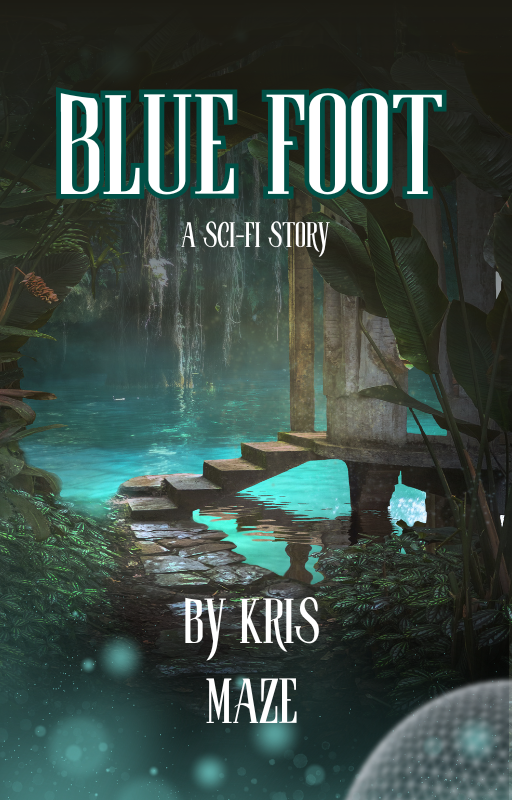
  1. Explanation: The title page is the opening page of your book and serves as a cover for the internal part of the book. It features the book's title, your name as the author, and may include the publisher's information or logo.
  2. Considerations: Make sure the title page is aesthetically pleasing and reflects the tone of your book. Consistency in font and design helps create a professional look.

Copyright Page (Even Page Number, Back of Title Page):

  1. Explanation: Found on the reverse side of the title page, the copyright page includes legal and bibliographic information such as copyright details, publication information, and ISBN. This is the only page in this section that has to appear on the left side of the open book.
  2. Considerations: Ensure all necessary copyright information is accurate. Include any disclaimers or permissions and consult legal professionals if needed.

Dedication (Odd Page Number):

  1. Explanation: The dedication page allows you to express gratitude or dedicate your book to someone special.
  2. Considerations: Keep the dedication concise and heartfelt. Personal touches can create a connection with readers.

Table of Contents (Usually Starts on an Odd Page):

  1. Explanation: The table of contents lists chapters and sections, aiding readers in navigating your book.
  2. Considerations: Ensure accuracy in page numbers. If it spans two pages, the second page can start on an even page. A clear and organized table of contents enhances the reader's experience.

Foreword (Or a preface):

  1. Explanation: A foreword is an introduction to your book written by someone other than you, providing additional context or perspective.
  2. Considerations: Choose someone relevant to your book's theme or genre for the foreword. A compelling foreword can generate interest in your work.

Preface (Or a foreword):

  1. Explanation: The preface is your own introduction to the book, explaining its purpose, scope, or context.
  2. Considerations: Use the preface to connect with readers, sharing insights into your writing process or motivation. Keep it concise and relevant.

Acknowledgments (Can Go in Front or Back):

  1. Explanation: Acknowledgments express gratitude to individuals or organizations that contributed to your book.
  2. Considerations: Decide whether to place acknowledgments before or after the main text. Would it be better for the reader to see which individuals and organizations supported this work before or after reading the novel? Be sincere and specific in your acknowledgments.

Introduction:

  1. Explanation: The introduction sets the stage for your book, providing context and preparing readers for the content to come.
  2. Considerations: Clearly outline the purpose of your book in the introduction. It's an opportunity to engage readers from the beginning and to hook them into the story.

First Text Page (Should Start on Odd/Right Page):

  1. Explanation: This is the beginning of the main content of your book, typically starting on the right-hand side for a clean layout. This is the start of the reader’s main journey and it should draw the reader in right away.
  2. Considerations: Ensure the formatting is consistent and visually appealing. A polished beginning creates a positive, intriguing first impression.

Final Considerations for Authors

Authors can use these pages to their advantage when selling books by considering the following:

  • Professionalism: A well-designed and organized front matter creates a professional impression, enhancing the overall quality of your book.
  • Reader Engagement: Elements like the foreword and introduction can capture readers' interest, encouraging them to delve into the main content and to keep turning pages.
  • Marketing: Consider using the dedication or acknowledgments to subtly acknowledge and thank readers. This personal touch can foster a connection and encourage word-of-mouth promotion.
  • Navigability: A clear table of contents and properly formatted page numbers make it easy for readers to navigate your book, enhancing their reading experience.

By paying attention to these details, authors can present a polished and engaging book that appeals to readers and contributes to its overall success. Use this list and the considerations to assist your preparation for book publication. 

Final Thoughts

What tools do you use to organize the parts of your book?  What stage is your work in progress?  Share with our readers below and encourage each other in our writing efforts.

About Kris

Kris Maze is an author, writing coach, and teacher. She has worked in education for many years and writes for various publications, including Practical Advice for Teachers of Heritage Learners of Spanish and the award-winning blog Writers in the Storm where she is also a host. You can find her horror stories and young adult writing on her website. Keep up with future projects and events by subscribing to her newsletter. And other writing work HERE.

A recovering grammarian and hopeless wanderer, Kris enjoys reading, playing violin and piano, and spending time outdoors.

And occasionally, she photographs shy mushrooms in the forest.

Read More
6 Questions To Go Deeper With Subtext In Fiction

by Lisa Hall-Wilson

Looking for a quick effective way to take your writing up a notch? Subtext. K.M. Weiland calls it the black belt of fiction writing. When you can replace spoken dialogue with silent communication, with familiarity, shared goals, etc. you invite your readers deeper into the story world.

We employ silent communication all the time in real life. If you’ve been in a long-term relationship of any kind – think back to your parents, siblings, highschool, college, your marriage – all of these relationships (both professional and personal) will utilize silent communication – subtext.

What is Subtext?

Subtext is silent communication. It’s the body language we use like posture, gestures, and subtle movements. It’s not just what is spoken aloud, it’s also the tone of voice, the intonation, cadence, emphasis, and affects on our voice. It includes facial expressions and micro expressions – smiles and winks, but more subtle shifts in eyebrows, eye movement, or quirks of our mouths.

Subtext also employs shared familiarity about a past event or experience at both an intimate personal level and wider shared cultural knowledge. And this silent communication can happen in place of spoken dialogue, or it can happen alongside spoken dialogue signalling a deeper meaning (what’s said between the lines).

Subtext can add a layer of realism and authenticity to our stories and is a necessary technique when using deep point of view.

One aspect of subtext that’s not often explored on blogs is how power or authority applies a filter to subtext. Those who have spent time learning about domestic violence, abuse, and coercion will understand the dynamics about power imbalances, but let’s dive into that a bit and get curious about how we can leverage this in our fiction.

How Does Power Affect Subtext?

Power and authority have the ability to directly or indirectly influence the behavior of others. Power and authority are situational. One can have power and authority in the workplace, but none at home, or vice versa. There are some who exercise power and authority everywhere they go.

The thing about power and authority is that inevitably, there are those with it and those without. It creates an imbalance. And sometimes that imbalance is OK because the power is not abused, it’s not used to coerce or influence, it’s used to protect. That imbalance, good or bad, MUST create a filter for our character’s intuition, fears, thoughts, priorities, interpretations, and actions.

So, how do we capture that authentically in fiction? It requires a few different tools from our writer toolbox: subtext, body language, spoken dialogue, internal dialogue. And when we try to do this in deep pov, it adds more complexity by removing the author/narrator voice.

6 Questions To Ask Your Characters About Power Imbalances

There must be consequences. If trying to decide which side of a power imbalance your character finds themselves on, there are some questions below to help you get started. Pick one or two of these questions and answer them – for yourself. Get curious about how the answer to questions would FEEL? I like to jot down 3-5 possible emotions that would spring up from that. It’s OK if they’re opposing emotions.

How would that emotion manifest physically? How does your character suppress their emotions – is there a part of the body where that emotion is contained (in their throat, shoulders, back, stomach)? Is this emotional reaction helpful? What would be some helpful thoughts to help them through this situation? In what ways might the character condemn themselves for thinking or feeling this way – even if they’re the only one who knows what they’re feeling and thining? What would a better person do? Why don’t do they do that?

1. What’s At Stake If They Say No?

Is your character free to say no? The request might be spoken aloud, but the character might also need to employ interpretation of body language or subtext (which is sometimes misinterpreted – there’s room for that too). If your character refuses, will the consequences be immediate or down the road (and perhaps later subverted)? Will the consequences be overtly connected to their refusal? If they face the loss of something, what will the impact of that loss be?

2. Is Saying No An Option?

If your character is facing a situation where saying ‘no’ isn’t an option (in the character’s perception. This of course would apply to outright threat of physical violence, but in the context of power imbalance does the character feel free to say no?), how does that make them feel? What’s their best plan for getting through this, if they would otherwise refuse but can’t?

How is that emotion going to be shown in their body language (posture, expression, gestures, tone of voice)? If they need to hide that emotion, there has to be a consequence to that suppressed emotion – what will it be?

3. What Kind Of Person Are They?

Is the power imbalance personal, professional, social, economical (is the power imbalance limited to a particular situation or setting or is it over their whole life). Do they have an escape from this power imbalance?

If the power imbalance is at work, how do they compensate for those feelings when they’re not at work? Do they take a perceived (or actual) persecution or abuse out on others when out from under that power influence? What’s important to them? What kind of person do they want to be? Are they that person – what do they need to learn/do to change?

4. Is the Power Misinterpreted or Abdicated?

Is the character’s perception of the power over them true – is their perception accurate? Do they have power in a situation, but choose not to use it for a reason? A husband who believes his wife has one foot out the door thinks she has all the power – his perception might be that he’s powerless to make/convince her to stay. What would that thinking lead to (actions, emotions, thoughts)? That wife might believe he doesn’t find her attractive, so in her perception he has all the power. What might her reaction be to that situation – would she just give up and constantly shame herself, or would she hit the gym, go to the hairstylist, read self-help books?

Would her need to remain proactive, feed his insecurity? They’ve both abdicated their power because of shame. Oooh – what a tangled web we weave.

5. How Is Touch Employed To Convey Power?

Touch is an expression of authority and power, and relationship. We choose who we allow close enough to touch us. There are some benign touches that are socially acceptable: a handshake, a kiss on the cheek in greeting, an inadvertent brush as you pass another, being squeezed in a crowded space (like an elevator), etc.

Touch can be reassuring and comforting, flirtatious, polite greeting, inviting or intimidating, claiming or denouncing, teasing or withholding, promising or threatening. Some use their bodies to intimidate by leaning over, standing too close, blocking escape without actually touching (and building in deniability for themselves).

Think about the power of a raised hand over someone cringing waiting for the expected blow to land? The fear invoked by a touch too harsh, too hard – the grabbing of a jaw, the squeezing of cheeks, the harsh handshake, etc.

What of the man who notices another staring at his date? How would he demonstrate possession without being overt? He might put his hand on the small of her back or around her waist, or take her hand in his without asking. Showing he has her permission to touch. There is lots communicated in this way.

Withholding touch is also about a power imbalance. What of the wife who puts on lingerie, makes a point of prettying up for bed. And her husband notices the lingerie, and simply turns the light off and rolls over? This is another withholding of touch that communicates power imbalance.

Can you use either the power of touch or of withholding touch to communicate authority and power?

6. Who Is Exercising Power and Authority?

We all write characters who have power and authority in various settings in our novels. What tools do you have to SHOW they have power and authority, without resorting to the narrator/author voice explaining or summarizing the situation for readers? How would they use that power and authority productively, and how would it be abused?

Once a character has to pull rank, so to speak, how are they left feeling afterwards? Do they feel powerful? Drained? Frustrated? What’s their leadership goal? What kind of person do they want to be, and does that power corrupt them at all? Can they see that corruption, and what will they do to prevent it?

Power Imbalance In Action

From Fast and the Furious

I love this scene between Dom and Letty where Dom finally gets a chance to talk to Letty after believing her dead. https://www.youtube.com/watch?v=8hAfJb3oHo4

He has power over her – her memories – their shared history together. She’s lost her memory of those things. But what does he do with that power? At first, he touches the car in place of her. Then the touches get more and more intimate. He pulls aside the tank top strap to show a scar that’s otherwise hidden.

She tolerates his growing boldness, but in the end, the part with hands extended towards one another, not even fingertips touching. Letty has power to reject him, but Dom’s got the greater balance of power in this scene because he has intimate knowledge she doesn’t and she feels like she lacks something.

From The Devil Wears Prada

The "Gird Your Loins" scene from The Devil Wears Prada is very illustrative. It’s over-the-top, but watch the body language and actions of everyone ELSE. How could you incorporate this into your scenes? Watch the way body posture changes, defers, etc. And the juxtaposition of Anne Hathaway’s character who has no knowledge of the ultimate power structure. https://www.youtube.com/watch?v=2PjZAeiU7uM

From Erin Brockovich

This clip from Erin Brockovich is fascinating. Watch for the power shift. Watch the change in body language, the posture, gazes, tone of voices – every character in the scene is aware of the shift at different times. It shows what’s important to that character. https://www.youtube.com/watch?v=OpISHolWtKs

From Yellowstone

In this scene from Yellowstone, initially it’s hard to see who holds the balance of power. But very quickly, the hierarchy is reestablished and the one with the actual power stands up to the bravado. Watch for the shift in posture, tone, volume. Where does the threat come in – a threat without any physical violence. What one character stands to lose is what gains compliance. https://www.youtube.com/watch?v=5e1Mya1uUK0

Which of these six questions resonates with you and your current WIP? In what way would using subtext and power/authority help immerse the reader in your character’s lived experience?

About Lisa

Lisa Hall-Wilson is a writing teacher and award-winning writer and author. She’s the author of Method Acting For Writers: Learn Deep Point Of View Using Emotional Layers. Her blog, Beyond Basics For Writers, explores all facets of the popular writing style deep point of view and offers practical tips for writers. 

She runs the free Facebook group Going Deeper With Emotions where she shares tips and videos on writing in deep point of view. 

Image Credits:

Top image from Depositphotos.

Read More
Question of the Day: WHY Do You Write?

by Johnny B. Truant

You know … this writing thing can be a real pain in the ass. It beats you up and is sometimes a serious downer. I used to be so loud and proud in my early days online that I never really let those home truths settle, but they’re no joke.

When I wrote this post (with a sweary title) back in 2012, it went mega-viral. People read the tone of it and acted like I must eat bullets. When I was co-hosting the Self-Publishing Podcast and the Smarter Artist Summit here in Austin, I used to say things like, “Writers are too sensitive. Plumbers don't get plumber’s block, so why do writers get writer’s block? Just do the work, people!”

I bragged about writing 1.5 million words (the Harry Potter series and a half) per year. People heard me and seemed to decide that I either had it all figured out and/or I was a serious jerk.

Neither was entirely true. Neither was entirely false.

Time and experience change one’s outlook.

Maybe it’s because I’m older now — or maybe all the anger in the world has pushed me to be helpful rather than angry — but these days all the “pain-in-the-ass, beats-you-up, serious-downer” aspects of writing have started to rear their heads for me in ways I couldn’t previously imagine.

I’ve always had bad days, no matter what my big mouth used to say. Some are epic-level bad. If you’re reading this, then I’m sure you can relate. People who say they can’t are just putting up a front, the way I used to.

I’ve been very fortunate in this business. For ten years, writing books has been my only gig, so I haven’t had to punch a clock and fit novels in on the side. I even had one of my book series made into a TV show. But that makes no difference when life rears back and kicks you right in the jimmies. It’s no consolation on the days when things are hard, and trying and failing to write only makes it worse.

A new gig.

I decided to take two coaching clients last month — a little experiment I wasn’t sure I’d like, but that I ended up absolutely loving. I like feeling like I am part of the solution.

When one client apologized for having had a difficult few days and “not getting work done that he’d promised me,” I found myself typing this in reply:

Try to think of your fiction — if worries, emotional stuff, or life in general” is in the way — as a way OUT of the crap rather than more crap to pile atop the other crap. Work on it in a way that makes you feel better, not worse, in whatever that way” ends up being … and it might not be writing words on a page.

There was more to that email, but the above was the most important point. I found myself copying that section into a recurring task so that I, not he, would be forced to read it, and hopefully to believe it.

But giving that advice was only the beginning. The whole “writing is supposed to make us better, not worse” dilemma wouldn’t leave my mind.

So, I wrote this post on my blog (which I hope you hop over and read in its entirety because it’s absolutely a “sister post” to this one).

About that post.

The post above (The Best Reason to Write (or Make Any Art) is For Free) is downright contrarian, and maybe even offensive to the WITS audience. That was not my intention. The point of it is this:

Although writers deserve some recognition and income from what we do, the universe doesn’t owe us those things. Even if the world answers our work with crickets — and even though it really, really sucks when nobody cares — real artists have no choice but to keep creating anyway.

My point was that if writing is an art to you, rather than a business (and zero judgment if it’s the latter), that means you will always write for the love or the deep-down necessity of the writing itself.

What Is Writing Motivation?

But then I asked: WHY do I do what I do? Is my purpose external: so that people will read what I write? Or is it instead internal: to write, period, and for me to take something positive from the process?

I’d ask you the same:

Why do you write?

And if you’re creative in other ways, why do you do those things, too?

The internet isn’t doing us any favors in the comparisonitis department. We’ve all ended up with too many metrics to check … and because we check those metrics compulsively, it feels like we’re failing whenever the numbers don’t change.

Additionally, we see how well other creators are doing thanks to social media, and often infer from their updates that we’re failures by comparison. It’s a case of, “I thought I was happy, but it turns out I’m wrong.”

But again, why do you write?

What are your goals and purposes? What do you actually want to get from telling all your stories? The default answer that most of us end up with is: I want to sell as many books and be as widely read as [insert your favorite big-name author here].

But the more I think on it, the more I realize that’s not true for me. That’s not what I actually want at all.

What do I want?

I know you’re all dying to hear about my personal needs and desires as a writer (don’t pretend you’re not), so let’s dive into that. In addition to “just wanting to write and make my art,” if I may be so bold as to ask for more, I would very much also like to:

1. Be happy.

This is Numero Uno by far. Setting aside my responsibility to my family, the only thing I care about is to be happy. Don’t try to pull any tricks here, like saying that happiness is secondary to being healthy. It’s not. If I wasn’t healthy, health and happiness would probably decline together, but it’s happiness I’d want back most.

2. Be the best thing in the world to a small group of fans and readers.

Assuming I’m happy, it would be super rad if I could also have a core group of ardent fans. This group will — and maybe should — be small relative to that “whole wide world” thing.

Big fame comes with a spotlight, pressure, and usually some degree of artistic compromise. If I could have a thousand people who absolutely love what I do in its purest form, without compromise OR ten million who kind of like me, I’d choose the thousand with the accompanying relative poverty. Call me crazy.

3. Earn enough from my creative jobs that I don’t need non-creative jobs to make ends meet.

To be clear, I’m saying that I only truly want this much money— enough to make ends meet. It is true that having Taylor Swift style fame can earn you billions, whereas Rob Schneider fame will “only” earn you a good living. I wouldn’t turn my nose up at riches, but they’re far from essential.

4. Have people.

Ouch on this one. I’ve recently come face-to-face with the fact that I have an extraordinarily small community these days. It used to be much bigger. I guess that’s one reason I’m glad I’m guest posting here — because maybe youre my people. That would be awesome.

5. Be constantly inspired.

That last one feels tricky, but it’s not. “Being constantly inspired” is akin to having real-life magic, and magic makes everything better across the board.

It’s one thing to create, but another thing entirely to live inside an aura of creation, where everything inspires you.  Maybe you won’t be able to ride broomsticks or use spells that don’t really make much sense once you think about them (like Alohomora), but it’s magic just the same.

As for me, the magic of inspiration is enough. That’s why I started my Art of Noticing podcast (on Apple PodcastsSpotify, and others), which keeps me in that “aura of creation” pretty much all the time. 

The other goals the world tries to force on me? Nah. I’ll make my own magic, thanks. 

Why do YOU write? What are you real goals, once you get comparisonitis and other people’s expectations out of the way?

About Johnny

Johnny B. Truant is the bestselling author of Fat Vampire, adapted by SyFy as Reginald the Vampire starring Spider-Man's Jacob Batalon. His site at JohnnyBTruant.com publishes his 10-minute Art of Noticing podcast and the accompanying “Noticings” post series, both for writers and other artists.

Johnny's other books include Pretty Killer, Pattern Black, Invasion, The Beam, Dead City, and over 100 other titles across many genres. Originally from Ohio, Johnny and his family now live in Austin, Texas, where he’s finally surrounded by creative types as weird as he is.

Read More

Subscribe to WITS

Recent Posts

Search

WITS Team

Categories

Archives

Copyright © 2026 Writers In The Storm - All Rights Reserved