We all know the Big Three elements that keep a story engaging. A character has a goal, which they want to achieve because of some motivation, and while trying to reach it, they run into some conflict.
Notice what’s in the center there?
Yep. Motivation.
It’s crucial, and yet it’s usually the last thing we writers think about. Well, maybe not the VERY last — that could be “hmm, WHAT was this publisher’s address?” — but it’s usually the last of the Big Three.
Yet without motivation, a story winds up kind of flat. Picture an opening where the hero is racing through rush-hour traffic, dodging around cars and pedestrians and careening past bicyclists who raise their fists and holler, and his phone rings and he barks into it “can’t talk, I’m on the way to Clancy’s” so we know his goal is getting to Clancy’s.
So far so good.
Let’s say this grabber-opening goal continues with some kind of conflict:
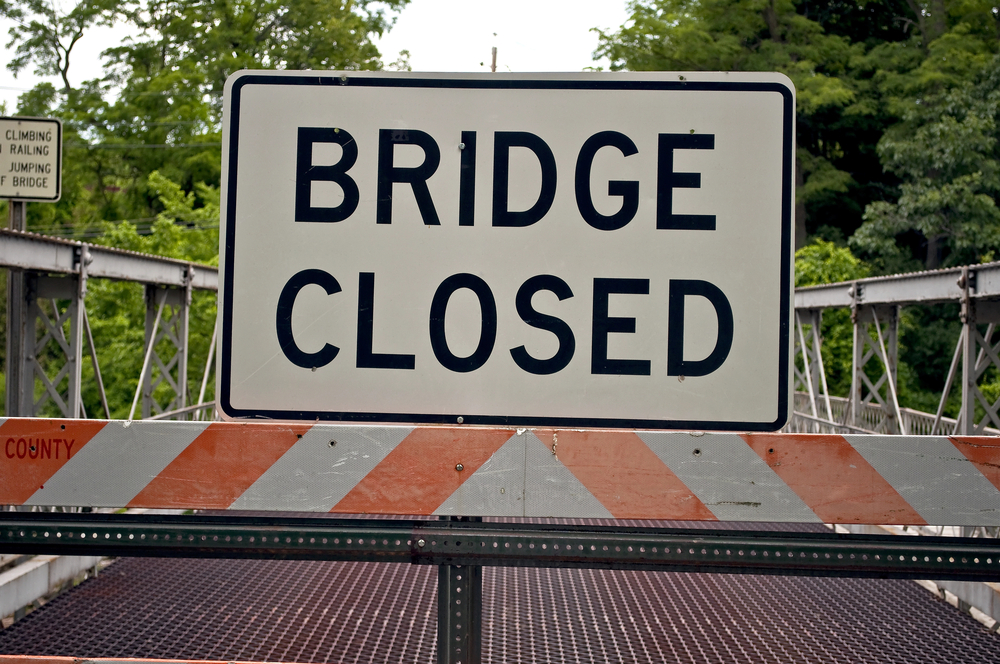
Oh, no, the bridge is closed!
Will he swim?
Will he call for a helicopter?
Will he threaten the bridge operator?
He does one of those, and meets with success or failure which results in still more conflict, then gropes with THAT conflict, and more, and more, and more...but we still don’t know why he’s in such a hurry to make it to Clancy’s.
How long, in such a book, would you wait before you start skimming pages?
You might give it a few scenes. Maybe even a few chapters. Maybe, if you paid more than you’d planned for this story, almost half the book!
“It’ll get better,” you might assure yourself. (As I’ve done when there’s nothing else within reach and I don’t want to leave my cozy bed and head for the bookshelf.)
No reason to give up yet, right? I mean, we’ve got a hero with a very clear goal and some very clear conflicts...
Why isn’t that enough?
“But it IS enough,” I can picture the writer protesting. “C’mon, this conflict is great! Didn’t everyone love when the helicopter skittered off the edge of the bridge?”
Sure.
“And the goal is hugely important! Wasn’t everyone on the edge of their seat when he glanced at his phone map and started swearing?”
Sure.
But, without some idea of what’s motivating this guy, a great goal and great conflict aren’t enough.
Okay, so let’s bring in the motivation.
Which might be...let’s see, Clancy is the informant who’s going to reveal the identity of the crooked lieutenant who’s been secretly sabotaging the squad’s every move.
Or Clancy’s is where he’s arranged to meet his college sweetheart who’s visiting from Africa this afternoon before flying out again tonight, and he’s hoping to win a second chance.
Or Clancy has the magic potion that’s going to save this guy’s son from a spell created to kill him at the stroke of midnight.
Technically, learning the crook’s identity or meeting the sweetheart or saving his son are STILL goals, but each comes with a built-in motivation:
Recover the squad’s power.
Restore a lost relationship.
Ensure his son’s survival.
And we can drill down even further for the core motivation:
POWER or JUSTICE
RELATIONSHIP or LOVE
FAMILY or SURVIVAL
See how we’re getting into some pretty basic human needs, there?
THAT’s what a motivation should be.
A character who’s motivated by more than just an external goal is in pursuit of some basic human need.
It doesn’t matter if, at first glance, the goal seems minor. How many times have we seen stories featuring a 15-year-old who HAS to find the right outfit for the prom?
Sure, that seems pretty inconsequential compared to things like honor, love, justice, life, and so on. But to this 15-year-old, being accepted or winning love or feeling validated ARE basic human needs, and clearly the only way to achieve those is to find the right outfit.
The power of a story isn’t how consequential someone’s core motivation is.
We’d probably all agree that survival is a powerful need, and there have been plenty of books about people going to great lengths to avoid starving to death or escaping the dragon or fleeing the serial killer.
But they’re not necessarily any more compelling than books about characters hoping to be the best, or to find a cherished treasure, or to forget about their stupid ex and move on.
People can happily read stories about a whole lot of protagonists with a whole lot of motivations. It doesn’t matter what the gut-level core motivation is.
What matters is that this character HAS one.
Readers don’t necessarily identify the core motivation as they’re enjoying a story. (They’re usually too busy enjoying the story.) But afterwards, it can be interesting to look back and recognize what was driving that hero to get to Clancy’s at the beginning of the book...and whether his motivation evolved as the story continued.
Because, yes, motivation can evolve. But that’s a whole other topic!
Prize Drawing Question Whether it evolved or lasted as-is from beginning to end, what’s some motivation you remember noticing in a book you loved? If you recall the character’s name, or even their title / author’s name, mention that here and give all of us readers the chance to enjoy recalling (or discovering) a fabulous story.
And somebody who comments will win free registration to “Plotting Via Motivation,” a March 4-29 email class on building an entire plot around the characters’ motivations. On Monday morning I’ll have random dot org draw a name and post it at the end of the comments… hmm, is that a good motivation to check back Monday? :)
About Laurie
After winning Romantic Times’ “Best Special Edition of the Year” over Nora Roberts, Laurie Schnebly Campbell discovered she loved teaching every bit as much as writing...if not more. Since then she’s taught online and live workshops including the one at WriterUniv.com/classes/Plotting-Via-Motivation/, and keeps a special section of her bookshelves for people who’ve developed that particular novel in her classes. With 50+ titles there so far, she’s always hoping for more.
Some of if not the most important storytelling concepts a writer needs to understand are the concepts of tension, suspense, and conflict in stories. Those three things can captivate your audience and keep them turning pages. However, the concepts overlap enough to cause confusion. Recognizing the differences between them can help, but learning to see them in stories, and incorporate them into your own stories will make a difference in reader satisfaction and retention.
Definitions
The dictionary often rescues a right-word-seeking writer, but it can also be a trickster. That’s because a dictionary defines the word in terms of its usage in a sentence. When we’re talking about storytelling techniques and devices, knowing how to use the word in a sentence isn’t exactly what you need.
Tension
At its simplest, tension is a feeling of uncertainty or anticipation. In both fiction and nonfiction, writers pose questions that aren’t answered right away or incompletely answered questions to introduce tension to their words. The question can be clear, hidden by characters or circumstances, or suggested by the elements of the story.
Suspense
Suspense is a feeling of excited anticipation that something risky or dangerous is about to happen. The intensity of suspense is proportional to risk or danger as perceived by either the story character or the reader. It is the risk or danger that distinguishes suspense from tension.
Conflict
In How to Tell a Story: The Secrets of Writing Captivating Tales by Peter Rubie and Gary Provost, the authors give what I believe is the best definition of conflict I’ve ever read. “The idea of conflict can be reduced to the word no.” Someone or something is saying no to your character. Blake Snyder, author of Save the Cat, says conflict in fiction means thwarted, opposed, or endangered.
Conflict happens when a character who has a goal cannot reach that goal because someone or something thwarted her, opposed her, or some element of danger kept her from accomplishing her goal. It is important to note that conflict in storytelling does not have to be an argument, a physical altercation, or some other form of violence. But, worrying and anxiety are not conflict.
How Tension, Suspense, and Conflict Work
Tension and the Human Brain
The human brain is hard-wired and conditioned to at least attempt to help answer questions. When a reader comes across an unanswered or half-answered question, she can’t help but try to find a response.
Once she perceives the question, if she puts the book down, her brain will work on an answer. If the question is about a sympathetic character or relatable circumstance, she’ll pick the book up again in order to determine if her answer was “right.”
If the question causes enough tension and is compelling enough, she can’t put the book down but will read the next page or pages for the answer.
The Effect of Suspense on the Human Body & Brain
To one degree or another, suspense is part of our daily life. We’ve understood that suspense causes observable changes in our bodies for a long time. More recently, neuroimaging studies have allowed us to observe we react to suspense in multiple areas of the brain. Suspenseful stories can ’trigger” the brain to react as if the reader was physically enduring the suspenseful event. Her breathing grows fast and shallow. Her pulse quickens. Her muscles tighten.
Humans and Conflict in Storytelling
We have something of a dual personality regarding conflict. Many of us avoid conflict at all costs. Others of us seem to generate conflict simply by existing.
Why does this happen? Our brains are designed to protect us. When a conflict threatens us, our bodies release stress hormones to prepare us to act, often called the fight/flight/freeze response. In times of great stress, we will act first and think later. Those who generate conflict have had their fight response triggered. Those who avoid the conflict have had the flight or freeze response triggered. It is nearly impossible to alter our automatic response to conflict.
Just like stories can trigger our brains to “live” in a suspenseful situation, stories can trigger our brains to in response to conflict.
Every day, real life is full of conflict. Even modern day real life. We read about characters who face conflict because it gives us strategies for facing our own obstacles. It comforts us and it gives us hope that we, too, can succeed despite the obstacles we face.
Examples of Tension, Suspense, and Conflict
While the visual medium of movies makes writing scripts different from writing a novel, both forms tell stories. All stories employ the elements of tension, suspense, and conflict. Using popular movies as examples ensures a greater number of you will recognize the devices with my brief and incomplete descriptions. Be aware, there are major spoilers in this discussion.
The Little Mermaid, 1989
Summary
A mermaid princess makes a Faustian bargain to become human and win a prince’s love.
Conflict
Ariel, the little mermaid, wants to be human in order to win a prince’s love but Ursula, the sea witch, wants to add Ariel’s soul to her collection and gain power on land by seducing the prince with Ariel’s voice.
Suspense
Ariel nearly drowns when the sea witch transforms Ariel to a human while she’s underwater.
Outraged at being outwitted, Ursula causes a massive storm that threatens to kill the prince.
Tension
Will the prince kiss Ariel?
Will the prince fall for Ursula, who is using Ariel’s voice to seduce him?
Will Ariel be able to stop Ursula from marrying the prince?
Rear Window, 1954
Summary
Bored and confined to a wheelchair during a sweltering New York summer, professional photographer, Jeff, spies on his neighbors through his window and enlists his only visitors, his girlfriend and his nurse, to find proof a neighbor murdered his wife.
Conflict
Jeff’s inner conflict is between his desire to be a photographer willing to put himself in danger for the right picture and his growing sense of what having and not having a long-term relationship means based on his observations of his neighbors. This is also an outer conflict between him and his girlfriend. The other conflict is between Jeff wanting to prove a murder happened and his murderous neighbor wanting to keep the murder a secret.
Suspense
Jeff is helpless to do anything but watch when he sends someone to find proof of the murder. Suspense builds as he puts first his cop friend in danger, then his nurse, and finally his girlfriend.
Jeff knows his neighbor, the murderer, is coming to kill him, but unable to get out of his wheelchair, Jeff is trapped and helpless.
Tension
Will Jeff break it off with his girlfriend, who obviously wants to marry him?
Did his neighbor commit murder?
Will his neighbor catch his girlfriend searching for proof of the murder?
The Greatest Showman, 2017
Summary
This is the story of how PT Barnum, the imaginative son of a tailor, aspiring to be a success and accepted by the upper class, starts a circus starring people with unique qualities.
Conflict
The success of Barnum’s circus stirs conflict and judgment with the upper class, who view the circus and the entertainers there as lower class. Barnum’s inner conflict is between his desire to be accepted, his desire to be a success, and his love for his wife and daughters.
Suspense
When Barnum loses his job and his attempts to be a success fail, he’s unable to give his wife and daughters things they want and need.
Fire destroys the circus building, and we anxiously watch to see who will survive and what will happen next.
Tension
Will Barnum ever be a success?
Will Barnum have an affair with Jenny Lind?
Will Barnum return to the circus?
More To Come
In a way, how you master the elements of tension, suspense, and conflict in your stories is as individual and unique as you are. Learning to recognize the difference in movies and books will help you recognize those things in your own writing. But there is more to tension, suspense, and conflict. Next month, we’ll dive deeper into those story elements and ways you can enhance them in your work.
Please share an example of tension, suspense, or conflict in your work, a book you've read, or a movie you've watched.
About Lynette
Lynette M. Burrows is an author, blogger, creativity advocate, and Yorkie wrangler. She survived moving seventeen times between kindergarten and her high school graduation. This alone makes her uniquely qualified to write an adventure or two.
Her Fellowship series is a “chillingly realistic” alternate history in 1961 Fellowship America where autogyros fly and following the rules isn’t optional. Books one and two, My Soul to Keep, and If I Should Die, are available everywhere books are sold online. Book three, And When I Wake, is scheduled to be published in late 2024.
Lynette lives in the land of OZ. She is a certifiable chocoholic and coffee lover. When she’s not blogging or writing or researching her next book, she avoids housework and plays with her two Yorkshire terriers. You can find Lynette online on Facebook or on her website.
Great! I have good news for you: everything we know about marketing is changing, except for one thing: the core best practices. Things that have always been true are still true. All the hacks and elaborate technological hoops are moving and shifting, but I’d like to suggest that this is the best thing that could happen for writers.
I’ve watched too many writers spending valuable time and energy trying to do the things they feel they “should” do for marketing, while at the same time they tell me that they wish they could just write.
What if writing was the best marketing you could do?
What is successful marketing?
Successful marketing is giving your fans what they want from you. Writers and fans make connections that transcend technology. You need to understand what your true fans want. Create a memorable and engaging experience for your fans, one that makes them feel valued and appreciated, and they will love you and tell others about you.
But how do you do that? How do you know what your fans want?
If a shoe company discovered that their fans wanted jackets, they would have a choice: provide jackets or get new fans.
This sounds overly simplistic, but we need to remember: You want fans who love what you write.
Not everyone will be your true fan. You want to get your writing in front of those who will love it. For this to work, you’re going to need to showcase your writing.
Advertising, search, and email marketing are tools that we’ve used in the past to get eyes on our work. These tools are undergoing huge technological changes that we need to stay on top of, and that may change the way you decide to spend your marketing resources.
The Changing Landscape of Advertising, Search, and Email Marketing
Paid ads (Facebook, Amazon, etc.), search engine optimization (blogging!), and email marketing (newsletters!) are some of the most effective and widely used tools we have. They help us reach readers, bring them to our website, introduce them to our books, and turn them into loyal fans.
But it is important not to forget that your most powerful tool is writing brilliant books.
Other marketing tools change based on how people are interacting with technology, but readers’ connection to story and their desire to connect with storytellers is only growing stronger. People value connections with authors and stories they love.
Major changes to watch:
Changes in Advertising
Each new privacy law impacts the ability of advertisers to target specific people to sell products to. Have you noticed the shake-ups in social media channels lately? Most of them make their money through advertising. As people shift their behaviors and cut back on advertising, these platforms are struggling to survive.
Meta is testing an ad-free subscription model in the EU after the changes in privacy laws. Social media platforms make money from advertising. If they can't advertise effectively, they need to find a new way to make money.
Have you noticed the death of magazines and other spaces that were supported by advertising? People are cutting back on their advertising spending and many venues don’t have the subscriber base to survive without advertising revenue.
Review the Effectiveness of Your Ads
Is your paid advertising profitable? If not, maybe the problem isn’t you. Maybe you don’t need to learn the latest tricks in order to make money. Maybe you need to explore other marketing options!
I want to be clear here: some genres are still doing very well with paid advertising. If you’ve cracked the code and you’re making money with ads, just keep one eye on your profitability and continue to explore other marketing options. Don’t base your entire career on paid ads.
But if advertising isn’t working for you, I want to suggest that it is okay to not put your energy there. You have a guilt-free pass to stop.
As a writer, the takeaway here is that your paid advertising may be decreasing in power as privacy laws and ad-free subscriptions change the algorithms. Remember that the content you share on social media is only as effective as your connection with your audience. This means that focusing on connecting is not only more important, but it may also become more effective!
Both Google and Yahoo have also introduced “new” requirements for bulk senders, those who send more than 5,000 emails per day. These requirements include:
Using your own custom domain name
Authenticating your domain with SPF, DKIM, or DMARC (link to my article)
Making it so people only have to click one button to unsubscribe
Keeping your spam complaints below 0.3% (meaning that the people on your list don’t complain)
These changes turn long-standing best practices into mandatory standards. The goal is to reduce spam.
I’d like you to consider this: if you are sending out something that people don’t want to receive, you may actually be sending spam.
Let that sink in.
If your only reason for contacting your fans is to sell them something, stop and think before pushing send: Would you like to receive that email? This applies whether you are sending 5 emails or 5,000 emails.
Now, think about the kinds of email you do like to receive, and apply it to the emails you send out.
Only send messages when you have something to say.
Only send your emails to people who want them.
Only send emails your fans want to read.
Changes in Google’s Accounts
Google has begun phasing out inactive email accounts, those that have not been logged into or used for over two years.
What does this mean? You may find that you have old addresses on your subscriber list that need to be removed, but be careful because, due to changing privacy practices, your system may not accurately be tracking who opens and reads your newsletters.
Changes in Privacy Protection
New privacy protection options from Apple and others are affecting the statistics from our websites and our newsletters.
If someone has privacy enabled on their email—and many people don’t even realize that they have turned these features on—you may not know that a reader has opened and read your email. I’ve had authors send emails to people saying, “I’m going to remove you because you haven’t been reading…” only to get angry emails back saying that they’ve been reading every one.
You can't accurately track how many of your subscribers open your emails. You also can't use email open rates as a guide for other actions, but they are still effective as general trends. Instead, you need to actively engage your readers, encouraging them to reply, comment, or click on something to send you a signal that they are there.
Sure, you can encourage your subscribers to add your emails to their VIP list, to ensure that they receive and see your emails, but that's asking your readers to take a technical action. Better to create emails they want. Emails they will read and respond to. (Spoiler: the trick is the superpower of your writing.)
Yes, I just told you that it is okay to not worry about those statistics and to focus on interacting with your readers!
Changes in Search Engines
Another trend that is shaping the future of search and email marketing is the rise of voice search and artificial intelligence like Bing’s Copilot, Google’s Bard, and many others. How people search is changing from keyword-focused to topic- and content-focused.
What does this mean for you? It means you have an advantage!
Writers write words. That may sound overly simplistic, but work with me here. Natural language is not just your native language, but your superpower. As a writer, you can write engagingly about topics that will interest your readers. This gives you a tremendous advantage over non-writers who own websites.
Keywords vs Stories
Search engines have never just looked for keywords, but that has been an easy way to study the results. Search engines are only as useful as their ability to provide people with the search information they’re looking for. If a search engine can’t do that, people will go elsewhere. Here's just one article about this change.
For years, businesses have focused on writing with a goal of being the best for specific words, specific topics they want to rank for. This is a highly competitive and technical skill.
Now, with “generative search experience” (GSE—the AI approach that is predicted to replace conventional search engines) those articles focused on words are losing ground fast. Hang out in the search engine optimization space for long and you see people freaking out over lost traffic. Writers do not need to panic, but they do need to notice that the world is changing.
Writers write words that tell stories.
Did you know business people are trying to learn how to write stories so they can score better in search engines? (Seriously—look at how many businesses are trying to hire writers these days.)
Don’t get distracted by all of the marketing aimed at helping businesses write keyword-focused stories. Writing stories is what you do naturally.
However, this only works if you are writing what your fans want to read. So, if you are filling your blog with random posts because you feel you should, here is your free pass to stop.
Yep, I just said that. If you aren’t going to blog about stuff your readers want to read and share about, don’t waste your time or energy. It won’t work. More about blogging next month.
How to Give Your Fans What They Want
The key to successful marketing is to understand and cater to your readers’ needs, preferences, and expectations. You need to create a memorable and engaging experience for them, one that makes them feel valued, appreciated, and entertained.
Here are some tips and best practices:
Know Your Audience
The first step to giving your fans what they want is to know who they are, what they want, and why they want it.
There are many tools out there to help, but most of them don’t work well for creative writers. Again, I’d like to suggest that your writing is and has always been one of the best ways to connect to your fans!
Create Valuable Content
How many times have I heard writers say that they just want to write? They don’t want to spend so much time marketing; they want to write! Guess what? Your readers want the same thing! They want you to stop trying to sell them stuff and just give them more stories!
Blog posts can include cut scenes, backstories, even flash fiction. Blog posts can become newsletters so that your true fans don’t miss out on any of the juicy story bits. And all this content can even feed into new stories, books, and other products!
You can figure out what connects with your readers in blog posts or in books. I think it is easier to experiment with a blog post! But there are authors who prefer to experiment by writing books. That’s an option. For authors who wish they could “just write,” a blog can be a powerful tool, if they are willing to keep at it for a long time.
I’d like to suggest that if you don’t have valuable content to put in your blog, you may want to consider not blogging. Look at the different types of websites. A business card website may be more appropriate for you if you don’t want to share engaging content!
Engage and Interact with Your Audience
The final step to giving your fans what they want is to engage and interact with them regularly and consistently. Foster a sense of community and belonging. You need to listen and respond to their feedback, questions, and comments. You want to acknowledge and appreciate their support.
You also need to encourage your fans to tell others about your stories.
There is a marketing principle that people won’t do what you don’t ask them to. So ask them! Ask your fans to communicate with you. Ask them to leave a review or tell a friend about your story.
Create experiences based around your stories that people can’t wait to share. Examples: backstory, surprise alternate endings, a chance to name a character, even maps of the fictional places you write about. The key here is that both you and your readers should have fun. Then ask them to invite their friends to the party.
What if the most effective thing you can do as an author is to step back from a lot of the marketing techniques and tricks, and instead focus on writing stories and getting them into the hands of your fans?
The Good, the Bad, and the Obvious
Your readers love you for a reason.
Your fans want to be entertained.
You’re in the entertainment industry. (If this comes as a surprise, embrace this truth right now.)
If your emails aren’t entertaining, then you are failing.
It is better not to send out any email than it is to send out one that isn’t wanted. Stop sending boring newsletters!
How does this hit you? Have you seen some marketing techniques becoming more or less effective? Does this give you any ideas for how to find and interact with your true fans?
About Lisa
Lisa Norman's passion has been writing since she could hold a pencil. While that is a cliché, she is unique in that her first novel was written on gum wrappers. As a young woman, she learned to program and discovered she has a talent for helping people and computers learn to work together and play nice. When she's not playing with her daughter, writing, or designing for the web, she can be found wandering the local beaches.