by Jenny Hansen
Having recently completed a rigorous scientific investigation into the relationship between writers and holly bushes (over at Writers Helping Writers), I felt obligated to continue my “research.” My snarky writing-self demanded it.
Backstory
For those who missed my Writers Helping Writers post, here’s the scoop:
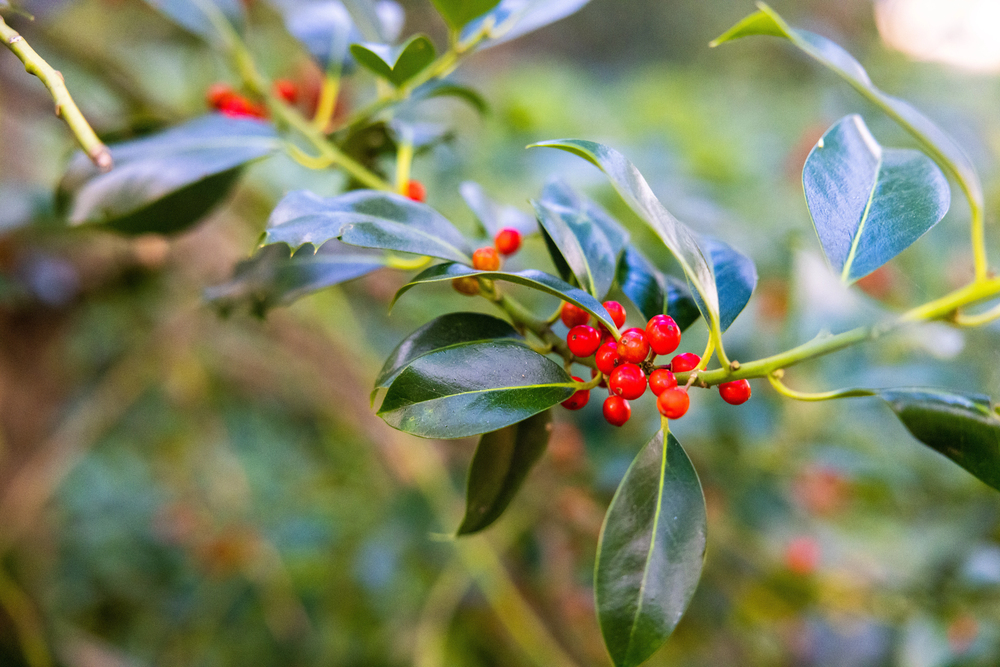
Holly leaves don't begin life with spikes. They start smooth, and get stabby only after repeated encounters with grazing animals. The plant adapts. It develops defenses. It becomes (in less-than-botanical terms), quite stabby.
The Parallels with Writers Can’t Be Unseen
This holly bush discovery explained so much about writers that I immediately began cataloging the various subspecies. After decades in writing communities, conferences, critique groups, and online forums, I can report that Writer Holly exists in several distinct varieties.
You’ve likely met some of these sub-varieties of “Writer Holly.” (You’ll have to let me know in the comments if you belong to one. I sure do.)
The Critique Group Holly
This variety can hear the phrase "I have a suggestion…" from three blocks away.
Researchers believe their hearing evolved after prolonged exposure to comments such as:
- "The middle feels a bit slow."
- "I wasn't connecting with the protagonist."
- "Have you considered cutting Chapter Eight?"
The remarkable thing about Critique Group Holly is that it voluntarily returns to the very environment that wounded it. Sometimes weekly. (Scientists remain baffled.) It is undetermined whether the repeated stimuli of weekly vs monthly vs quarterly make a difference in the spiky-ness of Critique Group Holly.
More research is needed.
The Query Letter Holly
This sub-species begins life cheerful and optimistic. The ego-chomping nature of querying changes their leaves from smooth to spiky, almost overnight.
After approximately thirty rejections, new spikes appear.
After sixty rejections, their spikes look sharp enough to key a car.
After one hundred rejections, this subspecies can identify a form rejection from the first six words and has developed the prickly protection of a medieval fortress.
Common behaviors include:
- Refreshing email every nine minutes.
- Interpreting silence as an ominous communication strategy.
- Saying things like, "I'm fine," while maintaining a spreadsheet that would impress an auditor.
This variety survives almost entirely on caffeine and spite.
The Conference Holly
Conference Holly appears friendly. But beware of sitting too close during industry panel discussions.
This subspecies has spent hundreds or thousands of dollars to hear publishing professionals answer pressing writer questions with:
- "It depends."
- "The market is changing."
- "Nobody really knows."
Conference Holly develops a fascinating defense mechanism. Ask what they're writing, and they'll immediately launch into a polished pitch they've rehearsed in the shower, in traffic, and while standing in line for coffee.
It should be noted that Conference Holly members are champion queue-ers. They’ll stand patiently in line for coffee, elevators, book signings…and industry chats.
The Amazon Review Holly
One of the most sensitive species in the ecosystem.
Amazon Review Holly can receive ninety-nine glowing reviews and one negative review. Guess which one it remembers? A five-star review is treasured. A one-star review can trigger more spikes than a cactus.
Years later, the writer will still remember: "I couldn't connect with the characters." Meanwhile, they cannot recall where they left their keys ten minutes ago.
Amazon Review Holly memory is an ongoing mystery.
The Goodreads Holly
This species evolved from the Amazon Review Holly, but in a much harsher environment.
Goodreads Holly understands a terrifying truth: Readers are talking about your book even when they aren't talking to you. Their reviews are not intended for the author, and that changes everything.
A Goodreads reviewer might write: "The heroine annoyed me." And fifty-seven strangers will arrive to discuss the heroine as if she were a problematic aunt at a holiday dinner.
Goodreads Holly tells itself: "Reviews are for readers." (Then immediately reads every review.) Goodreads Holly also possesses an extraordinary ability to locate a two-star review hidden among hundreds of positive ratings.
The writer then spends the rest of the afternoon wondering whether the reviewer was right. (Even when the reviewer admits they only read three chapters.)
The Social Media Holly
This subspecies, which did not exist when I started writing, now appears everywhere.
Social Media Holly can spend four hours creating content about writing in order to avoid writing.
Its natural habitat includes:
- Instagram analytics
- Facebook engagement reports
- LinkedIn impressions
- Threads conversations
- Twenty-seven browser tabs explaining algorithms
A common mating call is: "I should really be working on my manuscript." (The manuscript, meanwhile, has not seen its creator in days.)
And finally we come to…
The Veteran Writer Holly
This is the most interesting variety of all.
At first glance, it still appears prickly. The spikes are definitely there. But something changes after enough years of being gnawed on by predators.
Veteran Writer Holly learns the difference between criticism and catastrophe. It learns that one rejection isn't the end. One bad review or disappointing lunch isn't the end.
It learns that most writing wounds are survivable.
More importantly, it has learned that not every deer deserves a response. Veteran Writer Holly has wisdom. And exhaustion. (But mostly wisdom.)
Final Thoughts
What fascinates me most about holly is that the plant itself never changes. Underneath every prickly leaf is the same DNA that existed before the outside world nibbled at it. The spikes are an adaptation, not an identity.
Maybe that's true for writers too.
Beneath the rejection letters, critique comments, conference pitches, Amazon reviews, algorithm panic, imposter syndrome, and emergency chocolate...
...the original writer is still there.
That person who loved stories. Who wanted to make something. The one who sat down one day and thought, “Writing sounds fun.”
That person still lives inside each of us.
Even on the days when we’re exhausted by the rest of it. Even when we’re feeling a bit stabby. We still keep writing, and we still love words. (Which may be the strongest evidence yet that writers are a little bit crazy.)
But at least we're all here, hanging out together in this writing forest.
Cheers, y’all!
So now enquiring minds want to know... Do you belong to one of these various writing subspecies? Perhaps to several? I'd love to hear about it down in the comments!
About Jenny

By day, Jenny Hansen provides brand storytelling, LinkedIn coaching, and copywriting for small businesses. By night, she writes humor, memoir, women’s fiction, and short stories. After 20+ years as a corporate trainer, she’s delighted to sit down while she works.
Find Jenny here at Writers In the Storm, or online on Facebook or Instagram.
Top photo purchased from Depositphotos