Writers in the Storm

A blog about writing

storm moving across a field
How to Write Sex Scenes

by Diana Gabaldon

Where most beginning writers screw up (you should pardon the expression) is in thinking that sex scenes are about sex. A good sex scene is about the exchange of emotions, not bodily fluids. That being so, it can encompass any emotion whatever, from rage or desolation to exultation, tenderness, or surprise. 

Lust is not an emotion; it’s a one-dimensional hormonal response. Ergo, while you can mention lust in a sex-scene, describing it at any great length is like going on about the pattern of the wall-paper in the bedroom. Worth a quick glance, maybe, but essentially boring.

So how do you show the exchange of emotions?  Dialogue, expression, or action—that’s about the limit of your choices, and of those, dialogue is by far the most flexible and powerful tool a writer has. What people say reveals the essence of their character.

Example:

“I know once is enough to make it legal, but…” He paused shyly.

“You want to do it again?”

“Would ye mind verra much?”

I didn’t laugh this time, either, but I felt my ribs creak under the strain.

“No,” I said gravely. “I wouldn’t mind.”

Now, you do, of course, want to make the scene vivid and three-dimensional. You have an important advantage when dealing with sex, insofar as you can reasonably expect that most of your audience knows how it’s done. Ergo, you can rely on this commonality of experience, and don’t need more than brief references to create a mental picture. 

You want to anchor the scene with physical details, but by and large, it’s better to use sensual details, rather than overtly sexual ones. (Just read any scene that involves a man licking a woman’s nipples and you’ll see what I mean. Either the writer goes into ghastly contortions to avoid using the word “nipples”—“tender pink crests” comes vividly to mind—or does it in blunt and hideous detail, so that you can all but hear the slurping. This is Distracting. Don’t Do That.)

So how do you make a scene vivid, but not revoltingly so? There’s a little trick called the Rule of Three: if you use any three of the five senses, it will make the scene immediately three-dimensional. (Many people use only sight and sound. Include smell, taste, touch, and you’re in business.)

Example:

The road was narrow, and they jostled against one another now and then, blinded between the dark wood and the brilliance of the rising moon. He could hear Jamie’s breath, or thought he could—it seemed part of the soft wind that touched his face.  He could smell Jamie, smell the musk of his body, the dried sweat and dust in his clothes, and felt suddenly wolf-like and feral, longing changed to outright hunger.

He wanted. 

In essence, a good sex scene is usually a dialogue scene with physical details.

 Example:

"I'll gie it to ye," he murmured, and his hand moved lightly. A touch. Another. "But ye'll take it from me tenderly, a nighean donn."

"I don't want tenderness, damn you!"

"I ken that well enough," he said, with a hint of grimness.  "But it's what ye'll have, like it or not."

He laid me down on his kilt, and came back into me, strongly enough that I gave a small, high-pitched cry of relief.

"Ask me to your bed," he said. "I shall come to ye.  For that matter—I shall come, whether ye ask it or no. But I am your man; I serve ye as I will."

And finally, you can use metaphor and lyricism to address the emotional atmosphere of an encounter directly. This is kind of advanced stuff, though.

Example:

He'd meant to be gentle. Very gentle. Had planned it with care, worrying each step of the long way home. She was broken; he must go canny, take his time. Be careful in gluing back her shattered bits.

And then he came to her and discovered that she wished no part of gentleness, of courting. She wished directness. Brevity and violence. If she was broken, she would slash him with her jagged edges, reckless as a drunkard with a shattered bottle.

She raked his back; he felt the scrape of broken nails, and thought dimly that was good—she'd fought. That was the last of his thought; his own fury took him then, rage and a lust that came on him like black thunder on a mountain, a cloud that hid all from him and him from all, so that kind familiarity was lost and he was alone, strange in darkness. 

Like that.

What has your experience been writing sex scenes?

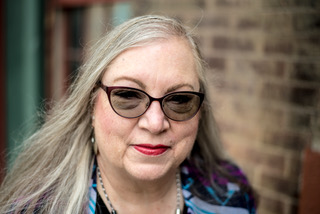
About Diana

Diana Gabaldon

Diana Gabaldon is the author of the award-winning, #1 NYT-bestselling OUTLANDER novels, described by Salon magazine as “the smartest historical sci-fi adventure-romance story ever written by a science Ph.D. with a background in scripting ‘Scrooge McDuck’ comics.”

As of January 2022, Diana’s books are published in thirty-eight languages and sold in one hundred and fourteen countries.

Learn more about Diana on her website: DianaGabaldon.com.

This post is excerpted from Diana's book: "I Give you My Body..." also available as an audiobook read by Diana.

Top image by Yerson Retamal from Pixabay

Read More
How to Publish Poems and Prose in Magazines

by Ellen Buikema

There is nothing quite like the joy of seeing your words in print. Getting your poetry and short stories published takes effort and persistence. But if you take the right approach with the composition and submissions process, you’ll have a better chance of finding a home for your poetry and prose.

But first …

Share your work with other writers.

Before you send your work out into the world of editors and publishers, workshop or share your writing for feedback. We all need suggestions for improvement. You don’t need to agree with everyone, just listen and decide what feels right to you.

A finely crafted piece has the best chance for publication.

Reach out to fellow writer friends or acquaintances and ask for their feedback. Remember to return the favor with an offer to critique their writing.

Consider joining a local writers’ group.

Writers meet at a variety of places:

  • libraries,
  • coffee shops,
  • restaurants,
  • community centers.

Check online groups via Google searches and Social Media sites. I’ve had good luck with Facebook writers’ groups as well as MeetUp.

When I moved to a new town and couldn’t find a local writers’ group, I joined the local Arts Guild and started a critique group.

Just like Field of Dreams, “If you build it, they will come.”

Read literary journals and magazines.

“If you don't have time to read, you don't have the time (or the tools) to write. Simple as that.”

― Stephen King

If you’d like to be published in literary magazines, you should read literary magazines. Look for online and print magazines with a strong focus on your area of interest.

  • For poets, there are publications dedicated entirely to poetry.
  • Writers who have a strong interest in short stories can explore these publications.

Reading these publications will help you have a better idea of the kinds and styles of poetry and prose that editors are looking for and being published in different markets now. You can use your research to find niche markets your poetry fits best.

Buying and reading literary magazines helps support and keep these publications running. Also, the fewer places there are for you to submit, the fewer chances you have of getting your poetry published.

Research submission possibilities

Reading a variety of poetry and short story publications will help you begin the research side of the submissions process.

Finding a publication that is a good fit.

Think about the publications you’ve read where you can picture your work fitting in perfectly.

If you write using a specific genre or poetry style, submit to publications that cater to your niche. You’re more likely to be accepted in these magazines than if you choose places that publish a broader range of works.

This advice also applies to calls for themed submissions. In this case a magazine produces an issue in which all pieces focus on a certain topic, word or theme. Writers have an opportunity to submit works that fit the theme.

Poetry anthologies—collections of poems from different writers, often published by small presses—are largely based around themes. Search for anthology calls for submissions too.

Submitting your work

After finding the publications you feel are the best fit for you work:

Check the guidelines.

  • Each magazine and publisher have different rules for how to submit your work.
  • Read the guidelines with care to make sure your writing makes it to the proper channels.

Format as requested.

  • Your writing should stand out, not the font.
  • Follow the formatting guidelines to a “T” or it may end up in the trash.
  • The goal here is to make life easier on the editor.

Proofread and then proofread again.

  • Make sure that your work is error-free.
  • Ask others to read your work. Extra eyes-on never hurts.

Be at peace with rejection.

  • Don’t give up!
  • Everyone who sends out their work suffers rejection. Everyone.
  • Many famous writers spent years submitting work before they found success.
  • Always be courteous and gracious. If your work is not accepted this time, there will always be opportunities in the future.

The following links may help you find a place to submit your poems and stories:

Magazines send out calls for themed writing. Look here to find announcements:

A few words of caution.

Be careful when publishing work on a personal blog, discussion forum or other online publications.

Magazines generally only accept submissions that have not been previously published, and count blogs or other websites as publications.

If you post to a website that invites you to publish your writing for feedback, you may risk the work being considered previously published—therefore unacceptable.

Have you published your writing in a magazine or journal? What advice do you have for writers who want to get their work out into the world?

* * * * * *

About Ellen

Author, speaker, and former teacher, Ellen L. Buikema has written non-fiction for parents, and The Adventures of Charlie Chameleon chapter book series with stories encouraging the development of empathy—sprinkling humor wherever possible. Her Works In Progress are The Hobo Code, YA historical fiction and Crystal Memories, MG Magical Realism/ Sci-Fi.

Find her at https://ellenbuikema.com or on Amazon.

Tip Image by StartupStockPhotos from Pixabay

Read More
Writers, Are You Breaking the Cardinal Rule?

by Angela Ackerman

Ah, the euphoria of holding one’s own book. Nothing compares, does it? In that moment, the months (or years) of writing, revising, editing, polishing, and finally publishing are in the rearview mirror. All we know is the joy of seeing our hard work compressed into pages and fitted with a stunning cover.

We dream of happy readers, bestseller lists, and maybe even awards.

And we can have these things...if we haven't broken
 the cardinal rule of publishing.

As someone who studies storytelling from all angles, I can spot quickly when the cardinal rule has been broken, and every time, it guts me. Each book starts with untapped potential, ripe with the imagination of its creator, ready to bring something new and fresh to readers. But this one rule, when it's broken, limits a book's potential, keeping it from being all it can be.

So, what is this cardinal rule that stands above all others?

Don't Rush.

Stories take time to write, and even longer to refine, especially as we're all developing writers. We each have strengths and weaknesses and are building our skills as we go. Sometimes we don't know what we don't know, and so may not be the best judge as to whether a story is ready to move forward.

And yet, I see writers rush toward publication, skipping some of the necessary steps to ensure their book is as strong as it can be. And unfortunately, it ends the same way - a book that wasn't ready, and the author feeling disappointment and disillusionment when their novel fails to gain traction with readers.

Rushing Burns Bridges

With more books than people on the planet, readers have endless choice. So, the very best thing we can do is give them an amazing experience when they pick up our book, because when we do, they'll be back for more. But if we rush and the quality isn't there, readers notice. Not only is it unlikely they'll stick with us as an author, but they may also leave poor reviews that dissuade others from taking a chance on our book, too.

Rushing also hurts if we're on the hunt for an agent or publisher. If we submit something that's clearly not ready, that's the end of the road with that agent or editor. And what if they remember us and our rushed manuscript if we submit to them down the road...will they be less inclined to ask for sample pages?

Rushing Can Be Expensive

When we rush, we seek out editing before a story is ready for it, meaning costs go up as there's more to fix. A reputable editor should let the writer know if the project is not ready before they get in too deep, but this is an ethical line that you can’t count on everyone to follow. And if a writer doesn't carefully vet their editor, they might end up with someone who isn't skilled enough to offer the level of help needed yet is happy to keep billing round after editing round.

Most of us must budget carefully when it comes to our writing, and editing costs that balloon can fill us with frustration and guilt and may cause us to question our choice of pursuing this path.

Rushing Can Open Us to Scams

All careers require time, effort, and training to become great at them. But unfortunately, we can forget this when it comes to writing. Maybe we think having an abundance of imagination and our creativity will carry us through, or a past career where we wrote a lot on the job makes us believe we can zip through the learning curve. Here's the thing - imagination requires craft to apply it well, and writing and storytelling are two different skill sets. Believing there's an easy route to publishing opens us to scams.

There are plenty of vanity publishers and other "assisted publishing" businesses that make big promises to do all the work that the writer doesn't want to do. Because their business model is to make money from writers, not the sale of books, they don't care about the product. Writers end up shelling out huge dollars for something subpar and are often locked into contracts where they are required to also purchase a large quantity of their books themselves.

Bottom line: there is no easy button when it comes to a quality book and successful career. Prepare to work hard and open yourself to learning all you can.

Rushing Can Damage Self-Esteem

When we query or self-publish process before we're ready, the results won't be what we hoped for, and this can cause us to feel inadequate. When our self-belief plummets, it can steal our energy and make it harder for us to pivot or rebound from mistakes and failures. And even when we write great books, mistakes and failures come with the territory, so we need to learn how to process these moments and learn from them.

If we're always beating ourselves up for every misstep, we'll eventually decide we aren't cut out for this career. And we are! Each of us is capable of learning what we need to know to write amazing stories and steer ourselves toward a fulfilling career.

Pressure to rush is something we all understand
 but must resist.

When other writers are pounding out stories and getting them out into the world, we think we need to be doing the same, forgetting that we're all in different stages of development, and our journey to publication will be unique.

Yet, when we give ourselves the space and time to write the strongest story we can, it may take longer, but our chances of pleasing readers will go way up. And we grow through the process, gaining new knowledge and refining our abilities, which will help us become masterful storytellers.

So, embrace the learning curve and enjoy the journey! It’s there to help, not stand in your way.

Help for Anti-Rushers:

How to Write a Book From Start to Finish in 13 Steps
Self-Editing Your Own Writing
Story Feedback: Free and Paid Options
Critique Etiquette: The Ultimate Guide for Giving and Receiving Feedback
When Am I Ready for Professional Editing?
Best Practices for Working with a Professional Editor
How to Navigate Editorial Feedback and Revise Your WIP

Have any lessons to share about rushing, or tips on how we can rein in the urge to do so? Let me know in the comments!

About Angela

Angela Ackerman

Angela Ackerman is a story coach, international speaker, and co-author of the bestselling book, The Emotion Thesaurus: A Writer’s Guide to Character Expression, and its many sequels. Available in nine languages, her guides are sourced by US universities, recommended by agents and editors, and are used by novelists, screenwriters, and psychologists around the world. To date, this book collection has sold over a million copies.

Angela is also the co-founder of the popular site Writers Helping Writers®, as well as One Stop for Writers®, a portal to game-changing tools and resources that enable writers to craft powerful fiction. Find her on Facebook, Twitter, and Instagram.

Read More

Subscribe to WITS

Recent Posts

Search

WITS Team

Categories

Archives

Copyright © 2026 Writers In The Storm - All Rights Reserved