Writers in the Storm

A blog about writing

storm moving across a field
Create a Compelling Plot with What-But-Therefore

Lynette M. Burrows

You can have interesting characters in a striking setting and have a boring book. Plot structure can create tension that keeps the reader engaged and eager to finish your book. But learning how to plot is confusing. Many writers have their own theory on how to create an interesting plot. Some argue the number of types of plot structure and they name anywhere between one (man against man) to seven. Others talk about the elements of or the stages of plot. Those folk teach five, six, seven, nine, or more elements they call stages, or doors, or plot points. They say to use a diagram or an outline or to write freely and figure it out as you go. What’s a writer to do? Learn as much as you can. A good place to start is 7 Plot Structures for Pantsers by John Peragine. If you're looking for a simple and effective tool for creating a cause-effect, can’t-stop-reading plot use the WHAT-BUT-THEREFORE method.

What is Plot?

At its most basic level, plot is the chain of events that make up a story. But a basic chain of events does not make a story. Consider this pared-down version of Rumplestiltskin by the Brothers Grimm:

The miller says his daughter can spin straw into gold.

The king gave the girl a room of straw to spin into gold.

The girl made a bargain with a droll little man.

The girl spins the straw into gold.

The king marries the girl and she becomes queen.

The queen gives birth to a little girl.

The droll little man wants his end of the bargain.

The queen guesses his name, and he goes away empty-handed.

As a plain chain of events, this classic story has no tension. It’s boring. 

A more complex definition of plot is the sequence of events which causes a character to react in a way that affects the next event through the principle of cause-and-effect. With this definition, you can still create an unexciting story. The tension must rise.

graphic representation of a dramatic plot line with points indicating the meeting, inciting incident, first turning point, pinch 1, midpoint, pinch 2, 2nd turning point, stand up, climax, and ened.

The way I make certain story tension grips the reader is to use a What-But-Therefore outline of each scene.

WHAT-BUT-THEREFORE 

The first time I heard about this tool, I believe they labeled it the THEN-BUT-THEREFORE. I have lost track of the person(s) who introduced me to the concept. It may spring from the creators of South Park, though they may not have been the originators of the idea. 

This group of sentences helps you create a causal plot. One act leads to a complication and a decision or new action. Used properly, they can help you build the steps of an interesting plot that shows your theme and compels your reader to turn the page. So let’s examine what those three words stand for in this application.

WHAT

For a scene to compel your reader to turn the page, there must be forward movement of the story. The main character must have a goal that matters. The character must do something, take an action they believe will get them to their goal. Sometimes this may include thinking, planning, or weighing choices, but an effective scene will always include or lead directly to an action. 

BUT

The action taken by your protagonist leads to an obstacle. The obstacle can be geographical, a person, weather, or just about anything else. Whatever the obstacle is, it blocks the forward movement of the protagonist toward her goal. These obstacles are progressive. Each more difficult to get past.

THEREFORE

She must change her strategy, her tactics, her direction. This decision can mislead her or force her to retreat or make her reconsider and change her goal.

Put together it is: WHAT the character does (an action) toward the goal of the viewpoint character BUT something or someone interferes (progressive complication) THEREFORE the character is compelled to do something she wouldn’t at the beginning of the scene (which becomes the action of the next scene.) 

Example

Illustration of Rumplestiltskin dancing around a fire in the forest with a cute cottage in the background.

WHAT: The king takes the miller’s beautiful daughter, places her in a room of straw and demands she spin it into gold by morning or die. BUT the girl cannot spin the gold. THEREFORE she cries and pleads for help.

WHAT: A droll little man appears and offers to help for something of value. BUT the girl can only offer a necklace. THEREFORE, the little man accepts the necklace and spun the straw into gold and the king is pleased.

WHAT: The greedy king brings in more straw for the girl to spin into gold or die. BUT the girl still cannot spin the straw into gold. THEREFORE she cries for help again. 

WHAT: The droll little man reappears and offers to spin the straw into gold in exchange for something of value. BUT the girl only has her ring to offer him. THEREFORE, he accepts the ring and spins the straw into gold and the king is pleased. 

WHAT: This pleases the king who gives the girl even more straw to spin into gold and promises she’ll be his queen if she does it by morning. BUT the girl still cannot spin the straw into gold…

You get the idea. 

Rumplestiltskin doesn’t have an ideal plot, but it’s a classic because the plot complications and rewards grow and grow until the girl outwits her opponent.

What I Love about What-But-Therefore

When I make my What-But-Therefore sentence outline, I write fast and make them run-on sentences. Some writers need to follow the rules of grammar. That’s okay. You can write these out any way that works for you. The primary object is to write a series of scenes with cause-and-effect actions that build tension.

The reason I love this method of building an outline is that the words remind me to put the tension in each scene. But I don’t have an outline so detailed that my inner pantser feels restricted. I leave the specifics of the complications and how the characters get into or out of the complications. Therefore, my pantser side gets to play during the writing.

Story is More than One Thing

Can you build an interesting plot using the What-But-Therefore sentences? Absolutely. You can also make it uninteresting. Story is more than one thing. It takes a compelling theme, a set of characters with goals your reader cares about, an interesting plot that creates obstacles and twists, and the right mix of tension and release. 

There is no one right way to create a compelling story. You must find a way that works for you. Study plot structure as taught by Aristotle (Poetics), Gustav Freytag (Technique of the Drama), Joseph Campbell (The Hero’s Journey), Larry Brooks (Story Engineering), James Scott Bell (Plot & Structure), Jessica Brody (Save the Cat! Writes a Novel), Jennie Nash (Blueprint for a Book), or experts you follow. Must you read all those books? No one will force you to do so, but the more you learn and understand, the better able you will be to choose the things that work for you and your stories. 

Whether you use templates like the Hero’s Journey, or Story Engineering, or Blueprint, they all help you build your plot. Without complications and building tension, your plot isn’t compelling. Your story doesn’t satisfy. If you need a quick-and-dirty outline that gives you a flexible outline, What-But-Therefore can work for you.

What do you love about the plot template you use?

About Lynette

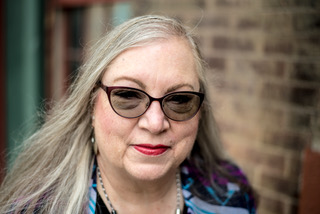
Portrait photo of author Lynette M. Burrows

Lynette M. Burrows writes action-filled science fiction with characters who discover their inner strength and determination, then make courageous choices for themselves, their family, and their world.

In Book One of the Fellowship Dystopia, My Soul to Keep, Miranda Clarke lived a charmed life… until she breaks the rules. But it is 1961 and America’s a theocracy. Following the rules isn’t optional.

In the recently released book two, If I Should Die, Miranda, the former “good daughter” of the Fellowship, has transformed into a hero of the rebellion but now she faces the question, what do you do when the other side doesn’t want to listen?

Owned by two Yorkshire Terriers, Lynette lives in the land of Oz. When she’s not procrastinating by not doing housework and playing with her dogs, she’s blogging or writing or researching her next book. You can find Lynette online on her website, Facebook, or on Twitter @LynetteMBurrows. 

Image Credits

Top image by Mariana Anatoneag from Pixabay

Middle image by Kamchatka, CC BY-SA 3.0 via Wikimedia Commons

Bottom image by Anne Anderson (1874-1930), Public domain, via Wikimedia Commons

Read More
How to Avoid Writer’s Guilt this Summer

by Angela Ackerman

Summer can be a tough time for writers. Sunshine lures us away from our computers, meaning we’re spending family time at the park, enjoying drinks on the patio, dashing off on camping trips or vacations…you know, instead of adding to our wordcount.

And guess what? That’s okay! We should do these things. Life is short, and we work hard. We deserve to have fun and make memories.

Unfortunately, though, many of us feel guilt when we aren’t writing, especially if we’ve set big goals to achieve by year’s end. As days pass, our internal critic grows loader, grousing about how our lapse in discipline is going to mess up the BIG PLAN. Suddenly we feel bad for diverting time to summer activities and that steals our joy, undoing all the good that comes from making room for fun in the first place.

So how can writers enjoy summer without guilt?

A great strategy is to stay productive by using smaller, irregular gaps of time to tackle other writerly tasks. We all have a ton of little projects we never get to, so right now is an ideal time to knock a few off our to-do list. Doing something that help us prep for the next book, improve our skills, or understand the business of writing better will make us feel accomplished, making it easier to enjoy summer, guilt free.

To get the ball rolling, here are a few areas you could focus on if you wanted to. Feel free to steal these ideas!

Angela’s favorite: Make a list.

Full disclosure, I love lists. They help me stay organized, break down complex projects, and group tasks I want to complete. Often lists are made in a rush to capture ideas so they aren’t forgotten, but you can take your time and really think things through so your list becomes a roadmap on what to do next.

For example, take some time to list out your writing strengths and weaknesses. This will help you become aware of where you are now and choose an area to focus on for improvement. Or make a list of marketing ideas, publishers, or author services you want to investigate. Lists are great when it comes to our WIP, too. If a character or plot is giving you trouble, list out the questions you need to answer to set things right in your story.

Get organized.

Does your home office look like it belongs on an episode of Hoarders? Does your desktop filing system need an overhaul? Let’s face it, cleaning is always something we put off, but we always feel better when it’s done. Use a pocket of time this summer to sort your space so you’ll feel more creative when it’s time to write.

Expand your knowledge.

Is there an aspect of writing you want to learn more about so you can grow your skills? Or maybe you want to know more about book marketing, ads, formatting a book, or the different publishing paths. Pick a topic and use time here and there to learn more about it. There are many great books, blog posts, tools, and resources out there to help make your job easier. If you need a place to start, try this ‘Writer’s Secret Weapon” page. You can dive into many different topics writers need to know about.

Become a spy.

There’s a lot more to being an author than writing a book - we need a website, a way to connect with readers, tools to help us market and manage our business, and more. The problem? We don’t always know how to do all these things. So, do some sleuthing by seeing what successful authors in your genre are doing on their websites, in their newsletters, and online. Pay attention to what they post, how they promote, interact with readers, and the apps or plugins they use on their sites. Figure out if some of these things can work for you, too.

Get to know your characters.

Whether it’s for a story you’re planning or your current WIP, spending a bit of time thinking about your character can be a very good thing. Do you know what they want, need, worry about, and fear? Understanding these can help you better nail down their motivation, backstory, and behavior so it’s easier for you to plot challenges and plan their character arc. So, ask questions about who your character is. Get under their skin to discover their secrets. If you need help, the Character Builder is a great tool for figuring out what makes your character tick.

Master your TBR pile.

Admit it, you have a more than a few unread books waiting for their turn in the spotlight. Well, summer is here, so get reading and feel like a champ for whittling down that TBR pile. (Once you do, reward yourself with a few new ones to take their place!)

Indulge.

We’re all human and need down time. We shouldn’t feel guilty or apologize for it. So do what you need to relax, feel balanced, and refill your creative well. Happy summer!

About Angela

Angela Ackerman

Angela Ackerman is a writing coach, international speaker, and co-author of the bestselling book, The Emotion Thesaurus: A Writer’s Guide to Character Expression, and its many sequels. Available in ten languages, her guides are sourced by US universities, recommended by agents and editors, and are used by novelists, screenwriters, and psychologists around the world.

Angela is also the co-founder of the popular site Writers Helping Writers, as well as One Stop for Writers, a portal to game-changing tools and resources that enable writers to craft powerful fiction. Find her on Facebook, Twitter, and Instagram.

Top Image by นิธิ วีระสันติ from Pixabay.

Read More
Are Writers Born, or Are Writers Made?

by Jenny Hansen

My husband and I had an interesting discussion about the nature vs nurture theory of writing. Our question: were accomplished writers born intact like Beethoven, with words rather than music, or were writers nurtured along by adversity and pain?

Nurture won by a mile.

We came to the conclusion that the majority of writers are made, rather than born. And that even though there are a few perfectly happy souls (with perfectly happy childhoods) who just love to write and somehow have the perfect words, that isn't how most of us came to the page.

How did we get there?

Writers are Booklovers

Most of us read extensively from a young age and fell in love with words.

As young readers, we came to treasure the power and magic of story. Stories took us out of our own world and dropped us into other worlds that held characters we wanted to know. Maybe it was a fairy, a wizard, or a talking lion. More often it was a boy or girl our age, who lived in a world that had rules that made more sense to us.

Perhaps your favorite story contained a character who became your friend. Perhaps that friend was someone who gave you enough courage to keep living in your everyday life with just a little more hope or happiness than you had before you met them.

A story from Dean Koontz

Many years ago, I was lucky enough to hear Dean Koontz speak for almost three hours. The first part of his talk was about his own writing journey but then he answered questions. One of them was what made him want to write, another was why he always gives his books a happily ever after.

He explained that he lived in a home with a volatile father who sometimes made life scary and nearly unlivable. When things got very bad, his mother would farm all the children out to safe spaces somewhere else.

She'd often send Dean to an elderly neighbor, a grandmotherly type whose kids had all grown. She lived alone and had a big quiet library where she would make up a cot for her traumatized little neighborhood boy. He would lay in that cot, surrounded by books, and read in the soft glow of a lamp. The house was quiet and safe. There was no yelling, no abuse, and no fear. And the young Dean could breathe and relax and fall into a story.

That neighbor changed his life. She gave him safety and she gave him books. And he forever associated the two. He loves to know that however tortured his characters are, they will walk away from his pages only after they've found their way toward happiness.

What I Believe

I firmly believe that writers are made.

They are made from shyness and bullying and a million awkward moments. They're made from abuse and codependence and loneliness, and from thousands of sharp words that bruised their tender souls.

I believe the majority of writers are forged from fear or pain or loss.

I believe many writers began writing to create worlds that were better than the one they lived in. They filled those worlds with the people they wished they knew and the relationships they wished they had. Sometimes they used the page to look for solutions to problems they didn't fully understand.

I believe there are people who began writing because they felt compelled to make sense of things that made no sense, to speak the unspeakable, and to create hope and a way forward when there was no clear path in their everyday lives.

I believe that most writers are compelled to try to make the world better for others.

Strong Motivation

It takes some strong motivation to do what we do.

Let's face it, being a writer is rarely the easiest career choice. The pay is crappy and the hours are weird. Sometimes we have to repeat a task over and over again, until it is "just right." (Even though "just right" is kind of a unicorn.)

Most of us never truly know when our work is done. We write and write until "we just feel it," or until someone more experienced tells us we are done.

There are a hundred professions that are easier, but very few that we'd find more satisfying. We like seeking out those unicorns. We like finding just the perfect word. And we love to create.

Learning All The Things

That last statement wasn't meant to imply that creating comes easy. Creating is hard, and so so worth it.

We go to writing classes, write endless drafts of our stories, and read blogs like this one. We learn all the things so that we can get to those "perfect words" more quickly. We keep putting our fingers to the keyboard because of all the reasons I mentioned above.

Sometimes "overnight success" happens...or does it?

Here are six first novels that became bestsellers. But...just because these were first novels doesn't mean these were new writers. They weren't. Like every "overnight success" I've ever spoken to, their success was years -- and probably decades -- in the making.

Final Thoughts

No matter what brought you to the page and to this crazy writing life, I hope you stay for the challenge and gain access to the joy. I hope you stay for the difference you make in others' lives with your words. I hope you keep on writing because your stories matter, and the act of writing them down is a very brave and inspiring thing.

Do you believe writers spring up fully formed (nature), or that they are forged from the fire of adversity (made)? I'll be interested to hear what you think down in the comments!

*  *  *  *  *  *

About Jenny

By day, Jenny Hansen provides LinkedIn coaching and copywriting for professional services firms. By night she writes humor, memoir, women’s fiction, and short stories. After 20 years as a corporate trainer, she’s delighted to sit down while she works.

Top photo purchased from Depositphotos.

Read More

Subscribe to WITS

Recent Posts

Search

WITS Team

Categories

Archives

Copyright © 2026 Writers In The Storm - All Rights Reserved