Writers in the Storm

A blog about writing

storm moving across a field
The Yin and Yang Relationship Between Psychology and Storytelling

by Stefan Emunds

This new multi-part series at Writers In the Storm by Stefan Emunds examines the intersection of psychology and storytelling. Stefan, the author of the international bestseller, The Eight Crafts of Writing, is demystifying the how-to of applying psychology to storytelling to enhance your skills and the readers’ experience.

Why Do Writers Need to Know Psychology?

There main reason writers need to know psychology is to enrich their storytelling. Here are four more reasons:

1. Engagement. Knowing how readers think and feel allows you to leverage that knowledge to engage them more fully in your story.

2. Relatability. Understanding the psychology of experiencing helps writers create story experiences that have a real-to-life feel.

3. Truth. When writers design characters with plausible traits, flaws, talents, motivations, etc., the reader will believe in them.

4. Understanding. Writers need to know themselves — why they write, what they really want to write about, and how to get out of their own way.

The Eight Crafts of Writing

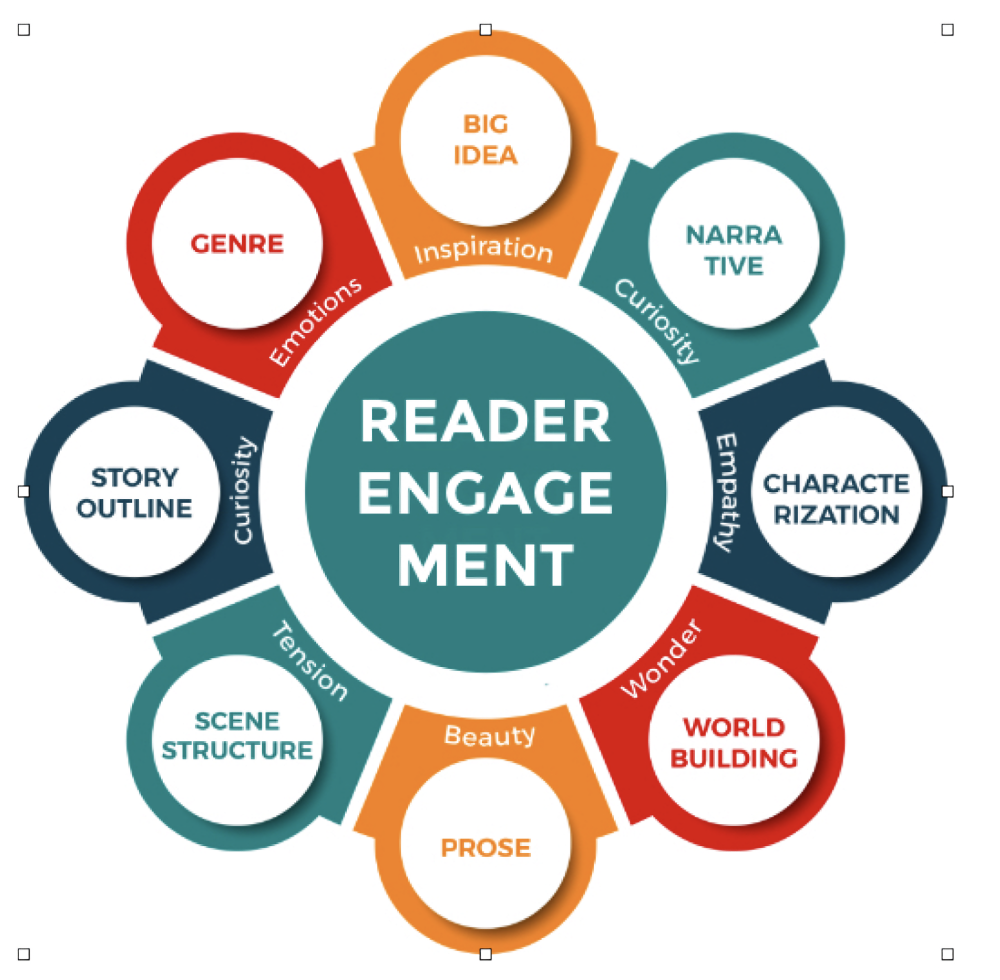
This entire series of articles is written with The Eight Crafts of Writing in mind. These eight writing crafts are:

  1. Big Idea (aka theme)
  2. Genre
  3. Narrative (including POV)
  4. Story Outline (aka plotting)
  5. Characterization
  6. World Building
  7. Scene Structure
  8. Prose (aka line-by-line writing)

Reader Investment and Engagement

Readers don’t just invest money — by buying your book — but also time and effort. They suspend their disbelief and invest trust, meaning they give you, the writer, the benefit of the doubt that you will deliver on your story and style promise.

They make efforts figuring out clues and blinds, twists and turns, and foreseeing climaxes. Last but not least, they invest emotionally by rooting for story characters and weathering conflicts and tension.

Reader investment is your goal. Reader investment means success.

Your story will be successful if you get total strangers to read the first chapter of your book and hook them enough to read the second. And the third. And so on.

Reader investment means reader engagement.

Creating Reader Engagement

What makes readers open a book and keep turning the pages?

These nine engagers:

  • Empathy
  • Curiosity
  • Tension
  • Inspiration and motivation
  • Sense of wonder and beauty
  • Emotional thrill
  • Excitement
  • Satisfaction
  • Feelings

Let’s have a closer look at the nine engagers.

Empathy

Empathy is the root engager. If readers don’t root for the protagonist, they won’t be curious about what will happen to her, nor get tense when the going gets tough. We’ll cover how to weave empathy in a later article.

Curiosity

Make the audience put things together. Dont give them four, give them two plus two. — Andrew Stanton

People are curious souls. They wonder how it feels to walk in someone else’s moccasins for a moon. Or in someone else’s high heels for a month. Is the grass really greener on the other side? How does it feel to have no garden? How does it feel to have an entire park as a garden? People read to experience situations they can’t or don’t want to encounter in real life. 

Curiosity manifests in two ways:

  • Expectation or anticipation (positive curiosity)
  • Worry (negative curiosity)

Drama is anticipation mingled with uncertainty. — William Archer

Curiosity is an intellectual/cognitive affair. You can maintain your readers’ curiosity by raising questions, in particular, the global story question: Will the protagonist succeed or not? But don’t just raise any question, questions need to come with challenges (no challenges, no story).

The antagonist (the agent of adversity) stands between the protagonist and the story goal. The greater the power divide between the protagonist and antagonist, the greater the curiosity:

  • Small power divide: Readers wonder whether the protagonist will succeed.
  • Large power divide: Readers wonder how on earth the protagonist can possibly succeed.
  • Optimal power divide and story jackpot: Readers are convinced that it is impossible for the protagonist to succeed.

In the case of series, writers give their protagonists an umbrella goal and keep them from achieving it. The Blacklist would end the moment Elizabeth Keen is safe. The 100 would end the moment these guys get a life. Tony Soprano better not succeed with his therapy, and Uhtred better not get his kingdom.

Many screenplays have seven or eight sequences, and each sequence begins with a challenge/question and ends with an answer: success or failure. You can do the same thing with chapters and acts.

You can boost reader curiosity with dramatic devices, for example, with a cliffhanger. A cliffhanger separates a question and its answer with a chapter, act, or even book break.

Tension

Tension arises from the discrepancy between want and reality. In order to feel tension, readers must empathize with characters.

Tension manifests in two ways:

  • Hope/anticipation: The reader wants something to happen, for example, that the protagonist succeeds
  • Worry: The reader wants something not to happen, for example, that the protagonist fails.

In other words, your reader must care what happens. Otherwise, he wont worry*, and worry is the big product that a writer sells. — Dwight V. Swain

* Worry = negative curiosity.

While curiosity is binary, tension arcs:

The antagonist and adversity stand between the protagonist and her success. The antagonist and adversity catalyze tension.

Empathy + Adversity = Tension

You can use dramatic devices to increase tension, for example, by:

  • Adding various types of adversity
  • Raising stakes
  • Complicating complications
  • Adding unexpected twists
  • Adding deadlines
  • Revealing hidden agendas

Tension and Curiosity

Tension and curiosity are the most effective story engagers — enabled by empathy.

Ever heard that stories are story-driven or character-driven? Best if they are both.

Oversimplified, character-driven stories engage readers with tension, and story-driven stories engage readers with curiosity. Writers design curiosity with Story Outline and create tension with Characterization and Narrative.

Inspiration & Motivation

Big Ideas inspire and motivate readers. Great stories deliver inspiring what-ifs, morals, or wisdom bytes. What if a vampire hates being one?

A protagonist who succeeds against all odds can inspire and motivate readers to follow her example in real life. That’s the power of narrative. Politicians, economists, and prophets engage in narratives to make that power work for them.

Sense of Wonder & Beauty

You can produce a sense of wonder and beauty with splendrous descriptions of characters and story worlds. Classical examples for the latter are Harry Potter and The Lord of the Rings.

Ugly worlds can produce a sense of wonder and (dark) beauty too, for example, dystopian worlds and Nordic Noir.

Emotional Thrill

Readers engage with stories because they allow them to enjoy emotional thrill without the dangers that come with it in real life.

You can engage readers with emotional thrill through action beats and conflict-based dialogue.

Excitement

Stories are virtual adventures. What is more exciting than following a heroine on her heroic journey?

Satisfaction

We experience satisfaction when we succeed in endeavors and avert danger. The story resolution delivers poetic justice, and that conjures a sense of satisfaction in readers.

Feelings

Feelings and emotions are two different affairs. Thrill, excitement, satisfaction, anger, disgust, and infatuation are emotions. Love, happiness, a sense of beauty and purpose are feelings.

Feelings, aka aesthetic emotions, are somewhat elusive because, unlike emotions, experiences can’t trigger them. Feelings need to be cultivated, for example, in art or in a relationship (one could consider a relationship a piece of art).

How often do we express unconditional love in real life? Happiness? Beauty? Purpose? Stories are great opportunities to reveal, explore, and communicate feelings.

Emotions sell. That’s why romance, action, horror, and thriller are the leading genres. But readers have become more demanding and desire deeper stories, stories with existential depths that conjure feelings and touch the heart. Many stories that come out of Asia aim at readers’ hearts.

A Word on Conflict

True, there can never be enough conflicts in a story, but conflict is a sub-category of adversity, not an engager in its own right.

We experience adversity on five levels:

  1. Physical adversity (storms, droughts, etc.)
  2. Natural adversity (predators, sickness, etc.)
  3. Social conflicts
  4. Inter-personal conflicts
  5. Intra-personal/psychological conflicts, e.g. conflicts between thoughts and feelings

As you can see, adversity takes the form of conflict only on the social, relationship, and psychological levels.

Writers craft social conflicts through World Building.

Writers craft inter-personal conflicts through Characterization. Conflicts between people can assume two forms:

  • Physical (action)
  • Verbal (drama)

Conflicts catalyze curiosity and tension, which are the true engagers. Conflicts make it harder for the protagonist to realize the story goal, which engages readers with tension. Conflicts give also rise to the question whether the protagonist will prevail, which engages readers with curiosity.

Balancing Engagement

How many engagers should a writer use at any given time in her story?

Empathy needs to be present at all times because it enables curiosity and tension.

Too few engagers and your story gets boring. Too many engagers would stress out your readers.

Comparing a story with a cake, make empathy your cake’s base layer, use tension and curiosity to fill it with emotional thrills, ice the whole thing with inspiration, sprinkle on a splendor of wonder and beauty and excitement, light some feely candles, and place an all-resolving cherry on top. Or a lemon.

Thank you for reading! The next installment of this series covers the psychology of experiencing and how to apply that to storytelling.

Which engagers are you good at using and which ones are you struggling with? Which ones do you overuse? Which ones should you use more often? Please share in the comments below.

Note: You can buy The Eight Crafts of Writing here (available on Kindle Unlimited or in paperback) or take the course at the Lawson Writer’s Academy here.

About Stefan

Stefan Emunds is the author of The Eight Crafts of Writing. He writes inspirational non-fiction and visionary fiction stories and runs an online inspiration and enlightenment workshop. Stefan was born in Germany and enjoyed two years backpacking in Australia, New Zealand, and South-East Asia in his early twenties. Prior to becoming a writer, he worked as a business development manager in Europe, the Middle East, and Asia. At the moment, he lives with his son in the Philippines.

Read More
Create Stronger Characters by Giving Them Roles

By Janice Hardy, @Janice_Hardy

There’s one trick I use that makes writing—and developing—my characters a whole lot easier.

I’ve always been a bit of a pantser when it comes to characters. I figure out only the basics of who they are and where they came from before I start a draft, and I learn who they are by putting them into terrible situations and seeing how they get out of it. A “trial by fire” so to speak.

This has advantages and disadvantages—it lets me develop characters whose traits work for the story, but I also often wind up with two-dimensional characters at the end of a first draft. Sure, they become the people I need for the plot to work, but sometimes that’s all they are. This causes me extra work during my revision passes.

But a few years ago, I started doing things differently, and it made a huge difference.

I gave each character a role.

Knowing what role a character plays in the story helps you determine which character does what in every scene—which helps characterize them at the same time.

A character’s role is essentially their function in the novel.

  • Are they the best friend?
  • The mom?
  • The confidante?
  • The spark of inspiration?
  • The fount of knowledge?
  • The comic relief?
  • The constant thorn in the side?

Whatever it is, any time something needs to happen in a scene that fits their role, they’re the ones to do it.

Why do you give characters a role?

Roles help differentiate the characters, and allows you to develop them with traits unique to them. The mom character (the one who worries and takes care of everyone, not always an actual mom) will step up anytime someone needs comfort, or a firm nudge to do the right thing, or whatever “mom” means in your story. But they’re probably not going to ignore someone in pain or who needs their help. 

In the early drafts of my current novel, my protagonist was fairly defined, but her two best friends were not. Their dialogue was a bit bland, they didn’t have strong roles, and I could have swapped most of what they said or did and it wouldn’t have changed the story any.

They were placeholder characters spouting the lines and doing the tasks I needed for plot, not individuals with a sense of agency.

Poorly defined characters lose their uniqueness, which leads to interchangeable characters. And that leads to flat, forgettable stories.

And I certainly didn’t want that. I sat down with my draft, looked at the scenes and histories of these characters, and how they fit into the story to help resolve the conflict and drive the plot. Based on that, I clarified which role each one played, and revised so that aspect was stronger.

Let’s look closer.

Each character got a specific role to fill based on what they did the most.

This was an adventure story that sent three kids out into the wilderness to solve a problem affecting their town. From a technical standpoint, I needed someone who knew the magic (which involves plants), the wildlife (since they were in the woods), and how to survive on their own. These were the three most common aspects that appeared in some way in the story and involved the plot.

Examples:

Bailey: My protagonist’s role was easy—she had the magic power and was the driving force behind wanting to solve the problem, and she had the skills necessary to do it. She was also the “good with plants gal.” Anything that involved knowing about plants and/or magic, she was the one who knew it or noticed it.

David: Friend One was a city boy with a scientist father who studied magical creatures. He was the one who shared information about the magical animals in this world, so he became my “he knows all about the critters” guy.

Ellen: Friend Two was a country gal whose family lived in the woods, and was used to the dangers of the woods. She became “the protector” and the one who knew how to survive in the wild. She helped keep the others alive when they would have otherwise done something stupid and died horribly.

Once I identified how each character fit, I better understood how they’d interact with the world, and each other. It kept any one character from being too perfect and knowing too much. It also gave readers different types of characters to relate to, which is particularly important in fiction aimed at teens and tweens.

What do you want to get across to your readers?

Think about the aspects of your story you want to get across to readers.

Do you have a lot of information that needs to be conveyed? Are there world details, such as magic, or a specific profession you’ll need to explain? Are there particular character tropes, such as the Sidekick, the Mentor, the Love Interest? Maybe you have a Cautionary Tale character, or a Dark Mirror character. You might even have thematic roles for certain characters.

Each character had a specific type of information they shared with the protagonist—and with readers.

This is where knowing the roles really paid off. If the scene needed someone to understand plants and what to do with them (and the magic), Bailey would share it. If there was information about animals to convey, David was my go-to guy. When someone needed to point out the dangers or remind readers what could go wrong, Ellen brought it up or noticed it.

It might sound like a small thing, but it made it very clear in every scene who would say what, as well as what they’d notice about the world or situation.

Think about the information you’ll need to explain to readers and consider which characters are the best ones to do that.

Look at their personalities, backstories, and families, since that’s most likely where they learned whatever knowledge you’ll need them to share. If you notice they never have anything relevant to share, that’s a red flag that they might not have much to do in the story.

Each character was “in charge” of something.

Knowing their roles meant I knew who would jump into action when (and why), so all three kids had a chance to get involved and shine. If someone needed protecting or defending, Ellen handled it. If it involved the main plot and using the magic, Bailey did it. If someone had to interact with the wildlife, David stepped forward (and often got himself into trouble, but that was also part of his character).

This gave me opportunities for each character to show off their skills and do what they did best, which also gave me options on how every scene’s conflict might be resolved.

Think about how characters are going to act and react in different ways based on who they are.

A character who avoids confrontation isn't likely to charge out into danger to defend someone, but a “jumps in without thinking” type probably would. Knowing who would do what, when, and why, is handy when deciding which character needs to be in a scene.

Each character had unique traits and skills.

The characters’ skills came from what I knew about them before I started writing, but they developed significantly as I focused on their roles. Bailey studied magic and plants, David helped his father research magical creatures, Ellen learned survival skills from her family. I could look at any scene and what problem they faced, and it was clear who had the skills to resolve the problem. Often, it took a mix of skills and the kids working together to overcome whatever obstacle I’d thrown at them.

Think about what skills you’ll need to solve your story’s problems. Figure out what each character brings to the table. What are they good at? What special skills or useful traits will come in handy at some point in the novel? What skills would they have naturally learned with their unique background? What traits would someone with their upbringing have naturally learned? If you need a skill later, how might one of your characters have learned it? Maybe change a backstory to fit that need, or give a character an opportunity to learn that skill earlier in the story.

Giving a character a role is a shortcut to figuring out who they are and how they fit in the story.

There’s always some overlap, of course, but that gives you options on who might do what when you need to mix it up some, which helps keeps scenes unpredictable. Just look at each character and decide who makes the best choice for that scene for what needs to be done or said.

It’s easier to write great characters when you know why they’re there. They have a job to do, as well as a life to live. Understanding that role and that life gives you a deeper well to draw from when writing a scene, because you’ll clearly see what that character has to offer.

Do you give your characters different roles? Do you have some favorite characters or favorite roles that come to mind? Please share them with us down in the comments!

About Janice

Janice Hardy is the award-winning author and founder of the popular writing site Fiction University, where she helps writers improve their craft and navigate the crazy world of publishing. Not only does she write about writing, she teaches workshops across the country, and her blog has been recognized as a Top Writing Blog by Writer’s Digest.

Janice also spins tales of adventure for both teens and adults, and firmly believes that doing terrible things to her characters makes them more interesting (in a good way). She loves talking with writers and readers, and encourages questions of all types—even the weird ones.

Find out more about writing at www.Fiction-University.com, or visit her author’s site at www.JaniceHardy.com. Subscribe to her newsletter to stay updated on future books, workshops, and events and receive her book, 25 Ways to Strengthen Your Writing Right Now, free.

Website | Facebook | Twitter | Pinterest | Goodreads | Amazon | Barnes & Noble | iTunes | Indie Bound

Read More
The Law of Abundance and You as a Writer

by Diana Stout, MFA, PhD

As writers, we'd like to think that our work will bring us an abundance of wealth, but what if it doesn't?

Is there anything we can do that would make a difference?

Would you be surprised if I said, "Yes, there is"?

Some Universal Laws

The Law of Abundance is a powerful, amazing, and profound Law, as are all of the Universal Laws. Surprisingly, most of these Laws are unknown, misunderstood, scoffed at, or ignored.

The Universal Laws are quite simple, actually. They are in motion always, responding to our actions, our thoughts, our beliefs, and to the things we say regardless if our words, thoughts, and actions are negative or positive. Every day. 24/7.

We attract people, things, events, circumstances, and happenings. Likewise, we are attracted to those who are like us in beliefs, judgments, sense of humor, hobbies, and so forth.

More About the Law of Abundance

The Law of Abundance is also known as The Law of Compensation. This Law embraces the common phrase, You reap what you sow. Would you be surprised to learn that the Law of Karma fits that phrase, too, as does the Law of Cause and Effect?

Abundance comes in many forms, not just monetary, and sometimes it is uneven. For example, while I've been blessed with abundance in many areas of my writing, the monetary element has been scarce.

Actually, I'm here today because of the Law of Abundance. I'm living one of my dreams of being a contributor to this award-winning Writers in the Storm blog.

But, I think I'm really here because of my recent request of wanting to find my audience.

The Beginning of My Journey

I floundered during those early years, as so many of us do, trying to find my life's purpose. I would have loved having a life coach. Instead, I made do with how-to books. Looking back, I can see that I had to take this longer path to find my life's full purpose.

At the beginning of my writing life, I just wanted to see my name in print. And it happened. Quickly.

According to Jenny Hansen's earlier July 15 here at WITS, Are Writers Born, or Are Writers Made? she suggests that "the majority of writers are forged from fear or pain or loss."

While I'd been writing from these three perspectives through my early articles and journals, I believe there's another category of writers, the category that was the impetus for my wanting to write romance books: the dollar-signs-in-the-eyes writer.

At the time, I was reading a romance per day, reading interviews of favorite authors that included their earnings. Analyzing these 200-page fun reads with their happily-ever-after endings, I thought, I could write these.

I could hear the cha-ching.

My purpose became money-focused and despite all the publications and bylines that followed, including the three traditionally published books, and speaking at various groups by invitation, I still wasn't earning a living from my writing. (Indie publishing was more than a decade away.)

My Road to Writers In the Storm

As I mentioned earlier, I'm here today because of the Law of Abundance. I’ve had a long-term dream of contributing to this award-winning Writers in the Storm blog. Let me explain…

A few weeks ago, I had told a writer friend that I wanted—needed actually—to find my audience, and learn where they hung out. When I told her about this blog opportunity, her mouth dropped open in a huge "O" and she said, "Diana, those readers are your audience."

The Law of Abundance had heard my request and put the people in my path who could make this event happen.

How the Law of Abundance Has Worked for Me

The Law of Abundance tends to shower tremendous gifts on those who not only ask, but who show up and do the work.

As many writers know, it's a challenge to balance writing with a day job. I had a particular dream when I was finishing up my bachelor’s degree. I wanted to attend a hard-to-get-into MFA program that was a good 45-minute drive one-way. I didn’t know how I’d pay for the program and my current job didn’t leave me time for it.

I seeded a piece of paper with money owed me into a houseplant with a wish for the means to attend. I also applied for the MFA program’s scholarship with little confidence that I’d get it.

A few weeks later, I was invited to transfer to a new job with hours that allowed me time to travel the distance to attend the afternoon classes for my coveted MFA program. Now, if I could just figure out how to pay for it…

Then I received the miraculous news that I’d been awarded a full scholarship for that MFA degree, which allowed me to teach the craft of writing full time.

Later, when I asked the department's chair how I had managed to win the scholarship over another talented writer, the chair told me that I not only had more previous writing experiences including publications, I also had stellar grades and fantastic recommendations from employers, co-workers, and teachers.

I’d asked for what I wanted, and I showed up and did the work.

How can the Law of Abundance help you, as a writer?

Watch Your Words

  • Don't say: I'm not a writer because I'm not published.
  • Instead say: I'm a writer because I'm putting words to paper. I'm a writer because I'm creating stories with interesting characters.

Do the Work

  • Don't write only when you're in the mood.
  • Do create a habit where you write every day, even if only for 10 minutes a day! Write even when you don't know what to write. Just start putting words on paper. You'll be surprised at how quickly the words will start flowing. Sometimes, it just takes priming the pump.

Believe in Yourself

  • Don't ever think to yourself that you're wasting your time, that you can't write.
  • Do tell yourself repeatedly that you're a good writer, learning your craft.

Over the years, I've studied and restudied the Laws, analyzed and tested them, and have made corrections in my own behavior. I've learned that if I'm not getting what I want, the Law isn't at fault—I am.

The Law of Abundance has always given me exactly that upon which I had focused.

With my writing, the Law of Abundance has provided me with bylines, publications, wins and placements in contests, awards, meeting the right people, putting me in the right place at the right time (with my preparedness) for speaking engagements and writing opportunities, and gifted me my last two degrees monetarily.

Final Thoughts

The Law of Abundance can work for you, just as it has for me. Believe in yourself, do the work by pursuing your craft, and watch your words, especially as to how they pertain to you as a writer.

If you want to learn more, I am teaching a class called Bringing Abundance Into Your Life that starts TODAY. It’s based on my recent publication, Finding Your Fire & Keeping It Hot. You'll receive a free ebook copy of Finding Your Fire if you click the link and sign up. I hope to see you there!

Note: This opportunity, too, is the result of a request I had made to the Universe.

Do you believe in the Universal Laws? How have you seen them at work in your life and your writing? Please share your journey with us down in the comments!

Please join us in welcoming Diana to Writers In the Storm!!!

About Diana

Diana Stout is a screenwriter, author, blogger, writing coach, former English professor, and award-winning writer of multiple genres. Her latest fiction release was Arrested Pleasures: A Laurel Ridge Novella (#3 in the series).

Diana's links:

Website  ~ Facebook ~ Twitter ~ Goodreads ~ Amazon ~ Instagram ~ Pinterest


Top photo base downloaded from Depositphotos.

Read More

Subscribe to WITS

Recent Posts

Search

WITS Team

Categories

Archives

Copyright © 2026 Writers In The Storm - All Rights Reserved