Writers in the Storm

A blog about writing

storm moving across a field
The Power of Vision in Writing

By Ellen Buikema

When I began this series on sensory writing, I hadn’t planned to include the power of vision in writing. Everyone uses the sense of sight, right?

People are unique in that most use sight as their dominant sense, which may be why the sense of sight is so often used in describing scenes and characters.

When using sight in writing, our characters are often guided by what they see.

Color

“As we emerged into the capital of Winter, the corridors changed from what looked more or less like smooth, poured concrete to crystalline ice in every hue of glacial blue and green, the bands of color merging, intertwining. Flickers of light danced through the depths of the ice like lazy fireflies of violet and crimson and cold blue sky. My eyes wanted to follow the lights, but I didn’t let them. I couldn’t tell you why, but my instincts told me that would be dangerous, and I listened to them.” –  Jim Butcher, Cold Days

Color is a great tool to use for sight. It adds life, richness, and contributes to mood, in this case—fear. Winter’s world in the Butcher’s Dresden series is full of treachery and deceit. A cold and violent place. The cool colors add to the tension.

Movement

“On the periphery of his vision he sensed fresh movement. Two more terrorists had entered the room, their guns blazing. He rolled again, still firing, and saw them both fall. He came to a stop on one knee, poised and ready to spring in any direction. … The senator cowered away in the opposite direction, terrified of any movement near him. His lips quivered and he was whimpering like a child.” – David Ambrose, The Discrete Charm of Charlie Monk

The way that characters move through a scene illuminates their qualities and emotions. In this case, the protagonist is open and full of energy (no doubt, adrenalin), whereas the protectee has pulled himself inward.

Light

“The blazing sun, the cessation of the short-lived breeze, and the return of perfect silence to the cemetery made her uneasy. The sun seemed to pass through her as if she were transparent, and she was strangely light, almost weightless, and mildly dizzy too. She felt as if she were in a dream, floating above an unreal landscape.” – Dean R. Koontz, Lightning

Light affects mood, both inside and outdoors.

Perhaps you have a character originally from a sunnier location that moves to the Pacific Northwest, maybe the Oregon coast. How do you think the change of light might affect the character’s frame of mind? Sad? Depressed? Elated? Murderous?

Here’s a great list of weather descriptions to use.

Visual Writing Prompt #1

Find an interesting photo.

  • Close your eyes and imagine yourself in the scene.
  • First focus on individual parts, and then in your mind, step back and see the whole scene.
  • Is it familiar?
  • How does it make you feel?
  • What would your characters do in this environment?
  • Try adding this or similar sensory information in your WIP.

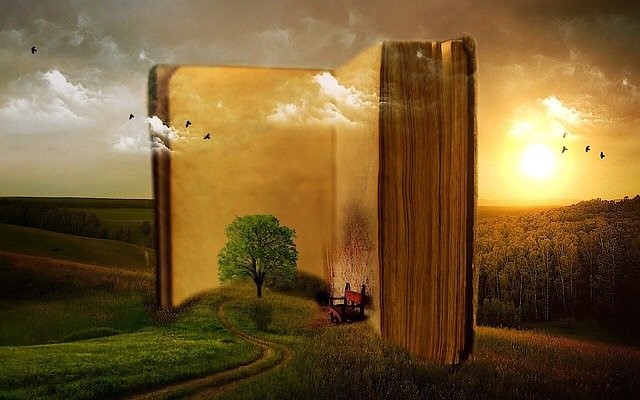
Try using the top image as a writing prompt and see where your imagination takes you.

Visual Writing Prompt #2

  • Stand in the middle of your room.
  • Look all around.
  • Make notes on the details
    • Dust bunnies
    • Crumbs
    • Clothes draped on the floor, furniture, or hamper
    • Textures of bedding, lamp, lampshade
    • Books, glasses, empty plates

Can any of these elements fit into your story?

Writing the Sense of Sight in Different Genres

Sight in Romance

“Sam handed me my hot chocolate and didn’t answer. But his yellow eyes gazed at me possessively—I wondered if he realized that the way he looked at me was far more intimate than copping a feel could ever be.
I crouched to look at the almond bark on the bottom shelf in the counter. I wasn’t quite bold enough to look at either of them when I admitted, ‘Well, it was love at first sight.’” – Maggie  Stiefvater, Shiver

Sight in Humor

“It's not because I want to make out with her."
Hold on." He grabbed a pencil and scrawled excitedly at the paper as if he'd just made a mathematical breakthrough and then looked back up at me. "I just did some calculations, and I've been able to determine that you're full of shit.”  – John Green, Looking for Alaska

Sight in Mystery/Thriller

“I watched her undress with moonlight shivering across the room from behind sheer curtains that moved with the currents from the hearth fire.” – Gabriel F.W. Koch, Death Leaves a Shadow

“Robin was a great kid. Smarter than her father at eight years old. She liked the oddest things. Like the instructions for a toy more than the toy itself. The credits of a movie instead of the movie. The way something was written. An expression on my face. Once she told me I looked like the sun to her, because of my hair. I asked her if I shined like the sun, and she told me, ‘No, Daddy, you shine more like the moon, when it’s dark outside.” ― Josh Malerman, Bird Box

Using sensory details helps your readers immerse themselves in the story and experience the characters’ feelings.

How do you use the sense of sight in your writing? Do you have any examples of writing using sight you’d like to share?

* * * * *

About Ellen

Author, speaker, and former teacher, Ellen L. Buikema has written non-fiction for parents and a series of chapter books for children with stories encouraging the development of empathy—sprinkling humor wherever possible. Her Works In Progress are The Hobo Code, YA historical fiction and Crystal Memories, YA paranormal fantasy.

Find her at https://ellenbuikema.com or on Amazon.

Read More
One Plotting Tool for All

Whether you’ve just finished a project or you’ve just started writing, facing the blank screen (page) is daunting. It can make even the best ideas shrivel in your head and freeze your fingers. Some believe that story structure is essential for success and advise all writers must plan their story in advance. Others believe spontaneity is crucial to creativity and advise that everyone should pants their story. What is a writer, especially a new writer, to do? Consider that both are correct. Story structure is important and spontaneity can be a boon to creativity. Neither are the only right answer. There are tools that can help all writers regardless of their preferred story development method. One plotting tool for all is the story sentence.

Where Do You Start?

You stare at the screen and think that the great idea you had is really a cliché, or it’s too slight to be the epic novel you envisioned, or that the idea is only a two-step plot. Hold on. It’s not that bad. All you need is one sentence. But before we begin that, we need a common understanding of what plot means.

What is Plot?

To paraphrase and meld together definitions by Dwight V. Swain, Donald Maass, and Jessica Page Morrell

Plot is a series of scenes where something changes. Each change builds intensity and tension and increases your reader’s sense of foreboding until there is a devastating fear that your focal character may not attain her goal. When the intensity reaches its maximum, there is a release of tension in a satisfying manner. 

It’s a mouthful, but all of those things are part of the word plot represents. What changes, how things change, how intense or tension-filled your story is comes from the situation, genre, and tropes you select to build your plot. Overwhelmed yet? There are a lot of pieces to plot and it can be overwhelming. So let’s pare it down to a bite-sized chunk—the story sentence.

What is The Story Sentence?

It is not a tagline. A tagline is a tease. That’s not what we want right now.

The sentence is closer to a log line. But it’s not that either. It isn’t for marketing. It isn’t for your readers to understand. 

It’s a plotting tool, a sentence meant to help you focus your story. Maybe you’re like I was. You’ve heard writers are supposed to boil their story down to one sentence but you can’t figure out how to do it.

I did not get it until I took Holly Lisle’s “How to Revise A Novel” course. Simply put, she advised that the sentence included a protagonist, an antagonist, a conflict, and a hook. She recommended the sentence should be no more than thirty words in length. With her more detailed class instructions, I finally understood. Since then, I’ve studied how others use the story sentence and eventually made it my own. 

The Parts of the Sentence

I break down the sentence into parts--

An [adjective] [focal character] needs [to do something] for [an important personal reason] but [an adjective] [obstacle] needs [something] which [verb of conflict or stakes].

This is both easier and harder than it looks. Those of you who are grammar nerds may find my next statement objectionable. Don’t worry about grammar when you construct the story sentence. This isn’t about making a well-constructed sentence. It’s about getting the essence of your story down.

Let’s look at the parts of that sentence more closely.

The Character

The first noun, the character, is usually your protagonist, primary, or focal character. A name at this point doesn’t help you. Instead of a name, identify your character by her predominate character trait, job or vocation, or role in the story. This is a place where clichés are okay, but if you can be more specific and unusual, that’s better. The adjective you choose to enhance your character should describe a small part of what makes your character unusual. 

Let’s say we have an army doctor. Now we give the army doctor a descriptive adjective. He’s a wounded army doctor. Great. Moving along.

The Need

What does our army doctor need? Hmm, we’ll say he’s returning to civilian life. Okay. That’s pretty ordinary. Let’s make that more specific. He’s searching for a flat in London. Better. Maybe he’s discovered that returning to civilian life isn’t easy. How can we reduce that to convey stronger feelings? 

He’s unfulfilled by civilian life. Okay. That implies he needs to be fulfilled somehow. We keep working on this until we have a better idea of what his need is. Maybe he needs to overcome PTSD. Wait, you say. That’s not terribly original. Remember, the sentence is to help you focus your story, not necessarily to show all the lovely details that make your story unique. 

The Sentence So Far

A wounded army doctor unfulfilled by civilian life must overcome his PTSD…

To Do What?

All right, now we need to figure out what motivates him (at least in a broad sense) to overcome his PTSD. This may be where another character comes in. Don’t name the character, give him a descriptive adjective and noun. So our wounded army doctor has an eccentric flatmate. Maybe his eccentric flatmate has gotten into some kind of trouble and only the doctor can save his flatmate. 

The Updated Sentence 

A wounded army doctor unfulfilled by civilian life must overcome his PTSD to save his eccentric flatmate…

The Obstacle

The obstacle is a person, place, or thing that may cause the focal character to fail. The weather, the geography, internal flaws, or even a culture can be an obstacle. Often the obstacle is the antagonist and actively keeps your focal character from attaining her goal. In the wounded army doctor story, who or what is the obstacle? 

When searching for the obstacle, ask yourself questions. Why can’t the army doctor swoop in and save his flatmate? Why would the flatmate need his life saved? Perhaps the eccentric flatmate is a brilliant private detective. What if that detective’s nemesis is a criminal genius? What if the criminal genius has sprung a trap, endangering the life of the detective? What if the doctor is the only one who knows about the trap?

The Full Sentence

A wounded army doctor unfulfilled by civilian life must overcome his PTSD to unravel clues left by a criminal genius to save his eccentric flatmate’s life and find fulfillment as a detective. 

Did you guess this thirty-two word sentence is about Sherlock, the British television series? Is it a well-written sentence? No. Does it focus the story’s plot? Yes. It actually shifts the focus away from the Sherlock as the focal character and makes it more about Doctor Watson. That’s good news if our idea was to have Dr. Watson be the protagonist. If we didn’t mean to make the story about Dr. Watson, we can try again. 

Not Written in Stone

The sentence is a tool. It is not static or unchangeable. If you change your mind at any stage of the writing process, you can pause and rewrite the sentence. Change the protagonist or obstacle or the whole thing. Or you can carry on writing your new story to the end. Rewrite the sentence before you revise your story. It will help you through the revision process.

Must you use a story sentence? Nope. You can outline or pants all the way through a story. Depending on your understanding and internalization of how to write a story, pantsing may mean you have a lot of revision to do. There’s nothing wrong with that. If you are a clean writer, you may need only minor revisions. It’s a matter of what you, as a writer, need to do in order to be your most efficient and effective storytelling self.

Is it really One Plotting Tool for All?

As a semi-reformed pantser, I love the story sentence. It helps me keep the story focused without telling a thing about the specific path the story will take. Is the sentence for you? Only you can decide that.

Some writers start with little more than a glimmer of an idea. Others use copious notes and detailed outlines before they write a word. There are writers who write the end first and writers who write random scenes that they can somehow knit together later in a different order. Choose the tools and methods and steps that make sense to you. The how you write should be unique to you. Whether you rely on spontaneity or use detailed outlines, or even use the premise method, a tool like the sentence will help you start but will vanish out of sight as soon as you get your process ignited.

Moving On from The Sentence

Once you know your sentence, you can move on to the next phase of story development. For me, that’s developing my general story arc based on that sentence. But that’s for next month’s post.

Have you used The Sentence to guide your writing?

About Lynette

Lynette M. Burrows loves hot coffee, reading physical books, and the crack of a 9mm pistol—not all at the same time, though they all appear in her books. She writes action-filled science fiction with characters who discover their inner strength and determination and make courageous choices for themselves, their family, and their world.

In Book One of the Fellowship Dystopia, My Soul to Keep, Miranda discovers dark family secrets, the brutality of the Fellowship, and the deadly reality of rebellion. Book two, If I Should Die, continues Miranda’s story with heart-wrenching choices and page-turning action. If I Should Die will be published in May 2022. 

She  has had several children’s short stories published in regional and national magazines and co-authored The White Box series of novellas with Rob Chilson. Although collaborating with Mr. Chilson ruined her short story skills, she occasionally publishes flash fiction on her blog.

Owned by two Yorkshire Terriers, Lynette lives in the land of Oz. When she’s not procrastinating by doing housework or playing with her dogs, she’s blogging or writing or researching her next book. You can find Lynette online at https://lynettemburrows.com, Facebook.com/LynetteMBurrowsAuthor, or on Twitter @LynetteMBurrows.

Image Credits

Top image by by Markus Winkler from Pixabay 

Last image by Nile from Pixabay 

Read More
Creative Ways to Brainstorm Story Ideas

By Becca Puglisi

Inspiration is a fickle beast. She strikes at inopportune times (3 AM, anyone?) then disappears for months on end. She doesn't call, she doesn't write. Or maybe she treats you differently, pouring on so many ideas that you can't tell the golden nuggets from the stinky ones.

Finding and prioritizing story options can be a frustrating process, but it's easier if you approach it from the right angle. Here are a few possible starting points.

Start with Genre

We know that emotions are transferrable, from author to page to reader, so writing something that gets you excited pays off in dividends.

  • What do you like to write?
  • What do you like to read?
  • Which kinds of stories are you passionate about?

Do you like fantasy? Which elements? Think dragons, portals, evil wizards, shapeshifters—then consider how those elements might be reimagined.

Anne McCaffrey's Dragonriders of Pern series gave us a whole new take on dragons, turning them from marauding villains into loving creatures that impress upon humans at birth and use their fiery powers for good.

Then, twenty years after the first book was published, she released the dragons' origin story and how humans first came to Pern. While the previous books were straight fantasy, this one was also science fiction, showing the settlers traveling to the new world and using their technology to establish communities and bioengineer full-blown dragons from foot-long fire lizards. Dragonsdawn is an innovative blending of the sci-fi and fantasy genres in a way that was new and entirely fresh.

So think of the genre you want to write, then tweak the standard conventions to create something new. Or blend your preferred genre with another one and see what ideas come to mind.

Start with Character

Everyone's process is different. It's one of the things I love about the writing community—the vast diversity of thought and method that can birth uncountable stories. Maybe you're the kind of writer who's drawn to characters. They come to you fully-formed, or you have an inkling of who they are before you have any idea what the story's about. If this is you, start by getting to know that character.

  • If you have a good idea of their personality, dig into their backstory to see what could have happened to make them the way they are.
  • If you already know about their troubled past, use that to figure out which positive attributes, flaws, fears, quirks, and habits they now exhibit.
  • What inner need do they have (and why)?
  • Which story goal might they embrace as a way of filling that void?

Characters drive the story, so they can be a good jumping-off point for finding your next big idea.

BONUS TIP: For an easy-to-use, comprehensive tool to build your character from scratch, check out our Character Builder.

Start with a Story Seed

But maybe it's not characters that rev your engine. When I'm exploring a new project, I have no idea about the people involved. Instead, my stories typically start with a What if? question.

  • What if a man abandoned his family to strike it rich in the California Gold Rush—what would happen to them?
  • What if all the children under the age of 16 abruptly disappeared?
  • What if someone's sneezes transported them to weird new worlds?

Four helpful tips:

  1. If story elements, plotlines, and unusual events get your wheels turning, brainstorm those areas.
  2. If inspiration strikes when you're neck-deep in research for your current story, write down those potential nuggets.
  3. Use generators to explore concepts you wouldn't come up with on your own.
  4. Keep a journal of any possible seeds for future stories so you have options.

Start with a Logline

If you've got a vague idea of something you might want to write about, a great way to explore it is to create a logline—a one- or two-sentence pitch that explains what your story is about. Here's an example you might recognize:

A small time boxer gets a once-in-a-lifetime chance to fight the heavyweight champ in a bout in which he strives to go the distance for his self-respect.

Writing a logline for a story idea enables you to flesh it out and experiment with its basic elements. The process of test-driving your idea with different protagonists, goals, conflicts, and stakes can turn a boring or already-done concept into an entirely new one that you can't wait to write.

BONUS TIP: For more information on how to write a logline, see these posts at Writers Helping Writers and Screencraft.

Start with GMC

Debra Dixon's Goal, Motivation, and Conflict teaches authors how to use these foundational elements to plan and enhance a story. But the same principles apply to fleshing out a story idea.

If you're thinking about a certain goal (it's a story about someone who has to stop a killer/find their purpose/plan a wedding), play with various conflicts and motivations. Throw ideas into the hopper and see what pops out. Keep turning the handle to produce concept after concept until one of them strikes your fancy.

Listen, we all know the importance of writing what we're excited about. Without that passion, writing becomes a slog and our stories end up partially finished on a back-up hard drive instead of filling people's bookshelves. So when it comes to story ideas, let your imagination run riot. Consider all the options, no matter how far out they are or uncomfortable they make you feel. Don't stop 'til you find the one that gets you going.

Then get going.

BONUS TIP: For a comprehensive guide on brainstorming ideas and planning your story (as well how to draft and revise it), check out the One Stop for Writers' Storyteller's Roadmap.

Tell us your most creative brainstorming methods and tips below!

About Becca

Becca Puglisi is an international speaker, writing coach, and bestselling author of The Emotion Thesaurus and other resources for writers. Her latest book (The Conflict Thesaurus: A Writer's Guide to Obstacles, Adversaries, and Inner Struggles) released in 2022 with a second volume coming out this fall. She is passionate about learning and sharing her knowledge with others through her Writers Helping Writers blog and via One Stop For Writers—a powerhouse online resource for authors that's home to the Character Builder and Storyteller's Roadmap tools.

Read More

Subscribe to WITS

Recent Posts

Search

WITS Team

Categories

Archives

Copyright © 2026 Writers In The Storm - All Rights Reserved