Writers in the Storm

A blog about writing

storm moving across a field
35 Tips to a Healthier Writer You in 2022

by Lynette M. Burrows

It’s the holidays and your non-writing mind may be on giving gifts to others. That’s wonderful, but consider giving a writer-centric gift to yourself. Writers are often workaholics, to their physical detriment. This holiday season, give yourself the gift of better health. Here are 35 tips to make you a healthier writer in 2022.

Please note that this is not medical advice. If you have symptoms of repetitive stress injuries or any chronic medical issues, consult your personal health care provider before changing your work environment or habits.

For Your Eyes

Focusing on the computer screen makes the user blink thirty to fifty percent less frequently than normal. This causes dry, red, gritty-feeling eyes, and eyestrain.

The American Academy of Ophthalmology has a lot to say about how to avoid eye strain. The essentials are:

  • Keep the computer 25 inches (an arm’s length) away from your face.
  • The top of the monitor should be at eye level.
  • Reduce glare by repositioning lights or using an anti-glare filter.
  • Give your eyes a 20-20-20 break. Every twenty minutes, look twenty feet away for twenty seconds.
  • Use a desktop humidifier or artificial tears.
  • Natural lighting is best. A combination of natural and artificial light will also work.
  • Adjust the brightness of your room (or screen) so your screen is less bright than the room lights.
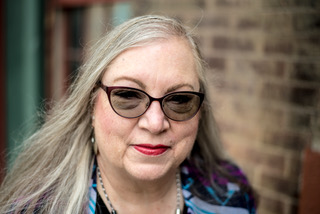
photograph ofa woman

For Your Hands and Arms

  • Find a keyboard that allows your wrists to be in a neutral position (not flexed). 
  • Your mouse should be in easy reach of your dominant hand. Or you can use a foot controlled mouse.
  • Try to keep your arms parallel to the floor.
  • Avoid resting your arms on the edge of the keyboard, desk, or table.
  • Elbows should be at 100 to 110 degrees. This means your keyboard should be slightly higher in the back of it, so use those little feet on your keyboards. 

For Your Heart and Circulation

  • When you take a break, do something. Walk a hundred paces, do stretches, get up and move.
  • Do aerobic exercises every day, at least every day you’re at the computer.
  • Blood is about fifty percent water. Drink eight glasses of water a day to keep it moving. 

For Your Legs

  • Don’t cross your legs or ankles.
  • Your chair should allow your feet to be flat on the floor. Use a step stool if you can’t get your chair into the correct position. 
  • Treadmill desks benefit your legs and your entire body. Sit-stand desks are helpful too.
  • If your feet swell, try the legs-up-the-wall yoga position.
photo of a man standing at a riser that puts his laptop and keyboard at healthier writer positions.

For Your Spine (Neck & Back)

  • Maintain good posture.
  • Use a chair with lumbar back support. Or sit on a balance ball if you can maintain proper arm and hand position while on the ball.
  • Position yourself so your feet are flat on the floor.
  • Computer height should be just below your head height so that you look slightly down without bending your neck.
  • Avoid twisting or turning your torso. Frequently used items should be directly in front of you.
  • Keep your shoulders relaxed and your elbows close to your sides.
  • Sit-stand desks are a great option. 
  • Take a one- to two-minute break every twenty minutes, a five-minute break every hour, and get up and do an activity away from the computer every few hours.

For Your Writer Mind, Spirit, and Soul

A man walks his dog outside, one of the ways you can be a healthier writer.
  • Breathe. Take five deep breaths, in through your nose, out through your mouth. 
  • When you take a break, turn on the tunes that make you want to move.
  • Get outside. Our bodies need the vitamin D sunlight provides.
  • Take five minutes to be grateful. Sometimes finding one thing you are genuinely grateful for can turn your day around.
  • Smell the roses or whatever flower or scent that calms you.
  • Meditate for five or ten minutes.
  • Keep a writer’s motivation journal or album. Collect your positive reviews or critiques, quotes that speak to you, and any motivational or inspirational memes or images. Sometimes we all need to pat ourselves on the back.
  • Last, but not least, give yourself the gift of a few days off to enjoy friends, family at least once a week and at the holidays.

Become a Healthier You

Writers are notorious for not taking care of themselves. Are you one who doesn’t? Even one change to your workspace ergonomics or habits can improve your health. Try it. Don’t change everything at once. Start with one change. Maintain it for three or four months, then add another change. Which of these tips to make you a healthier writer will you use?

What’s your best tip for being a healthier writer? We'd love to know about it down in the comments!

Lynette M. Burrows loves hot coffee, reading physical books, and the crack of a 9mm pistol—not all at the same time, though they all show up in her stories. She writes thrilling science fiction readers can't put down.

Her series, The Fellowship Dystopia, presents a frightening familiar American tyranny that never was but could be. In Book One, My Soul to Keep, Miranda discovers dark family secrets, the brutality of the Fellowship way of life, and the deadly reality of rebellion. In Fellowship, the series companion novel, a desperate young man and his siblings hide in the mountains from the government agents who Took their parents. Book two of the series, If I Should Die, will be published in 2022.

Owned by two Yorkshire Terriers, Lynette lives in the land of Oz. You can find her online at her website, on Facebook, or on Twitter @LynetteMBurrows.

Image Credits

Top Image by Harry Strauss from Pixabay 

Second Image/photo by Photo by Eugene Chystiakov on Unsplash

Third Image/photo by JP Lockwood on Unsplash

Last Image/photo by by JackieLou DL from Pixabay 

Read More
Dreams & Confessions of a Disorganized Writer

by Jenny Hansen

I dream of being an organized person. Heck, I'd settle for being an organized writer. Fortunately for me, I married my organization gene, and he's a keeper! But every year, as December goes into full swing and I'm hip-deep in wrangling the family holidays, I dream of being more organized.

And before all you Planner Unicorns start eagerly reaching for your Pomodoros, I've tried to be one of you. And I have failed. I lose the planners, the cute stickers, the schedules, and the list of resolutions...and it makes me feel like a failure.

I've had a bit more luck using technology to corral my ADD tendencies because my computer files are completely organized. Those suckers are pristine and on OneDrive where I can get them from anywhere, which I find very comforting. Also, Google calendar puts reminders right in my face, from both my phone and my computer, which means I actually remember my meetings and get to them on time.

I love technology.

Fun Tangent: here are some great posts from some of the bloggers at WITS on using technology to increase writing productivity:

What Holiday Disorder Looks Like at My House

All my organized friends are about to cringe and peek at these next paragraphs through their fingers. (Sorry in advance!) But this post is about providing comfort to the rest of the readers here. The ones who often feel overwhelmed by life and responsibilities. The ones who jot down book notes on their utility bill envelopes because they can't remember where they put that notebook. The ones who read the paragraph below about my garage and send me a virtual fist bump.

If you often feel like you'd lose your head if it wasn't attached, this section is for YOU. Hopefully, it will help you realize you are not alone.

My Disorganization Gene has a sub-category I'm reminded of every holiday season.

That's when I lament that I am also in possession of the Stuff Disorder gene and the Oh-I-Forgot-I-Had-That gene. Thankfully, I married my husband, aka Mr. Disaster Recovery, and he passed the Supreme Organization gene on to my daughter.

Around the holidays, I depend on my hubby like a blind woman on her guide dog. I thank God for him all the time, but over the holidays — I’m just gonna say it — he saves my bacon every year.

Holiday time shines a strobe light on this not-so-secret shame of mine...

I suck at keeping my stuff organized.

For example, when my husband we unpacked the Christmas stuff from the garage, I found scads of things I’d forgotten about:

  • Cards I meant to send last year.
  • Presents (including calendars) that were for 2017/2018 not this year.
  • 27 boxes of Christmas cards
  • 11 stockings (there are three of us)
  • 19 rolls of wrapping paper
  • 6 things of tissue paper (the jumbo kind)
  • 2 jumbo packs of Scotch tape
  • And NO blinky lights for outside (because we missed that after-holiday sale last year).

Hello? I’ve got enough Christmas cards for the entire block. Literally, all of my family and friends (and their friends) could come to my house to wrap their holiday gifts. And when I'm pressed for time, I end up using gift bags anyway (which is why the graphic at the top says "wrap a present").

True Confessions

I’d be crushed by my mess if I hadn’t married the King of Organization.

Confession #1

I’ve stopped trying to get my cards out at Thanksgiving or Christmas. Nowadays, we just order New Year’s Cards. (In really bad years, they’re called Valentines… One really terrible year, I had St. Patrick’s day “hellos.”)

Confession #2

Most of the time I buy the cards and presents on time, forget where I put them, and have to spend valuable time digging them out. Sometimes I've had to re-shop. One year, for my Baby Girl’s birthday party, my husband asked if I would consider just wrapping and labeling everyone’s unsent presents and putting them on a table by the door so they could TAKE THEM HOME.

Confession #3

I have started combating this organizational deadlock by mailing gifts through the Fall, or even the moment I buy them. I label the package with an “open date.” I comfort myself with the thought that even if these gifts miss the proper occasion, at least it wasn’t because I was a slack-a$$.

On the upside, I started making many of my gifts these last few years. When I'm not buried under deadlines, I bake, paint, create and knit my way through the holiday season. It gives me joy and my gifts have that personal touch of love, even when they’re not usually timely.

We had The Year of Hats a few years back.

Something else I'm thankful for as I come skidding into the New Year all battered and bruised: I have two organized friends who share their Organizational Rockstar gene with me as holiday and birthday gifts most years. They help me start the New Year feeling hopeful that maybe this year I can be more organized.

My Holiday Writing Dreams

I not only dream of being an organized person, I also dream of being an organized writer. I have pals like Laura Drake who finish their shopping by the Fall and write all their books in a lovely linear fashion. She gets up every day at about 3 am to write for several hours. Honestly, I'd hate her if she wasn't one of my fave peeps.

In my organized writer dreams, my life looks far different:

  • I have a set writing time every day.
  • I have an actual office space. With a desk and a big storyboard of my current works in progress.
  • I have an organized wall calendar.
  • I know where my planner is! And it has cute stickers in it.
  • I have an assistant who herds me along toward my goals. And mails packages.

Because let's face it, without the last item on the list, I'd either forget about all these goals for weeks at a time, or I'd keep moving along in the same fits and starts that plague me now. And for sure, I wouldn't have that cool wall calendar.

I'm blessed with lots of superpowers - I couldn't be successful at my job or running WITS without them - but being organized isn't one of them. On the upside, I've already made the almond roca this year.

Confession time! Did you inherit the Stuff Disorder gene or the Supreme Organization gene? Are you shuddering right now or nodding your head in agreement? Do the holidays shine their twinkly lights on your greatest strengths or your greatest weaknesses? Please tell me your story down in the comments!

About Jenny

By day, Jenny Hansen provides corporate communications and LinkedIn advice for professional services firms. By night she writes humor, memoir, women’s fiction, and short stories. After 20 years as a corporate trainer, she’s delighted to sit down while she works.

When she’s not at her personal blog, More Cowbell, Jenny can be found on Facebook at JennyHansenAuthor or at Writers In The Storm.

Read More
10 Steps: NaNoWriMo to Publication

by Piper Bayard

It's December, which is known to writers as the month after National Novel Writing Month. The intensity of the push is over. We blink and search around like the lights just came up in the bar. Or maybe our expressions are more like that look a cat gets when a kid puts a paper bag over it for a few seconds and then pops it off again. We gaze about in a bit of confusion and relief and wonder what the heck just happened. More importantly, we wonder what happens next.

Actual photo of Nanowrimo participant by Canstock.
Actual photo of Nanowrimo participant.

First, if you won NaNoWriMo by making it to the 50k line, congratulations! Woot! Woot! Give yourself a pat on the back. Now get back to work on word 50,001.

If you started writing but fell short of 50k because life is what happens when we’re making plans, congratulations! Yay! Give yourself a pat on the back. You’re further than you were. Now get back to work and finish your manuscript.

If you started writing and fizzled out, congratulations! Pat yourself on the back. You tried. Now open up what you started and get back to work.

"Get back to work" is the theme.

That’s because “winning” NaNoWriMo is not about reaching 50k. Though that’s quite an accomplishment, and it definitely earns the right to wear the t-shirt, it is not the end. It is only the beginning.

NaNoWriMo is not about word count. It is about focusing our choices and behaviors long enough to develop new habits. That's because if we ask any professional author if they are doing Nanowrimo in November, they will tell you that every month is NaNoWriMo. We win far more than the t-shirt and bragging rights when we use the discipline needed for NaNoWriMo as a tool to direct our energies toward reaching further goals.


So what are those writing goals?

To answer that question, we have to know why we write. For a few of us, it’s because therapy is too expensive. For others of us, it’s to leave behind our stories for our children and grandchildren. For some of us, it is to become the next James Rollins, J.K. Rowling, or Diana Gabaldon. Whatever the reason we write, we need to be honest with ourselves about our goals in order to know what comes next.

For those of us who are writing for therapy or to leave our stories behind as a piece of history, our journey can continue at a leisurely pace, with or without editing, agents, publishers, or tackling the learning curve of self-publishing. Such endeavors can come with deep fulfillment and leave messages that could enlighten our future generations.

For those of us who dream of book tours, movie deals, and big fat checks, our journey requires more discipline. Part of that is resisting the temptation to stare at those Nanowrimo manuscripts and admire them.

NaNo writers and/or new writers often want to coddle their manuscripts and possibly tweak them. Then offer them to all of our family and friends, as if we were showing off our baby.

We might think something like "was there ever a more beautiful baby?"

Well....yes. There was.

The most beautiful baby awards go to the baby that got edited, rewritten, edited, rewritten, proofread, edited, rewritten, sent to an agent, edited again, and sold. So the first thing we must do after NaNoWriMo is get over the “baby” idea. Most of us don’t sell our babies on Amazon.

 Cold, Hard Writing Fact

Writing may be an art, but publishing is a business. It’s a beautiful world when our art is in harmony with the demands of business. Sometimes it is. Sometimes it isn’t. How we adjust to that fact of life is where we each find our own way.

Regardless of how the art stars align with the earthy nature of business, the process of getting our novels ready for publication requires certain elements.


10 Steps Between NaNoWriMo (aka Draft #1) and Publication

1. A great book starts with rest.

Unless we actually have an agent or editor chomping at the bit for the manuscript, we should let our NaNoWriMo baby sit for a bit while we write more books. At a bare minimum, we should wait two weeks.

It’s excruciating but so necessary. That’s because working on a manuscript is like driving across the country. If we don’t blink and change our focus from the road to the landscape at times, our minds zone out, and our vision gets blurry. When we stare at a manuscript too long, like the road, we stop seeing it. So we need to change focus, and that includes making our friends, relatives, and beta readers wait until after the next step. It’s agonizing, but it pays off in the long run.

2. Read the manuscript through again and edit it.

It’s not right to ask others to read our work when we haven’t even read it through ourselves. And done a thorough spelling and grammar check.

3. Bring on the Betas

When we are confident that the manuscript is the best it can be without external input, it’s time to send it to beta readers.

When the beta readers send it back, no matter what they say, the only appropriate response is to thank them for their time and efforts. Never argue about their comments. Remember that their purpose is not to give us strokes and affirmation, it is to ferret out the holes in our plots and prose that readers on the open market will find with a vengeance.

4. Evaluate our feedback.

Evaluate beta reader feedback with an open mind and weigh it carefully. If we disagree with an isolated criticism, that’s fine. We move on. However, if more than one person says the same thing, it’s worth deeper consideration, even if we disagree.

Ultimately, we are the masters of our own pages, but part of that mastery is subduing our egos for the sake of creating a great story.

5. The Second Edit

Edit again based on beta reader feedback and polish the manuscript until the sun reflecting off of it could drive airplanes off course.

6. Expanding The Circle

At this point, we need to call in the professionals. For self-publishing or indie publishing, we need an excellent editor for a substantive edit and a line edit. The good ones cost, but they are often worth every penny, as their feedback is invaluable and usually applicable to future projects.

One good way to find someone is to ask around. However, we shouldn't hire a personal friend unless that friend is a professional editor with an excellent reputation—someone willing to slaughter all of our little darlings and make our novel presentable to the public at large. Someone who shows no mercy. Friendship is friendship, and business is business.

For traditional publishing, it's still a good idea to hire an editor, even though an agent and many more editors will give their input during the journey to publication. No agent wants to read unedited work.

7. Rewrite the content of the manuscript again based on the recommendations of the professional editor.

8. Send the manuscript back for the final line edit.

Make sure the editor uses the Chicago Manual of Style or some other equally acceptable authority. A good line editor will cite the rule for every change they make. It's tempting to punctuate from the heart, but it's not good practice.

9. Clean up the manuscript after the line edit.

10. Enter the publication channels.

If self-publishing, we need people to do the cover, the layout, the uploads, the marketing, etc., or learn to do it all or in part on our own. This is no small time investment, but the knowledge can be emancipating.

If going traditional, we must send out those query letters. That's letters, plural. It is our right to query as many agents as we like. It’s up to them to give us a timely response. We would die staring at our mailboxes while waiting for some of them to reply, and many of them never will.

Even if an agent has requested our full, unless they have specifically asked for an exclusive, and we have specifically agreed to it, we are under no obligation to give it. It is, however, professional courtesy to keep them updated if we should sign with someone else.

Actual photo of a writer with twelve queries and one full out the door.

The Most Important Next Step

Get back to work. Write another book. It can take a long time to land an agent, and publishers can be even slower. Don’t wait. Move on, because for every writer, ultimately, it is not about 50k in a month. It is not about whether we are published this week or ten years from now, or whether we self-publish or go traditional.

At the end of the day, it is only about ourselves and the page. That is the bond that keeps bringing us back. We may start writing in November, but we keep doing it every month because it’s who we are.

Good luck to each of you, and may your muses be generous!

Do you take all ten steps on your own road to publication? Do you add in other steps, or leave some out? We'd love to hear those answers down in the comments!

About Piper

Piper Bayard is an author and a recovering attorney with a college degree or two. She is also a belly dancer and a former hospice volunteer. She has been working daily with her good friend Jay Holmes for the past decade, learning about foreign affairs, espionage history, and field techniques for the purpose of writing fiction and nonfiction. She currently pens espionage nonfiction and international spy thrillers with Jay Holmes, as well as post-apocalyptic fiction of her own.

Jay Holmes is a forty-five-year veteran of field espionage operations with experience spanning from the Cold War fight against the Soviets, the East Germans, and the various terrorist organizations they sponsored to the present Global War on Terror. He is unwilling to admit to much more than that. Piper is the public face of their partnership.

In Spycraft: Essentials, Bayard & Holmes share information on espionage history, organizations, firearms of spycraft, tradecraft techniques, honey pots, sleeper agents, the most common foibles of spy fiction, and the personalities and personal challenges of the men and women behind the myths.

Though crafted with advice and specific tips for writers, Spycraft: Essentials is for anyone who wants to learn more about the inner workings of the Shadow World.

Note: All photos used are owned by Writers In the Storm (Depositphotos) and Bayard & Holmes (Canstock).

Read More

Subscribe to WITS

Recent Posts

Search

WITS Team

Categories

Archives

Copyright © 2026 Writers In The Storm - All Rights Reserved