Writers in the Storm

A blog about writing

storm moving across a field
A Premise Isn’t a Plot. But it’s a Good Start.

by Janice Hardy, @Janice_Hardy

You need more than a great idea to write a great novel.

Although I’ve never done an official study on this, I strongly suspect a lot of first novels are premise novels. The writer comes up with an idea and dives in, but they haven’t yet learned how to develop a protagonist with a problem, and are still a little unsure about how to plot.

Such books have solid ideas, but no actual stories, so the ideas fall flat. They’re illustrations of an idea, not a story about a character trying to overcome an issue or resolve a conflict. Many are explorations of fascinating worlds or situations, but there’s no story set in that world or a character struggling with that situation.

A lot of these ideas would indeed make fantastic novels—once the story within the premise is discovered and developed.  

How to Identify a Premise Novel

A premise novel frequently has multiple point of view characters (and a lot of them) because it's trying to show the idea from all sides. But when you try to identify the protagonist, you can’t. There’s no clear character at the center of the story.

Since there’s no protagonist driving the plot, there are no goals to pursue or conflicts to resolve. The scenes commonly focus on elements of the world or aspects of the theme or idea, not a character facing a problem that must be solved or else bad things will happen.

And those bad things are often the "save the world" type of stakes, not a personal risk to a character. None of the characters have anything to lose except their lives. But since everyone has that stake, the stakes never escalate, so there’s no tension and readers don’t care about the outcome.

Here’s the easiest way to test for a premise novel:

Describe the novel in one sentence (even a bad sentence) using the standard "protagonist has X problem and needs to do Y to win Z or Q happens." If you can’t, that’s a red flag you might be looking at a premise novel.

Premise novel descriptions often focus on the idea or theme, not the story. For example:

  • “It’s a story of lost love and redemption.”
  • “It’s a tale of what it means to be human.”
  • “It’s about a world where everyone has a mediocre superpower.”
  • “It shows how corporate greed poisons lives and the environment.”

Each of these could make a wonderful novel, but they’re also "all idea and no plot." There’s no sense of a character trying to solve a conflict, but they’ll turn into a story once you put a protagonist with a problem into them.

How to Fix a Premise Novel

If you discover you have a premise novel (or an idea that’s all premise and no plot), don’t worry—all it takes is some brainstorming to develop the pieces you’ll need to turn that premise into a compelling novel.

Step One: Find the core conflict behind the idea

Every novel needs a problem (the conflict), and that problem is the anchor of the story. It’s what the protagonist needs to resolve and what will drive the plot. Look for a tangible problem that must be resolved to prevent/trigger/avoid or whatever this idea is about. What’s going wrong in this story? What’s the one thing that must be resolved or else? What's at the center of your premise?

Step Two: Pick a protagonist (or two)

Someone in your premise is in a position to solve this core conflict. This person will be in a position to affect change in the novel by the choices they make and the things they do. Better still, solving the conflict matters to them, and something bad will happen to them personally if they don’t act. Who has the most to lose in your premise? Who has the ability to act or change the outcome? Who has the story you want to explore?

Step Three: Pick an antagonist

Someone or something is standing in the way of your protagonist succeeding and solving this problem. It's not unusual for the antagonist to be the one who created the core conflict problem, so that's a good place to start looking. Who has something to gain from this core conflict? Who has an agenda about this problem and is at odds with the protagonist's goal?

The plot will unfold as the protagonist tries to solve the core conflict problem and the antagonist tries to stop them. Two personal forces clashing against each other. Both will have things to lose if they fail. Both will have things to win if they succeed. If you took both out of the story, the story would fall apart.

Step Four: Determine the motivations

Character motivations are what truly turns a premise novel into a story. Look for reasons why your protagonist needs to solve this problem (beyond the "or they die" type stakes). What's personal about this problem? What would cause someone in their position to undertake this task? Their reasons for acting and the choices they make is where the plot is going to come from.

Step Five: Determine the stakes

Stakes make the goals matter more and help create the tension that will keep readers invested in the story. How will failure affect the protagonist? Why do they need to act in this novel and solve this problem? As you consider your stakes, think about what matters to the protagonist. If they’re going to risk their life or something precious to them, there must be a very good reason.

These five steps will help you pinpoint the key elements to turning a premise into a story, which will then help you develop your plot.

3 Reasons You Might Resist Fixing a Premise Novel

1. I'll have to cut so much!

Not gonna lie—you probably will. Premise novels typically have pages and pages of extra information in them, and none of it serves any actual story. Think of those pages as research—you created the background necessary to understand your story, and now you'll be able to identify the best parts of it. Plus, any scenes you truly love can be salvaged to include your protagonist or antagonist. Just rework them so they fit the plot and not just the idea.

2. I'll have to rewrite most of it!

Maybe, but a lot can still be used. And with a solid protagonist and clear goals, the rewriting will go much easier. You'll have a plot driving the novel and characters acting with solid motivations to achieve interesting goals. The scenes will have purpose and drive, and won’t simply be “this happened, and then that happened, and then this other thing happened.”

3. I'll have to get rid of half my characters!

Very likely, but that's often a good thing. Too many characters, especially point-of-view characters, dilute the story and make it hard for readers to connect to any one character. If they don't connect, they don't care, and if they don't care, they don't keep reading. Cutting characters also helps you determine who your protagonist is and what they want—which again, helps you find the plot and the story.

Final Thoughts

Turning a premise into a story can be hard work, but it’s worth doing. You might have to get rid of point-of-view characters you love, or cut subplots you find interesting, and for some, you might need to trash the whole manuscript and start over. It'll be hard, but in the end, you'll have a much better novel—and a more marketing novel.

For some writers, coming up with a great idea is the hardest part of writing a novel, so having a great premise is a good start. You have the idea already, and probably a pretty darned fleshed-out one at that. Now it's just a matter of finding the right protagonist and plot to go with it.

Have you ever written a premise novel? Do you have one you're struggling with right now? Please share your story with us down in the comments!

About Janice

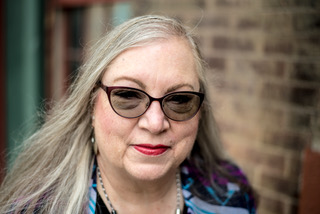
Janice Hardy

Janice Hardy is the award-winning author and founder of the popular writing site Fiction University, where she helps writers improve their craft and navigate the crazy world of publishing. Not only does she write about writing, she teaches workshops across the country, and her blog has been recognized as a Top Writing Blog by Writer’s Digest. She also spins tales of adventure for both teens and adults, and firmly believes that doing terrible things to her characters makes them more interesting (in a good way). She loves talking with writers and readers, and encourages questions of all types—even the weird ones.

Find out more about writing at www.Fiction-University.com, or visit her author’s site at www.JaniceHardy.com. Subscribe to her newsletter to stay updated on future books, workshops, and events and receive her book, 25 Ways to Strengthen Your Writing Right Now, free.

Website | Facebook | Twitter | Pinterest | Goodreads | Amazon | Barnes & Noble | iTunes | Indie Bound

Read More
3 Myths (and Some Motivation) About NaNoWriMo

by Jenny Hansen

NaNoWriMo, for those of you who are unfamiliar with it, is National Novel Writing Month, where hundreds of thousands of writers gather to bang out many many words in a month. Many writers skip it and many writers treat it as a yearly pilgrimage to Writing Mecca.

I'm always surprised to hear how people describe NaNoWriMo, before they've tried it and even after they've participated. I'm even more surprised by the myths that surround this writing challenge. I've been participating in NaNoWriMo since 2007 and I promise to tell you everything I know...

Truths and Myths about NaNo

There are a lot of interesting sentiments bandied about regarding this unique writing challenge.

  • 50K or bust!
  • I don't eat or sleep during NaNo.
  • Word Count Envy is REAL.
  • NaNo Prep is vital.
  • The graphs and tools keep me going.
  • The graphs freak me out.
  • If I don't make 50K, I feel like I failed.

The reality is that for many writers, especially indie authors, fifty thousand words in a month is just considered "a professional pace." If you're putting out 4-5 books in a year, this is absolutely true. But I know many many slower writers who keep a pace closer to twenty-five thousand words and the pressure of NaNoWriMo freaks them out.

Fact: November is an insane month for me each year.

Even without my birthday falling at the beginning of the month and Thanksgiving at the end, there always seems to be unexpected craziness. One year it was shingles, another year a family vacation. I tend to arrive at December 1st a little bit out of breath.

I've learned to take a more holistic approach. NaNoWriMo is my birthday present to myself each year. Most years, I love it. And some years, I hate it. And every year I throw my hat in the arena and try.

During yesterday's NaNo Prep webcast, Author Emily X.R. Pan shared a true thing: "The spirit of #NaNoWriMo is doing what you're capable of doing."

Myth #1 - 50K or Bust

The 50K total started with a bet between NaNoWriMo founder Chris Baty and one of his writing friends. It was arbitrary number. It was weird and it was fun...so they did it again the next year.

This whole challenge is about fun and community, about writing a bunch of words and drinking a bunch of writer-y beverages. It is absolutely not about you feeling like a writing loser because you don't have 50K worth of words in your November schedule.

We have lives, people. And jobs and families. And stories we really really want to finish.

This year I'm participating in two regional groups and two personal groups. I logged into OhWrite to create a sprint room with a timer (now that the NaNo site has dropped that tool). I even pre-ordered the Winners t-shirt, just in case.

Maybe one of those things will help push me across the 50K line.

Fact: I have won NaNoWriMo only one time.

Julie Glover and I were accountability partners that year and we met for a lot of word sprints that November. My normal total is somewhere between 12-30K, and every year I am happy to have those words, and the momentum the challenge builds to keep me writing at that pace through the end of the year.

Moral of the story: Your NaNo buddies will pull you through every time. (Partly because Word Count Envy really is kind of a thing.)

Myth #2 - NaNo Prep is VITAL

Here's what I know - it's November 1st, and most of you reading this have not done any of the NaNoWriMo prep.

So what? The majority of my American pals who win have never done the prep. They just sit their butts in a chair for 1,667 words a day until they're done

Fact: most of them front-load their word count with some crazy writing sessions and try to finish by Thanksgiving so they can take the holiday off.

However...

  • If you want to see some of the prep tools, go here. There is also a manual you can download on this page.
  • If you need some writing motivation and want to see the Pep Talks, go here. (They're from the likes of Anne Lamott, Andy Weir, and Diana Gabaldon.)

Quick Prep and Mindset Changes

If you're still feeling the push to for 50K, behold the NaNo Team's 2012 Tips for Successful WriMos. (These are the things the rest of us wish we had known for our first NaNoWriMo.)

1. It’s okay to not know what you’re doing. Really. You’ve read a lot of novels, so you’re completely up to the challenge of writing one.

2. If you feel more comfortable outlining your story ahead of time, do it! But it’s also fine to just wing it.

3. Write every day, and a book-worthy story will appear, even if you’re not sure what that story might be right now.

4. Do not edit as you go. Editing is for December and beyond. Think of November as an experiment in pure output.

5. Even if it’s hard at first, leave ugly prose and poorly written passages on the page to be cleaned up later. Your inner editor will be very grumpy about this, but your inner editor is a nitpicky jerk who foolishly believes that it is possible to write a brilliant first draft if you write it slowly enough. It isn’t.

6. Every book you’ve ever loved started out as a beautifully flawed first draft. In November, embrace imperfection and see where it takes you.

7. Tell everyone you know that you’re writing a novel in November. This will pay big dividends in Week Two, when the only thing keeping you from quitting is the fear of looking pathetic in front of all the people who’ve had to hear about your novel for the past month.

8. Seriously. The looming specter of personal humiliation is a very reliable muse.

9. There will be times you’ll want to quit during November. This is okay. Everyone who wins NaNoWriMo wanted to quit at some point in November. Stick it out. See it through.

Myth #3 - The First Half Is Harder than the Second Half

This is patently false. While the first few days are quite exciting, especially for the newbies, it is all a challenge. And those wordcount graphs actually get harder to look at the longer you go on, especially if you are behind.

I'd like to address the dreaded phenomenon of the Week Two Wall in the NaNo challenge where the initial endorphins have faded and the grind of the 1,667 words-a-day writing schedule sets in. Often the shiny has worn right off our shimmery fabulous idea.

This when it's time to throw out all those nasty words: can't, should, won't. We all hate those words, whether we're doing a writing challenge or not.

Today, before NaNo heats up, I'd like to chat about what I consider to be a NaNo "win":

  • Your very best = a NaNo win
  • Achieving your goal numbers = a NaNo win (ex: my true goal this month is 30K, not 50K)
  • Finishing a project = a NaNo win
  • Forming amazing writing habits = a NaNo win

Note: Nano should be fun. And The only word count that matters is YOURS.

Motivation is key.

Obviously I love NaNoWriMo.

I love the community, the late-night writing sprints, the before and after parties my local team throws, even thought they're still virtual. I love the write-ins, the pep talks, the excitement and uploading my word count. I adore getting the chance to encourage my peeps and watch everyone chase their goals.

Whether you're gearing up for NaNoWriMo or not, I wish you luck in your writing goals this month.

Final Thoughts

Wherever you are on your writing journey, DON’T STOP. Give yourself grace when you need it, and keep your goals in sight. You've got this.

The best is always yet to come because our writing improves with every word we write. And our words on the page will never quite match the music and pageantry in our heads. New York Times bestselling author, Linda Howard, gave the best advice for this:

"Do it anyway.”

Do it because you have to. Do it because you need to. Do it because the act of sharing those words is more than most people will ever attempt.

DON'T STOP, my friends.
Your story is calling you.

Do you participate in writing challenges? Do you do NaNoWriMo? For my WriMo pals, what do you do in advance of November to get ready?

*  *  *  *  *  *

About Jenny

By day, Jenny Hansen provides corporate communications and LinkedIn advice for professional services firms. By night she writes humor, memoir, women’s fiction, and short stories. After 20 years as a corporate trainer, she’s delighted to sit down while she works.

When she’s not at her personal blog, More Cowbell, Jenny can be found on Facebook at JennyHansenAuthor or at Writers In The Storm.

Read More
A Case for WAS: The Much-Maligned Passive Voice

by Kathleen Baldwin

Alas, poor WAS! Thou art cruelly misunderstood and murdered most foul by brutal editors and unknowing authors. When should you use the ruddy WAS thing and when should you toss it over a cliff? Is passive voice given a bad rap? Can it be used for good, or is it always evil?

Beware of The Deadly WAS-Wipe…

My critique partner, Carole Fowkes, a brilliant horror and mystery author, suffered a vicious WAS-Wipe from an anthology editor at a publishing house. This naïve editor sent down an edict. “Behold, Thou shalt remove every instance of WAS.” And so, my diligent friend followed instructions, and the anthology went forth WAS-less.

For several weeks Carole labored under the assumption that the enemy of all good active writing must be the dastardly verb, ‘was.’ Finally, at my wit’s end, I grabbed her by the collar and shook that nonsense out of her head. “There is a use for was! WAS was invented for a reason.”

There. I just used was in an active sentence. Never mind that it constituted both the subject and the verb.

I will not bore you with grammar.

It is my considered opinion that grammar is like knitting—no fun to watch. The problem is, if one doesn’t understand the basics of either, one can end in a dreadful tangle. (Pardon my gratuitous use of a puppy.)

Nope. No boring grammar discussion here.

Instead, let’s talk about what works and techniques to keep your sentences and stories lively and active.

Hint: Occasionally you may need to employ a WAS.

Today I had an unexpected run-in with passive voice. It happened in a scene wherein a friend, Georgie, interrupts my heroine with urgent news in the middle of the heroine’s first passionate kiss with the hero, Quentin. Take a look:

Our blissful haze of kissing explodes. Immediately I break into a run. Georgie and Quentin are following me, but that does not matter. I must race death, and at times like this I am faster than anyone might expect.

Did you spot a was?

Nope.

Yet this passage feels passive. Let’s whip out a passive-voice cleaver and chop it to pieces. Put on your seat belts. Prepare for a messy ride through some hard-core sentence-butchery.

First up…

Pesky Ponderous Prepositions

There are approximately 150 prepositions in the English language. Some prepositions (not all) slow pacing and produce passivity. Here’s a list of twenty that tend to slow pacing. I’ve bolded the ten peskiest: above, along, around, as, at, before, behind, beside, between, by, from, of, off, on, to, toward, under, upon, with, and within.

Stay alert to pesky little prepositions. Gauge their sneaky behavior in your sentences. Are they producing ‘be’ verbs? Do they slow your syntax flow? Did you want to slow it down?

In my sample sentence, we collide smack-dab into “of kissing.” That pesky preposition, of, slams on the brakes right before we get to the delightfully active word, explodes. On a side note, why didn’t I show that crucial emotional explosion? I want the reader to experience that sensation of pleasure bursting apart, right? Yes, I do. Let’s try to fix that, too.

The reader already observed them kissing in the preceding paragraph. So, we can rewrite it like this:

Our blissful haze explodes into a million glittering shards.

That’s better. More active and visual. Which brings us to the next problem…

Beastly Bothersome Beetle-like Ings

I confess—I am the queen of ings.

Those dratted little devils! Ings are shifty little critters that often force you to add a ‘be’ verb, thereby convoluting a delightfully active verb into a languorous slug-like beetle.

Two ings haunt my example: kissing and following. Note: the new addition of glittering does not require a ‘be’ verb or a preposition to make it glitter in the example. Therefore, I grant permission for glittering to twirl across this sentence’s stage.

We got rid of the kissing ing already. Hooray! Not that it was much of a problem, but there’s definitely an issue with the next line: “Georgie and Quentin are following me, but that does not matter.” Following requires the be verb are in order to make sense. So we need to change following to follow.  

While we’re at it, let’s remove ‘but that does not matter.’

Here’s why:

Delving into the heroine’s thoughts during this urgent moment slows my curious readers. It compels them to ask, “Why does it not matter? Doesn’t she care if they are following her?” Yes, of course, she cares, but her race against death is more important.

We can change it to:

Georgie and Quentin follow hard on my heels, but I must race death.

The Terrible Trap of Taking Time to Tell Time

Discussing time is almost always a passive act. I cringe, sheep-faced and scarlet-cheeked, that I wrote the next line. Go ahead laugh with loud guffaws. I deserve it.

“And at times like this, I am faster than one might expect.”

Really? Is she? My heroine stopped to make an aside to my reader about how “at times like this, she is faster than her frail figure might lead one to suspect.” Ha! At times like this, my dear, I think you ought to keep running as fast as possible.

The preposition ‘at’ ought to have given me pause, but two primary elements drag this line into a tarpit:

1. The generality of the statement weakens impact and dispels urgency. The reader may question, “At all times like this?” One may wonder how often do times like this occur in her life? Is this a daily incident?

2. Referencing time slows the reader and elicits a more reflective feel. Sometimes this is exactly what an author wants. Other times, as in my sample passage, it doesn’t work. (LOL, yes, I just used sometimes and other times. Here it works.)

Let’s take a look at the full edit:

Our blissful haze explodes into a million glittering shards. I break into a run. Georgie and Quentin follow hard on my heels, but I must race death. And that makes me faster than anyone expects.

Okay. That’s good enough for now. I’m sure I’ll tweak it more later. Let’s jump back to the problem of editors and authors thinking our poor innocent WAS is guilty of verboten passive poison.

Brilliant Fiction Writers Know When to Use WAS

Use WAS to focus attention on the action, or another element, instead of the actor.

The best way to illustrate this concept is with examples. Or perhaps I should say… Examples illustrate this concept the best way.

[Note the preposition and passive be verb in that first sentence. Neither is wrong. They simply focus the reader differently. The first sentence emphasizes the best way to illustrate the concept. The second almost buries the word concept and lets the reader know examples are coming. Which one do you think does the job best?]

All of the examples will be given in past tense for usage equivalency comparisons. Changing to present tense is a naturally more active approach, but we often need to write in third person past tense.

Charlotte’s Web by E.B White

A spider named Charlotte spun an amazing web to save Wilbur the pig from slaughter.

[The focus here is on Charlotte spinning the web. Backloading the sentence with slaughter makes the reader realize the importance of what she did.]

Wilbur the pig was saved from slaughter when a spider named Charlotte spun an amazing web.
[WAS focuses our attention on Wilbur the pig being saved. We end with the intriguing idea of an amazing spider web.]

Which sentence did you like best? It may depend on what aspect you liked best about Charlotte’s Web.

More Examples

Three more examples built around The Wizard of Oz by L. Frank Baum:

Dorothy splashed a pail of water on the Wicked Witch and killed her.
[The focus is on Dorothy’s action. Was is not needed.]

The Wicked Witch was killed when Dorothy splashed a pail of water at her.
[WAS changes the focus to the Wicked Witch being killed.]

A pail of water was tossed at the Wicked Witch by Dorothy. The water splashed over the witch and killed her.  
[This WAS shifts the focus to the pail of water as the instrument of death. This is an example of how a news report can focus reader attention.]

Use WAS to locate the action in time, or to focus on a particular aspect.

Dorothy was splashing water at the witch.

[We see the bucket in Dorothy’s hands, and water is splashing at poor old Wicked.]

Dorothy splashed water at the witch.

[Using splashed avoids employing WAS, but it completes the action. The witch is now doused and melting or already melted. There is no WAS, but the action is over.]

Water was splashed at the witch by Dorothy.

[This is extremely passive. Focus is on the water having been thrown. The witch is now a boring waxy puddle, and actor credit is prepositionally tacked on the end.]

Two more examples:

Suppose your hero or heroine sees a boy jumping off a cliff as she drives by. Do you write: The boy was jumping off a cliff. OR. The boy jumped off a cliff. 

There is a distinction. This last wonderful example is provided by author, Patience Griffin, and came from her brilliant Penguin editor:

The man was digging a grave. OR. The man dug a grave.  There’s a grave difference. LOL.

That concludes my case for the much-maligned WAS. It is up to you the jury to decide the fate of WAS. Cast your vote as a jury member.

Is WAS guilty of unforgivable passivity? Or will you grant WAS a conditional reprieve? Share your examples of effective or ineffective WAS usages in the comments! I'd love to see them.

About Kathleen

Kathleen Baldwin is an award-winning author with more than 600,000 copies of her books in the hands of readers around the globe. Her books have been translated into several languages, and a Japanese publisher even made Lady Fiasco into a manga. Stranje House, her alternate history series for teens was licensed by Scholastic for school book fairs and optioned for film by Ian Bryce, producer of Spiderman, Transformers, Saving Private Ryan, and other blockbuster films. The series is currently in its third film option.


November 1-15, 2021, Kathleen will teach a course on The Truth About the Writing Life and Money, at Margie Lawson Writer’s Academy   

Read More

Subscribe to WITS

Recent Posts

Search

WITS Team

Categories

Archives

Copyright © 2026 Writers In The Storm - All Rights Reserved