Writers in the Storm

A blog about writing

storm moving across a field
Memoir Writing: What I Wish I Knew Before I Started – Part 2

By Linda Ruggeri

A few months ago, I posted my Memoir Writing 101 Series: Getting Started Part 1. Today I’m sharing Part 2, where we discuss with the same authors I wrote about, the positive things and surprises that came out of their memoir projects—the unintended consequences memoir writing can have in our lives.

When I work with memoir writers as their editor and/or writing coach, there is an inherent bond of trust that is forged. They promise to share their best work with me (which usually nobody has seen), and I promise to listen, read, and give them honest and helpful guidance that can make their manuscripts stronger.

It’s a delicate act and not one for the faint of heart (for either of us). I know I’ll be treading through different and sometimes difficult stories: some painful, some rewarding, some that took years to write, and some that are born out of pure passion—so what I say, and how I say it, can break or strengthen a person’s soul, or both.

Universal Writing Truth

In all manuscript revision processes, there are hard moments of truth we need to acknowledge (things we missed or omitted, points we never got across, sections we could have written differently). But there are also moments of great joy, where the writer finds themself in the words they’ve written and a sense of pride permeates the pages. The writer has found their voice and their story.

Here is part two of our conversation, printed here with their permission.

Linda: Can you tell me three positive outcomes that came from writing your memoir?

Christina (inspirational memoir)

I found writing my memoir to be very therapeutic. It allowed me to understand and work through some of my traumas. That isn't to say that I've completely fixed myself, but writing it all out was a good start. When I finally did go to counseling I knew exactly what I needed to work on and heal from. 

Writing also forced me to sit down and focus on one thing for a certain amount of time every day. I work as a certified nursing assistant, so my mind is usually racing and cluttered, but when I had to sit down and write, I had to be very intentional and grounded with what I was doing. This approach worked and I enjoyed the process very much.

I also kept a promise to myself:  That before I died that I would write a story about my life in hopes that it would inspire others out there who are going through a rough time. I also want to be able to share my story with my future children someday. When I finished writing it, I felt very proud of myself for not giving up, and for being honest with all the parts of my life.

Takeaway:

  • Writing memoir can be therapeutic and grounding.
  • Being disciplined, and writing every day, guarantees you’ll finish your manuscript.

Carolyn (memoir author about a 40-year friendship)

The most positive thing that came from writing my memoir, was that I finished it and saw it through to publication. When I started writing it I wasn’t sure I’d be alive by the end due to many medical conditions, so that part went exceedingly well! My memoir is about a forty-year friendship I had with my neighbor Doris, and I didn’t realize how meaningful that friendship was until she passed away. It was this realization that moved me to write this memoir. I was afraid of how her family would take the book, but they had a very positive reaction, far better than I ever could have hoped for.

All the artwork in the book is mine, and that is something that I am immensely proud of. This memoir has brought new friends into my life and discussing my book has deepened friendships. Hearing that someone has changed their thinking and felt something more deeply has been a powerful reward I never had expected to have.

Takeaway:

  • Memoir affects other people’s lives and deepens relationships.

Ed (historical memoir)

What I enjoyed the most while I wrote my memoir was how many events I was able to recall triggered other memories. The "triggered memories” helped make connections to understand "how" and "why" some things happened. I was able to see my past with different eyes, and that of my parents and grandparents with so much more perspective, curiosity, and compassion.

I also enjoyed visiting historical societies and learning the specifics of certain things. How and why an early 1900s photo of my grandparents had been staged a certain way. What every item in that image meant. Touching historical documents and artifacts from the late 1800s—like a stereoscope, or a Twinplex blade stropper like the one my grandfather used—was very moving as well. I was able to revisit my past in a very tangible way and appreciated every minute of it.

 Takeaway:

  • Memoir writing helps you develop perspective.
  • It also makes you appreciate the small things in life.

Shelli (inspirational memoir)

From what I'd heard about "editing" I didn't think I would like or appreciate the suggestions and critique I received nearly as much as I did. This part of the writing process (revising my work after a developmental edit) was actually the MOST helpful and I appreciated it the most—even though sometimes it was very challenging to think through and figure out what I am/was really trying to say and how to say it more clearly.

I never realized how much chapter order—or the order of what is presented—can add to or detract from a story. The input I received on this was eye-opening for me.

I enjoyed experiencing firsthand that having someone edit your work isn't just for the mechanics of writing, it can help you be a better writer. I wasn’t expecting to learn so much. It’s made me a better writer.

 Takeaway:

  • Working with an editor can help you become a better writer.

5 Mindsets for a Successful Memoir Writing Experience

Writing a memoir can seem overwhelming but with a game plan in place, not only is it doable, but it can be extremely rewarding. The following five tips/mindsets can increase the enjoyment of writing memoir:

  1. Writing memoir is therapeutic, even healing (and not every memoir needs to be published!)
  2. Writing our memoir will likely trigger other memories, and make us appreciate our lives—and how far we’ve come—a lot more.
  3. Writing memoir allows us to see the past with a new set of eyes, gain perspective, even learn something new about ourselves/our life.
  4. Our memoir can have an effect on the lives of others.
  5. A good editor will correct more than just the mechanics of writing, they can help you strengthen your manuscript so your message is clear, but also reaches your intended readers.

Now it’s your turn. Are you writing a memoir? What positive experiences have you had so far? Please share them with us down in the comments!

[Note: In Part 3 of this series we will discuss different ways to revise our memoir.]

About Linda

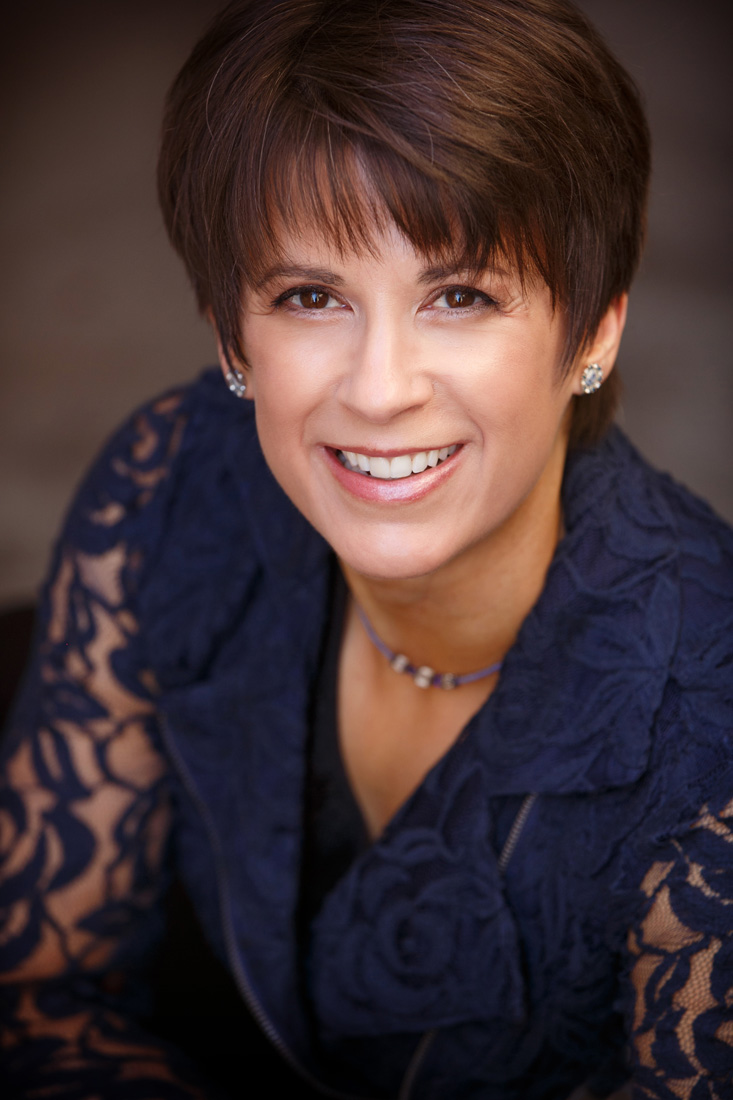
Linda Ruggeri is a full-service editor and project manager based out of Los Angeles. She co-authored the historical memoir Stepping Into Rural Wisconsin: Grandpa Charly’s Life Vignettes from Prussia to the Midwest and can be found online at The Insightful Editor and on Instagram. Her new book Networking for Editors will be released this summer.

Read More
7 Character Lessons from a Real Life Heroine

by Piper Bayard
of Bayard & Holmes

This week on June 8 was Women’s Fiction Day, celebrating strong female protagonists. More and more stories these days are bringing us great female characters. In thrillers and military fiction, one challenge is to write those strong women as authentic, well-rounded female personalities rather than alpha males with lady parts.

One good way to address this challenge is to study the real-life heroines of the past, who used wits, wiles, cunning, determination, and subterfuge to stay alive and conquer their foes. Today, we’ll take a look at the life of a real-life heroine who was feared by the Nazis as “the most dangerous spy in all of France,” Virginia Hall Goillot.

I've shared seven precious writing tips from Virginia's life are at the bottom of this post.

Some background on Virginia Hall

Virginia Hall and Wild Bill Donovan (Public Domain)

Say the name “Virginia Hall” to anyone in the Clandestine Services, and they may well get choked up with reverence. Being a woman with no special physical ability and lacking one leg, no recruiter then or now would entertain thoughts of Virginia being capable of military service, especially behind enemy lines.

Nevertheless, she was determined to serve an active role in the battle against Nazi Germany, and serve she did, becoming one of the most revered 20th-century icons in the Intelligence Community. Altogether remarkable, she is a breathtaking example of selflessness, courage, and commitment and a true role model for both the Intelligence Community, and for fiction writers.

Virginia Hall was born on April 6, 1906, to a wealthy family in Baltimore, Maryland. Having a gift for languages, she studied French, German, and Italian at Radcliffe College and Barnard College. She then traveled to Europe to continue her education in Austria, France, and Germany. Her goal was to enter the US Foreign Service.

After finishing her studies in 1931, she worked as a Consular Service clerk at the US Embassy in Warsaw. From there, she was assigned to a consulate office in Izmir, Turkey, where a hunting accident forced her to have her lower left leg amputated. She obtained a wooden prosthetic leg, which she named “Cuthbert.” She was then assigned to the US consulate in Venice.

When Virginia requested permission to take the US Foreign Service Exam, she was informed that, due to her injury, she could not apply for a position as a diplomat. She returned to the United States and attended graduate school at American University in Washington, DC.

Hall's Role in World War II

Virginia was visiting Paris when Germany invaded France in 1940. She immediately volunteered with the French Ambulance Corps and drove ambulances to evacuate wounded French soldiers from the front. When France surrendered to Germany, Virginia escaped to Spain and then on to England.

In London, Virginia applied for service in the British Special Operations Executive (“SOE”) and was accepted. With the SOE, Virginia trained in weapons, communications, and as a resistance organizer for occupied France, and in August of 1941, she infiltrated Vichy in France. Some sources state that she was the first female SOE agent to do so.

The United States was not yet directly involved in the war, so Virginia posed as a news correspondent for the New York Post. Once the United States did enter the war in December of 1941, the sensible thing for her to do would have been to hustle back to England. Fortunately for the Allied effort, she declined to escape and went underground.

At the time Virginia infiltrated Vichy in 1941, operating there under the Pétain government was more dangerous for an SOE agent than operating in the Nazi-occupied region of France. The Vichy government had command of the French police departments, and with so many reliable local assets, it could more easily discover infiltrators and resistors. Most SOE agents sent into Vichy in 1941 and 1942 were killed or captured within days. (For more on life under the Pétain regime and German occupation, watch the excellent French series, Un Village Français on Prime video.)

Virginia quickly earned a reputation as a great recruiter and resistance organizer in France. She was instrumental in the rescue of hundreds of downed Allied aviators, and she arranged their safe return to England. She also organized a network of safe houses and coordinated numerous air drops of weapons and supplies to the French Resistance at a time when most drops were being intercepted by the Vichy police and the Gestapo.

Virginia's Antagonist, Klaus Barbie
(public domain)

Virginia’s successes did not go completely unnoticed by the Vichy government and the Nazis. The Gestapo branded her as the most dangerous spy in all of France, and they made her capture a priority. When the Germans took over Vichy in November of 1942, infamous Gestapo leader Klaus Barbie demanded that “the woman with the limp,” as Virginia was known, be captured and brought directly to him so that he could personally strangle her.

Virginia used her one good leg to stay one step ahead of the Gestapo, and that November, she escaped on foot over the Pyrenees to Spain. Some convincing sources say she was alone on this trip. Some other convincing sources say she was not alone on this trip. It is possible that she made more than one trip over the Pyrenees.

This is only one of many uncertainties about Virginia Hall’s career. She knew all too well that spies who don’t take their secrets to the grave can end up in the grave all too soon.

Once in Spain, Virginia had no identification papers at a time when such documents were crucial. The Spanish arrested her and incarcerated her for several weeks. When the US consulate in Barcelona learned of this, they claimed Virginia as a legitimate US citizen and demanded her release.

After four months working undercover in Spain, Virginia returned to England in 1943 in the hope of doing more “useful” work. Once there, Virginia left the SOE to join the fledgling American OSS and volunteered to return to occupied France.

Virginia dyed her hair gray and disguised herself as an elderly farmer. Since her wooden leg made a nighttime parachute drop too dangerous for her, she was infiltrated back to Bretagne, France, on a British torpedo boat. Using the alias “Marcelle Montagne” and the code name “Diane,” she made her way to central France, where she set up radio communications with London.

In addition to transmitting intelligence back to London, Virginia again organized successful supply drops for the French Resistance, established safe houses, helped train three battalions of Free French guerrilla forces, and linked up with a Jedburgh team after the Allied invasion. In spite of Klaus Barbie’s personal vendetta against her, Virginia avoided capture and continued operating until the Allies liberated central France in 1944.

A Decorated Heroine

In September of 1945, on behalf of a grateful nation, OSS General William “Wild Bill” Donovan presented Virginia Hall with a Distinguished Service Cross. That was the highest honor received by any female civilian during WWII. President Truman had intended to present her the award in a public ceremony at the White House, but Virginia insisted that the ceremony be kept from public view because she was “anxious to get back to work” and still needed her cover. She wasn’t finished yet.

Virginia went to work undercover in Italy operating against Soviet efforts to cultivate Italian communist groups. Afterward, she worked with a CIA front group, the National Committee for a Free Europe, which was associated with Radio Free Europe.

In 1950, Virginia married OSS Agent Paul Goillot, and in the following year, both Virginia and her husband joined the newly-established CIA. Virginia became an expert on resistance groups in Soviet-occupied Europe, remaining in the shadows and working on a variety of projects until her retirement in 1966.

Virginia Hall Goillot passed away of natural causes in Rockville, Maryland, on July 8, 1982. To this day, her remarkable history of selfless service in the cause of freedom remains a brilliant example for the intrepid few who might dare to follow in her footsteps, as well as an outstanding model for strong female protagonists in fiction.

7 Lessons from Virginia Hall

Thanks for joining me on that walk through history. Now what lessons can we use from Hall's life to ramp up our fictional heroines or spies?

1. Leverage others' bias.

Being dismissed by society can be a great asset in the field, and many parts of the world still dismiss women out of hand. If a woman can refrain from smacking those people and has the strengths of stealth and deception, she can use that bias to her advantage.

2. Embrace Disabilities

A disability often contributes to being dismissed by society, making it an asset under the right circumstances. If a disabled person has the strength of character to use her wit and wisdom to turn her opponent’s bias against them, that disability can become a strength. While having two working legs would have no doubt helped Virginia in many ways, having only one leg likely contributed heavily to her success at hiding from the Germans.

3. Don't underestimate a strong will.

Virginia Hall showed herself to be the epitome of will, crossing the Pyrenees on foot (literally "foot") in November. More than one field operative has held herself together with nothing but the will to do anything to survive.

4. Don't let "No" stop you.

When most people would have changed career course after shooting off their leg, for Virginia Hall, the word “no,” was where negotiations began. Rather than talking about serving, wanting to serve, dreaming of serving, she used her strength of determination to grab every opportunity she had to serve and used it to kick down the door.

5. Focus on "Can," not "Can't"

Virginia’s life shows us just how able a “disabled” protagonist can be. A character who focuses on what she can do rather than what she can't do has the strong mindset of a heroine.

6. Silence saves lives.

Choosing silence over glory is a great strength in an espionage character. Because Virginia remained silent about her life and her work in spite of the honors she received, she was able to serve long after her time in Nazi-occupied France.

7. Honest self-perception is a gift.

The greatest strength a character can have is her self-perception. The only “crippled” people in Virginia’s world were the ones who wrote her off. If she had seen herself the way the rest of the world saw her, she would have quit before she ever started.

Pyrenees Mountains in November
(Canstock Photo)

Do you write female protagonists? What are their greatest strengths and weaknesses? What characteristics do your strong female protagonists have that differentiate them from their male peers? Did you think of other lessons, or tips for characters as you read through Virginia's life? Please share them with us down in the comments!

* * * * * *

Piper Bayard is an author and recovering attorney who has been working daily with 45-year veteran field operative "Jay Holmes," learning espionage tradecraft and history for the purpose of writing espionage fiction and nonfiction. For more brief biographies of the espionage greats, see their recent release, Key Figures in Espionage: The Good, the Bad & the Booty, available from your preferred bookseller at Bayard & Holmes Nonfiction.

Bayard & Holmes are also the authors of the bestselling SPYCRAFT: Essentials, which is designed to take the fiction out of spy fiction, covering the functions and jurisdictions of the main US intelligence organizations, the espionage personality and character, recruitment, tradecraft techniques, surveillancex, firearms, the most common foibles of spy fiction, and much more.

Please visit Piper and Jay at their site, BayardandHolmes.com. For notices of their upcoming releases, subscribe to the Bayard & Holmes Covert Briefing. You can also contact Bayard & Holmes at their Contact page, on Twitter at @piperbayard, or at BayardandHolmes(at)protonmail.com.

Read More
5 Signs You Have "Writer's DNA"

by Colleen M. Story

You enjoy writing, but does that mean you should be a writer?

This can be a difficult question. Most of us don’t know if we have what it takes to be successful writers, and we may spend years allowing that doubt to interfere with our writing progress.

We’d love to have some authority come along and tell us whether writing is indeed what we “should” be doing with our lives. We dream of hearing the words, “You were meant to be a writer. This is what you should do.”  

But no one—absolutely no one—is qualified to say whether you’re “good enough” to be a writer. You wouldn’t want to give that power to anyone else anyway. The decision to devote your life to being a writer is yours to make.

Still, it’s often a difficult one, and we could all use some help. After all, no one wants to waste their time chasing dreams that have no chance of coming true.

To discover if you truly have a writer’s DNA, look for the following five clues in your life. They may not reveal a definite answer, but they will help you get a little closer to figuring out whether you were meant to write or not.

1. You feel a natural “high” after writing.

Writers love to write. That doesn’t mean it’s easy. In fact, writing is often harder for writers than it is for other people. But a person with a writer’s DNA will often (not always) feel a natural high after writing.

This is the feeling that brings us back to writing over and over again. We get a dopamine hit off of it. Dopamine is a neurotransmitter in the brain tied to reward and pleasure. It’s why an addict keeps seeking the next high, which isn’t good, but it’s also why a writer keeps coming back to the blank page—which is great.

Sure, we all have bad writing days, but on the whole, writing gets us high.

2. You obsess about stories.

Writers are usually voracious readers, and they love stories of all kinds, even those about the neighbors. More often than not, they're the ones making up stories about the neighbors just for the fun of it.

While other people may enjoy a movie for the action, scenery, or the hot actor or actress, writers will focus on the story. If that's no good, the movie is unlikely to satisfy them. The same may be true of their time spent with family and friends. Writers love to listen to and tell stories and will linger long into the night as long as there are stories to be told.

Writers are the ones who used their childhood toys—whether those were dolls, action figures, or Play-Doh figures—to stage stories for themselves, their friends, or even their pets. May writers involved their pets in those stories, too (to the great chagrin of the cats).

Even if you didn't do any of these activities as a kid, your brain was likely telling stories from the beginning. Think back and you may remember.

3. Your writing has a special place in your heart.

Whether you become a bestselling writer or not, writing is likely in your DNA if your stories hold a special place in your heart.

Think back to Little Women by Louisa May Alcott. What do you remember most? Writers will typically recall the scene where little sister Amy March burns the heroine Jo’s unpublished manuscript. That one hits us all with a gut-punch because we know how hard it would be to lose our words. We can never get them back again, at least not in the same way.

When asked what they'd take from a burning home, a writer will have some common answers, such as family photographs, computers, or musical instruments. But they would add their manuscripts and books to that list because they're that special.

We know the people in our stories. We want them to live on after us. We care about them. It may seem strange to a nonwriter, to feel so much for characters that aren’t real or a story that never happened, but writers understand it perfectly.

4. You communicate best through writing.

Given the choice, most writers would rather write than communicate in other ways.

We’re the ones who love emailing, texting, and the old-fashioned practice of writing letters. We enjoy giving and receiving cards for birthdays and holidays, and we excel at any job that relies on good writing skills.

Emotions we struggle to express through speech often flow out of us in writing. On the page, we feel like we can be our true selves and are less likely to get stymied by fear or anxiety.

We’re the ones who like to leave little notes of appreciation where our loved ones or even our colleagues will find them, whereas we wouldn’t get caught dead saying the same things out loud. We’re also more likely to write a complaint to a company or manager than to dress down an employee in person.

Whatever the situation, if it requires communication, we’d rather write it. Yes, we can communicate just fine by speech when required—and indeed, many writers make great public speakers—but we find our most authentic voices on the page.

5. You’re willing to make sacrifices to write.

Ask most people about their ideal lifestyle and they’d probably include a healthy income along with their other desires. Writers are no different, except that we can imagine giving up that income for more time to write.

We can truly imagine going without many of the things money can buy if we could gain the freedom to write as we wish. Whereas others wouldn't want to swap a healthy salary for hours to spend alone in a room with a laptop, writers would. Others would typically prefer a nice house, while writers can imagine living in a small studio as long as it comes with a desk or at least a comfortable, quiet corner.

Many writers actually do cut back to win more time to write. They may go without a second car (or any car at all), cut the cable subscription, stop eating out, or sell it all and live out of a camper or even a truck to pursue their writing dreams.

Other sacrifices can be just as meaningful, like choosing to stay in a house that’s bursting at the seams so you don’t have to work more hours and can use that time to write. Or going without the security of health insurance and a regular salary so you can have more flexible hours as a contractor.

Even giving up a couple of hours a week with your children so you can focus on your stories qualifies. And as many parents will tell you, can be one of the most difficult sacrifices of all.

Is Writing in Your DNA?

If one or more of these clues sounded familiar to you, you likely have a writer's DNA, and you should keep writing no matter what. Even if you never make much money from it, it’s clear that it matters greatly in your life, and for that reason alone, you shouldn’t give it up.

For you, a life without writing is a poorer life.

Note: For more on overcoming self-doubt and deciding to be a writer no matter what, see Colleen’s new book, Your Writing Matters: How to Banish Self-Doubt, Trust Yourself, and Go the Distance. Get your free chapter here!

Which of these signs resonates most with you? When did you first know you had "Writers DNA?" Please share your story with us down in the comments!

About Colleen

In her new release, Your Writing Matters, Colleen M. Story helps writers determine whether writing is part of their life’s purpose. Her book on author platforms, Writer Get Noticed!, was a gold-medal winner in the Reader’s Favorite Book Awards, and Overwhelmed Writer Rescue was named Book by Book Publicity’s Best Writing/Publishing Book in 2018. Her novel, Loreena’s Gift, was a Foreword Reviews' INDIES Book of the Year Awards winner, among others.

Colleen frequently serves as a workshop leader and motivational speaker, where she helps attendees remove mental and emotional blocks and tap into their unique creative powers. Find more at her author website and Writing and Wellness, and connect with her on Twitter and YouTube.

Read More

Subscribe to WITS

Recent Posts

Search

WITS Team

Categories

Archives

Copyright © 2026 Writers In The Storm - All Rights Reserved