

By Miffie Seideman
The other day I found three little blue pills strewn on the ground at my local gas station. As soon as I saw them, my heart skipped. As a pharmacist, I can spot oxycodone tablets a mile away -- little round blue tablets with an “M” imprinted on one side, and “30” on the other.
But the coloring on these were off…just enough.
These were lethal fentanyl-laced counterfeit oxycodone, the pills causing fatal overdoses in high schools and showing up in national headlines. Just one can kill an adult, so imagine what these three could do to a passing kid or dog.
The police confirmed my fears and came to scour the area for more.
Sure, we’re all authors looking for great new plot twists, and this would surely count. But we also need to know the facts about fentanyl for the safety of ourselves and our loved ones.
Important Questions and Answers
Would you know how to save your loved one’s life, if they overdosed on fentanyl?
If not, keep reading. It no longer matters if that person would never touch fentanyl or street oxycodone. Finding those tablets so close to home highlighted that real and present danger for me.
Here are 3 things you need to do regarding fentanyl and opioid overdose dangers:
- Arm yourself with knowledge
- Arm your family with an open door to discussion
- Arm yourself with the antidote
1. Arm Yourself With Knowledge
I asked several authors what they wanted to know most about fentanyl. The top seven answers are below.
What is fentanyl?
- Medical fentanyl is an opioid painkiller 100 times more potent than morphine. It is completely synthetic (made in a lab).
- Illegal ‘street’ versions of fentanyl (and some of its cousins) are even more potent than medical fentanyl and are being laced into street drugs. One cousin is carfentanil(a large animal veterinary tranquilizer) 100 times stronger than fentanyl.
Yes, that should scare you. Elephant tranquilizers are ending up in street drugs.
Fentanyl and its cousins are now responsible for the majority of opioid-related overdose deaths:
- At least 50% of all opioid deaths in 2018 involved fentanyl(s)
- 36,000 US overdose deaths in 2019 involved ‘synthetic opioids’, such as fentanyl
- Overdoses soared by 38% during covid, heavily boosted by fentanyl-related deaths
What does fentanyl look like?
Well, that’s a tough one. Fentanyl comes in several forms: injection, skin patch, nasal spray, and a lozenge. Illegal fentanyl also comes as a powder.
The real question isn’t what does fentanyl look like, but what are street fentanyl(s) laced into?
It’s a long list, including marijuana, cocaine, methamphetamine (‘meth’), heroin, fake Xanax, fake Vicodin, and fake Adderall* (the ADHD drug), among other drugs. Fentanyl powder has been colored, pressed, and imprinted to look almost identical to real oxycodone (OxyContin). This so-called “Mexican Oxy” is what I found at the gas station. (*Fake Adderall has also contained lethal amounts of methamphetamine).
Why is fentanyl so dangerous?
- Used the right way, medical fentanyl isn’t.
It’s great for severe pain, during surgery, and some cancer pain. But it does need to be measured carefully, since just 2 mg can be fatal to an adult.
- The true danger comes from street fentanyl(s).
Drug traffickers aren’t exactly worried about careful measuring- they get paid all the same. Some street doses have very little fentanyl. Some have been found with 5 mg of fentanyl in a single tablet- more than twice a lethal dose. With carfentanil, a dose the size of a grain of salt can be lethal. How are they going to measure that safely?
- Toxic doses of fentanyl(s) make the body stop breathing. If breathing isn’t restarted rapidly with naloxone (Narcan), the brain dies from lack of oxygen. It has taken 4-5 doses of Narcan to save some victims of these potent street drugs. In some cases, even that hasn’t been enough.
Why would a lethal drug get added to street drugs?
It’s all marketing and profit. If traffickers add the right amount, the fentanyl gives the drugs a bigger kick, a bigger high, and it’s cheap to add. A bigger high also raises demand. Users just hope they get a great high. Some are willing to buy it knowing the risk of a poorly measured batch. In some cases, fentanyl leftover from a previous counterfeit batch contaminates a new batch made in the same container.
How are people getting it?
- Most abused fentanyl is from street drug supplies.
In the US, most of these supplies come across the Southern border. Some comes from China. From there, supplies flow to other markets in the US.
- Some users actually seek out fentanyl-laced batches!
Buyers and sellers can even connect via social media apps and subgroups, using special emojis.
- But most people getting fentanyl don’t even know until it is too late. By then they could be dead or addicted.
It could be in the heroin they bought. It could be in the pain pill the football player bums from a friend so he can make it through the game. It could be in the weed at a weekend party.
Or little Timmy could pick up a little blue-grey tablet off the ground at the gas station while Mom is turned away for a second or two.
So…how much is actually getting into the US?
Much more than is being stopped. If you have a strong countenance (or a good glass of scotch), do a quick google search of your own state. I did that for Arizona and the data was pretty sobering:
- 170,000 fatal fentanyl doses found in one drug bust (Jan 2020)
- 22 pounds of fentanyl found (enough for 4 million lethal doses) on one traffic stop (June 2021
- Another 22 pounds of fentanyl powder captured just last month
What do I look for in my kid, friend, spouse?
- Similar to other abused drugs, the basic recommendations include (see full check list here):
- Changes in mood (depression, mood swings, anger, hostility)
- Changes in behavior/ sleep patterns
- Drop in school grades/school attendance
- Changes in friend circle
- Missing money/ increased need for money
- Odd smells in room or clothing (or sudden use of scents to mask smells)
- Secretive conversations
2. Arm Your Family With an Open Door to Discussion
- It’s never too soon to talk to kids about drugs
The National Institute for Drug Addiction has sobering statistics for 8th graders (Yes, that’s 8th grade – 13 year-olds!):
- 15% admit to having used illicit drugs in 2020
- Almost 3% have used Adderall when not prescribed
- 2% have used hallucinogens
ANY of these drugs could have been fentanyl-laced.
- Open a door to safe communication
Share the dangers of drug use. Let them know they can talk with you openly about drugs, what they see at school, and ask their questions without judgment. Let them know that door is open, even if they make a mistake and try drugs. They need to know you will be there to help them.
If that door is closed, they will go somewhere else.
My family and friends know they can call if they are in or near this kind of danger or have had too much to drink. We will come get them any time of day or night. We won’t judge. We just want them alive. If you offer this, make sure you follow through. Or that door will slam.
- Educate yourself about drugs
The best way to talk to your loved ones is by having at least some basic information. What is going on in your neighborhood? Your local schools? What do those drugs look like and what are the dangers? It’s a bit scary to read at first, but it’s better to know and be prepared.
It’s easy to get overwhelmed. So, pick just a few drugs to get started. I might suggest: oxycodone, fentanyl, Adderall, marijuana, and methamphetamine.
These sites can get you started:
- https://www.drugabuse.gov/drug-topics/trends-statistics/monitoring-future/monitoring-future-study-trends-in-prevalence-various-drugs
- https://www.getsmartaboutdrugs.gov/
3. Arm Yourself With the Antidote
- Get Narcan (naloxone) AND learn how to use it!
- Narcan is available at many pharmacies without a prescription. State programs or insurance often cover the full cost and some drug manufacturers offer free naloxone.
- Have the pharmacist show you how to use it or watch an online instruction video. You do not want to start figuring it out when someone you love has stopped breathing.
Plotting with Fentanyl
While I am passionate about the drug overdose problem, I’m still a writer at heart!
After the initial shock of finding street oxy (literally on the street) at my regular gas station, I started plotting the incident into a scene.
How authors can weave a few basics into plots:
1. Use your imagination to decide how your character gets exposed to fentanyl.
Is he smoking tainted marijuana? Did he bum some tainted Adderall off another student? Inject fentanyl-laced heroin?
2. Give your character some basic quick symptoms.
Your character can develop some basic symptoms that evolve over several minutes, including feeling that euphoric ‘high’, difficulty concentrating, and feeling very drowsy. Are you putting the character into lethal peril? Does the reader know the batch was tainted?
This is where you can have you character progress to unconsciousness and more toxic symptoms, with your reader at the edge of their seat.
3. Use current news headlines.
For additional scene ideas, contemporary news headlines are unfortunately full of drug busts and local cases to pick from. In my own town, street oxy was recently handed out at a teen party. No one knew it was fentanyl-laced until 4 teens died.
4. Research historical drug use.
Historical searches may also be useful, such as the famous Moscow Theater attack by Chechen rebels in 2002, ultimately resulting in Russian forces releasing carfentanil into air vents, killing about 129 hostages and 33 rebels.
Have you seen this growing fentanyl danger where you live? Have you addressed it in conversation or in the pages of your story? Please share your experiences with us down in the comments!
* * * * * *
About Miffie
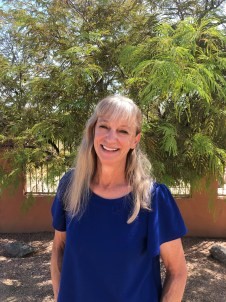
Miffie Seideman has been a pharmacist for over 30 years, with a passion for helping others. As a published non-fiction author, her articles have appeared in several professional pharmacy journals. When not training for a race, her writing projects include a (soon to be announced) writer’s handbook and a fantasy adventure that started as “What if Romeo and Juliet didn’t live happily ever after they died?” An avid triathlete, she spends countless hours training in the arid deserts of Arizona, devising new plots.
Miffie can be found hanging around her blog onwemerrilystumble.com examining the intersection of triathlon and writing and on Twitter @MiffieSeideman…you know…tweeting.




