Writers in the Storm

A blog about writing

storm moving across a field
WITS Bloggers Give Writerly Thanks

Today at Writers In The Storm we’re giving thanks for the “writerly” people and things that help us put words on the page. We're also opening the door for our readers! Share your gratitude for writerly things large and small down in the comments!

Ellen Buikema

I am thankful for the patience and support of family, friends, and my many writer buddies—new and not-so-new. From them, I've learned how to be a better listener.

I am over the moon that readers have generously allowed me to share the lives of my characters with them, the wise and the wacky.

I am grateful for the help given by my editor, the late Jean Jenkins, who wanted so much to be a part of "The Hobo Code." She made me a stronger writer. May she dance with the angels and not critique them overly hard

.

Jenny Hansen

2020 has been a difficult year for everybody: parents, kids, singles, marrieds, business owners and workers. I don't know anyone who has remained unscathed. Hardest of all, creatives tend to take on those fears and emotions swirling in the air, which makes it hard to create.

Today I'm thankful to Danny Iny and the Mirasee crew for giving me a piece of advice that saved my sanity for the rest of the year. At the LIFT Conference in August, Danny stopped me cold with these words:

"Gratitude lives in the same part of the brain as fear. You can’t feel both at the same time." (How fascinating is that? Here's an article on the neuroscience of gratitude.)

That conference and his Course Business Masterclass have opened my mind to new ideas, and my life to new people and opportunities. Three days last summer pulled me out of my pandemic doldrums and have sustained me for the rest of this crazy year.

John Peragine

I am thankful for my son, Max, who is always there to get me through the rough spots. His hugs and “I believe in you, Dad” were my great strengths this year.

Writing and publishing a book is hard - real hard. Don’t let anyone try to convince you otherwise. Without my son, my wife, and my cats, I would have chucked my manuscript into the recycling bin a number of times.

Without my son, there would be no Max and the Spice Thieves. (Here's the link to Chapter 1 if you want to take a peek!)

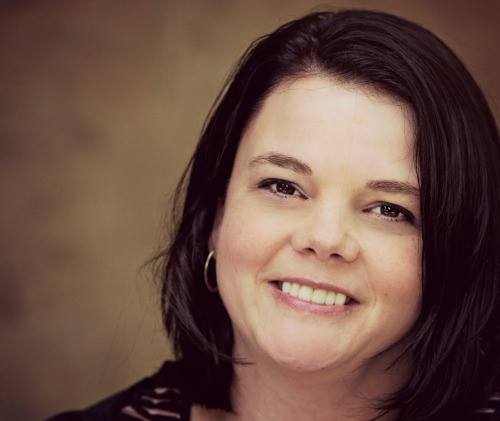
Kris Maze

Kris Maze author pic
  1. My Time. I may be busier than I ever have been, as I now work mostly from home and never get away, but now I use those minutes I spent driving to work or dropping off kids more efficiently. Although my Nano word count may not show it, I am satisfied with my time spent on developing stories and re-crafting parts of my author website. (Be on the lookout in the next month or so for a sneak peek!)
  2. My Couch. The multipurpose focal point of our house, this sturdy piece of furniture plays host to writing sprints, Zoom calls, working from home, and heated games of cribbage with my kids.
  3. My Writer Support Groups. The writers in my tribe supported me tremendously this year.  It’s been a time of firsts and foiled publishing accomplishments, but within those challenges, they reminded me that writing is only as good as what gets on the page. 

The collective experiences and struggles of my writing community have encouraged me to move forward on my next project. Currently, I look forward to weekly chats and a shared writer journey. I enjoy a first sip of coffee with an early online writer check-in. What writer wouldn’t be grateful for that?

If you're in the States, we hope you had a good Thanksgiving. If you're doing NaNoWriMo, we hope your word count made you happy (or that you at least had fun). And wherever you are on your writing journey, we're thankful that you share your journey with us here at Writers In the Storm!

Many thanks,
Ellen, Jenny, John & Kris

Read More
Why Don’t Bestsellers Use Deep Point Of View?

by Lisa Hall-Wilson

Hey Hey my fellow scribes *mittened fist-bump*

Most of the writers who request to join my free Facebook group “Going Deeper With Emotions In Fiction” are looking for tips and help in writing deep point of view. So, I’m always a little confused when every so often someone posts some variation of: so why don’t bestselling authors use deep point of view?

I think these questions are often rooted in frustration. Deep point of view isn’t easy to learn. It’s even more difficult when you think you’re writing in deep POV, but really it’s limited/close third person (or even more distant than that) and you just can’t see the difference.

Psychic Distance

The idea of levels of psychic distance was coined by John Gardner in The Art Of Fiction. This is the idea of how close the reader is to the point of view character’s thoughts/feelings with the gap between them bridged by the writer/narrator voice. These POV styles have been given different names over time, I’ve tried to include a few of the common ones.

With omniscient POV, the writer/narrator knows everything, at times even the future. Sometimes the narrator is a character in their own right, but mostly it’s the writer/narrator voice telling the story objectively (details, descriptions, thoughts) about any or all of the characters. The reader gets a story about one or many characters from the writer/narrator. (ie. The Graveyard Book by Neil Gaiman)

The next level of psychic distance is known by a few names (Indirect thought, objective third person). The author is still telling a story about the characters, but the narrator tries to communicate emotion to the reader. If you’re aiming to write in limited/close third but are told you’re “telling” -- this is the style you’re slipping into most likely.

In Limited or Close Third Person POV (or direct thought), the author/narrator voice is still telling the story but they’re limited to one character at a time, and that character shares the storytelling role through internal dialogue and some internal sensations. We see internal rhetorical questions come into use. There’s more evoking of emotions and the reader gets to be inside the character’s head some of the time.

In contrast, there is no narrator/writer voice in deep point of view. The character isn’t telling a story, they’re living out the story and the reader is a fly on the wall inside the character’s head. The reader experiences the story vicariously through the character. It’s like a first-person shooter game viewpoint. There’s no psychic distance or gap between the reader and the character (hence why there’s no need for italics for direct thoughts in deep pov). This is a massive mindset shift in how story is told.

Become A True Artist

So, back to the main question – why don’t bestselling writers use deep point of view? First, I would argue they do. Overwhelmingly, deep POV is used in certain genres like romance, but in most genres most bestsellers are dipping into deep POV in a variety of different ways.

The key is to know what psychic distance is and how each POV style uses it to tell a story that keeps the reader turning pages. Each style serves a purpose and creates specific effects, so use them strategically.

Shifting Between Psychic Distance Styles

The blue text is limited/close third person, bolded is deep pov, and orange is objective or indirect point of view. This first one is written in first person, but it’s not all in deep point of view (a lot of people don’t understand that first person is not automatically deep pov).

Do you see how the different styles are blended together as best serves the story and the emotional arc of the chapter? Those last two sentences has the narrator/writer voice creeping in to bridge the gap for readers that (to me) feels a bit more distant than the opening sentences. (You might disagree with me about that. That’s fine.)

Let’s look at another example of the blending the styles:

Those two sentences in orange font are purely a narrator/writer voice stepping in to fill in the gap.

This objective narrator/writer voice is used sparingly but strategically. A few lines above, do you see how the deep POV really pulls the reader into the tensest moment in the chapter? Everything in this chapter has led to this impending conflict.

And just for contrast, here’s one written entirely in deep POV. Just head to the bestseller page on Amazon and click romance. Most of them are going to be in deep POV. Do you see how the narrator/writer voice is missing?

Even stories written entirely in deep POV will make use of the other psychic distance styles for expediency, in ways that serve the story. Rather than create some scenario in which the reader can intuit that Mariah is the point of view character’s daughter (which wouldn’t be wrong), Harlow just tells the reader who Mariah is, and moves back into deep POV.

Learn the rules, learn how to make these point of view styles work FOR YOU, and then break the rules! This is what bestsellers do very well, this use of psychic distance, so well that readers often don’t even notice. Deep point of view is difficult and doesn’t seem intuitive until you really understand this idea of psychic distance. You pair this with the techniques of deep pov aimed at removing psychic distance and creating immediacy, and the differences become very clear. Now you’re ready to use deep POV as you like in any style, because you know how to use each tool to create specific effects for readers.

Do you prefer to write in deep POV, limited/close third person, or some other style? What style do you most prefer to read in? Do you have any questions about writing in deep POV, or examples to share? Tell us about it down in the comments!

About Lisa

Lisa Hall-Wilson

Lisa Hall-Wilson is a writing teacher and award-winning writer and author. She’s the author of Method Acting For Writers: Learn Deep Point Of View Using Emotional Layers. Her blog Beyond Basics For Writers explores all facets of the popular writing style deep point of view and offers practical tips for writers. 

She runs the free Facebook group Going Deeper With Emotions where she shares tips and videos on writing in deep point of view. 

Read More
How Specifics Make Your Stories Universal

By Tiffany Yates- Martin

The first time my husband read something I wrote, I eagerly awaited his feedback. “What did you think?” I asked breathlessly.

“It was good!”

“Say more about that…” I prodded.

“I liked it.”

“But what did you like about it?”

“I don’t know…it was good.”

My then-new spouse wasn’t trying to be opaque or difficult or euphemistic (though it took a few days of pouting and grousing for me to figure that out), and I wasn’t (just) seeking more praise (though it took a few days of bewilderment for my hubs to figure that out).

I needed clear, objective input on exactly what was and wasn’t working so I could figure out how to fix it. I needed specifics.

What kind of specifics?

Just as we as writers can’t address the possible weaknesses in our stories until we understand exactly what they are, readers can’t fully engage with those stories without a clear, concrete, granular sense of detail.

Yet one of the observations I most frequently make with authors’ manuscripts in my editing work is that key elements may lack impact because they feel vague or generalized. Not only does this prevent readers from grounding themselves in the world of your story, it can also result in ambiguous writing or a lack of clarity that may frustrate them, lower stakes, and reduce the effectiveness and immediacy of your story.

Example #1:

My dad died of a heart attack, and I don’t want to die having never really let myself live like he did.

versus

One day my dad trundled in to work—eight fifteen on the dot, just like always—worked until six, then went to sleep on the two-hour train ride home and never woke up. Heart attack, the doctor said. Just like that—while the rest of our family was being a family, he worked and worked and worked and then one day he died. I don’t want that to be me.

Both these passages convey the same idea, but one does it with generalizations that offer the reader little context, that create no concrete picture in her mind.

In the first passage we understand the point the character is making, but it’s intellectual, not visceral; theoretical rather than real—vague rather than clear.

In the second example we get enough specific details that we have a concrete image in our minds:

  • We can paint the rest of the picture for ourselves—which is what creates that magical synergy between author and reader that draws readers directly into the world of the story and fully brings it to life.
  • We get a fuller idea of the narrator’s father—that he was a man of structure and routine, perhaps a workaholic.
  • We get an idea of the protagonist’s feelings about him—that his dad wasn’t around for their family, in fact didn’t fully feel part of it to our narrator and that maybe he resents it.
  • And we have a much more direct, visceral feeling for how that affected his own goal not to live his life that way.

The author doesn’t spell out every tiny detail—just enough to create a concrete suggestion of these story elements and give the reader rich raw material to build on in her own imagination.

Example #2:

She fled an unhappy marriage.

That certainly conveys some information about the character’s past. But as Tolstoy famously said, “each unhappy family is unhappy in its own way.” An unhappy marriage might suggest any of a broad spectrum of issues, from incompatibility to abuse.  It leaves out nuance.

Look what even a few strokes of specificity add to this simple line:

One day she packed a bag and walked out and never looked back, vowing no one would ever make her feel invisible or small again.

Now we can fill in more of the picture from our own perspective:

  • We may never have been in a verbally abusive or belittling marriage, but most of us can relate to the feeling of someone making us feel inadequate in some way.
  • We can viscerally understand the emotions and reactions and impact of that based on our own firsthand experiences.

This is what I mean by the specific invoking the universal: The more concrete and granular a picture the author creates, the more it may resonate with each reader’s direct experience of the universal feelings attached to these situations and events.

Example #3:

Despite perhaps wildly differing personal experiences, we can understand feeling minimized, unseen, unhappy, etc., by reflecting on times when we felt those things ourselves—albeit perhaps for different reasons.

In Brit Bennett’s astonishing novel The Vanishing Half, Stella Vignes decides to abandon her mother, her hometown and community, and her twin sister to pass as white to circumvent the limited opportunities she feels her future holds as a Black woman in the segregated South, yet finds herself haunted years later by the secret she carries.

Bennett’s pinpoint-specific character and situation may not reflect the lived experience of the bulk of her readers—but they hit on universal motivations and emotions that allow readers to viscerally understand and react to Stella’s choices and their effect. They bring her story to rich, vivid, immediate life.

  • We may never have faced that exact situation for ourselves, but most of us can relate to the desire to transcend strictures or limits put on the opportunities available to us.
  • We can probably relate to the pressures and emotions of hiding something about ourselves that we fear others seeing—whether that’s a secret, a vulnerability, a shame or regret, etc.

Using specifics will also add punch to character motivations and goals—consider a character who “wants to find love” versus one who demands a partner who can see and appreciate her for who she is, rather than what he wants her to be (Sandy in Grease), or a protagonist who wants to vanquish the terrorists holding hostages inside a building versus the one desperate to save his wife and family so he can reconcile with them (Die Hard).

As humans we don’t deeply engage with abstracts; we crave detail, specificity, and most of all connection on a human level. We understand story through the universal human reference points we all share.

Example #4:

He was determined to save the family farm

doesn’t quite suggest the same driving need to preserve a legacy as:

His father had worked this land all his life, and his father and his father before him, their sweat and tears and blood as much a part of these fifty acres as the soil, and that strong unbroken chain wasn’t going to snap with him.

Example #5:

They even apply to descriptions: Compare the images in your mind between

 She took in his gorgeous high-end kitchen

versus

The reflections off the miles of quartz countertops and gleaming Viking appliances practically blinded her.

Notice how just from a few concrete specifics, your imagination lets you fill in more detail on your own—I’m betting your mental picture included more than just appliances and a countertop:

Did you also see the cabinets, the sink, the flooring, the color scheme?

Sparked by specific detail, you create a much clearer and more vivid picture in your mind than from the vague generalization of “a high-end kitchen.”

Enhancing your stories and readers’ experience of them with specifics doesn’t mean adding tedious laundry lists of detail. Experiment with shading in just enough nuance to bring a few details into sharper focus so that readers can engage by filling in the rest of the picture.

When you think of your favorite stories you’ve read, what details live most vividly in your mind? How do you use specifics to bring your own writing more fully to life?

About Tiffany

Tiffany Yates Martin has spent more than twenty-five years as an editor in the publishing industry, working with major publishers and New York Times, Washington Post, Wall Street Journal, and USA Today bestselling, award-winning authors as well as indie and newer writers, and is the author of the Amazon bestseller Intuitive Editing: A Creative and Practical Guide to Revising Your Writing. She's led workshops and seminars for conferences and writers' groups across the country and is a frequent contributor to writers' sites and publications. Under the pen name Phoebe Fox, she's the author of the Breakup Doctor series and her most recent release, A Little Bit of Grace (Berkley, 2020). Visit her at www.foxprinteditorial.com or www.phoebefoxauthor.com.

Read More

Subscribe to WITS

Recent Posts

Search

WITS Team

Categories

Archives

Copyright © 2026 Writers In The Storm - All Rights Reserved