Writers in the Storm

A blog about writing

storm moving across a field
Tell Your Story Forward

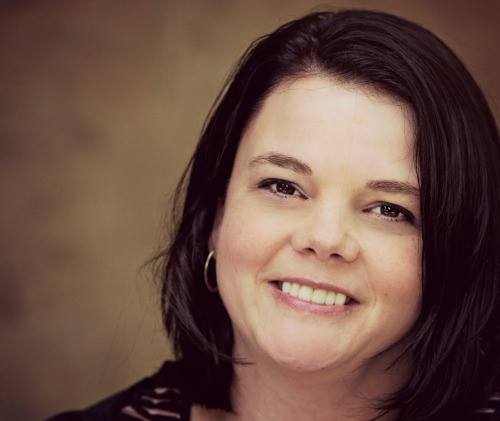
by Lori Freeland

What does it mean to tell your story forward? Whatever point you choose to drop the reader into your story, start there and move each scene forward in chronological order. The idea sounds simple, but it’s easy to think we’re doing it when we’re really not.

That’s because we don’t “count” all the places we pause the story to fit in what we think the reader needs to know about prior events.

Those pauses are cheating, and each time we use them, we drag our readers out of the present and dump them into the past. That’s sabotage we’re doing to ourselves. We’re derailing our own train.

But what about those books and movies that______? (Insert your own argument.)

There are exceptions to almost any “writing rule.” But exceptions are rare. That’s why they grab our attention. It’s like overusing exclamation points. If everything stands out, nothing stands out.

Take Pulp Fiction. Not quite told in chronological order, it challenges us to figure out “what happens when” as the story unfolds. It’s a unique device. Some of us might like it. Some of us might not. But we can probably agree that we wouldn’t want all our movies to be told that way.

When I say tell your story forward, I’m not talking about are movies like Memento where the story starts at the end and is deliberately told backward. Or Benjamin Button where the main character ages in reverse. Or Back to the Future, where Marty McFly travels to the past to save his future. I’m also not talking about dual timelines where you’re telling two stories, one in the present and one in the past.

What I am talking about are places in your WIP that...

Don’t Stop the Action

Taking a timeout from intense action or a pivotal moment is like pushing the emergency stop on a rollercoaster the second before it makes a ninety-degree drop. When we’ve spent so much effort getting our reader to the top of the “ride,” why would we want to lose all of our momentum by pulling them back at the last second? That’s very disappointing.  

Example:

The door burst open, and the long barrel of a sawed-off shotgun entered the cabin first.

Jimmy lunged behind the couch as the first shot shattered the mirror behind him. It was times like these that reminded him of the survival training summer camp he attended last summer before the start of junior year. Learn to live in the wild. Learn to shoot a rifle. Learn to camouflage. What a waste of time. He’d lost an entire summer. And summers were his only free time. The only thing he didn’t regret was meeting Jenny. And their first kiss by the lake. They’d stayed up till dawn, talking for hours, and then as the sun peeked over the mountains, he’d casually leaned in and . . . Yeah, well now he knew that had probably been a mistake. A big mistake.  

It's okay to laugh. Jimmy’s example is definitely over the top. But I’ve read similar passages.

No one thinks they’re actually spinning off on that much of a tangent. Only, some of you are, and probably without even realizing it.

“But I need to let the reader know about this thing that happened because they won’t understand what’s going on and they won’t get my character and why he’s doing or saying this now.”

I hear this argument a lot. No, you don’t need to let the reader know. Not in that moment. But we’ll get back to that.

Paragraphs like Jimmy’s example above grab a sprinting reader by the ankles, plant him in freshly poured cement, and force him to trudge back to what he really cares about—the action. No one likes to trudge. The only other option? Skim until they get to the “good” parts or give up on the book entirely.

Try Something Like This Instead:

The door burst open, and the long barrel of a sawed-off shotgun entered the cabin first.

Jimmy lunged behind the couch as the first shot shattered the mirror behind him. Survival camp. What a freaking waste of time. Options. Options. Options. He was out of options.

The next shot sent bullets tearing through the back of the couch, covering Jenny’s head in bits of floral fabric.

He never should’ve kissed her. Never should’ve brought her here. Throwing himself on top of her, he prayed his body would be enough of a barrier to save her.

In this version, Jimmy brings his past with him into the present without stopping the action.

Don’t Deflate Your Tension

Tension, that feeling of needing to know how it all works out, is what pulls readers along. 

Writers and screenwriters who tell true stories have a special challenge. Readers already know the end. Giving away the end of your story at the beginning can steal your reader’s connection to your characters. If they know straight up that he lives or dies or that she does or doesn’t get what she wants, what’s the point in taking the journey?

That doesn’t mean you can’t open with a snapshot of the climax or a turning point. But stick with the beginning of that pivotal moment and leave the reader hanging. As they walk through the story with your characters, they’ll wonder when they’ll get to that point and how it will be resolved.

Example: The first line of Twilight by Stephenie Meyer (no haters, please ?)

“I’d never given much thought to how I would die—though I’d had reason enough in the last few months—but even if I’d had, I would not have imagined it like this.”

Example: In the movie Saving Private Ryan, the opening scene shows an old man at the Normandy American Cemetery. We don’t know his name until the end. As we watch the movie and get attached to each character, tension builds as we wonder which one will be the sole survivor.

Don’t Hold the Reader Hostage in the Past

Back to the earlier argument that your reader needs to know this or that about your character.

That’s called backstory, and it deserves the attention it received in these earlier posts from Lisa Cron and Margie Lawson. But here’s what two other mega-selling authors have to say:

Stephen King in On Writing: A Memoir of the Craft.

“The most important things to remember about backstory are that (a) everyone has a history and (b) most of it isn't very interesting. Stick to the parts that are, and don't get carried away with the rest. Life stories are best received in bars, and only then an hour or so before closing time, and if you are buying.”

Garth SteinNew York Times bestselling author of The Art of Racing in the Rain.

“Rushing the backstory is a terrible waste. Many writers try to get too much out too soon. If the earthquake is going to happen today, don’t start your story two days ago, even though something important happened to your protagonist two days ago. Start it with the earthquake. Then, the previous two days become the backstory that will inform our hero’s actions in the ‘now’—the fight he had with his wife, the fact that he has no gas in his car (or cash), or that his kids are stuck at summer camp and he has to get to them. Tension between what the reader knows and what the reader doesn’t know will then serve to propel your reader through your story.”

Dumping the past on your reader during an in-the-moment event is the painless way out when it comes to writing. Painless for you. It can be very painful for the reader.

Picture this. As the story beckons them forward, you have a tight grip on their neck holding them back. You’ve set up an entire story world for them to travel—but then you won’t let them go in.

Slicing up chunks of backstory and sprinkling them throughout the story in the right place, at the right time, and in the right order takes skill. Sharing information about your character in a way that weaves that information into the action is hard. No one is disputing that.

So how do you actually carry it out on the page? Practice. Rewrites. Deliberate planning. And even more deliberate edits.  

The first step is to admit you have a backstory problem.

If you’re not sure, check with your beta readers or critique partners. Fresh eyes are crucial. Make sure you trust the people you give your manuscript to. Know that they have your best interests at heart. And that they know what they’re talking about. For more on that, see The Up and Downsides of Critique Groups.

Once you have your people, ask them to highlight the parts they skim. Read those parts and assess what you’re doing in those sections as a writer and why.

Now you have a few options. Copy and paste the backstory into a different document and figure out where and when you can use it in smaller chunks. It helps to cross it out as you put it back in. Or you can fix your backstory dumps on the spot. Shorten/tighten/rework them to weave into what’s going on without stalling the story. It helps to think about what’s actually important for the reader to know, not what you think they need to know. If you can’t figure that out, ask your beta readers and critique partners.

Every writer deals with issues of telling their stories forward. Some are naturally good at it. Others learn to be good at it.

I’d love to hear your experiences and read some examples of what you’ve done to make sure your story doesn’t stop the action, deflate the tension, or hold the reader hostage in the past. Please share in the comments!

About Lori

An encourager at heart, author, editor, and writing coach Lori Freeland believes everyone has a story to tell. She’s presented multiple workshops at writer’s conferences across the country and writes everything from non-fiction to short stories to novels—YA to adult. When she’s not curled up with her husband drinking too much coffee and worrying about her kids, she loves to mess with the lives of the imaginary people living in her head.

This image has an empty alt attribute; its file name is Accidental-Boyfriend.jpg

You can find her young adult and contemporary romance at lorifreeland.com and her inspirational blog and writing tips at lafreeland.com. Her latest release, The Accidental Boyfriend, is currently free on the Radish app. 

Read More
The Highs and Lows of a Debut Author: Thirty-Six Voices, Plus One

By Barbara Linn Probst

It’s a cliché that becoming a published author is like becoming a parent. The astonishing reality of this new creation, after all the months—or even years—of preparation. The swift change of identity. The joy and vulnerability. 

As a parent by adoption, I’ve always been sensitive to this metaphor, finding it both illuminating and constraining. Unlike some who choose to adopt, I didn’t try every available means to conceive a biological child but switched paths fairly quickly because I believed—and still do—that raising a child was far more important to me than how that child arrived in my arms.

Even so, there were plenty of moments, especially in the beginning, when I heard myself grow defensive—“explaining” and justifying my choice, even though no one had asked. 

It was a bit like that when I decided—after a single agent query that seemed destined to be the “one-in-a-thousand” exception to all the stories I’d heard, until it wasn’t— to publish with a hybrid press. As with motherhood, I had the means and the temperament to take this path.

Bringing my book to life felt more important than how, exactly, it got there. Once out in the world, its fate would depend on its merits and reception, not on its pedigree. Kind of like my kids, now that they’re grown.

My journey has been immensely rewarding, a lot of work and a lot of fun. Still, I couldn’t help wondering if my experience was like that of other new authors. Being a former researcher, I did what comes naturally. I asked.

My Research

Recently, I posed three open-ended questions on several Facebook groups for writers, offering the option of responding by email or in a phone call. I didn’t specify genre or path to publication; my only criterion was the recent publication of a first book or its imminent launch in the next few months.

I explained that I was looking for themes and discoveries that might be useful for future cohorts. No one would be singled out by name. Rather, I hoped to cull through the stories and identify common experiences, caveats, and discoveries.

My questions:

  1. What was/is the best part of being a debut author? 
  2. What was/is the toughest part?
  3. What was/is the most surprising part?

I ended up talking, on the phone or by email with thirty-six people from every stage of publishing, with every kind of press—from The Big Five to tiny “traditional” presses to a large and well-established hybrid press. As it happened, none were self-published.

Of the thirty-six people who responded, thirteen had published within the past twelve months, eight more than a year ago, and fifteen were “almost there,” launching in the next couple of months. Only one man volunteered; the rest were women.

The responders represented a variety of genres, with the majority publishing women’s fiction. I’ve summarized their responses below, with a few direct quotes as examples and a word or two from my own experience.

What I Learned

The Best Parts?

There was a clear consensus among the thirty-six authors on the three best parts of the debut experience.

The sense of accomplishment, including the thrill of the object itself—actually holding the physical book in their hands. Several also mentioned the initiation into a new identity, a new way of being, as they passed each milestone: the first image of the cover, the first blurb, the first Amazon review.

The connection with readers, knowing that you had touched someone’s life.

  • Nothing is more gratifying than to know that
    something you wrote truly landed with people, that they got what you
    were trying to say.
  • Knowing
    I’d touched someone and helped them understand something new.
  • Knowing
    that something I wrote
    resonated with another human being.
  • I’ve
    never been a joiner, so it’s been really surprising to me how important this
    tribe of writers has become to me.

The welcoming and supportive community of authors—the kinship, kindness, generosity, and mutual support; the sense of being part of a sisterhood or tribe.

  • The camaraderie of other authors, the deep
    relationships that have formed.
  • Writing is such a solitary endeavor, so I
    imagined that authors were all just existing alongside each other without
    really interacting—and that was so wrong!

A note: I located respondents through Facebook groups, so it makes sense that the people I heard from were those for whom community was important. There may be plenty of other debut authors for whom community isn’t so important. In my own case, being more solitary, this was less salient than the first two points.

The Tough Parts?

The three toughest aspects were also consistent across respondents.

Managing the roller coaster of emotions, including the anxiety, self-doubt, “imposter syndrome,” and fear of not doing enough. Some spoke about the peril of comparing oneself to other debut authors—the pangs of jealousy, and the guilt that followed. Many also expressed how important it was to give themselves permission to have all these feelings.

  • The
    “pinch me!” feeling, followed by the letdown afterward.
  • I
    had to work really hard to manage
    my expectations, my anxiety, and the endless compulsion to do more.
  • It’s hard when other people are getting
    things you didn’t even know you wanted and posting about all the lists they’ve
    made. It’s okay and I hope even normal to feel a little bit jealous while also
    being genuinely happy for the person.

Having to do the endless marketing, a daunting and unforeseen challenge! Most had not realized how much promotion they would need to do—the time and energy required, the entirely new skill set they had to acquire, and the discomfort with the whole notion of self-promotion. 

  • It took a lot more time to promote and be responsive on social media than I’d expected. It’s another round-the-clock job that requires attention and follow-up and organization to do it well, even with a publicist.
  • It’s not my personality to say, “Hey look at
    me, buy my book!” It’s so time-consuming, having to learn about social media
    and put all that energy into marketing yourself.
  • It’s
    overwhelming to see what other authors are doing. This whole marketing and
    promotion thing is so new for me, and my own sense of being a novice/am I doing
    enough/doing it right led to so much anxiety.

The pressure to write another book—quickly—and having no time to do that while promoting the first. The demands of promotion took precious time and energy away from working on the next book, which was what so many really wanted to be doing.

A note: I definitely resonated with the first two points, especially the roller-coaster of emotions! Each bit of “good news” made me soar with elation and, yes, heightened ambition. Each disappointment or Facebook post about someone else’s “good news” made me sink into misery—and then reprimand myself for feeling that way. I kept thinking I ought to be “better than that,” more generous and centered. So that was a struggle for me.  

The Surprising Parts

These parts overlapped the great and the difficult.  There were pleasant surprises and unpleasant ones.

Many people were pleasantly surprised by:

  • The warm, welcoming, supportive community of writers
  • The care and respect they received from their publisher
  • The support from friends and family, including reconnecting with people from the past whose genuine excitement they hadn’t expected

Some were unpleasantly surprised by:

  • How hard it is to sell books (and get people to review them); the overall lack of control
  • How much it hurt to experience the callousness of people who posted negative (“snarky”) reviews behind the cyber wall— how casually people can rip a book or its author to shreds as if there wasn’t an actual human being behind the book.

What Can Their Experience Offer Us?

What I really wanted to know, when I asked these other debut authors about their experience, was: Am I “normal?”

Was my own experience typical of anyone going through this intense and identity-changing experience—or was it the reflection of an overly ambitious and anxious personality?  My compulsion to keep “doing things,” as if stopping would mean my book would fail. The seesaw between ecstatic surges of joy when something good happened and despair when it didn’t. The feeling of being in the throes of an addiction.

Was it me, my personal craziness, or was it the debut experience itself?

My conclusion?  A bit of both—because, of course, there’s no single “normal.” Yet there are patterns and tendencies—in the debut experience, as in all experiences—and it can be an enormous relief to know that others have felt what I’m feeling, gone through the same highs and lows. And survived.

If you’ve already had your debut, what was it like? Which of the points in this essay rang true for you?  Did you experience something different, that wasn’t captured here? If your debut is still ahead, which of the points resonated … terrified … reassured you?

About Barbara

Barbara Linn Probst is a writer of both fiction and non-fiction, living on a historic dirt road in New York’s Hudson Valley. Her debut novel, Queen of the Owls (April 2020), is the powerful story of a woman’s search for wholeness, framed around the art and life of iconic American painter Georgia O’Keeffe.

Endorsed by best-selling authors such as Christina Baker Kline and Caroline Leavitt, Queen of the Owls was selected as one of the 20 most anticipated books of 2020 by Working Mother, one of the best Spring fiction books by Parade Magazine, and a debut novel “too good to ignore” by Bustle. It was also featured in lists compiled by Pop Sugar and Entertainment Weekly, among others. It won the bronze medal for popular fiction from the Independent Publishers Association, placed first runner-up in general fiction for the Eric Hoffer Award, and was short-listed for both the First Horizon and the $2500 Grand Prize. Barbara’s book-related article, “Naked: Being Seen is Terrifying but Liberating,” appeared in Ms. Magazine on May 27.

Barbara is also the author of the groundbreaking book on nurturing out-of-the-box children, When The Labels Don't Fit. She has a PhD in clinical social work, blogs for several award-winning sites for writers, and is a serious amateur pianist. Her second book releases in April 2021. To learn more about Barbara and her work,  please see http://www.barbaralinnprobst.com/

An earlier version of this article appeared on Writer Unboxed.

Top Graphic formed by Kris Maze

Read More
The Power of Pronouns -- Part 1

by John Peragine

Some of the smallest words in English (and other languages) are pronouns, but they have a profound impact on meaning and emotions. Using them well in our writing is a powerful shortcut to help our readers.

Pronouns can be proclamations of our psyches to the world, about how we feel about ourselves and others around us. Pronouns can bring us comfort and they can bring us pain. Pronouns can drive us to rage or drop us into tears.

Pronouns are declarations separating us from them. They can bring us together. And they can accuse them.

Sit with this simple sentence for a moment:

Look at what they are doing to my city.

More than likely when you read that sentence, your inner voice reacted. How did it make you feel? What did it make you think about?

Consider this sentence below and notice what changing the pronouns does to the tone, feel, and imagery.

Look at what we are doing to our city.  

Pronouns are debated in Washington. Laws are made surrounding them. The usage of the right pronoun can make us feel included. Conversely, the misuse or misattribution of a pronoun can be used as a weapon.

It is for these reasons that the proper use and care of pronouns should be given in our writing. All our writing: articles, books, emails, and social media. As writers, we have a responsibility to use pronouns with the highest level of ethics and personal moral standards.

A Quick Pronoun Primer

Here is a quick list of all the various pronouns.

  • Subject Pronouns: I, you, he, she, it, they
  • Object Pronouns: me, you, him, her, it
  • Possessive Pronouns: my, mine, your, yours, his, her, hers, its
  • Interrogative Pronouns: who, whom, whose, what, which
  • Indefinite Pronouns: another, each, everything, nobody, either, someone
  • Relative Pronouns: who, whom, whose, that, which
  • Reflexive and Intensive Pronouns: myself, yourself, himself, herself, itself
  • Demonstrative Pronouns: this, that

POV and Pronouns

My recent work in progress was originally written in third person point of view. I worked on it for three years, pitched to agents and publishers, and I was schooled about my genre. My book was not an adult fantasy, as I originally believed, it was a middle-grade adventure.

I was crushed, not because I mis-genred it (yes, I am owning genred now), but because I now had the job of editing the whole book, analyzing every pronoun in every scene, and changing it to first person. When my main character spoke, I had to switch from "he said" to "I said," which opened up a totally new point of view and reflection on the scene.

In this total re-write, pronouns were my touchpoints. I gained a new respect for pronouns and their use in writing.

  • Pronouns drive point of view.
  • They let the reader know who is speaking.
  • Pronouns show who (or what) is doing an action.

Using the right pronoun, and connecting it to the object it replaces, is important. Below, I've provided some common errors people make when using pronouns.

Using the Wrong Form of the Pronoun

People often choose the object form of a pronoun, rather than the subject form. Here is an example:

Over the course of the month, my friends and me went to the fishing hole every day.

This should read:

Over the course of the month, my friends and I went to the fishing hole every day.

The word “me” is the object form of the pronoun. The subject forms of pronouns are I, he, she, we, and they. These are subjects of the verb.

Pronouns After a Preposition

Pronouns can be the object of the preposition. Here is another example:

The ice cream was served at the end of the night, and party favors were given to she and the other girls.

It should read:

 The ice cream was served at the end of the night, and party favors were given to her and the other girls.  

In this case, "her" is the object of the preposition "to."   If the prepositional phrase is shortened it would read "to them," again using the object form of the pronoun.

 Pronouns and Possessive Adjectives

Consider the sentence:

The bride announces she and her new husband’s plans for their honeymoon include a trip to the Bahamas.   

Pronouns have possessive forms: my, your, his, her, its, our, and their. These are pronouns that are used when an object is possessed. The sentence should read:

The bride announces her and her new husband’s plans for their honeymoon include a trip to the Bahamas.  

Pronouns and Transitive verbs

Kelly signed she and her friend out of detention using her teacher’s signature.

In this sentence is the transitive verb signed. In this case the object form of the pronoun should be used.

Kelly signed her and her friend out of detention using her teacher’s signature.

Reflexive Pronoun Versus Personal Pronoun

Reflexive pronouns are those that end in -self or -selves. Examples are himself, herself, and ourselves. Consider this sentence:

Both my daughter and myself were daring enough to ride the double-loop rollercoaster.

The sentence should use a personal pronoun instead.

Both my daughter and I were daring enough to ride the double-loop rollercoaster.

# # #

Here is a challenge for you: how many times did I misuse pronouns in this article? What do you believe is the most powerful pronoun in the English language?

About John Peragine

John Peragine has published 14 books and ghostwritten more than 100 others. He is a contributor for HuffPost, Reuters, and The Today Show. He covered the John Edwards trial exclusively for Bloomberg News and The New York Times. He has written for Wine EnthusiastGrapevine Magazine, Realtor.com, WineMaker magazine, and Writer's Digest.

John began writing professionally in 2007, after working 13 years in social work and as the piccolo player for the Western Piedmont Symphony for over 25 years. Peragine is a member of the American Society of Journalists and Authors. His newest book, Max and the Spice Thieves, will be released this Fall. https://www.facebook.com/twilightdjinn/

Max and the Spice Thieves, Secrets of the Twilight Djinn by John Peragine
Read More

Subscribe to WITS

Recent Posts

Search

WITS Team

Categories

Archives

Copyright © 2026 Writers In The Storm - All Rights Reserved