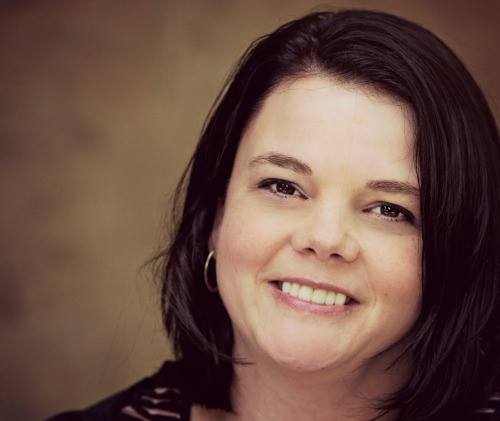
By Barbara Linn Probst
Before I turned to fiction, I was a hybrid of academic and therapist. There was a truism in clinical practice that having been in therapy made you a better therapist—a complicated question, impossible to prove, although we always encouraged students to experience therapy themselves before attempting to offer it to others. I got curious and decided to ask the question in reverse: what was it like for people who entered therapy after having spent time as therapists? Could they leave their therapist-minds behind when they moved to “the other chair” and surrender to the client role? As you might guess, it wasn’t so easy.
Now that I’m a novelist, I’m interested in a similar question for writers. Most of us were readers before we became writers, and would probably agree that our reading experience influences our experience as writers. But what happens when a writer opens a book and shifts to her reader-identity? Can we leave our writer-minds behind and surrender to the “reader chair”—and should we?
Once again, I asked. More than fifty people on several writer groups I belong to responded to my question: “How do you read? Do you lose yourself in the story (as a reader might) or read to study how the author did it (as a writer might)?”
The responses can be summarized into three big ideas.
"It depends on the quality of the book."
For some, there was a clear difference in how they read “well-written books” and how they read “poorly-written books.”
- If the book is really good, I lose myself in it and forget to “read like a writer,” even if I want to and try to.
- A good story hijacks my brain and turns me back into a reader!
- If it's a book with problems, I tend to read like a writer and start seeing the issues.
- A poorly-written book will break the spell and activate that inner critic.
On the other hand, some people felt that the writer-brain interfered, even with well-written books, and often ruined their enjoyment.
- Writer-mind can interfere, and I wish it didn’t! It’s a real downer.
- I’d like to read like a reader but it can be really difficult.
- The inner writer critic comes out far too often. I find myself pulled from the story.
- I'd like to read as a reader, but I find now that it's often as a writer. Oh, there's THAT trope. Oh, what a nice use of interjection. Why's she switching POV now? Hah, great dialogue! Ooh, what a great way to describe that expression. Ah, she just raised the stakes. It's kind of annoying because I miss just reading for pleasure.
People dealt with that challenge in different ways—typically by toggling back and forth or by reading a book more than once.
"I switch back and forth."
For some, the “toggling” happens as they go. While mainly “just reading,” they might stop to note something the writer did that they admired—or to wince when something is jarring.
- I read like a reader who is a writer, meaning that I simply read, but sometimes take notes on things that impressed me about the writing.
- A good book makes me stop to ponder how she did that!
- I often re-read a certain passage and think, “Now that’s a great idea to describe xyz!”
- I try to read like a reader but I catch myself noticing if the POV veered slightly off or if the scene jumped without a clear explanation. I find myself thinking: hmmm. Something was removed here and the transition is now bumpy.
- Mostly as a reader but I sometimes stop dead as a writer to admire a great sentence or be shocked by bad technique.
For others, the two processes happen alongside one another, as if different parts of the self are engaged in different ways.
- The writer can still think along the way, while the reader feels.
- I read like both: like a chef enjoying a dish prepared by someone else, who can't help figuring out how it was prepared and what ingredients went into it. Or like a singer listening to another singer, and appreciating how they handle reaching difficult notes and where technique compensates for vocal flaws.
I go back and read the book a second time.
With an exceptionally good book, many people said that they read for enjoyment the first time, and then go back to re-read with their “writer-brains” so they can focus on craft and identify what the author did that was so effective.
- Then a second time as a writer, paying more attention to how it was written rather than what it's about.
- If a book wows me, I'll reread it, sometimes to be wowed again, sometimes to study technique to understand why it wowed me.
- If it's amazing or I couldn't put it down, I go back and try to figure out what exactly created that response.
This was especially so for books that had effective twists and turns.
- If the book intrigues me enough I'll go back and reread as a writer so that I can understand how this particular book kept me turning the pages
- I wanted to analyze why it worked so well and what it was that made me lose myself.
- The twist at the end revealed why the point-of-view character behaved as he did throughout the story. I had to reread it with that knowledge.
Many people noted how important it was to experience the story as a reader, before all else.
- If you don't read first as a reader, the story is no longer a work of art or humanity.
- I would never want to forget that the story is written for readers, that the writer has something personal to convey, and is speaking to me, not demonstrating writing technique. I can't really experience the story if all I care about is to study its writing, even if I naturally tend to notice the writer's skill as I read.
These reflections offer an additional reminder. It’s important to remember that we’re writing for the reader—to give the reader that immersive experience of falling under the spell of the story, the same experience that we ourselves enjoy!
That may sound obvious, but I know I can become caught up in craft and technique—the sort of things that writers care about. I can spend hours worrying about eliminating “deadweight” or searching for the perfect word to convey the meaning I’m after. Although these things are part of our craft, I suspect that they’re not the things that readers care about.
Story.
Characters.
Meaning.
Isn’t that what we care about too, when we are in our reader-selves? When we read, many of us toggle back-and-forth. We also need to toggle back-and-forth when we write— balancing our search for the highest level of craft we can muster and our feeling for the reader.
What about you? How do you read? Do you find yourself switching into your writer-brain when you read? If so, what triggers the switch? Please share with us down in the comments!

Barbara Linn Probst is a writer of both fiction and non-fiction, living on a historic dirt road in New York’s Hudson Valley. Her debut novel, Queen of the Owls (April 2020), is the powerful story of a woman’s search for wholeness, framed around the art and life of iconic American painter Georgia O’Keeffe.
Endorsed by best-selling authors such as Christina Baker Kline and Caroline Leavitt, Queen of the Owls was selected as one of the 20 most anticipated books of 2020 by Working Mother, one of the best Spring fiction books by Parade Magazine, and a debut novel “too good to ignore” by Bustle. It was also featured in lists compiled by Pop Sugar and Entertainment Weekly, among others. It won the bronze medal for popular fiction from the Independent Publishers Association, placed first runner-up in general fiction for the Eric Hoffer Award, and was short-listed for both the First Horizon and the $2500 Grand Prize. Barbara’s book-related article, “Naked: Being Seen is Terrifying but Liberating,” appeared in Ms. Magazine on May 27.
Barbara is also the author of the groundbreaking book on nurturing out-of-the-box children, When The Labels Don't Fit. She has a PhD in clinical social work, blogs for several award-winning sites for writers, and is a serious amateur pianist. Her second book releases in April 2021. To learn more about Barbara and her work, please see http://www.barbaralinnprobst.com/