Writers in the Storm

A blog about writing

storm moving across a field
Why ‘Free’ is a Cornerstone Marketing Strategy

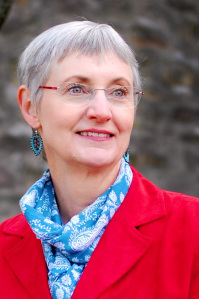
Penny Sanseveri

From a business standpoint, giving something away for free to get a sale may seem counterintuitive. How can giving something away for free help you make money in the long run?  

Think of offering those freebies as a marketing expense: the cost of exposure. Free promotions are a great way to get you exposure in front of your target audience. This exposure can help expand your following, and eventually this will lead to sales down the line. The key is to know how to take advantage of free.  

Let me give you an example: One author I worked with held a freebie promotion that led to 37,000 downloads of her eBook. The following day, when the promotion was over, she sold 1,300 eBooks. While 37,000 seems like a lot of lost sales, it’s actually a conversion number. You can’t get all the 37,000 downloaders to become fans. Within that group are your fans and readers, perhaps around 1,000 or so. They are the people who take the time to read the book, and who may even write a review. You’ll gain enough of a following to start building a fan base, and you’ll continue to market to those people in order to keep the connection strong.  

Don’t worry about the freeloaders. Instead, focus on those downloaders who will take the time to read your book and become fans. 

How can you make this work for your book? Below are the first few benefits of free, as well as ways to use free promotions effectively to get more fans and sales. 

1. It Makes Your Book Attractive 

Being discovered by readers is a real challenge for authors these days, since there are an estimated 350,000 books published every year. Readers are inundated with choices. By making your book free, you make your title attractive, and make it easy for readers to choose your book— especially if you’re an author they’re unfamiliar with— over another author’s book.  

Freebies are a way to introduce readers to you in a risk-free way, and there’s a good chance they’ll want more. By offering a risk-free introduction to you and your books, you gain fans who will pay for your books in the future. 

2. Promotion is Easier 

As mentioned above, offering something for free now can turn into a potential sale in the future. To make the most of this free promotion, and to make sure you reach the most potential readers, spread the word about your promotion. Share it with your email list, in your newsletter, with social media fans, etc.  

For instance, take advantage of Amazon’s Kindle Direct Publishing program, which allows you to offer your book for free through KDP Select. You will have to sell your book on Amazon exclusively during this period, but it can be one of the most effective ways to make sure your book is seen by a large number of readers at once. 

There are other free giveaway opportunities available on sites like Library Thing and Goodreads. Both of these sites allow members to give away copies of their books. Again, for these freebies to work, you do need to promote your giveaway, both on the site you choose and to your own network. 

3. Pricing is Competitive  

So how should you price your book once your free promotion is over? As mentioned above, readers are inundated with choices, and pricing can make a huge difference in which books readers will choose. If you want to build a fan base, you’ve got to price your book competitively within your genre or niche. How do you determine pricing? Look at books in your market and find the average price. Amazon is a good place to do this research, but keep in mind you may see a lot of eBooks listed for free as part of a promotion or the Kindle Lending Library. Look at regularly-priced books. 

How to Use Free Promotions Effectively to Grow Fans and Sales 

1.Give away more than your book: The concept of free extends beyond your books. Think of all of the additional freebies you can share with your fans, such as tips, videos, webinars, and content. They’ll all bring people back to visit your website, read your blog, and buy your other products.  

2.Stay relevant:As you grow your fan base, make sure to keep people’s attention by checking in with them on a regular basis. You can start to grow this relationship by using the last page of your book to thank them for their purchase, encourage them to send you feedback, and ask them for a review. Let your fans know you’re interested in them and that you appreciate them. Once you have gained followers, cultivate this relationship by sharing ideas, posting great content, and making connections on social media. The more you reach out, the more effective you’ll be at building and growing your fan base.  

3. Invite fans into your world:Use your blog, social media, videos, and more to draw readers into your world. Be informative and entertaining by providing additional fun, free content. For fiction authors, share tidbits about your characters, blog in character, ask fans to help you select music for the characters, or post fun quizzes. Nonfiction authors can use their expertise to create tip sheets, informational videos, and mini eBooks. Identify how you can connect with fans in different ways, and be sure to offer variety. 

It’s important for you to remember that there’s no single marketing strategy that will help attract and retain fans. Instead, marketing is made up of a series of actions and consistent engagement over time that will help you to increase your following and keep them interested and involved. Freebies are only one marketing tool, but you now have the understanding and tools to make sure you’re using freebies effectively to get more exposure, fans, credibility, and sales over the long term.   

For more book marketing tips, check out my new book, 5-Minute Book Marketing for Authors - Updated 2019 Edition.It’s out now and features easy and effective ways to market your book every single day in as little as 5 minutes!

Have you ever tried free? Any tips for us?


Penny C. Sansevieri, Founder and CEO Author Marketing Experts, Inc., is a best-selling author and internationally recognized book marketing and media relations expert. She is an Adjunct Professor teaching Self-Publishing for NYU. She was named one of the top influencers of 2019 by New York Metropolitan Magazine.

Her company is one of the leaders in the publishing industry and has developed some of the most innovative Amazon Optimization programs as well as Social Media/Internet book marketing campaigns. She is the author of eighteen books, including How to Sell Your Books by the Truckload on AmazonRevise and Re-Release Your Book5-Minute Book Marketing for Authors, and Red Hot Internet Publicity, which has been called the "leading guide to everything Internet." 

AME has had dozens of books top bestseller lists, including those of the New York Times, USA Today, and Wall Street Journal.

To learn more about Penny’s books or her promotional services, you can visit her web site at www.amarketingexpert.com. 

Read More
Where an Author's Story Begins

Turning Whine Into Gold

by Kathryn Craft

It was 2001 and as a dance critic, I’d been getting paid for my published writing for eighteen years. I had this writing thing in the bag! I just needed an agent to get my recently drafted novel out into the world.

(Experienced authors: I hear you. Quit laughing.)

In search of that holy grail I went to my first meeting of the Greater Lehigh Valley Writers Group, nearby in southeastern PA, to learn from other seekers.

I got there early. The preceding board meeting hadn’t broken up yet, and the agent/editor chair for the upcoming conference was talking about which agents she’d contacted and whom she might yet approach, tossing names around like she knew these people.

A swirl of emotions ran through me.

1. Jitters: Would any of those agents think my manuscript was good?

2. Overwhelm: I had so much to learn about the industry.

3. Desperation: I wanted that knowledge.

4. But…I had no idea how to get it.

That agent chair knew, though, so before that meeting had let out, I had joined the organization and, knowing my way around the newspaper biz, volunteered to play a small public relations role in putting on the conference. Working side-by-side with other writers—some much more experienced, others pressing first tentative words to the page—I started to get a sense where I fit in on the road to publication.

The realization came like a slap: I wasn’t nearly as far along as I had originally thought.

That kind of early ego pummeling created fertile ground for my first true step in the right direction: setting aside hopes of overnight stardom and creating a base of knowledge on which to build a career.

In a few more years I would hear an agent say, “Give me a so-so story that is beautifully written and I won’t be able to do a thing with it. Give me a great story that is written so-so and I can make a best-seller out of it.” The all-important feedback I received in my early years of critique groups, workshops, conferences, and even agent rejection told me I was weighing in on the wrong side of that equation.

I had thought that my 18 years of arts journalism would give me a leg up. It did not. While I was indeed a wordsmith, I did not yet wield the storytelling craft that could make me a published novelist.

From then on, while deepening my commitment to both organizational and personal goals, I created programs that brought me the teachers I needed, all the while learning the ins and outs of the ever-changing publishing industry. I ate up everything I could learn about the power of story, improving my novels while unknowingly laying the groundwork for what would become my developmental editing specialty.

During this time I made a promise to my husband: if I couldn’t get a novel published before my youngest left school in five years, I’d give up my fantasy and get a full-time job.

All too soon, my time was up. But I couldn’t possibly quit now! I felt like I was standing with my toes at the very edge of a diving platform, weight tipped forward in anticipation of the signal to dive in. I revised the promise to my husband: I’d really meant that I’d give up “when they left college.”

I stretched that as far as I could. Eventually my youngest son finished a five-year engineering program; after a gap year, my eldest finished a two-year master’s degree. But look what I’m holding in his graduation picture from 2012: a newly minted advance reader copy of my debut novel.

The photo was taken one year after I’d gotten an agent (on query 113). By then I’d heard it takes ten years to make a novelist, and apparently, I would add my name to those who would prove that saying right.

So what had changed during those years?

I was no longer operating from my emotions, but from knowledge.

1. Due to my intense study of storytelling, I no longer wondered if an agent would think my manuscript was good—I knew it was well-crafted. I just needed to find its perfect advocate.

2. Due to all of the tips I picked up while attending conferences and networking events, I was no longer overwhelmed by the submission process.

3. Due to leadership roles I’d taken on for various conferences, I could toss around the names of agents and editors as if I know these people—because many of them I’d met, hired, corresponded with, picked up from the bus station, moderated on panels, or pitched to in person.

4. Due to those relationships, I saw agents and editors as like-minded spirits: entrepreneurs who want to see great stories put it into print.

Comparing the two lists in this post, you’ll see that once my feet were planted on a firm foundation of knowledge, I was ready to contribute as a team player.

Because the first step toward an author’s life isn’t getting an agent.

It’s gathering all the knowledge you need to produce a great story, and then learning how to step up as an equal partner in its publication.

If you are on the road to publication, tell us about an action you took that netted a huge boost, or about someone whose support you feel you could not have done without. Those of you self-publishing: how does this post relate to your journey from writer to author?

Read More
Share Your Golden Writing Wisdom!

Laura Drake

There are SO many things that I wish I'd known in the beginning (or even yesterday). We all could use help/encouragement, and some advice is just too good not to share. Like my all-time go-to: If you don't know who's POV to be in in a scene, choose the character who has the MOST to LOSE!

You know me and memes—I'm going to include some writing gold here. Please share your best advice in the comments, so we all may learn from it!

This is what we here at WITS call a 'Yoda': 'He started to walk across the room'. How do you physically start to walk?

The second in Laura's Chestnut Creek Series, Home at Chestnut Creek, released July 2. It's getting fantastic reviews! Just click on the photo to get more info.

Read More

Subscribe to WITS

Recent Posts

Search

WITS Team

Categories

Archives

Copyright © 2026 Writers In The Storm - All Rights Reserved