

I read a recent article from Electric Lit. As a professional writer, or aspiring to publication, you need to read it. It's HERE. Go ahead, we'll wait.
The facts the article was based on came from the Authors Guild 2018 Survey (you can read that HERE) which said that, "American authors ... incomes falling to historic lows to a median of $6,080 in 2017, down 42 percent from 2009." (Based on a survey of over 5k authors)
Wait! Before you run off to flush the flash key of your work, start a bonfire in the back yard, or give up, let's discuss this.
I have also noticed a trend (which was verified by an agent I spoke with), that NY publishers are abandoning the romance market (excepting the top sellers) to the indies. And I imagine this isn't unique to romance. Publishers can't compete with the indies' ability to price cut. This is not new news--the trend has been advancing for years; it started with midlist authors, and is moving UP the food chain--meaning what was considered a good print run has declined steadily, and the number of copies you need to sell to be offered a new contract is increasing.
New York (the Big 5, or 3, or whatever they're down to) is still buying debut authors, but only in hopes of discovering a winner. If your first book or two aren't blockbusters, you're most likely not invited back to the party.
I don't blame the publishers. They're in this for the same reason you and I are--to make a profit. That's just reality.
But for me, the more disturbing part in the article is the entitlement issue it raised. I have seen this as well. I began a Facebook group for readers 3 1/2 years ago and it's grown to over 11k members. There was a discussion begun there a week ago, about where to go to get free books...the poster basically bragging that they almost never paid for books anymore. They weren't talking about pirate sites, either. We founder/moderators jumped into the discussion, explaining the relationship between paying for product, and the continuing availability of it. Many readers were shocked to hear how little authors make on their books. They thought (when they thought) that the fat cat publishers wouldn't notice to loss of a book sale here and there. I hope we enlightened a few readers.
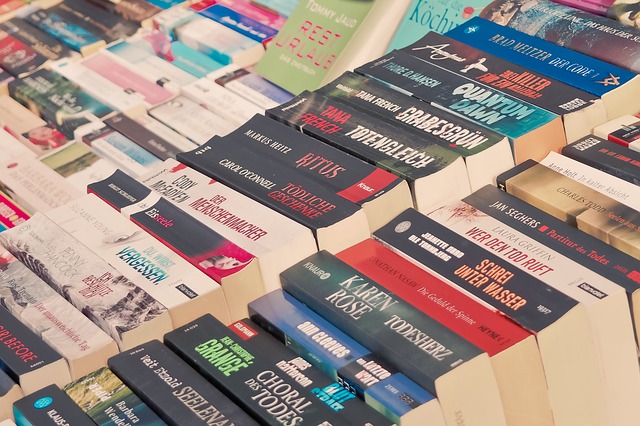
It began innocently (yikes, an adverb!) enough, as a marketing strategy. A way to get more readers by making the first of a series free, or almost free. The plan is to get the reader hooked and they'd go buy the rest of the author's series, then backlist. For the author, it was taking a gamble on their own talent. And it worked brilliantly (Ugh, another). For that author. Not so much the market.
Then, giveaways. Also a great marketing tool, with the same philosophy as above. But soon there were readers roving like packs of coyotes, skipping from group to group, only there for the free books. Many of them resold the books on Amazon below the publishers cost, which was a double hit for authors--they gave away the first, then a reader who might have paid, bought the discounted 'used' book, and the author got zero money on that, either.

Then came Amazon's Kindle Unlimited. A subscription service where a reader pays a monthly fee and can read an almost unlimited number of books. The majority subscription fees are put in a 'pool', and participating authors share in it. I was a CFO in my career; this never made sense to me as being in the author's best interest. And it's had the unforeseen consequence of cheapening the worth of the product in the reader's mind.

I'm not bemoaning the 'commoditizing' of books. We write as art, but if you've sold to a publisher, or offered your book for sale in the market, you know your book becomes a 'widget'--a commodity the minute it goes up for sale.
However we innocently we got here (3 adverbs in one post. I must really be upset), we're not going back. A market trend like this doesn't reverse (with the exception of innovation, and then, the majority of the price increase goes to the innovator).
Bottom line is black and white in the Authors Guild survey; excepting the few at the top, writers can't make a living writing fiction anymore.
So why am I being Debbie Downer, dumping salt in your morning coffee?
Because writers are angsty insecure people. I know many (and I count myself in the tribe) who were whispering to each other. I've heard it at conferences and group meetings: 'Are your sales down?' 'How was your last advance?' 'Did you sell through?' And that's after we chewed fingernails for months, trying to get up the guts to ask. See, it's bad form to ask about money if you're an artist. It's like asking a coworker how much they make. Also, payment is more than a living; it's a way of keeping score. And you want to know where you fit in the hierarchy, as much as you don't want to know. AND you sure don't want the person you're asking to know!
Facts is facts, and now they're out. In a weird, twisted way (hey, we're authors, right? We're used to that), it's a relief. I hear the whispers in the wind. It's not just me.
I wrote this post for a reason, not just to pee in your corn flakes. What can we do about all this? Two things:
- Don't quit your day job. The odds of you making a living wage, writing, though possible, is not likely.
- Know why you're doing this: There are a lot more reasons to write than to make a living. Is your reason enough to keep you going? Mine is.
If you came looking for answers, I don't have any. But let's discuss it.
Have you noticed this trend? How are you dealing with the reality? Have you thought about quitting writing? What keeps you going?
Laura is teaching her, 'First Five Pages' class online at Savvy Authors, beginning April 29 through May 12. Come polish those pages to a high shine, and learn advanced craft tips at the same time! Click HERE for more info!




