Writers in the Storm

A blog about writing

storm moving across a field
How Squirrel-Brain Helped My Writing

by Orly Konig

Are you guys done laughing at the title? Not yet? Now?

Since the early months of 2018, I’ve been dealing with overcrowding in the brain-squirrel department. Revisions on what became Carousel Beach, marketing and launch of Carousel Beach, writing proposal chapters, family issues, starting a new book, summer schedule and multiple trips, a shiny new book idea, a must-try crochet pattern, the writer’s retreat I organize for Womens Fiction Writers Assn., another awesome program for WFWA, more family issues, and ohohoh a shiny new book idea. 

I’m embarrassed to say that during that time, very little writing was actually happening.

Every time I sat down to write, I’d become paralyzed by the doubt-nuts the squirrels were hoarding in my head. What if the story I was working on wasn’t the right one to do next? What if that other idea was more timely?

My agent is a saint. Every email I sent with “What about this idea? Is that a better idea? Is it? Is it?” met with a calm assessment and a gentle nudge back on track.

But the story I was working on was dragging me down emotionally. A couple of writing buddies had provided feedback on early chapters, but instead of helping me settle into the story, I found myself getting pulled further away from it.

So, I started working on another idea. Sent the early chapters to my critique partners. And then started on another idea. I sent those early chapters to critique partners. Then started exploring ANOTHER story idea.

What can I say, my brain squirrels were busy stocking up for winter (or a multi-book deal … hey, can’t blame a girl for dreaming!). 

Then came the email from my agent that changed things around: “ORLY, JUST WRITE THE BOOK ALREADY.” Okay, she didn’t use all caps. And I still wasn’t sure which of the story ideas was the RIGHT one.

While the squirrels made me ridiculously crazy, they also gave me a couple of gifts, assuming I was brave enough to unwrap them.

Gift 1: Story ideas

If all the story squirrels went on strike today, I’d still have four solid ideas to develop. That’s four years of writing. And I run a pretty sweet little squirrel Inn – plenty of coffee and gummy bears – so more would show up before long.

The trick is to decide which of those ideas makes the most sense to move forward with. This time, it was easy enough … I went with the one that was the most developed. Despite all the starts and stops on this book, I still believe in the characters and the story idea. I just need to reconnect with it.

All the other ideas will wait their turn. Some will sprout roots and develop into full-fledged stories, ready to be written as soon as I clear time for them. Others may become secondary themes in one of the other books or take longer to gel.

Gift 2: The realization that something wasn’t working

The need to reconnect with my writing was the giant nut that dropped on my head. The fact that I wasn’t writing more than a chapter a month had nothing to do with the story and everything to do with my head space.

It was time to put a stop to squirrel rumpus time.

I made small but significant changes:

  • A notebook for each of the story ideas so that I can jot notes down without allowing the ideas or characters to invade my brain space for too long.
  • Dedicated writing time and that includes closing out of everything except Word for that period of time.
  • Limits on social media
  • Cutting down on the outside projects I agree to take on.

But the most important realization was that I needed to trust myself.

I had to stop second guessing my decisions and just write the book. For the first time since that very first attempt at a manuscript seven years ago, I’m letting the story write itself before I let anyone look at it. Every once in a while, I get the itch to have a critique partner tell me if I’m on the right track or not. But it’s a quick itch.

For the first time in almost a year, I’m enjoying writing again.

I’m not freaking out over the individual pieces, I’m savoring the whole. I still check in with my critique buddies and they know that next month, I’ll be ready to share a revised draft. For now, though, I’m happy in my nest. The squirrels still throw nuts at me sometimes, but I’ve gotten pretty darn good at dodging them.

How do you deal with squirrel brain? What did you do when you hit a giant nut-dam on a project?

*  *  *  *  *  *

About Orly

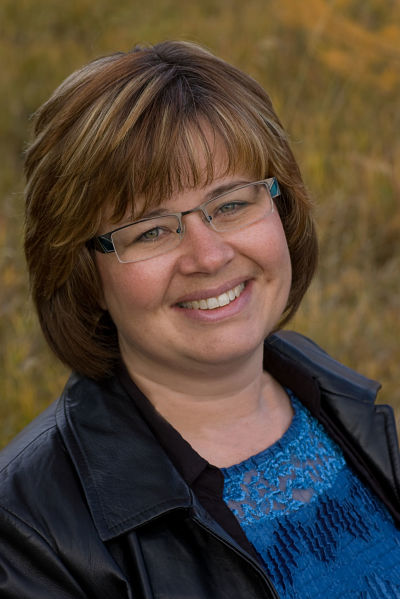
Orly Konig is an escapee from the corporate world. She is the founding president of the Women’s Fiction Writers Association, a member of the Tall Poppy Writers, and a quarterly contributor to the Writers In The Storm blog.

She’s the author of Carousel Beach (May 2018) and The Distance Home (May 2017).

Connect with Orly online at:

Website: www.orlykonig.com
Facebook: https://www.facebook.com/OrlyKonigAuthor/
Instagram:  https://www.instagram.com/orlykonig/
Bookbub: https://www.bookbub.com/profile/orly-konig
Pinterest: https://www.pinterest.com/orlykonigauthor/
Goodreads: https://www.goodreads.com/OrlyKonig

Read More
To Nano or Not To Nano...


NaNoWriMo, for those of you who are unfamiliar with it, is National Novel Writing Month, where hundreds of thousands of writers gather to bang out as many words as they can in the month of November. Many writers skip it and many writers treat it as a yearly pilgrimage to Writing Mecca.

NaNoWriMo is my birthday present to myself each year.

Every year, I love it. And every year, I hate it...there's simply too much to do in the tiny little month of November. And this year is a birthday that ends in a "0." [OMG]

Even without my birthday falling at the beginning of the month and Thanksgiving toward the end, there always seems to be unexpected craziness. One year it was shingles, another it was a family vacation.

I tend to arrive at December 1st a little bit out of breath.

And still, I love NaNoWriMo.

I love the community, the late-night writing sprints, the before and after parties my local team throws. I love the write-ins, the pep talks, the excitement and uploading my word count. I adore getting the chance to encourage my peeps and watch everyone chase their goals.

Whether you're gearing up for NaNoWriMo or not, I wish you luck in your writing goals this month.

I'd like to address the dreaded phenomenon of the Week Two Wall in the NaNo challenge where the initial endorphins have faded and the grind of the 1,667 words-a-day writing schedule sets in. The shiny has worn right off our shimmery fabulous idea.

Words like "can't," "shouldn't," and "haven't" begin to rear their ugly heads. 

We all hate those words, whether we're doing a writing challenge or not. Before NaNo starts, I'd like to chat about what I consider to be a NaNo "win":

  • Your very best = a NaNo win
  • Achieving your goal numbers = a NaNo win (ex: my goal this month is 30K, not 50K)
  • Finishing a project = a NaNo win
  • Forming amazing writing habits = a NaNo win

I think people get twitchy about some things that don't matter during the month of November. You've seen this cartoon, right?

NaNo should be fun.

The only word count that matters is YOURS.

However, if you're still feeling the push to "Go 50K or Bust"... Behold the NaNo Team's 2012 Tips for Successful WriMos...

[These are things we all wish we'd known for our first NaNoWriMo]

1. It’s okay to not know what you’re doing. Really. You’ve read a lot of novels, so you’re completely up to the challenge of writing one.

2. If you feel more comfortable outlining your story ahead of time, do it! But it’s also fine to just wing it.

3. Write every day, and a book-worthy story will appear, even if you’re not sure what that story might be right now.

4. Do not edit as you go. Editing is for December and beyond. Think of November as an experiment in pure output.

5. Even if it’s hard at first, leave ugly prose and poorly written passages on the page to be cleaned up later. Your inner editor will be very grumpy about this, but your inner editor is a nitpicky jerk who foolishly believes that it is possible to write a brilliant first draft if you write it slowly enough. It isn’t.

6. Every book you’ve ever loved started out as a beautifully flawed first draft. In November, embrace imperfection and see where it takes you.

7. Tell everyone you know that you’re writing a novel in November. This will pay big dividends in Week Two, when the only thing keeping you from quitting is the fear of looking pathetic in front of all the people who’ve had to hear about your novel for the past month.

8. Seriously. The looming specter of personal humiliation is a very reliable muse.

9. There will be times you’ll want to quit during November. This is okay. Everyone who wins NaNoWriMo wanted to quit at some point in November. Stick it out. See it through.

Above are the NaNo team's words. They have them squinched together into just a few tips, but I spread it out. All this wisdom needs to be heard. (There's years of writing pep talks here.)

Now, for my #10. (cadged from an earlier post here at Writers In The Storm.)

10. Wherever you are on your writing journey, DON’T STOP.

The best is always yet to come because we keep improving the more we do it. A keynote at a writer’s conference in San Diego some years back said these words I’ve never forgotten:

“Everybody dreams,” she said. “But writers are special because they write down their dreams."

As writers, we can do anything and be anyone. You can be astronauts or spies or time travelers. Writers can go to amazing places and build imaginary worlds for others to visit."

The sad fact is that no matter how hard you try, the music and the magic of your dreams will never be equaled by the words you put on a page."

Do it anyway.”

My hope is that this November (and every month), even on those days when you feel that all is lost, when you wonder why you ever believed that YOUR words were important, you keep at it.

And for goodness sake, make some extra food this month to throw at your family next month (or reheat yourself). The only big cooking you should do in November is special occasion cooking you can't avoid.

Do you participate in writing challenges? Do you do NaNoWriMo? For my WriMo pals, what do you do in advance of November to get ready?

*  *  *  *  *  *

About Jenny Hansen

By day, Jenny provides training and social media marketing for an accounting firm. By night she writes humor, memoir, women’s fiction and short stories. After 18 years as a corporate software trainer, she’s delighted to sit down while she works.

When she’s not at her personal blog, More Cowbell, Jenny can be found on Twitter at JennyHansenCA or here at Writers In The Storm.

Read More
The Brilliance of Backstory Slip-Ins

by Margie Lawson

I confess. I’m in love with the way some authors slip in backstory.

I’m not talking chunks of backstory that sit on your page like cement blocks. The kind of blah blah blah that invites readers to skim.

I’m talking about little hits of backstory. Those smooth keep-your-story-moving backstory slip-ins.

What is backstory? It’s the events that led up to your story before the story opens.

Sometimes backstory is presented in a stagnant way. Flat. Boring. Readers lose interest and put the book down.

YIKES! You want to write a novel that’s unputdownable.

Managing backstory is tricky. Some writers think the reader needs all the history the writer created. Not true. The reader only needs what they need to buy the story.

Mark Sullivan (mystery/suspense/thriller writer) has a great plan for backstory management. Here’s his brilliant plan.

He suggests writing down what you think the reader needs to know. I recommend creating a bullet-point list. 

Go through your backstory points and circle what the reader absolutely has to know. What they absolutely need to know.

Let go of things that you thought were important but don’t need to include. Just because you think it is interesting doesn’t mean the reader absolutely needs that information.

Take those points you circled, the ones the reader absolutely needs to know, and picture them etched on a sheet of glass. 

Got that visual?

You’re imagining those points imprinted on glass.

Imagine carrying that sheet of glass to a brick patio. Imagine standing on a brick patio, holding that sheet of glass.

YOU KNOW WHAT’S COMING.

Drop it.

Watch it shatter.

Imagine picking up one narrow shard of glass at a time – and slipping each sliver of backstory in your first 100 pages.

You’ve got the first 100 pages of your book to fit in each sliver of backstory.

No blah blah blah. No info-dumps.

You’ll have a smooth fast-paced read.

Your story will have momentum.

Great visual. Great plan.

You may believe your genre or story or style need more backstory as set up.

You may be right. AND – I bet you can share the backstory in a compelling way.

Let’s dive into some examples. The first one is from Laura Drake’s upcoming release, The Last True Cowboy.  It hits the shelves Dec. 4th.

The Last True Cowboy, Laura Drake, 2-time Immersion Grad, Cruising Writers Grad, RITA Winner

The first two paragraphs of Chapter One:

Addiction sucks. I should know. Papaw has his White Lightning. Nana has her Bingo-jones. My addiction has sad green eyes and my name tattooed across his left pec.

But my wedding-dress dreams always come in second to his rodeo. There’s even a term for it. Rodeo Widow. Except to earn that title, I’d have to be married.

Brilliant opening!

Deep Edit Analysis:

Laura Drake shared several hits of backstory, but she made those paragraphs compelling.

What does the reader learn?

  1. Papaw loves his White Lightning.
  2. Nana loves her Bingo.
  3. Our POV character loves her man.
  4. But her man loves his rodeo more than he wants to marry her.
  5. She’s unhappy about being unmarried.

Those hits of backstory share a big hint about the story promise too. What’s this story about? She wants to get married and he wants to keep rodeoing.

And all that was shared in a fun style with few words. Only 57 words.

I’ll share two more examples from The Last True Cowboy. From page 9:

At twenty-nine, my biological clock has stopped ticking—it’s tap-dancing on my ovaries. Every girl from my high school class is married and having babies, except me. Well, me and Rose Hart, but she wears men’s clothes and is taking hormones to grow a beard. She goes by Roy now.

At the bottom of page 9, right after Carly learns her best friend is pregnant again:

          My biological clock bongs a funeral dirge.

Deep Edit Analysis: What backstory does the reader learn?

  1. The POV character’s age.

It’s tough to slip in the age of your POV character, and make it sound natural.  Laura did.

Plus, she slipped in five humor hits:

  1. Bio clock is tap-dancing on ovaries.

2., 3., 4. Rose wears men’s clothes, takes hormones to grow a beard, goes by Roy now.

5. Bio clock bongs a funeral dirge.

Each point is an amplification. A funny or funny-sad amplification.

The last example from The Last True Cowboy may seem insignificant. Read, then we’ll analyze.

When Papaw turns into the town square, my lips and my heart rate slide up. The shadows hide the worn paint and empty stores. The high school kids have dressed the trees and the bandstand in white twinkle lights, changing the ambiance from neglect to magic.

Deep Edit Analysis:

The reader sees worn paint. Empty stores. Trees and bandstand covered in twinkling lights.

Where are the slip-ins?

-- my lips and my heart rate slide up  -- She’s proud of her town, even though it’s not thriving.

Deep Editing and Immersion Grads know that’s a rhetorical device called zeugma. And they know how to use zeugma to add interest and power.

-- changing the ambiance from neglect to magic – This slip-in is close to a universal truth. Most of us know twinkling lights can make any place look magical. It’s smart to slip in universal truths.

I Am Justice, Diana Munoz Stewart, 2-time Immersion Grad

From Page 1:

Call it a childhood dream, making good on her vow. Call it redemption, making it up to Hope. Call it revenge, making them pay for Hope’s death.

Brilliant! Diana was strategic with style and structure.

Deep Edit Analysis:

Backstory Slip-Ins: Hope is dead. And our POV character made a vow to make them pay for Hope’s death.

Diana used the rhetorical device anaphora, triple or more beginnings, to slip that backstory in with style.

Look at all her power words and phrases:  dream, making good, vow, redemption, making it up, Hope, revenge, making them pay, Hope’s death.

Two paragraphs from page 2:

Her earpiece clicked, and her brother’s voice came through. “Justice, youse…uh, you in position yet?”

Tony. He worked so hard to weed out his South Philly. She liked his accent. But being adopted into her big, crazy family had taught her people could have some weird issues.

Deep Edit Analysis:

The reader learns six hits of backstory:

  1. Her brother was adopted.
  2. He’s from south Philly.
  3. He’s trying hard to fit in.
  4. Her family is big.
  5. Her family is crazy.
  6. People can have weird issues.

And all those points were shared in one short cadence-driven paragraph.  

Star-Crossed, Pintip Dunn, Immersion Grad, RITA Winner, released Oct. 2nd.

Two paragraphs from the middle of the first chapter:

Once upon a time, my sister and I played rocket ships together. She was the captain, and I was her best mate. We zoomed here to the planet Dion, hundreds of light-years from Earth, and pretended we were one of the original colonists who landed on this world seventy years ago.

Of course, that was before I surpassed my sister’s eating ranking. Before my father, the King, announced one of us would be his Successor. Before my mother passed away.

Brilliant writing. Pintip was strategic in capturing that backstory on the page.

Deep Edit Analysis:

First Paragraph – Shares close relationship between sisters and slips in backstory that they’re on planet Dion and shared some history of the planet too.

Second Paragraph – Uses anaphora, triple or more beginnings, to share that the sister’s relationship changed, that her father is the King, that she or her sister would take the throne, that her mother is dead.

The last example is also from Pintip Dunn’s Star-Crossed, from the middle of Chapter 3:

Carr’s never asked his mom to come home before. Not when he lost his job at the apple orchard, not when their holo-feed got turned off. Not even when the unit-lord threatened to evict them.

Deep Edit Analysis:

Another example of anaphora (triple beginnings). Pintip shared four backstory slip-ins in that smart paragraph. Easy to see those four points.

Such brilliant writing in all the examples.

The slip-ins all deepened characterization. They shared backstory in a compelling way. And they carried interest and power.

Kudos to Immersion grads Laura Drake, Diana Munoz Stewart, and Pintip Dunn. Their writing and their stories WOW me.

Hundreds of Immersion grads and Margie grads wow me with their writing too. Wish I could include examples from dozens of them. I’ll include more in every blog.

A big squishy-hugged THANK YOU to the oh-so-smart WITS gals for inviting me to guest blog.

BLOG GUESTS: Please post a comment or share a ‘Hi Margie!” and you’ll have two chances to be a winner.

You could win a Lecture Packet from me, or an online class from Lawson Writer’s Academy.

Lawson Writer’s Academy – November Classes

  1. Deep Editing, Rhetorical Devices, and More
  2. Potent Pitches and Brilliant Blurbs 
  3. Author Power on Pinterest
  4. Killing it With Conflict
  5. Create Compelling Characters 
  6. Disasters & Doctors: Writing Thrillers and Danger

I’ll draw names for the TWO WINNERS Sunday night, at 9PM, and post them in the comments section.

Like this blog? Please give it a social media boost. Thank you.

P.S. – Check out my Immersion cruise for Cruising Writers, Dec. 2 – 9Have fun in Montego Bay, Georgetown, and Cozumel. And learn how to add power to your WIP on the four days at sea.

*  *  *  *  *  *

About Margie

Margie Lawson —editor and international presenter – teaches writers how to use her psychologically-based editing systems and deep editing techniques to create page turners.

She’s presented over 120 full day master classes in the U.S., Canada, Australia, New Zealand, and France, as well as taught multi-day intensives on cruises in the Caribbean.

To learn about Margie’s 5-day Immersion Master Classes (in 2018, in Phoenix, Denver, San Jose area, Dallas, Yosemite, Orange County, Los Angeles, Atlanta, and in Sydney, Melbourne, and Coolangatta, Australia), Cruising Writers cruises, full day and weekend workshops, keynote speeches, online courses through Lawson Writer’s Academy, lecture packets, and newsletter, please visit: www.margielawson.com

Read More

Subscribe to WITS

Recent Posts

Search

WITS Team

Categories

Archives

Copyright © 2026 Writers In The Storm - All Rights Reserved