
Writers in the Storm

A blog about writing

storm moving across a field
5 Ways That Playing with Pricing Can Sell More Books

Penny Sansevieri

Many authors talk about the complexity of book marketing, but sometimes it doesn’t have to be that hard. Sometimes all it takes is a tweak here or there to give your books a lift.

And with this being a new year, maybe it’s time for a new promotional boost that drives sales!

Adjusting a book price is often the last thing an author thinks of, but it’s a great tool to keep in your book marketing tool box if your book sales seem to be lagging.

You’ve probably heard this from other indie authors, or even experienced it yourself: once your book is on Amazon, it stagnates. You see virtually no movement.

And it’s disheartening to see your hard work just sit there. Believe me, I know. I hear it all the time. And, as an author myself, I understand.

But here’s the good news: it could be an easy fix.

There are lots of things you can consider, but playing with pricing can be a huge trigger to get that needle to move. And here is what you should keep in mind as you explore this option.

1. Be Competitive

I see this a lot — books that aren’t priced competitively with their markets. Keeping in mind what the market will bear, as well as your page count, your book should be priced accordingly.

Sometimes I’ll speak to authors who have their book priced very high with the intent to “earn back” the money they invested in producing it.

That’s a bad plan.

Now you may not have a lot of choice with regards to your print book. Thing like images and graphics can drive up the printing cost, but with your e-book you have a lot more wiggle room.

As you’re doing research, be sure to stay away from authors who are household names, because they can command higher prices. But check out top books, books that are performing well, and find the sweet spot. Then adjust your regular price to match that optimal number.

Remember, it’s never a good idea to price your book outside of what the market can bear.

2. Do Regular Price Rotations

The ability to change your book price is a benefit you have as an indie author. And you want to take advantage of this, because it triggers Amazon’s algorithm and can give your exposure there spikes each time you make a change.

So consider changing your price at least one time each month. By this, I mean shift between the $2.99 and $5.99 sweet spot reported by Amazon sales data.

Unless, of course, you’re doing a special promo, which I’ll discuss below.

3. Make Quarterly Promotional Price Drops

Every three to four months, I recommend that you dip below that sweet spot and do a big, multi-pronged book marketing push to support it.

As a rule, I suggest $.99, but sometimes $1.99 can get you decent exposure too. And you should plan to keep it at that price for a solid 3-5 days.

As part of the marketing push, list this price drop several e-book promotion sites as well.

Don’t forget to promote everywhere — your social media, your blog, your newsletter, any way that you are able to communicate with your audience.

4. Understand the Power of Free

Listing your book as free can be a hard pill to swallow. And I know that if you add up all the hours you spent working on it, you probably couldn’t charge enough for it.

But the thing is, you can’t focus on what you see as your worth or your book’s worth. Instead, you have to focus on what drives sales. And buyers love a good deal.

So definitely consider freebie e-book promotions as well. For these you can drop the price for just a day or two and really promote the hell out of it.

This book marketing strategy is especially effective for indie authors with multiple books. Offering your book for free gets you in front of more readers. And once they love your book, you’ve made a new fan that will continue to buy what you publish.

5. Take Free to the Next Level — Permafree

You may have heard “permafree” before. But what does it mean? Basically, it’s an e-book that’s always free on Amazon.

Enroll in Kindle Unlimited. It’s a good option for indie authors who write in genres that tend to be really popular for KU. Readers who subscribe to the service get the book for free.

Keep in mind, this isn’t beneficial to all authors. So definitely do your research, and then give it a shot if it looks promising. You commit to 90 days at a time.

Another option, albeit an unofficial one, to get a free-to-everyone book on Amazon is to ask Amazon to price-match it.

For this, I recommend choosing an older book, or Book One in your series. Make sure you have published it everywhere. Not sure how to do this? Sites like Draft2Digital and Smashwords offer simple platforms to upload your book and make it free.

These sites will publish the book on sites like Nook, iTunes, and Kobo, among others.

Once your book is free on these other sites, you can notify Amazon by clicking the “tell us about a better price” link under the book details on your Amazon page. Sometimes you have to submit more than once, so be diligent and check back every few days.

And as soon as Amazon lists your book for free, you’ll see it starting to surge up the Amazon ranks (under free e-books).

The key to making this really pay off is to ensure your readers are aware of your other books.

It’s important to keep your About the Author section current and ensure that your Amazon Author Central bio is current as well.

If it’s a series, make it easier for readers to find the paid ones in the series. Achieve this by naming the other books in the description of Book One. And be sure to include a list of your other titles, as well as excerpts and links to any bonus content in each of your books, but especially your permafree title.

If the idea of doing an entire book as permafree is making you crazy, what if you did a free teaser book?

David Baldacci did this with one of his titles, and it worked brilliantly. Essentially, he made the teaser book free (and the teaser book was clearly listed as such, so readers weren’t misled), and the teaser book was free. Within the teaser book, there was a link to his paid title, the full book, which wasn’t discounted at all.

Putting it All Together

Book marketing as an indie author is both complicated and exciting. There are so many options, so many opportunities, and only so many hours in a day. So I think you’ll really have fun with the different pricing strategies I’ve listed here. They’re quick and easy to implement. And most importantly, playing with the pricing can really help give you a sales boost when you feel like you’re doing everything else right and it’s not making those conversions.

About Penny

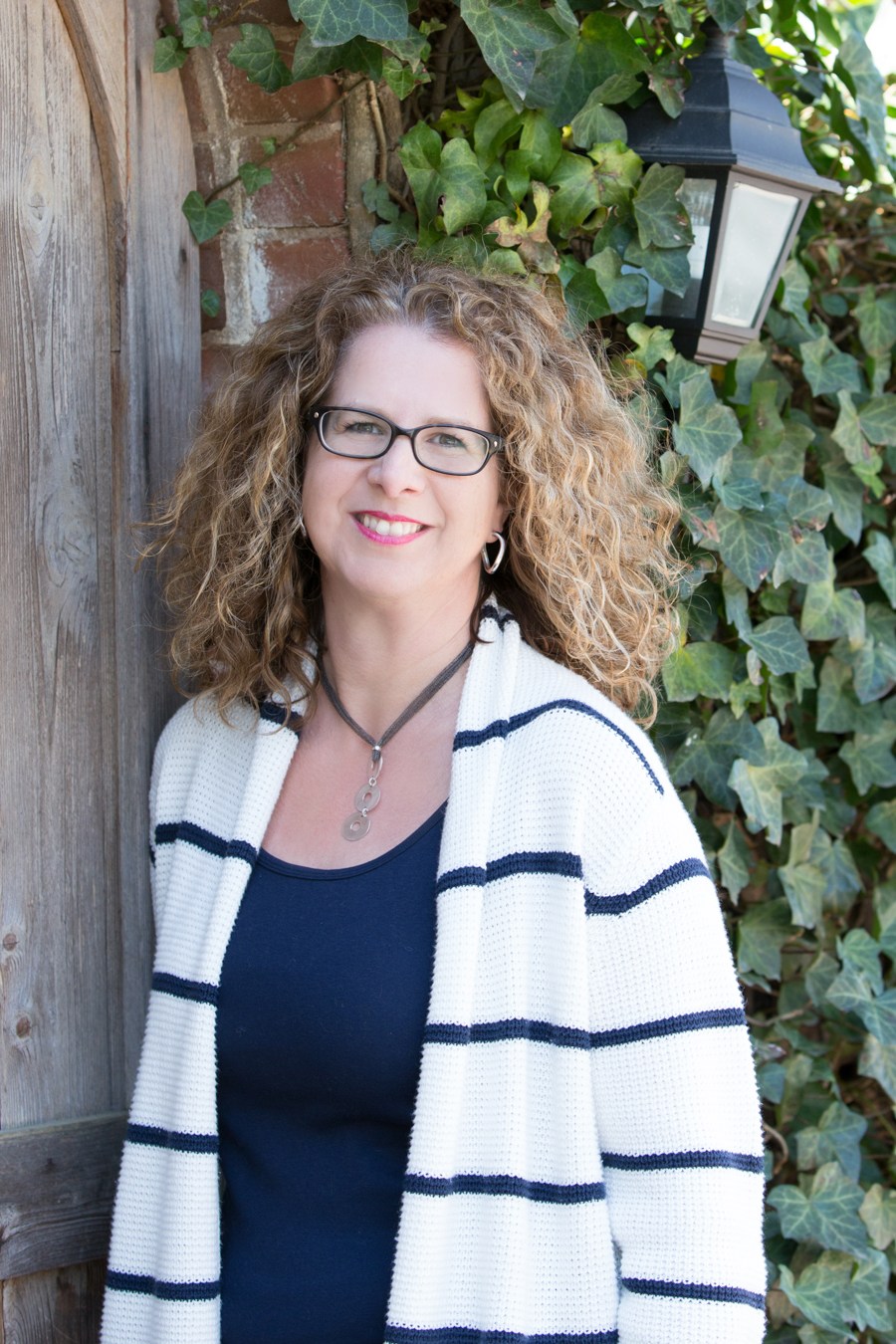
Author Marketing - Penny Sansevieri photo

Penny C. Sansevieri, CEO and founder of Author Marketing Experts, Inc., is a best-selling author and internationally recognized book marketing and media relations expert and an Adjunct Professor with NYU. Her company is one of the leaders in the publishing industry and has developed some of the most cutting-edge book marketing campaigns. She is the author of fourteen books, including How to Sell Books by the Truckload. AME is the first marketing and publicity firm to use Internet promotion to its full impact through online promotion and their signature program called: The Virtual Author Tour™

To learn more about Penny’s books or her promotional services, you can visit her web site at http://www.amarketingexpert.com. To subscribe to her free newsletter, send a blank email to: mailto:subscribe@amarketingexpert.com

Copyright @2018 Penny C. Sansevieri

Read More
Slow: Meandering Reader Ahead

Last week, Fae Rowen discussed her reading habits in Beware: Voracious Reading Ahead. Like her, I remember reading way more than my friends and classmates when I was young, devouring every book that came my way.

I started with the marvelous for Laura Ingalls Wilder and Nancy Drew. Then a very strange novel in 5th grade captured my young heart — A Wrinkle in Time. (Is anyone else on the edge of their seat awaiting the movie rendering of this tale?) The Chronicles of Narnia kept me in fantasy world.

High school English introduced me to classic literature. While some of my friends tossed the reading list and opted for bodice-ripper romances instead, I fell into the world of classics like Alice into the rabbit hole. Indeed, for a long time I couldn't fathom becoming a writer, because in my mind, writers were people like Jane Austen, Thomas Hardy, D.H. Lawrence, Edgar Allen Poe, and Leo Tolstoy. What on earth did I have in common with those people?

In college, I returned some of my focus to commercial fiction — first drawn in by an odd book about a vampire. Yep, when I picked up Interview with a Vampire by Anne Rice, it was the first contemporary fiction I'd read in about five years.

After that, my reading list expanded to include all kinds of books, including classics, but also mainstream fiction and genre favorites. I read Agatha Christie and re-discovered my love of mysteries — the same love Nancy Drew had fostered in me years earlier. (Thank you, Mildred Benson.)

A book club I joined in my 30s got me reading more women's fiction, and raising children got me into middle grade and young adult novels. So basically, I've meandered all over the place.

Reading

But while I feel like I still read a lot these days, I'm a slacker compared to some fellow writers!

According to the Pew Research Center, the Average Reader reads 12 books per year — one a month. Compared to that, I can strut pretty, feeling good about clearing well more than twelve a year. In fact, I land in the Voracious Reader category of 50 books a year. In 2017, I read 47 books and about half of seven more.

Chart with average, voracious, and super readers, and how many books they can expected to read in their lifetime
How many books will you read before you die?

But many writers fall into the Super Reader group, sucking down 80 books or more per year like water through a straw. Oftentimes, I find someone who reports reading 100, 150, or even 200 books a year. Good gravy, y'all! Do you sleep?

This is also why I get really and truly panicked when I read the array of writing advice that says:

  • Read a lot of the bestsellers, so you know what sells
  • Read a lot of books in the genre you write, to know what's out there
  • Read a lot of books outside the genre you write, to broaden your perspective
  • Read a lot of craft books, to hone your skills
  • Read a lot of marketing and business books, to know how to be successful

Oh dear heavens, how can I do all of those things? (And still sleep...)

Knowing I will never plow my way through 200 books in a year — though impressed by those who do — I become very selective about what I read.

First off, there are some books I have to read for my day job. So that's takes about 10% of my reading list right away. Then there are books I copy-edit, which takes another 10%. The remaining 80% gets populated with a little of all of those categories above, with the largest emphasis on the genre I'm currently writing.

While writing young adult, I tend toward books that teens are buzzing about, books on state reading lists like the Texas Library Association's Tayshays list, and books recommended by trusted friends. I also read young adult books nominated for the Romance Writers of America RITA awards.

While writing mysteries, I'm drawn to cozies with some bite. For instance, I've enjoyed Rhys Bowen's Royal Spyness series, Stephanie Bond's Body Movers series, and Charlaine Harris's Aurora Teagarden and Lily Bard Shakespeare series. Also, one of my clients writes creepy paranormal mysteries/urban fantasy I'd read even if she didn't pay me to copy-edit them — Peri Jean Mace Ghost Thrillers by Catie Rhodes.

Then I throw in a historical romance, a romantic comedy, a women's fiction book, and a classic here and there. I read a couple of craft books — usually cracking each open with the sense that I should read it but finishing because it hooks me with lessons I want to learn.

On top of that, I listen to success and marketing books, having learned that audiobooks are the best way for me to take in that information. Gaining business savvy while folding laundry or perusing grocery aisles is a good use of my multitasking skills.

Somehow or other, I end up with my 50-ish books every year. Would I like to read more? Sure. Maybe I can reach 60 this year. Maybe.

As for what genres I'll read in 2018, I'll lean toward mystery because I'm writing that now. And for the rest, I'll meander through genres picking up a novel here and there.

How many books do you try to read each year? Does what you're writing influence what you're reading?

*  *  *  *  *  *

About Julie

Julie Glover writes cozy mysteries and young adult fiction. Her YA contemporary novel, SHARING HUNTER, finaled in the 2015 RWA® Golden Heart®. When not writing, she collects boots, practices rampant sarcasm, and advocates for good grammar and the addition of the interrobang as a much-needed punctuation mark.

Julie is represented by Louise Fury of The Bent Agency. You can visit her website here and also follow her on Twitter, Facebook, and Instagram.

Read More
Confessions of a Workshop Flunkie

Orly Konig

Like most writers, I love craft books and workshops and blog posts and insight into writing better, smarter, stronger. There’s always room for improvement, and I’m absolutely convinced that somewhere out there is the magic ingredient for a bestseller.

I keep a notebook with those gems from each workshop that will change my writing life. I highlight and sticky-note passages in craft books that elicited a moment of “ohhhh wow.” I listen with awe as fellow authors talk about the life-altering moment when a particular method brought their story into focus, then promptly run out and devour that same material.

In August, I jumped at the chance of seeing Donald Maass present The Emotional Craft of Fiction in person after doing several online workshops with him.

And in September, I was at the Women’s Fiction Writers retreat where Lisa Cron presented a two-day workshop. I’d read Story Genius before the retreat, and I sponged every bit of additional information that came from her mouth. I marveled as fellow authors typed away on their story notes, excitement building with each new element they figured out. For weeks after the retreat, I exchanged messages with my critique partner as she applied what she’d learned and plotted out her next book.

I knew, just knew that when my time came to start on my next project, I’d rock this writing gig. Then a couple of months ago, I started a new project. First time in a couple of years when I’ve sat down with a fresh Word document and a shiny new story idea. I pulled out the notes and workbooks and started brainstorming character arcs and origin scenes and inciting incidents. I pondered the dark moment and backstory. This new book was going to be the best one yet. Because finally, FINALLY I was doing it right. I was going to have all the pieces in place and the story would be a breeze to write.

Yeah. Not so much. Because here’s the thing … while I love workshops and craft books and learning new awesome approaches to writing, I absolutely, positively, cannot apply the methods to my work. Writing, for me, is an organic process. The nuggets of a story grow and branch out piece by piece. When I force the various elements, they shrivel.

Character profiles? I know enough about my characters to get a story started. I learn about them as we grow together. When I sit with a character profile sheet and attempt to flush out who they are and where they came from, they get shy and clam up.

I know all about the various act structures — even have a huge poster board with handy, dandy guidelines for the six-stage act structure and space for sticky notes that I made after attending a weekend workshop with Michael Hauge.

Post it notes on board

Dark moments? We all face them and so will my characters. But I can’t tell you what it’ll be before I’m armpit deep in it. And forcing the plotting of it turns it from dark moment to boring beige.

I tried. I reread a couple of the books and scanned through notes. I printed worksheets and bought more sticky notes. And, the harder I tried, the worse it got. After a couple of months trying and failing and falling further behind on my deadline, I gave up.

While my writing colleagues were thriving, I was floundering. And I was embarrassed to admit it. How can I be the only one who’s not getting it? What’s wrong with me?

But sometimes you just have to admit defeat, suck up the shame, and move on. I put the craft books back on the shelf, shoved the worksheets into a desk drawer, and dove into writing. Once I gave myself permission to not have to follow a path, the story came together.

So, am I suggesting that you abandon the workshops and stop reading craft books? Absolutely not! Take as many workshops as you can, read every craft book out there. Yeah, you’re scrunching your eyebrows at me — I see you.

Here’s the thing … bits and pieces of what I’ve learned are in my head. I hear Donald Maass reminding me to explore emotional misdirection. I chuckle and rewrite when a cliché attempts to escape from my fingertips. And when the story is done and I’m ready to revise, THEN I bring out the poster board and sticky notes.

Ass-backwards, sure. Efficient, not necessarily. But it’s what works for me, and I’m okay with that. Because at the end of the day, it’s not how you get there, but that you get there!

That’s my confession. Anyone else have something that they feel they should be doing but can’t or am I the only flunkie out there?

*  *  *  *  *  *

About Orly

Carousel Beach Cover

After years in the corporate world (most of it in the space industry), Orly Konig took a leap into the creative world of fiction. She is the founding president of the Women’s Fiction Writers Association, an active member of the Tall Poppy Writers, and a quarterly contributor to the Writers in the Storm and Thinking Through Our Fingers blogs.

Her debut women’s fiction, The Distance Home, released from Forge, May 2017. Carousel Beach will release May 8, 2018. Find her online at www.orlykonig.com.

Read More

Subscribe to WITS

Recent Posts

Search

WITS Team

Categories

Archives

Copyright © 2026 Writers In The Storm - All Rights Reserved


