Writers in the Storm

A blog about writing

storm moving across a field
2017 Submission Alert — Your Synopsis

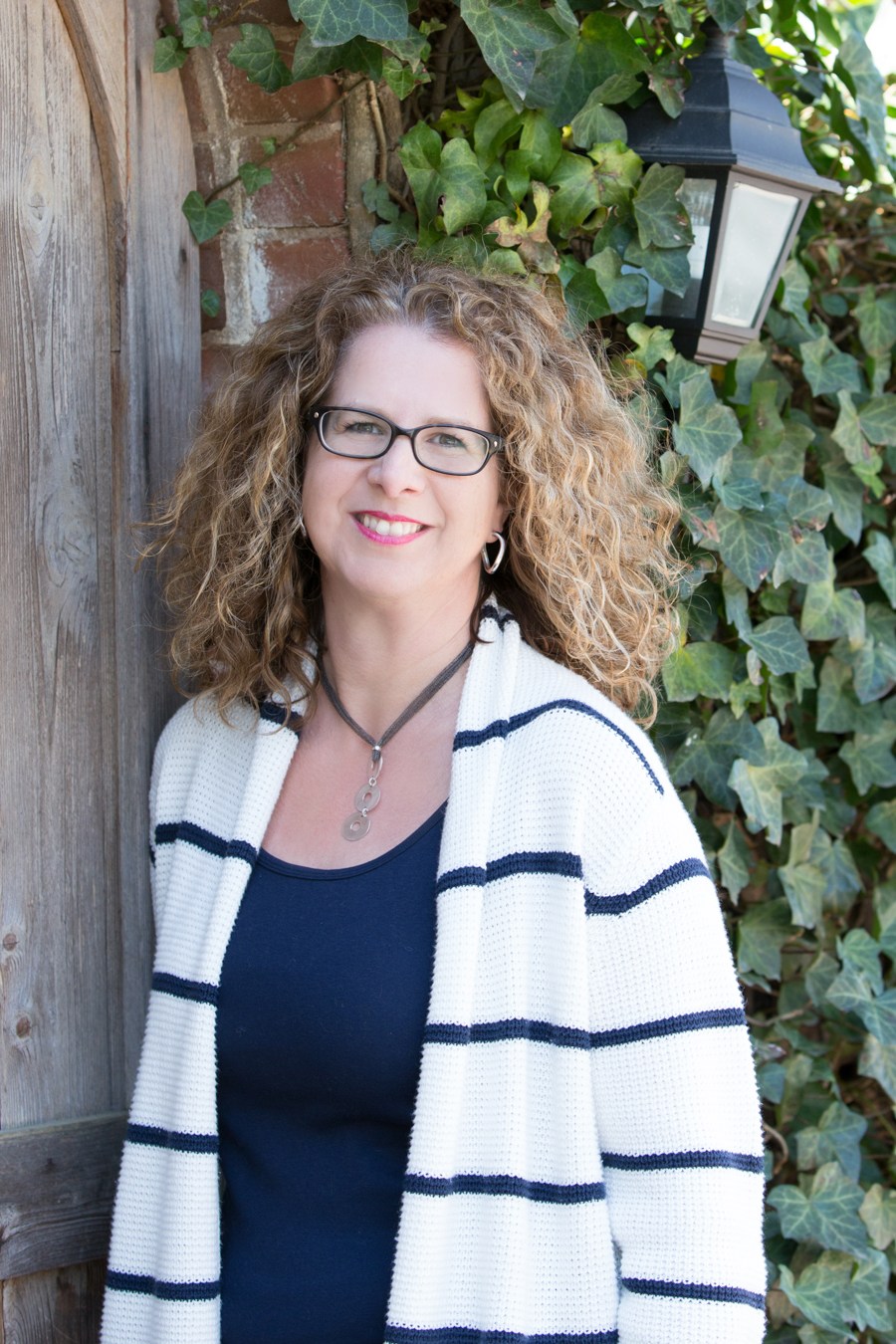
Suzanne Purvis

A new year full of writing possibilities, hopefully including the most exciting possibility: sending out your submission package to agents and/or editors.

You’ve finished your novel, revised, revised, revised, and polished.

Your query letter is tantalizing.

Now you're in need of the last, and most important, piece of your submission package--the synopsis.

Oh, no.

I hear the rumbles and grumbles echoing over the cyber waves.

Don’t worry. You’re not alone. Most writers cringe at the word synopsis.

But we all know, writing, and especially submitting, isn’t for the weak. Stay strong. Build more writing muscles, and write that sparkling story summary.

open-book-with-sparklers

Sparkling summary--seems like an oxymoron, doesn’t it?

But with your synopsis, as with any piece of writing you submit to agents, editors, contest judges, the synopsis should reflect your voice, your style, and be your best work.

Let's take a quick look at what a synopsis is and what it is not:

What a synopsis is NOT:


  1. It is not a blow-by-blow summary of every single plot point in your book.
  2. It is not back cover blurb.
  3. It is not a backstory dump.
  4. It does not introduce every secondary character.
  5. It is not your main character's resume.
  6. It is not a dry list of events.
  7. It doesn't include dialogue or paragraphs from your manuscript.

What is a synopsis?

  1. It is a narrative summary of your book written in the voice of your manuscript.
  2. Its primary purpose is to summarize your story in a way that makes the reader want to read the whole text.
  3. It is written in present tense.
  4. It is written in third person--even if your book is written in first.
  5. It is written in active voice.
  6. It is told in chronological order from beginning to end, no flashbacks.
  7. It introduces only your main characters, main conflict, and basic emotional arc.
  8. It delivers major plot twists and your ending. No cliffhangers allowed.
  9. It is a skillful weaving of your characters, the stakes, and the major plot events that move your characters from beginning to end.
  10. It shows the pacing of your novel.
  11. It should be in the same tone as your novel.

An ideal synopsis should be like reading a mini version of your book.

The query hooks the agent or editor.

Your first pages will convince the agent or editor they want to read more.

With a synopsis you have the chance to showcase your complete story's style, your writing, your excellent plot, and your VOICE.

A lot of synopsis writing involves plot, but . . .

Let's Consider Voice

It’s important to establish your voice early in the synopsis. You're striving for the same tone and mood as your story so the editor or agent can get a true sense of your writing.

If you're having trouble with your voice and tone coming through in your synopsis, or in certain paragraphs, imagine your main character.

How would your main character write the synopsis? 

You can even do this as an exercise.

Write your synopsis, or parts of the synopsis, in your main character's POV either in first person or close third.

But remember, a synopsis is usually written in third person present tense. However, it's not hard to convert to this POV from the above first-person exercise.

Let's look at some example synopsis paragraphs.

Listen to the tone and voice in Sandra Tilley's first paragraph for her 500-word synopsis for The Ghost and Mrs. Miller, soon to be published with Wild Rose Press.

LIBBY MILLER grew up on the outskirts of Birmingham, Alabama, where life was simple and new ideas were as slow as her Southern drawl. Childhood friends were forever like ELI ANDERSON, master prankster and keeper of Libby's secret; JESSE KING, ace quarterback, on and off the field; and NEIL MILLER, studious, stable, and the friend she marries.

Here’s a different voice and tone from a piece of my middle grade synopsis for Hertz Gets Fused.

Great-granddad POPS dresses patriotic-weird and drives a Cadillac, named ANASTASIA. When Anastasia breaks down on the way to Show Low, Hertz is worried. Pops is not and Hertz gets his first tool-filled lesson. Back on the road, Pops makes a stop for pancake sundaes and things go awry. Avis pukes. Hertz slips. And two local boys, JORDAN and MATT, recognize Hertz as the Phoenix Firebug--the kid on the news who set his house on fire.

Here’s another unique voice for Yves Masson’s historical fiction novel in progress, Under the Gun.

Haunted by the trauma of combat, the horrors he witnessed, and the death of the woman he loved, estranged from his family for years, Alain has to fight the toughest battle of his young life, alone, against a hidden enemy, Post-Traumatic Stress Disorder, only known at the time as battle fatigue.

And one more example. A unique Christian YA thriller voice in Megan Menard’s synopsis for her novel in progress Pursued.

ZACH NELSON is a sixteen-year-old problem-crusher and solution-maker, MVP-ing his soccer team to the championship in hopes of a college scholarship, protecting his little sister CELIA from his mom’s abusive boyfriend, CARTER WRIGHT, and fighting for safe foster care—but finding God and learning to trust him with his family and his dreams requires the scariest play of all—surrender.

Even though your synopsis has to be tight and trimmed to the bare essentials, there's still room for your voice.

Let’s Consider Writing Tight

That’s probably the biggest fear I see when working with writers on their synopses.

Synopsis language has to be very stripped down. Every must word count, and often do double-duty. 

With practice, patience, and super sharp scissors :-)

it is possible to cut and trim and tighten, yet still maintain voice and tone and intrigue.

Here's an example of tightening a synopsis sentence:

Very Wordy:

At school, Kelsey searches for Brandon all through the halls and finally finds him in the music room, where she tells him she can’t believe what he said about her in the cafeteria and wants nothing to do with him ever again.

Tight:

After searching everywhere, Kelsey finds Brandon in the music room, gives him her I’m-dumping-you speech, using the cafeteria incident as her excuse.

Let's look at an example of tightening from Lauri Corkum’s synopsis for her novel-in-progress The Prism Protocol.

Lauri's original:

She wakes, cuffed to a hospital bed alongside Tom, also wounded in the shootout. Realizing she is going to be thrown into a prison for terrorism, Danni breaks out of the cuffs and escapes from the hospital.

Trimmed:

She wakes, cuffed to a hospital bed beside Tom, also wounded in the shootout. Realizing she’s going to be thrown into a prison for terrorism, Danni escapes.

Here's a nice tight piece of Alice Yu's 300 word synopsis for her novel-in-progress Soul Affinity.

Vaktar Councillor BERTRAM SINCLAIR, mastermind behind the murders, uncovers Aziza's secret and attacks her best friends. Aziza risks everything to save them. Her plan backfires: the Vaktar order her immediate execution.

Another tight piece, this one from Becky Rawsley's 500-word synopsis for her novel-in-progress Merlin's Children.

Devastated by Cale's death, Tess returns home. But there's no time to grieve. Morgana has taken Tess's brother and mother to the Fae realm.

Synopsis writing comes with its own set of challenges, but like any piece of writing, it can be conquered, and believe it or not, can even be fun.

I’ll leave you with one more checklist.

Synopsis Checklist

* shares character descriptors which may explain their beginning conflicts and motivations.

*  the story setting is clear and grounds the reader.

*  provides goals, conflict, and motivation enough to make characters believable and easy to relate to.

*  goals are strong enough for characters to keep going with the odds stacked against them.

*  identifies major conflicts, both external and internal.

*  identifies major turning points.

*  synopsis is well-paced.

*  voice shines through.

*  tone reflects that of the manuscript.

*  writing is clear and tight.

*  adequately resolves all major conflicts.

  • avoids grammar, spelling, and punctuation mistakes.
  • uses standard industry-accepted formatting.

And if 2017 finds you in need of a sizzling, scintillating synopsis, maybe you’ll want to consider my upcoming January class with Lawson Writing Academy. where we truly have a blast curing that horrifying writerly disease--synopsis syndrome.

Why do you think a synopsis is so difficult to write? What "tricks" do you have to get you through one?

suzanne-purvis

Suzanne Purvis is a transplanted Canadian living in the Deep South, where she traded “eh” for “y’all.” An author of long, short, flash fiction for both children and adults, she has won several awards including those sponsored by the University of Toronto, RWA, Bethlehem Writer’s Roundtable, and Women Who Write. You can find her work in print anthologies, magazines, ezines, and ebooks. www.suzannepurvis.com

Read More
Coffee, Chocolate, and Whine

Kathryn Craft

Turning Whine into Gold

If Facebook posts are to be trusted, all a creative writer needs to be productive is coffee, chocolate, and wine. Rather than flow rich with ideas and possibilities, the creative blood of many writers is a biochemistry experiment gone awry.

You already know why we rely upon caffeine, nutrient-poor snacks, and a well-deserved depressant in the evening to ease us toward sleep. Which is elusive, because the processed foods and wine we’ve consumed have secretly messed with our hormone cycle and at 3 a.m., BAM! Eyes wide open. Anxiety about our ineffective lives sets in. Perhaps even before last night’s wine is fully metabolized, we start caffeinating again.

img_1313

Meanwhile, the brain fog resulting from these practices obscures the path to completing our novels. Many of us are skidding toward the end of 2016 with an energy balance in the red. The trials of the writing life—whether that means the tight deadlines and marketing demands of the published or the myriad uncertainties of the unpublished—have left us feeling exhausted, emotionally spent, and used up.
We are left wondering what happened to that creative life we intended to live. The morning pages, the artist dates, the photography walks. Reading whatever tickles your fancy. Stimulating conversations with other artists at a Parisian sidewalk café.

Oh. That would take time. And energy. Which makes me wonder if our beloved armchair addictions may be draining us more than nurturing us.

What if we replaced some of that coffee, chocolate, wine—and the time we spend talking about them on Facebook—with food and activities that actually nurtured us? We’d have the energy to be more productive. And once we are more productive, space would open in our schedules to engage in activities that renew our creative lives. That would be its own reward, and we wouldn’t “deserve” so much stuff that harms peak performance.

(This is a theory, mind you. Still working on implementation here.)

Creative writing is problem solving

Think of the advice you might give your teenage son the night before he must engage in a massive amount of problem solving. Say, taking the SAT. Add stakes: the outcome of the test will likely affect were he spends $200K+, the next four years, and his career beyond. Would you tell him to make sure he goes drinking the night before, stays up late, and then hops up on junk food and coffee the next morning?

carrot-kale-walnuts-tomatoes

Of course not. So why are we doing it? Think of all the problem solving required in our writing time alone: plot issues, word choice, scene structure, chaptering, pace, voice, and so much more. Then there is the energy required to keep you on an even emotional keel despite the head games inherent to a writing life. The energy required to come up with new ideas. The patience and stamina required to deal with day jobs, kids, spouses, elder care. We need healthy brains to effectively solve these problems.

I have a graphic representation of the creative life on my bulletin board. One arrow points to the top of a stick figure’s head, and says, “Fill your brain with all the information,” and another arrow points to the chair behind him and says, “and then sit a spell.” If your creative life is stuttering, how often are you filling your brain with new information and creative stimuli? How often do you give yourself time to sit a spell?

The irony here is that we all want to lead a creative life, but don’t give ourselves the time, inspiration, and nurturing that will allow us to do so.

What if we made the time?

If you are feeling stuffed, hung over, and sluggish after the holidays, you are ending the year at an emotional, psychological, and physical deficit. As we turn the corner, why not think about starting 2017 in the black?

What if we used the force of public commitment and state, right here and now, that we absolutely do have the time we need to nurture ourselves, accomplish our goals, and live the creative life we want—all while loving our families and friends?

It’s outrageous, right? But so is the notion that we will make enough money to become full-time writers, and we’re banking on that–while letting our health degrade.

freedom

So many voices fill my head right now. You will not part me with my coffee. Chocolate is healthy for you. I read about a woman who lived to be 110 and she had a glass of wine every day. And I’m well aware we all have ridiculous demands on our time that make us feel trapped. No need to share those, or to make excuses. Let’s head into 2017 with renewed optimism and commitment, shall we?

In the comments, write the words “I plan to recommit myself to a creative life by finding time to…” and then write one measure you could take to reinvigorate your writing life and/or improve the way you nurture your physical self. Let’s see if we can goose each other toward a more creative 2017!

Kathryn Craft

About Kathryn

art-of-falling1.jpg
10685420_966056250089360_8232949837407332697_n.jpg

Kathryn Craft is the award-winning author of two novels from Sourcebooks: The Art of Falling, and The Far End of Happy. Her chapter “A Drop of Imitation: Learn from the Masters” will appear in the forthcoming guide from Writers Digest Books, Author in Progress, available now for pre-order.

Her work as a developmental editor at Writing-Partner.com, specializing in storytelling structure and writing craft, follows a nineteen-year career as a dance critic. Long a leader in the southeastern Pennsylvania writing scene, she leads workshops and speaks often about writing.

Twitter: @kcraftwriter
FB: KathrynCraftAuthor

Read More
Advanced Craft Tips

I do a lot of critiquing. As I get better at craft, I’m starting to catch the nuances of good writing; things beyond the basics of POV, show don’t tell, etc. They’re subtler and harder to spot, but I believe they can be the difference between a ‘good writer’ and a popular author. And yes, I have these same problems too.


  • Tell us what we don't know: Something happens – your character has a thought about it – someone speaks – your character has another thought. It breaks up and slows the scene, and it doesn’t add enough to warrant the break. Example:

When he stepped out, he had no smile for her. He avoided meeting her gaze. Even though his clothing was freshly pressed and his shoulders were back, he looked drained, as if he’d just run the obstacle course.

The presentation must have gone badly.

Do you see how the thought is not only unneeded – but that it weakens the sentences above it? And it slows the read. Write only thoughts that the reader couldn’t guess. That can be powerful – showing that the character is keeping something from the others in the scene.

Knowing I can’t go out there, the walls seem to crowd me, closer than they were a few minutes ago. Is it going to be like this until the trial is over? If so, my bail was a waste—I’m just in a cushier, more familiar prison.

Her sobs over the phone claw my insides.


  • Anchor us in deep POV: Adam is the POV character below.


Halfway out the door, Adam grabbed him.

“Hey, lemme go!” The punk twisted to see who had the collar of his shirt.

Do you see how the way this is worded blurs and distances us from the POV character?

Better would be:

Halfway out the door, he grabbed the little thief.

Why? Because if I’m firmly in Adam’s POV, I shouldn’t have to use his proper name. The way it’s originally written, it’s distant; almost from a narrator’s POV.

            Another example:

 Suzie’s face flushed red, realizing she’d just put her mother in the same category as the wino.

Again, we’re in Suzie’s POV. We don’t need her name. This is also a minor POV violation – Suzie can feel the blood in her face, but she can’t see that her face is red.

Better: Blood pounded to her face, flooding her with the realization that she'd just put her mother in the same category as the wino.

He watched Harper drive, hands ten and two on the wheel. We're in his POV. If you say it, we know it's because he saw it. Better: Harper drove, hands ten and two on the wheel.


  • Unneeded dialog tags: I tend to notice these more, because dialog tags is one of my pet peeves. I believe that the only time you need a tag is when the reader wouldn’t know whom is speaking. And when you need one, there are a lot better ways to use it, than, ‘he said’. Besides, they’re distancing.

“I’ll walk you back to your ship,” she said, falling into step beside him.

Better would be:

“I’ll walk you back to your ship.” She fell into step beside him.

This is a nuance, but can you see how the second is more natural and ‘flows’ better? It helps the reader be in the scene, instead of just reading about it.

“What was that?” she asked. It sounded like someone had pinched a baby.

Since there are only a man and a woman in this scene, and we know it’s not him from the line before, the reader will deduce that she asked this. Which means you don’t need the tag.

Margie Lawson is the Queen at this. You can read a blog she wrote about it, here.

These are small nuances, but important ones. The reader won’t think, “I don’t need that tag.” But these are the things that show an agent/editor or reader that you’re good.


  • Telling, then showing:  I see this a lot. Example:

It was insane to expect him to restrain himself. “That’s like sending an alcoholic into a bar that’s giving away free beer.”

I’d make the case that not only is the beginning unnecessary, it weakens the line of dialog. Showing is almost always better than telling, and both is always the worst.


  • Over the top:  Sure sign to an agent or a reader of a newbie author.

Exclamation points!!!! You get three per book. Use them wisely. (and yes, I have the same limits, and I hate them just as much). And never two pieces of punctuation at the end of one sentence. Yes, I know everyone uses it on social media – but you’re a professional.

“I know, right?!”

Along the same lines – repetition in general –

  • Say it once-say it well: As a reader, we assume that if you wrote it, you meant it. Repeating it does not make us believe you more. Saying the same thing again in a different way won’t do it, either, and it's irritating to the reader, who feels like you think they're too dumb to get it the first time. If you feel like you need to do this, it's because your original sentence isn’t strong enough. Go back and work on that until you’re happy with it. Try it. I promise you'll agree with me.

But there are subtle shades of repetition, and it’s easy to miss.  Here’s some examples:

“Then why don’t you tell him, if it bothers you so much?” Richard visibly stiffened at Michelle’s suggestion.

First, the adverb is unnecessary. We’re in Michelle’s POV – so if she noticed, it had to be visible, right? Second, you should trust the reader to know that he stiffened because of what she said. It also breaks Margie Lawson’s rule: What’s the Visual?

Written this way, it would draw the reader closer:

Richard’s spine straightened and his lips pinched in his signature ‘irritated librarian’ look.


  • Backload your sentences I have Margie to thank for this, also. Put the important word(s) at the end of the sentence for more impact.

I’ve got more male in my life than I need already.

Becomes:

I’ve already got more male in my life than I need.


  • Favorite ‘author’ words. Everyone has them. Your ‘go to’ words. But they’re not words that everyone uses in everyday speech, so they stick out. Below are mine. My crit group gives me one to two of the following per book.

jerked, hipshot, full dark, tipped (as in chin)

            Ones I see very often in others’ work are:  Over, under, turned, back, down, up, just.


  • Same old, same old body expressions. How many times have you read, ‘he frowned’ or ‘she straightened her shoulders’ or ‘lifted her chin’?  Personally, I use sighing way too often. Why not freshen them, and instead of having the reader skim, give them a reason to pause?

She caught herself squirming in her seat and forced herself to stillness. 

Vale clears his throat. A shudder vibrates up my spine.

Vale’s shoulders tip back, just enough to make the crease across the front of his shirt pull smooth.

Priss buried her nose in her cup.


  • Throwaway words. I’m just becoming aware of how often I do this – throw in unneeded words at the beginning of a sentence. Margie calls this, 'clearing your throat' as a writer - you're getting ready to write. It’s not only wordy, it’s distancing. I’m a big one on ‘when.’

When the woman touched his shoulder, the kid shrugged her off.

Better:

The woman touched his shoulder. The kid shrugged her off.

Oh yes, I know what you mean.”

She knew it was hopeless.

See what I mean? They add words, but not meaning. Along those same lines:

Why use “moved” which tells us nothing instead of jerked (oops) jogged, or stumbled?

Why use “started” rather than just showing someone doing something? You can't start walking, start making cookies, or start getting angry.

“Almost” is another word that doesn’t work very often. Either someone does something or doesn’t. How do you ‘almost’ do something like smile?


  • Trust your Reader:

I think we often tell the reader much more than they need to know. In big ways, like backstory dumps, but also in subtle ways that are harder to catch. But they both irritate the reader – if you have enough of them, the reader will abandon the book. They may not even know why – just that it didn’t engage them.

See, readers want to be engaged. To think, and to figure things out – not just to have it all handed to them. In other words, they want to be in your story. A part of the action. All these nuances prevent them from doing that.

Here’s some examples of small ones:

“The small canoe rested in the water, floating beside a long wooden dock.”

Where else would a canoe next to a dock rest, but in the water? And if it’s in the water, it’s floating, right? See how neither of those references are needed? Use that room to put us in the scene; engage our imagination and our senses.

“A red canoe with wood trim bobbed beside the wooden dock, waves slapping its sides.”

Subtle? Yes, but I think it reads better—more descriptive, more engaging.

“None of these plants are used for food. They’re purely ornamental” See how that says the same thing?

A stiff smile on her lips…. Where else would a smile be?

“And you are. . .?”  He let the question dangle. The dots show us dangle.

Sonja glared, and retreated a step back – retreated is back.


  • Slip in snippets of backstory. Make the reader want backstory before you slip it in. How do you do that? In the first few sentences, raise questions they’ll be dying to hear answers to.

From my book, Reasons to Stay:

She stopped a few feet short of the open grave. Her mother was down there. Shouldn’t she feel something beyond tired?

Next paragraph:

“Come, Ignacio. It’s time to go.” A meager woman stood at the foot of the grave, her face and raincoat set in the same generic authoritarian lines.

Priss recognized a Social Worker when she saw one. Given her past, she should.

Your turn! I've just touched the surface.

Give us your tips with examples in the comments! 

*     *     *     *

Days Made of Glass:

dmog-2

Harlie Cooper raised her sister, Angel, even before their mother died. When their guardian is killed in a fire, rather than be separated by Social Services, they run. Life in off the grid in L.A. isn’t easy, but worse, there’s something wrong with Angel.

Harlie walks in to find their apartment scattered with shattered and glass and Angel, a bloody rag doll in a corner. The doctor orders institutionalization in a state facility. Harlie’s not leaving her sister in that human warehouse. But something better takes money. Lots of it.

When a rep from the Pro Bull Riding Circuit suggests she train as a bullfighter, rescuing downed cowboys from their rampaging charges, she can’t let the fact that she’d be the first woman to attempt this stop her. Angel is depending on her.

It’s not just the danger and taking on a man’s career that challenges Harlie. She must learn to trust—her partner and herself, and learn to let go of what’s not hers to save.

Read More

Subscribe to WITS

Recent Posts

Search

WITS Team

Categories

Archives

Copyright © 2026 Writers In The Storm - All Rights Reserved