We have a surprise for you today - our 1000th post happened this week and we're celebrating big time. That means we're celebrating you, our amazing readers. We're more than a little bit misty over this, as we never expected to get this far when we started our little blog back in 2010.
We appreciate all of you who have taken this journey with us, even when we were a mostly-unknown pixel on the map of the blogosphere. We hope y'all keep bringing new friends to visit so we can continue to grow.
Click on our Resources page to see who helps keep this blog running.
*drum roll, please*
Let's move on to the giveaways!!
There's a Rafflecopter you'll want to enter for the most chances to win. Winners, except for those detailed at the end of this post will be announced on our Facebook page. If you haven't Liked us on Facebook yet, click hereor just complete the Rafflecopter at the bottom of this post.
The giveaways will start in the morning (Eastern Time)
and go all day on our Facebook page.
Read on for some of today's giveaways, and please share on social media with the hashtag #WITS1000. We'll be combing the internet for cool tweets and updates and share them on for you.
Laura and Orly are giving away copies of their books.
We're a crafty bunch, so you'll get fun in between all the useful, just like you do with all our posts.
Orly's Crochet Horse - The Distance Home (Giveaway horse will be different colors/size but still snuggly cute)
Fae Rowen makes handmade cards
Jenny knits hats during reading & TV time
Laura has opted to give away several of her most useful craft books (gently used), along with several new copies of her own wonderful works.
Additionally, Laura has offered up two query letter critiques. Considering she teaches entire classes on query letters, that's a stellar prize!
There are some research books coming to you from Jenny and Fae, and a few fun favorites as well.
All of the above will be given away on our Facebook page, but the prizes below will ONLY go to one of our readers who comment on this blog.
Giveaway caveat: If it can be emailed (i.e. gift card codes or e-books), we will send it to you wherever you live. If it must be shipped, we ship to U.S. residents only.
To visit our homes away from WITS, click the links below. We'd love to see you at our other sites too!
If you are like me, when you started this writing journey, you probably didn’t realize how much it would force you out of your personal box of comfort. You might have imagined sitting in a comfortable room that is almost too small for anything but you, your computer, a comfy chair, a desk of your choice, and bookshelves.
And there, you and your words and your ideas would embark on a synergistic journey of creative importance, you would have had poignant moments of learning about yourself and your characters, and then people would read your book and it’d be lovely and you’d repeat the process, mingling in times when you would meet with the people who you’d inspired and hear how your words impacted their life.
Then it happened. You went to send your words into the world only to hear about “agents” and “pitches” and “queries” and “conferences”. Networking and platform building may have bleeped across your radar and suddenly, all the work that you did to create the thing of beauty would be stuck unless you did one of three very scary things:
Keep your writing to yourself.
Publish the book yourself and persuade people to buy it.
Try to entice an agent to love your book as much as you do so they can persuade someone to buy it.
Whichever option you may have selected, it’s scary. Not boogie man scary – this is more terrifying. This scary is putting yourself out there. This scary is putting your work out there. This scary is hoping with all hope that people will like your work. This is the kind of scary that, regardless of the path you choose, requires you to ask people to spend money on your work, to spend money on you.
Brené Brown said, “You can choose courage or you can choose comfort, but you cannot choose both.”
And if you are reading this blog, I bet you’ve had some conversations with yourself. These are certain to be deeply personal, and they probably involve a bit of self-arguing. But if you are reading this blog, I’m guessing that you are exploring either option two or option three. And you might be working really hard to convince yourself that you are good enough, that you are brave enough, that you are deserving enough to have your work go out into the world.
When these kinds of situations occur in my life, I like to reference what I call The Theory of the Duck. It came to me a few years ago when I was helping high school students (and my own kids) try something they wanted to do, but found their want and their doubt were equally matched.
The theory of the duck is this: imagine a duck swimming across a pond. From far away to up close, the ducks motions are calm, smooth, seemingly intentional. But if you look under the water? The pace of the feet moving the duck across the water are going much faster that you’d assume looking on the surface.
When you are facing a thing that is challenging all your courage, the words you write, the pitches or queries that you send need to convey calm, certain, unflappable. If you are to engage in a scary conversation live? Your face is the duck, it is what you are conveying to the world around you. But under the surface? You can absolutely be freaking out, having your mind race through scenarios, anticipate reactions, or whatever you and your mind like to do in your own time. No one is going to see that part.
Some say that this is just “fake it till you make it”, and that may be true, but I see it more asthe chance to allow you to learn to believe in yourself through seeing how others believe in you.
Because even the most accomplished people still have moments of imposter syndrome, but they have developed the habit of courage, have allowed it to stand in front of comfort as a means to advance through the struggles of a creative pursuit and to embrace a more fulfilled life.
How have you negotiated situations when your courage and your comfort are not in agreement? Have you struggled with imposter syndrome?
* * * * * *
About Tasha
Tasha Seegmiller is a mom to three kids and coordinator of the project-based learning center (EDGE) at Southern Utah University. She writes contemporary women’s fiction with a hint of magic, and thrives on Diet Coke, chocolate and cinnamon bears. She is a co-founder and the managing editor for the Thinking Through Our Fingers blog as well as the Women's Fiction Writers Association quarterly magazine, where she also serves as a board member. Tasha is represented by Annelise Robey of the Jane Rotrosen Agency.
The Digital Millennium Copyright Act (“DMCA”) is a U.S. law that contains a number of protections for content creators, Internet Service Providers, and the public, generally designed to “maintain a balance between the rights of authors and the larger public interest” including access to information.
I could write a book (and people have) describing the DMCA in detail, but the part of the law most relevant to authors – and the topic of today’s post – is the DMCA Takedown Notice.
(Advance apologies for the length of this post, but it takes a few more words to demonstrate how to do this in a practical manner.)
The DMCA requires website hosts and ISPs to promptly investigate and resolve claims of copyright infringement, provided the claims are presented in a DMCA-compliant notice (normally called a “DMCA Takedown Notice”). The legal requirements for this notice are located in 17 U.S. Code Section 512 (c)(3). Or, in practical English:
In order to put an ISP on notice that content on the hosted website infringes copyright, the ISP must be sent a written notice(many ISPs accept these notices in electronic format, and many websites even have a DMCA submission form) containing the following information:
1. Specific identification of the infringing material that the owner is asking the ISP to remove (or disable access to), along with enough information for the ISP to locate the material. (Normally, this means a URL or link to the infringing content on the hosted website.)
2. Specific identification of the copyrighted work the owner claims has been infringed. (If multiple works by one author are involved, the owner can send a single notice that lists all of the works.)
3. Sufficient information for the ISP or website to contact the person making the DMCA complaint. (Generally, this means a physical address, telephone number, and valid email address.)
4. A statement that the complaining party (that’s you, if you’re preparing the notice) has a good faith belief that use of the copyrighted material as described in the notice is not authorized by the copyright owner, any agent of the owner (such as a publisher), or the law.
5. A statement, made under penalty of perjury, that the information in the notice is accurate and that the complaining party (you, if you’re sending it) is either the copyright owner or legally authorized to act on the owner’s behalf.
6. The physical or electronic signature of the copyright owner (or an authorized representative, like an attorney, agent, or publisher).
If you discover your copyrighted material displayed on a website without permission, follow these steps:
Step 1: Make sure the website doesn’t have permission to post the material.
Check your contracts, licenses, and grants of rights (including the rights of publishers who may have granted permission!) to make sure the use is actually a copyright infringement.
Step 2: Make sure the use is not “Fair Use.”
Generally, offering free access to a copyrighted work in its entirety, without permission, is copyright infringement – but if the use is less than the whole, or if you’re not certain about fair use, contact a lawyer before proceeding with a DMCA notice.
Step 3: If the use is infringement, send a DMCA Takedown notice to the ISP, website administrator, or listed copyright agent.
If the website doesn’t include a copyright agent or administrator’s contact information, send the notice to the website’s host (the ISP which hosts the website on its servers).
Be aware: a DMCA Notice is only effective with U.S.-based ISPs and websites, ISPs and websites in countries which have signed the copyright treaty that prompted the DMCA’s enactment in the United States, or ISPs and websites in countries where the law protects copyright in a similar manner.
Although you can send a DMCA notice anywhere in the world, it may not be effective outside the United States, or with websites that exist purely for purposes of copyright infringement. Regrettably, DMCA notices—and even litigation—are often ineffective at stopping deliberate infringement. That said, DMCA notices can be effective with U.S. based websites, especially those that host third-party work on a regular basis.
Here’s a sample DMCA notice I wrote on behalf of a client:
(Information in brackets is redacted to preserve client privacy.)
* * * * *
[Notice Address of ISP to whom the notice is sent]
This letter is an official DMCA Takedown Notice, intended to provide you with formal notice of copyright infringement and a request to remove infringing material pursuant to Section 512 of the U.S. Copyright Act (17 USC § 512) and any other applicable laws or regulations.
The following copyrighted works (“Works”) are or have been posted on your website without the permission of the author or copyright holder:
[List of works infringed, by title, including publisher and copyright date.]
The Works are or have been posted at the following location(s) on your website:
[URL's on the relevant website where the infringing work appears.]
The address, telephone number and e-mail contact information of the individual providing this notice are as follows:
[Address, phone, email redacted.]
To the best of my knowledge and good faith belief, that use of the Works on your website is not and has not been authorized by the copyright owner, any agent of the copyright owner, or applicable law. Please remove the Works from the referenced portions of your website immediately.
I hereby declare, under penalty of perjury, that: (a) the information in this notice is complete and accurate to the best of my personal knowledge and belief, (b) I am either the copyright holder or a person legally authorized to act on behalf of the copyright holder, and (c) the physical or electronic signature at the end of this communication is the signature of the copyright owner or person authorized to act on behalf of the copyright owner of the works listed above.
Please contact me immediately if you require additional information.
Respectfully, [Signature.]
* * * * *
Obviously, I cannot guarantee that any DMCA notice will be effective – or that any website or ISP will comply with its legal obligations. Some websites take copyright seriously, and remove infringing content promptly upon receipt of a DMCA Notice. Others may ignore even properly drafted DMCA notices, either because they are sited outside the United States or because their operators do not care about compliance with copyright law.
That said, knowing how to prepare and use a DMCA Takedown Notice is an important skill for authors to possess, and it can be an effective tool for removing infringing content from the Internet.
And now for the legalese:
DISCLAIMER: The sample DMCA Notice above, and the content of this post is provided for informational purposes only, and is not provided or intended as legal advice to any person. This article does not create an attorney-client relationship between the author and any person. Use of information appearing at this article is done at the user’s own risk and not at the advice of the author or any other person, and neither the author nor Writers in the Storm have made any representations or warranties about its effectiveness.
If you believe your copyright or other legal rights have been infringed, consult an experienced attorney to advise you.
Have you experienced copyright infringement? What did you do? Do you have any publishing law questions for me?
About Susan
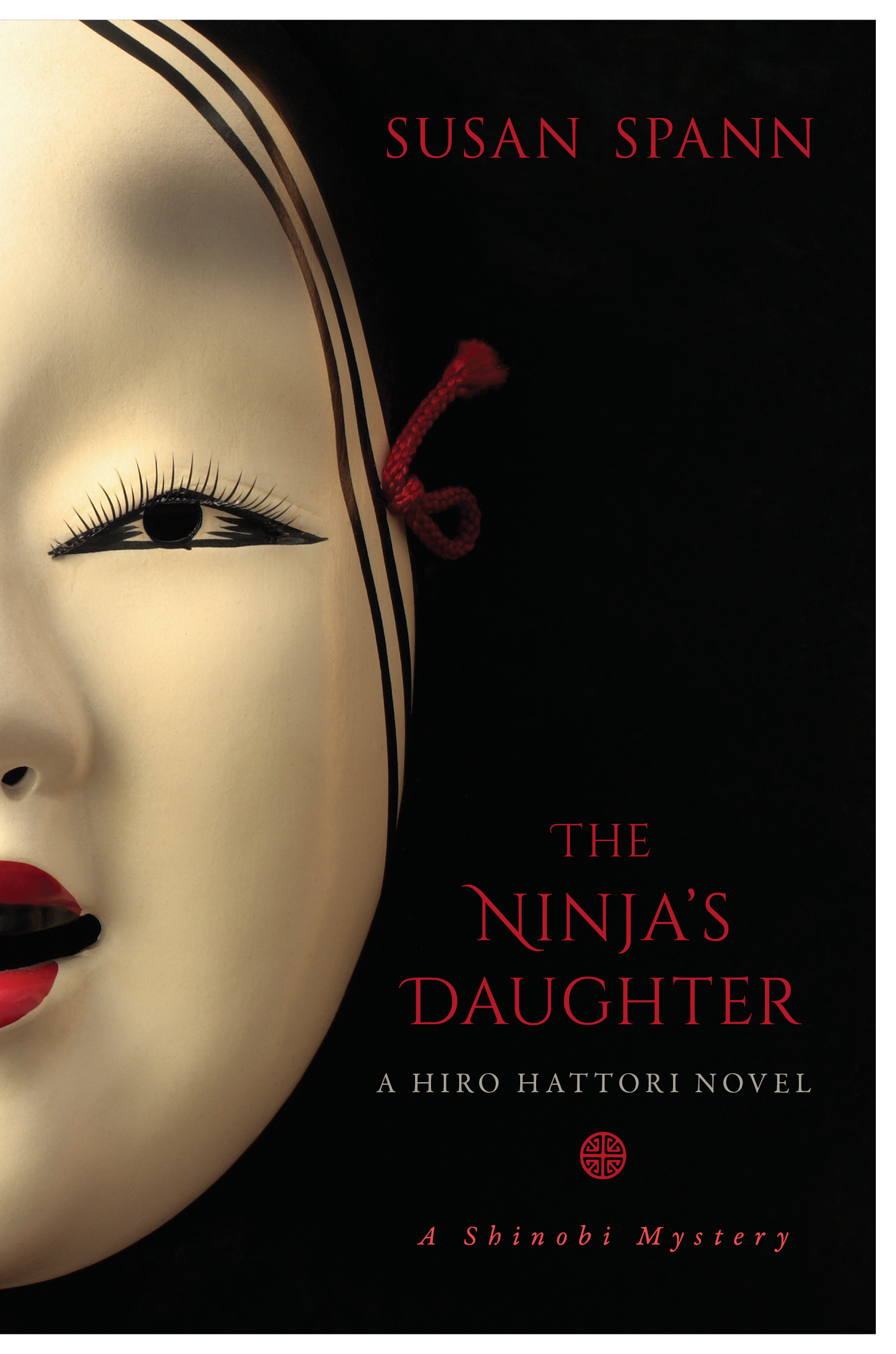
Susan Spann is a California transactional attorney whose practice focuses on publishing law and business, and is also the author of the Hiro Hattori (Shinobi) mysteries, featuring ninja detective Hiro Hattori and Portuguese Jesuit Father Mateo. Her fourth novel, THE NINJA’S DAUGHTER, released from Seventh Street Books in August 2016. Susan was the Rocky Mountain Fiction Writers’ 2015 Writer of the Year, and when not writing or practicing law, she raises seahorses and rare corals in her marine aquarium.
Find her online at http://www.SusanSpann.com, on Twitter (@SusanSpann), and on Facebook (/SusanSpannBooks).