Writers in the Storm

A blog about writing

storm moving across a field
How to Use Symbolism To Elevate Your Storytelling

Angela Ackerman

Stories should be a true experience for readers. Like a gourmet meal, we want there to be more to them than just what is seen on the surface. This depth can be added a number of ways—through subplots, character arc, subtext, theme, and symbolism. Of them all, symbolism is one of the simplest methods to employ, and it packs a serious wallop. 

Symbolism is important because it turns an ordinary object, place, color, person, etc. into something that goes beyond the literal. Babies represent innocence and unlimited potential, spring is synonymous with rebirth, shackles symbolize slavery, the color white brings to mind purity.

Symbols like these are universal in nature because they mean the same thing to many people. As such, universal symbols are helpful as readers see them and understand what they literally and figuratively mean. This not only delivers another shade of meaning to whatever is being described, it also promotes word economy because, by its very nature, symbolism allows us to convey more.

thistle

But a symbol can also be personal in nature, more individual, meaning something specifically to the character. For William Wallace in the movie Braveheart, the thistle represents love since one was given to him by Murron when they were children. To most people, love in the form of a prickly weed wouldn’t typically compute. But as it’s used throughout the film at poignant moments, the audience comes to recognize this personal symbol for what it means.

So whether the symbol is universally obvious or one that’s specific to the protagonist, it can add a layer that draws readers deeper into the story. The setting itself can become a symbol as a whole should you need it to. A home could stand for safety. A river might represent a forbidden boundary.

More often than not, your symbol will be something within the setting that represents an important idea to your character. And when you look within your protagonist’s immediate world, you’re sure to find something that holds emotional value for him or her.

For instance, if your character was physically abused as a child, it might make sense for the father to be a symbol of that abuse since he was the one who perpetrated it. But the father might live thousands of miles away. The character may have little to no contact with him, which doesn’t leave many chances to symbolize. Choosing something within the protagonist’s own setting will have greater impact and offer more opportunities for conflict and tension. A better symbol might be the smell of his father’s cologne—the same kind his roommate puts on when he’s prepping for a date, the scent of which soaks into the carpet and furniture and lingers for days.

Another choice might be an object from his setting that represents the one he was beaten with: wire hangers in the closet, a heavy dictionary on the library shelf, or the tennis racquet in his daughter’s room that she recently acquired and is using for lessons. These objects won’t be exact replicas of the ones from his past, but they’re close enough to trigger unease, bad memories, or even emotional trauma.

Symbols like these have potential because not only do they clearly remind the protagonist of a painful past event, they’re in his immediate environment, where he’s forced to encounter them frequently. In the case of the tennis racquet, an extra layer of complexity is added because the object is connected to someone he dearly loves—someone he wants to keep completely separate from any thoughts of his abuse.

Motifs: Symbolism on a Larger Scale

candle

Connecting readers with our stories is what we all hope to achieve as authors. This is why the stories we write often contain a central message or idea—a theme—that is being conveyed through its telling. Sometimes the theme is deliberately included during the drafting stage; other times, it organically emerges during the writing process. However it occurs, the theme is often supported by certain recurring symbols that help to develop the overall message or idea throughout the course of a story. These repeated symbols are called motifs.

For example, consider the Harry Potter series. One of the motifs under-girding the theme of good vs. evil is the snake. It’s the sign for the house of Slytherin, from which so many bad wizards have emerged. Voldemort’s pet, Nagini, is a giant snake. Those who can speak Parseltongue (the language of serpents) are considered to be dark wizards. By repeatedly using this creature as a symbol for evil, Rowling creates an image that readers automatically associate with the dark side of Potter’s world.

logo-medium-landscape-26c12ce547f22c15ed6d3227f65708d2

Because motifs are pivotal in revealing your theme, it’s important to find the right ones. The setting is a natural place for these motifs to occur because it contains so many possibilities. It could be a season, an article of clothing, an animal, a weather phenomenon—it could be anything, as long as it recurs throughout the story and reinforces the overall theme.
Themes can either be planned or accidental. If you know beforehand what your theme will be, think of a location that could reinforce that idea—either through the setting itself or with objects within that place—and make sure those choices are prominently displayed throughout the story.

Need a bit of help finding the right symbol for your story?

Did you know we have a comprehensive Symbolism and Motifs Thesaurus at One Stop for Writers? Stop by sometime and explore the many possible symbols that can be used to enhance the deeper themes in your writing.

How have you used symbolism and motifs in your writing?  If you haven't, how would you like to use them to enhance your writing?

Angela Ackerman

Angela Ackerman is a writing coach, international speaker, and co-author of five bestselling writing books, including The Emotion Thesaurus: A Writer’s Guide to Character Expression. She is passionate about helping writers succeed. Her site, One Stop For Writers is a powerhouse online library like no other, filled with description, story structure, and brainstorming tools to help writers elevate their storytelling. You can also find her on Twitter, Facebook and at her blog, Writers Helping Writers.


Read More
Why it’s not always about the writing

Let’s just call it … 2016 has been a whole cluster of bad. We lost some amazing artists, we’ve watched natural disasters and man-made disasters devastate communities, and we’re now experiencing massive aftershocks of an election that’s shaken all sides of the country.

I’ll spare you the pity party of various personal things.

Now here we are staring into the holiday season. That should be a happy thing and usually it is. Except this year, I’m feeling exhausted, absolutely mentally and emotionally drained.

I know a lot of people out there are feeling overwhelmed, scared, disillusioned, angry, or however all of this is affecting you, and we’re all trying to move forward in whatever way works for us personally.

I’ve been told to “get over it” and I’ve been told “you need to be doing more.” I’m not ready to get over it and I don’t have more to give – at least not right now. Don’t worry, I won’t be getting on any soap boxes today (with my luck, I’d fall off and add “broken ankle” to my fun list for 2016). I’m also not going to tell you what YOU should be doing. I will, however, share what I’m doing for myself and why I don’t feel the least bit guilty about it.

I’m reading.
I’m not reading heavy, literary, topic-based books. I’ve started and abandoned five different novels in the last month. And I’ve resisted attempts at discussing what I’m reading.

The novels that have kept my attention are ones that allowed me an hour or two of escape each day. I’m not looking for answers to profound questions or a grand “a-ha” moment. It was suggested (with a not very subtle eye-roll) that I was being shallow, that as a writer I was supposed to be deeper than that. I shrugged and walked away. I won’t be swapping titles with that person again.

As a writer, I know just how hard it is to write a book that transports someone to a different place, a different time. Why then should I feel guilty for enjoying and escaping into a world that someone else has lovingly created? The fact that someone’s hard work can give me an hour of peace in a day where I feel like my head is spinning like a cheesy horror movie, is brilliant. Hopefully my book will one day do that for someone.

Maybe I’m not “learning” from the author’s carefully honed craft. But I am honoring that carefully honed craft by letting her words transport me. I am escaping, I’m okay with that. And when I put the book down, I’m in a better place.

I’m watching TV programs
A couple of weeks ago, I started watching a TV program (This is Us) that a lot of my writer friends have been raving about. They’ve talked about the brilliant writing, the lessons we as novelists can learn. I’ve been watching it on the sly and tiptoeing away from any discussions online and in-person. I’ve been curled up on my couch, snuggling a cat, with a box of tissues handy, and losing myself in the struggles of these perfectly imperfect people.

Have I had any “ohhh, that’s brilliant” moments? Absolutely. Have I had any “that’s what I need to do with my main character” moments? Nope. I’m simply allowing myself to enjoy. And at the end of the hour or two or three depending on how far behind I am, I’m in a better place.

I’m not worrying about writing
There are days I can whip through my word count like it’s a bag of gummy bears. Other days, I sit at my desk, open my manuscript then promptly close it and move to the couch for a binge-fix or whatever else I feel I’m up for that day.

I know the “write every day” rule. I don’t. I can’t, especially not lately. But whether I’m consciously thinking about them or not, my characters are always with me. And I find that when I’m not forcing myself to think about them, they’re more forthcoming with their secrets. When I’m stressed or upset about whatever is happening to me or around me, I can’t always lose myself in the writing. Sometimes yes. For the can’t days, I give in. And I don’t feel guilty.

I said I wasn’t going to tell you what YOU should do. I take that back. I’m going to give you one piece of advice – Do whatever you need to nurture yourself.  And do it without the guilt. That’s not always easy, especially when people tell are judging what you’re doing or not doing as the case may be. Without a healthy, happy you, there is no writing anyway.

How do you get through the hard times?

About Orly

Orly-Ivy.jpg
distance-home

Orly Konig is an escapee from the corporate world, where she spent roughly sixteen (cough) years working in the space industry. Now she spends her days chatting up imaginary friends, drinking entirely too much coffee, and negotiating writing space around two over-fed cats. She is a co-founder and past president of the Women’s Fiction Writers Association, and a member of the Tall Poppy Writers. She is rep’d by Marlene Stringer, Stringer Literary Agency LLC.

Orly’s debut, The Distance Home, will be released by Forge on May 2, 2017.

You can find her on Twitter at @OrlyKonig, on Facebook at OrlyKonigAuthor, or on her website, www.orlykonig.com.

Read More
Life After NaNoWriMo—What’s Next?

Piper Bayard

It’s December—the month after National Novel Writing Month. We blink our eyes and search around like the lights just came up in the bar. Or maybe our expressions are more like that look a cat gets when a kid puts a paper bag over it for a few minutes and then pops it off again. We gaze about in a bit of confusion and relief and wonder what the heck just happened. More importantly, we wonder what happens next.

Actual photo of Nanowrimo participant by Canstock.

First, if you made it to the 50k line, I say, “Congratulations! Woot! Woot!” Give yourself a pat on the back. Now get back to work on word 50,001. If you started writing but fell short of 50k because life is what happens when we’re making plans, I say, “Congratulations! Woot! Woot!” Give yourself a pat on the back. You’re further than you were. Now get back to work and finish your manuscript. If you started writing and fizzled out, I say, “Congratulations! Woot! Woot!” Pat yourself on the back. You tried. Now open up what you started and get back to work.

You notice that “get back to work” theme I’ve got going on here? That’s because “winning” Nanowrimo is not about reaching 50k. That’s quite an accomplishment, and I do offer a hearty salute to all who met that goal. But it is not the end. It is only the beginning.

Nanowrimo is not about word count. It’s about focusing our choices and behaviors long enough to develop new habits. Because the fact is that if you ask any professional author if they are doing Nanowrimo in November, they will tell you that every month is Nanowrimo. We “win” Nanowrimo when we use it as a tool to direct our energies and reach further goals.

Words 49,999 and 50,000 by Canstock.

So what are those further goals? To answer that, we have to know why we write. For a few of us, it’s because therapy is too expensive. For others, it’s to leave behind our stories for our children and grandchildren. For some, it is to become the next James Rollins, Tom Clancy, or Danielle Steel.

Whatever the reason we write, we need to be honest with ourselves about our goals in order to know what comes next.

For those who are writing for therapy or to leave their stories behind as a piece of history, the journey can continue at a leisurely pace, with or without editing, agents, publishers, or tackling the learning curve of self-publishing. I wish you deep fulfillment, and I commend you in your efforts to leave behind a message that could enlighten your future generations.

And then there are the rest of us—those of us who dream of book tours, movie deals, and big fat checks. For us, the temptation is great to stare at those Nanowrimo manuscripts and admire them. We want to coddle them and tweak them and offer them to all of our family and friends, as if we were showing off our baby. And was there ever a more beautiful baby?

Canstock-2016-Dec-Baby-sleeping-on-books.jpg

Yes. There was. It was the baby that got edited, rewritten, edited, rewritten, proofread, edited, rewritten, sent to an agent, edited again, and sold. That was the more beautiful baby.

So the first thing to do after Nanowrimo is to get over the “baby” idea. Most of us don’t sell our babies on Amazon.

Hard, cold fact: writing may be an art, but publishing is a business. It’s a beautiful world when our art is in harmony with the demands of business. Sometimes it is. Sometimes it isn’t. How we adjust to that fact of life is where we each find our own way.

Regardless of how the art stars align with the earthy nature of business, the process of getting your novel ready for publication requires certain elements.

1.  Let your work rest.

Unless we actually have an agent or editor chomping at the bit for the manuscript, we should let it sit a year while writing more books. At a bare minimum, we should wait two weeks.

It’s excruciating, but we all know we need to do it, and it always pays off. That’s because working on a manuscript is like driving across the country. If we don’t blink and change our focus from the road to the landscape at times, our minds zone out, and our vision gets blurry. When we stare at a manuscript too long, like the road, we stop seeing it.

And when I say let it sit, that includes making our friends, relatives, and beta readers wait until after the next step. I know. It’s agonizing, but trust me. You will thank me in the long run, and so will they.

2.  Read the manuscript through again and edit it. It’s not right for us to ask others to read our work when we haven’t even read it through ourselves.

3.  Time for the beta readers.

When we are confident that the manuscript is the best it can be without external input, it’s time to send it to beta readers. When the beta readers send it back, no matter what they say, the only appropriate response is to thank them for their time and efforts. Never argue about their comments. Remember that their purpose is not to give us strokes and affirmation, it’s to ferret out the holes in our plots and prose that readers on the open market will find with a vengeance.

4.  Evaluate beta reader feedback with an open mind and weigh it carefully.

If we disagree with an isolated criticism, that’s fine. We move on. However, if more than one person says the same thing, it’s worth deeper consideration even if we do disagree. Ultimately, we are the masters of our own pages, but part of that mastery is subduing our egos for the sake of the task at hand.

5.  Edit again based on beta reader feedback and polish the manuscript until the sun reflecting off of it could drive airplanes off course.

6.  It's time to call in the professionals.

If you plan to self-publish, find an excellent editor for a substantive edit and a line edit. The good ones cost, but they are often worth every penny, as their feedback is invaluable and usually applicable to future projects.

If you don’t have someone in mind, ask around. Don’t hire a personal friend unless that friend is a professional editor with an excellent reputation—someone willing to slaughter all of your little darlings and make your novel presentable to the public at large. Someone who shows no mercy. Friendship is friendship, and business is business.

If you plan to go traditional, I still recommend hiring an editor, even though an agent and many more editors will give you input during the journey to publication. No agent wants to read unedited work.

7. Rewrite the content of the manuscript again based on the recommendations of the professional editor.

8. Send the manuscript back for the final line edit.

Make sure the editor uses the Chicago Manual of Style or some other equally acceptable authority. Don’t let anyone convince you that it’s okay to punctuate from the heart. It’s not. A good line editor will cite the rule for every change they make.

9.  Clean up the manuscript after the line edit.

10. Enter the publication channels.

If self-publishing, hire people to do the cover, the layout, the uploads, the marketing, etc., or learn to do it all or in part on your own. This is no small time investment, but the knowledge can be emancipating. If going traditional, send out those query letters.

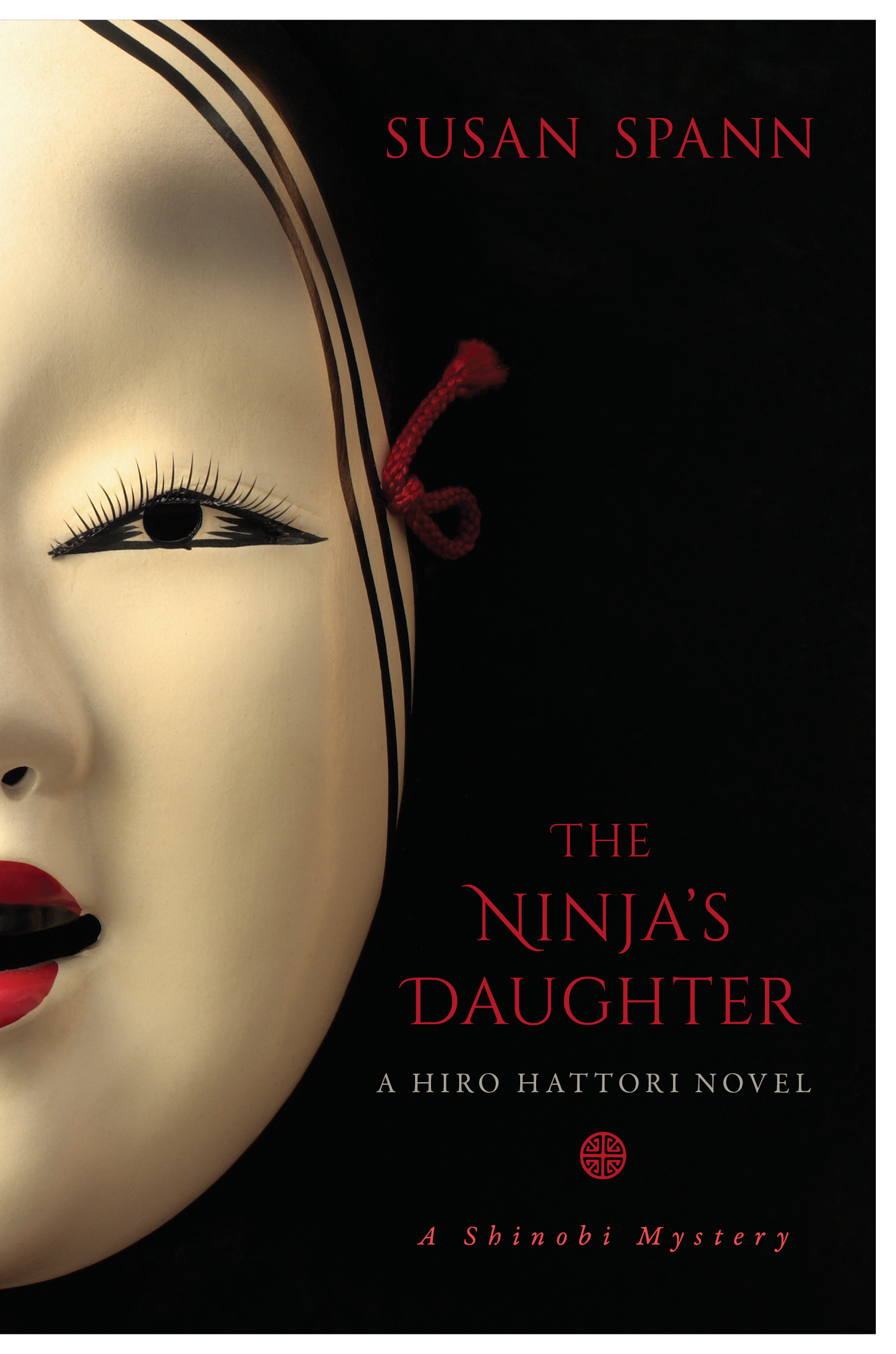
See the previous Writers in the Storm article by popular ninja mystery writer Susan Spann on How to Find Your Agent Match. The only thing I would add to Susan’s excellent post is that you should not wait for an agent’s response before querying other agents. It is our right to query as many agents as we like. It’s up to them to give us a timely response. We would die staring at our mailboxes while waiting for some of them to reply, and many of them never will. Even if an agent has requested our full, unless they have specifically asked for an exclusive, and we have specifically agreed to it, we are under no obligation to give it. It is, however, professional courtesy to keep them updated if we should sign with someone else.

paper-755551_640

Next step? If you haven’t done it already, start another book. It can take a long time to land an agent, and publishers can be even slower. Don’t wait. Move on, because for every writer, ultimately, it is not about 50k in a month. It is not about whether we are published this week or ten years from now, or whether we self-publish or go traditional.

At the end of the day, it is only about ourselves and the page. That is the bond that keeps bringing us back. We may start writing in November, but we keep doing it every month, because it’s who we are.

Good luck to each of you, and may your muses be generous!


Do you have additional tips on how to keep going after NanoWriMo? What are you doing this month?

*     *     *     *

ABOUT PIPER

Bayard and Holmes

Piper Bayard is an author, a recovering attorney, and the managing editor of the Social In Worldwide network. Her writing partner, Jay Holmes, is an anonymous senior member of the intelligence community and a field veteran from the Cold War through the current Global War on Terror. Together, they are the bestselling authors of the international spy thriller, THE SPY BRIDE. You can find Piper at BayardandHolmes.com.

Read More

Subscribe to WITS

Recent Posts

Search

WITS Team

Categories

Archives

Copyright © 2026 Writers In The Storm - All Rights Reserved