Writers in the Storm

A blog about writing

storm moving across a field
Taking it to the Streets: Lessons Learned From Creating a Multi-Author Event

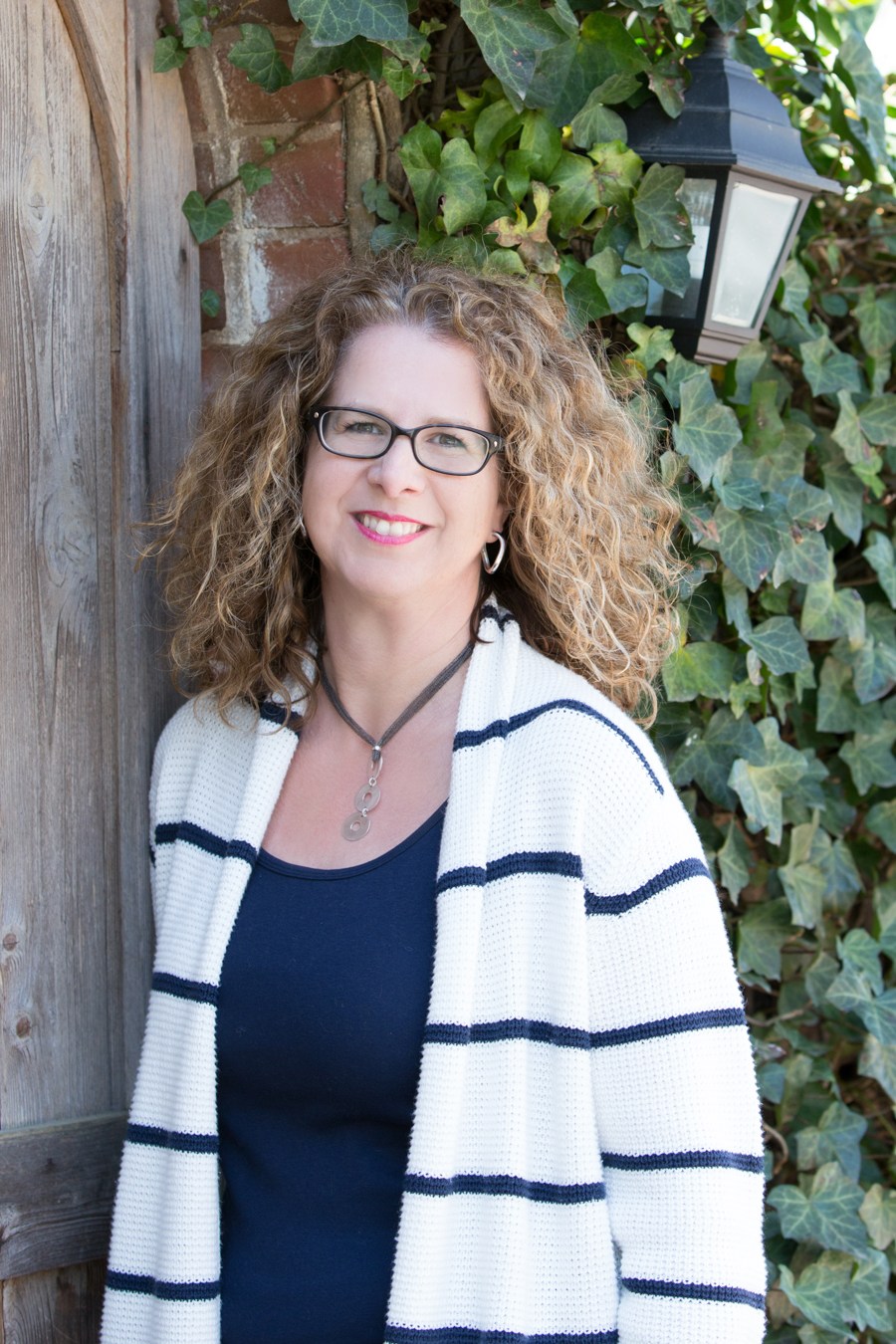
Brandi Megan Granett

Are you looking for a way to reaching your local community of readers and writers?  Do you want to find a way to make your book launch or book marketing bigger than yourself?  Consider stepping away from the internet and taking it live with a multi-author book event!

What started as just a crazy idea to promote my book launch turned into a 45 author, all ages book fair at a historic mill with a food truck serving crepes and a local vineyard doing wine tastings and bottle sales that I christened, River Reads

And to keep up with the theme of giving back, I wanted to share what I learned so that more events celebrating writing and reading could pop up everywhere.

rivereadsimages-2

Start Early

I began planning my event five months beforehand.  While I feel like this was plenty of time, I might have liked to have an additional month to really finalize the line-up of authors before some of the local print publishing deadlines.

Pick a Space First

I suppose this may not be true for everyone, but I needed to know I had a space locked in before I started to invite authors to attend.  Plus, after getting the space, I knew how many authors I could host.  Instead of asking to rent a space, the language I used was partner— as in, would your space like to partner with my community event—some spaces can host community events at different prices than they would for weddings or other celebrations.  And the space I found, Prallsville Mill in Stockton NJ, lived up to the word partner.  They promoted the event on their social media and in their email lists.  They answered all of my questions and shared their knowledge of event hosting freely.

Ask Everyone

To find authors, I started with the ones I knew asking them if they would like to participate via a Google Form that also collected all of their contact information.  Using this Google Form cut down on the emails sent to me and automatically tabulated the results into a spreadsheet.  I also emailed local bookstores to ask who they knew in the area.  To give my event a theme, I tried to recruit authors living along the Delaware River.  All genres were invited—though one thing I learned was to have people self-identify their genre.  I left that off the Google Form and mistakenly thought a book on dog training was for children.  I also posted my call to authors on a local Facebook group.  I cast my net widely and accepted everyone who reached out until the space was full.

I’d also say don’t be afraid to include a mix of authors: traditional, self-published, children’s and adult!  Families and friendship groups contain a variety of readers.  Having something for everyone could really expand your event’s reach.

Make Partners

In addition to partnering with the Prallsville Mill, I employed the partnering language with local vineyards.  One of the many I reached out to, Unionville Vineyards accepted my offer within minutes!  They offered to send someone to do wine tastings and bottle sales in exchange for being involved in our marketing and publicity efforts.   This added an extra value to the event and drew in people to stay longer. 

We also contracted with a food truck serving crepes.  This part of the festival planning proved to the most challenging.  Few small businesses are willing to take a chance on an unknown event.  In the end, I agreed to pay for any shortage in sales.  Happily, the crepe truck turned a profit—and this was a big worry off my shoulders.  I don’t recommend this path for everyone—but I thought adding the food truck both kept the author’s fed and drew in foot traffic.

We also partnered with the Friends of the Hunterdon County Library to host a “blind date with a book” sale to solicit donations for their group.  In exchange, the Friends promoted us to their membership.  Their inclusion in the event also made it possible for the event to be shared on certain community bulletin boards and spaces that only promote non-profits. 

To further this sale, Books Sparks/Spark Press donated beautifully wrapped books.  For the rest of the sale, I used all of the ARCs and review copies I received throughout the year.  I both collected money for the library and found more readers for authors in my online circles.

Another key partnership we made was with the local bookstore in Frenchtown, NJ, The Book Garden.  Caroline, one of the owners there, who does public relations work for the United Way of Hunterdon County, shared her press release skills that resulted in River Reads being featured in many local newspapers.  On the day of the event, she took credit cards for any authors unable to process them on their own.  Having people willing to share their unique skills and talents to support the event is a key takeaway!

My biggest partnership was with a local author, Marie C. Collins, who stepped out right away with an offer to help.  While I am terrible about asking for help, she used her knowledge of the local education landscape and her background in Middle Grade publishing to craft and distribute information about River Reads to local schools.  Then she rallied the Children’s, Young Adult, and Middle Grade authors into creating a scavenger hunt, prizes for giveaways from local bookstores, and a Halloween theme for their space.  Through this partnership, River Reads grew beyond my initial dream.  I am grateful for the vision and support my partners provided!  The main lesson here probably a timeless one—accept help with a glad heart and ask for it!

img_7917-1

Go With The Flow

One of the biggest challenges to River Read was the actual reading part of the event.  Initially, we hoped to feature authors reading throughout the day.  We organized two separate reading stages for adults and children and drafted sign-ups for the authors to pick a slot that morning.  I choose to limit the readings to five minutes to keep the emphasis on the conversations in the room between readers and authors.  But as our day unfolded, the readings weren’t working.  Sometimes there weren’t enough guests circulating, sometimes people were too engrossing in conversations and selling books.  So instead of forcing it, we just went with the flow and let the reading ebb and flow.  We let authors take control rather than bending the event to our will.

More Help Available

To celebrate the launch of my novel, Triple Love Score, I knew I wanted to do something.  But the idea of that something including me and a microphone with my loved ones gathered around for a reading of the steamiest sex scene in the book seemed, well, terrifying, (notwithstanding my hopes of getting a cake with my book cover on it!)  As Ann Garvin teaches new members of our collective, The Tall Poppy Writers , a rising tide lifts all boats, so I decided the best way to celebrate Triple Love Score is give back to those around me.  If this idea sounds like a plan to you, I would love to know about it.  While these are not the only things I learned, they are key takeaways.  If you would like to know more, please email me at brandi.granett@gmail.com.  I’d be happy to help you start your own festival!

What do you think, readers? Has Brandi convinced you to try this?

 
download
Brandi Megan Granett is an author, online English professor, and writing coach.  She earned her Ph.D. in Creative Writing at Aberystwyth University and her MFA in Fiction from Sarah Lawrence College.  Her latest novel, Triple Love Score, will be published by Wyatt-Mackenzie in Fall 2016. Morrow published her first novel, My Intended, in 2000. Her short fiction appeared in Pebble Lake Review, Folio, Pleiades, and other literary magazines and is collected in the volume, Cars and Other Things That Get Around.  She writes an author interview series for the Huffington Post.  When she is not writing or teaching or mothering, you will find her on the archery range.
Read More
Taking a Story from Idea to Concept to Premise

Susan Bischoff 

Writing as a career isn’t easy—especially for those writers who are still in another career (the evil day job). We can’t have a career polishing five-year novels, and we know, given the demands of day jobs, family, and all the commitments in our lives, that our writing time is very precious. False starts, useless tangents, writing our way twenty or thirty thousand words down a path that ends up going nowhere—these are the thoughts that wake us up at night. And keep some of us from starting, always in fear of getting it wrong.

young-girl-1149701_1920

And let’s not even talk about waiting for the Muse to visit. There’s a creature who doesn’t show up for appointments and doesn’t check her voicemail. So often, she’s right there, with her basket of plot bunnies, so enthusiastic and helpful when you get started, only to go completely AWOL, right when you need her.

That Muse is fickle and flighty.

I’ve had an addictive relationship with the Muse in the past, feeling like I absolutely needed her by my side to get a writing session started. Over the past few years, I’ve been working to kick my dependency issues and learn to solve my own problems when plotting a novel.

All that work culminated in The Story Toolkit: a series of worksheets that takes writers like me from that initial spark of inspiration through a complete outline for a story that works from beginning to end. Even when I have no clue what to put on the page, I now have a system that asks me questions until I’m able to pull the answer out of my subconscious where it hides.

Stick with me a little longer, and I’ll take you through an early part of the process – how to move that spark of inspiration from idea to concept to premise.

An idea is often very general. If you’ve ever had that thing where you think you have a brilliant idea, and then you start telling it to a friend, and they start asking questions, and you suddenly realize you’ve got a whole lotta nothin’—well, you probably know what I’m saying. An idea is great, but it’s not really a story yet.

I’m going to write a story about the zombie apocalypse.

Great, I love that! But a story about the zombie apocalypse could turn out to be The Walking Dead, 28 Days Later, World War Z, or a host of other things. All “zombie apocalypse” gets you is “it’s gonna have zombies” and “things will be bad.”

So you need to move that idea along to the concept phase, in which you start to pick some elements that make up the story - those key things you want to write about.

  • Do you want to focus on characters or events?
  • Large scale vs. small scale?
  • What’s the tone, comedic, suspenseful, horrific, emotional…?
  • Is there a lesson, statement, or theme you want of focus on?
  • Are there elements of period or place that will play key roles?

Answering those questions might take your concept to something like this:

I’m going to write about the zombie apocalypse, but instead of focusing solely on the humans fighting the zombies, I’m going to show the humans’ struggle to survive after the modern world is gone, to find food, safety, medical supplies. I’m going to focus on people. What will a person become when faced with that environment? I’m going to show the dark side, the man’s inhumanity to man stuff, but also show people growing in character, forming new family units…

Okay, so you’re writing The Walking Dead, or something close to it. But it’s still not a tellable tale. In fact, if you try to think about how to sit down and write The Walking Dead, it’s tough to see the big picture, because it’s made up of so many individual stories. Multiple premises. Note, in the concept above, the absence of story elements: characters, specific goals and motivations, and specific conflicts. Once you make up some of those things, you can start crafting premises for the stories you’re going to tell in the series.

Here is the premise for the first Walking Dead TV episode:

Rick Grimes, a small-town sheriff’s deputy who has just awakened from a coma, leaves the hospital and goes into the deserted town in search of his family, but encounters dead people who want to eat him.

That’s a story you can tell.

Idea: That spark of “I want to write about…”

Concept: Start throwing in specific elements you want to use to make the story yours.

Premise: Come up with the characters, goals, motivation, antagonist, and conflicts that will work with your chosen elements to tell a story.

Let’s try another one, off the cuff. Imagine you just watched a season of Supernatural. [Okay, now stop imagining Dean’s smile for two seconds and come back to me.]

Your idea is that you want to write something like Supernatural. (And I’m not even going to question your intentions when you start watching the boys and calling it “research.”) In your head, you have this vague idea that it’s going to be like Supernatural, somehow have the same feel as the show, but you’re going to make it yours.

Your next step, then, is to move it into the concept phase. How are you going to make it yours? Elements of the series include things like the relationship between the brothers, family business, monsters are real, road trip, monster of the week, saving the world… Elements you might add as your own might be gender swap, a romantic relationship rather than fraternal, best friends, parent child, a family business that’s based in one place—like a freaky town a la Smallville or Buffy—rather than the roadtrip aspect…

Perhaps you decide on Supernatural meets Smallville meets Buffy as a concept. From Supernatural, you know what moves you is the relationship, the way those guys are always out to save the world but they’ll throw away all their work to save each other. You want to keep it all in one place, like Smallville and Buffy, and you’re going to create a mythos for your world which will explain why it’s full of baddies. From Buffy you appreciate the aspect of The Chosen One, and how difficult it is when the mission chooses the agent. One or both of your characters will be chosen to fight these baddies, and will struggle with the willingness to give themselves up to that. And, since you adore romance, you’ve decide that your relationship will be a man and woman rather than brothers.

In just that little space, you’ve traveled far from that vague idea of “something like Supernatural.” But, again, it’s not a story you can write until you start to come up with the story elements that allow you to craft a premise.

You need to make more choices:

  • Who exactly are the main characters?
  • The antagonist?
  • What is the type of conflict?
  • What kind of personal conflict will there be?
  • What is the setting?

Answering these questions will allow you to craft a viable premise.

Anna Carson is a used book shop owner in the small town of New Hope. Her boyfriend, Greg, is the kind of man who wants to settle down to the same simple, quiet, happy life his parents had in the simple, quiet, happy town. What Greg and the town don’t know is that the town is sitting atop a system of caverns which imprison an ancient evil. Or had imprisoned an ancient evil, before Anna followed a map from an old book into the darkness and broke a magical seal. Now Cain, New Hope’s newest and most mysterious bachelor, is telling her that she’s the only one with the power to fight the demons that are slipping through the cracks, and that they must work together to seal the breach before Ashog, demi-god of the underworld, gains his freedom and unleashes his army of evil on the world.

Or something like that. You get the idea.

My worksheets ask me questions that expand on my concept and help discover everything I “know” about what I want include in the story.

Finally, I feel like I’m in control of the story. I feel like I know where I’m going when I sit down to write prose. This toolkit has put the pleasure back in writing for me so, of course, I wanted to share. I hope it helps some of you as much as it’s helped me.

What helps you flesh out your story? Do you have questions that you ask yourself and your characters? What moves you along when you’re stuck?

Best of luck on your writing adventures!

Susan Bischoff

The Story Toolkit:
Your Step-by-Step Guide To Stories That Sell

Do you have an idea for a book but don't know how to get started? Have you started books, but get stuck in the middle and can't quite finish? Don't be a slave to the Muse. Don't sit around and wait for the right inspiration to carry you away. Let The Story Toolkit take you by the hand and walk you through a step-by-step process of plotting a novel, from the first spark of an idea. It’s like having a developmental editor in your pocket--someone who can ask the right questions, straighten out that story you've got tangled up in your head, and smooth it out into a clear plan you can use to write a successful novel. 


What do you think? Would this process work for you? 

*  *  *  *  *  *  *

About Susan

Susan Bischoff

Susan Bischoff is a fiction fanatic, author, freelance editor, and incurable romantic. She lives in Tennessee with her high-school sweetheart husband, a daughter, two cats, and one big puppy. She loves most everything girly: sewing, knitting, and other needlework crafts, baking, doll collecting, shojo manga, and is particularly fond of things that are pink. Another favorite pastime is replaying the kissing scene at the end of the BBC's North and South.

Find her at susan-bischoff.com.

Read More
Final Pass Edit Fun

Last month I wrote about editing 1200 pages in 12 weeks. Today, I give you Part Two of my revision journey for the first book I plan to self publish.

Late Friday night I will send The Book back to Tiffany Yates Martin for her third and final pass. Sometimes I think, "Good! Then I can take a break." But there are those random moments that I've wanted to see if she'll make a fourth, maybe a fifth pass to be sure I've done the best I can do. When I'm rational again, I know there will always be at least one more thing (or ten) that I can do to improve the book, whether it's the flow, the action, the character arcs, or the story.

Why? Because my brain never shuts down. And when I'm at the computer revising eight hours (or more) a day, my brain is on overdrive. Great for the book, especially while I'm still working on it.

But, back to this story.

Revising after a second pass by your editor.

I didn't know what to expect from Tiffany's second pass. Happily, I'd fixed most of the problems she noted in the first half of the book. You know, missed opportunities, emotions, transition scenes after an action-packed, knock-down chapter endings. So the first half  of the book's revisions were line edits, cleaning up questions about my science fiction language and technology—small things that didn't require a lot of thought or angst, just time.

Now I'm to the point where the changes are bigger, whole-book details. Like updating all the tech. Naming a colony ship then searching for references to "the ship" on every single page of the document. Starting at the beginning and adding in subtext and thoughts in just the right places, to show one character questioning the identity of the other. I've entered the realm of the Time Sump, looking for ways to show a gradual build-up of emotion or trust. Or distrust.

This week, I'm working on revising the ending. I did that after the first pass, but not enough. Read that as not hard-hitting enough for a climax that's been building since page one.

Thank goodness for Tiffany. She doesn't let me get away with glossing over anything. There's no magical hand-waving over this revision. Her comments are not pedantic or put-down-ish. Her suggestions end in, "What do you think?" or "OK?" And every time, she's pointed out an angle I couldn't see from my writer's perspective.

This is why I'm working with an editor. I get so caught up in the story that I know so well, I forget to communicate it to the reader - to put it on the page. And that's my job. Thank goodness I can admit that I need all the help I can get.

What can you learn from second-pass edits?

1. Check the ending of each chapter.

Did you leave out important thoughts, feelings, or actions that should have occurred before we see the characters on stage at the beginning of the next chapter?

Remedy: Add that information at the end of the chapter as a final scene. If you want to end the chapter on a cliff-hanger, show your character twisting, literally or figuratively, at the beginning of the next chapter. Take advantage of those raw emotions to move your story forward, to deepen character, an move the character along his/her arc. Don't miss the opportunity.

2. Check for "muddied motivation."

If your character isn't acting in a way your reader identifies with, you haven't supplied clear motivation for her goals.

Remedy: Go back to the beginning, or at least several chapters. Look for places to add subtext that implies those goals. If you can't be subtle, find where you can add one line of backstory that will give your reader that "Aha" moment for why your character acts the way he does. If you have to reinforce that motivation later, be sure it's a deeper motivation.

3. Show reactions more clearly. 

It's easy to show the reactions of your POV character. Heck, we chose that character's POV because she had the biggest stake in the scene. But we need to see the other character's reactions, too. That isn't easy to do when you can't be in their heads.

Remedy: Check your non-POV character's reactions - body language, expressions, dialog 'cues'. Have you shown  physical response to the confrontation? Stress or surprise? Your POV character can recognize, and react to those responses. Your POV character can interpret body language, like a stance or lack of swagger. You can share the non-POV character's mind-set in dialogue, particularly by using words only used when stressed (a non-swearing character swearing, for instance). The delivery of those words will show the feeling just as much as the words will.  

Do you have a "final pass" revision tip? Maybe a "while-you're-still-writing" revision tip?

*     *     *     *     *

ABOUT FAE:

Fae Rowen

Fae Rowen discovered the romance genre after years as a science fiction freak.   Writing futuristics and medieval paranormals, she jokes  that she can live anywhere but the present.  As a mathematician, she knows life’s a lot more fun when you get to define your world and its rules.

Punished, oh-no, that’s published as a co-author of a math textbook, she yearns to hear personal stories about finding love from those who read her books, rather than the horrors of calculus lessons gone wrong.  She is grateful for good friends who remind her to do the practical things in life like grocery shop, show up at the airport for a flight and pay bills.

A “hard” scientist who avoided writing classes like the plague, she now shares her brain with characters who demand that their stories be told.  Amazing, gifted critique partners keep her on the straight and narrow. Feedback from readers keeps her fingers on the keyboard.

When she’s not hanging out at Writers in the Storm, you can visit Fae at http://faerowen.com  or www.facebook.com/fae.rowen.

Read More

Subscribe to WITS

Recent Posts

Search

WITS Team

Categories

Archives

Copyright © 2026 Writers In The Storm - All Rights Reserved