Writers in the Storm

A blog about writing

storm moving across a field
4 Ways to Bring a Balanced Perspective to Your Support Team
Kathryn Craft

Kathryn Craft
Turning Whine Into Gold

To navigate the gauntlet that is publishing today, your best strategy for success can be to embrace your new paradox: you are both artist and businessperson.

Why?

Because it’s not all business. Your publishing team is well aware that they would not have their salaried jobs without the creative talent that is willing to gamble for dollars in order to drive the industry.

Because it’s not all art. Oh they want your art, all right, but if truth be told, they’d rather not add one ounce of your artistic temperament to their business meetings.

Here are some strategies for achieving that all-important balanced perspective that will help your support team to thrive. Each one presents a new paradox.

1. Be both entrepreneur and team player.

No matter what path you took to achieve it, your decision to pursue publication meant that you were starting a home-based business. This is true in the eyes of the IRS and it will help if this also feels true in your heart. You are the author and therefore the brand; your story is now a product. And no matter how many times you tell yourself “I only want to share my story with others,” your publishing team will appreciate you getting on board with the fact that sale of your work is how you all intend to make money.

It therefore behooves you to understand the basics of running a small business as concerns record-keeping, budgeting, and the tax ramifications of your endeavor. Donning your role as sole business owner, ironically, will empower you to step onto the publishing team. You will see your agent, editor, cover designer, publicist, and marketing department for what they are: your business partners.

Too many authors feel sidelined in their own careers, saying things like, “I don’t know how my book is selling because I don’t want to bother my editor.” Um—why? If your publisher wants you on the sales team—and they do—you have a right to periodic sales numbers and whatever explanations you need to understand your contract and your royalty statement. You have a right to know where your agent is submitting your work and what kind of feedback your work is getting. Only by defending these rights can you be an effective part of your publishing team. 

2. Be both field marshal and herd dog.

Each member of your team has such an all-consuming role that they can forget they are on a team. Especially with a larger publisher, the right hand may not know what the left is doing. You are the lowest common denominator—without you, there wouldn’t be a team—so it’s on you to remind them.

Sometimes that will require you to get out front and take the lead. I needed to do this when my in-house publicist failed to achieve even one little piece of her ambitious PR plan for my second novel. As uncomfortable as it was, I had to get out front and act as field marshal: this is the new plan, and this is the support I expect from each of you to make it happen.

Other times, if you sense a member of your team lagging, it is best to herd from behind, calling to remind that you are awaiting edits or a cover concept or whatever. Ask to be apprised of the revised publication schedule. In the case of overdue services—unless you make the mistake of unleashing the full wrath of your artistic temperament—as long as you respect each member for the expertise each brings to the table, such “poking” is not an annoyance. It is simply gathering the information you need to best manage your time and contribution to the team. 

3. Be both enthusiastic and realistic.

Many writers pin up a mock cover for their manuscript that comes with “New York Times Bestseller” pre-affixed. There is nothing wrong with lofty goals! They can propel us through the muck and mire of workaday publishing. But we must also bring our A game to workaday publishing, and find value and joy in it, or we may never hit a list.

4. Let both emotional validation and data feed your sense of success.

A business person wants the data—how many books sold at the event, how many attended your Twitter chat, how many hits your blog or Facebook ad received. Such data may point to the most efficient use of your limited time and resources, but it will not tell the entire tale of your success. Your inner artist will feel successful as soon as readers email to say how your book moved them or opened their hearts. People do not forget books that touch them or excite them—they recommend them.

We must all start somewhere, after all, and not everyone will start at the top of their game. Use the feeling of success engendered by positive reviews to motivate your team to even greater heights.

It is a universal truth that everyone wants to play on a winning team. Set the bar high, with your inner artist holding one side of the bar and your inner business person holding the other—and then ask as much of yourself as you ask of others.

Do you ever feel torn between what seem to be conflicting roles in your publishing journey? How have you navigated such paradoxical moments?

To catch up with this series of posts, check out:

*  *  *  *  *  *

About Kathryn

art-of-falling1.jpg
10685420_966056250089360_8232949837407332697_n.jpg

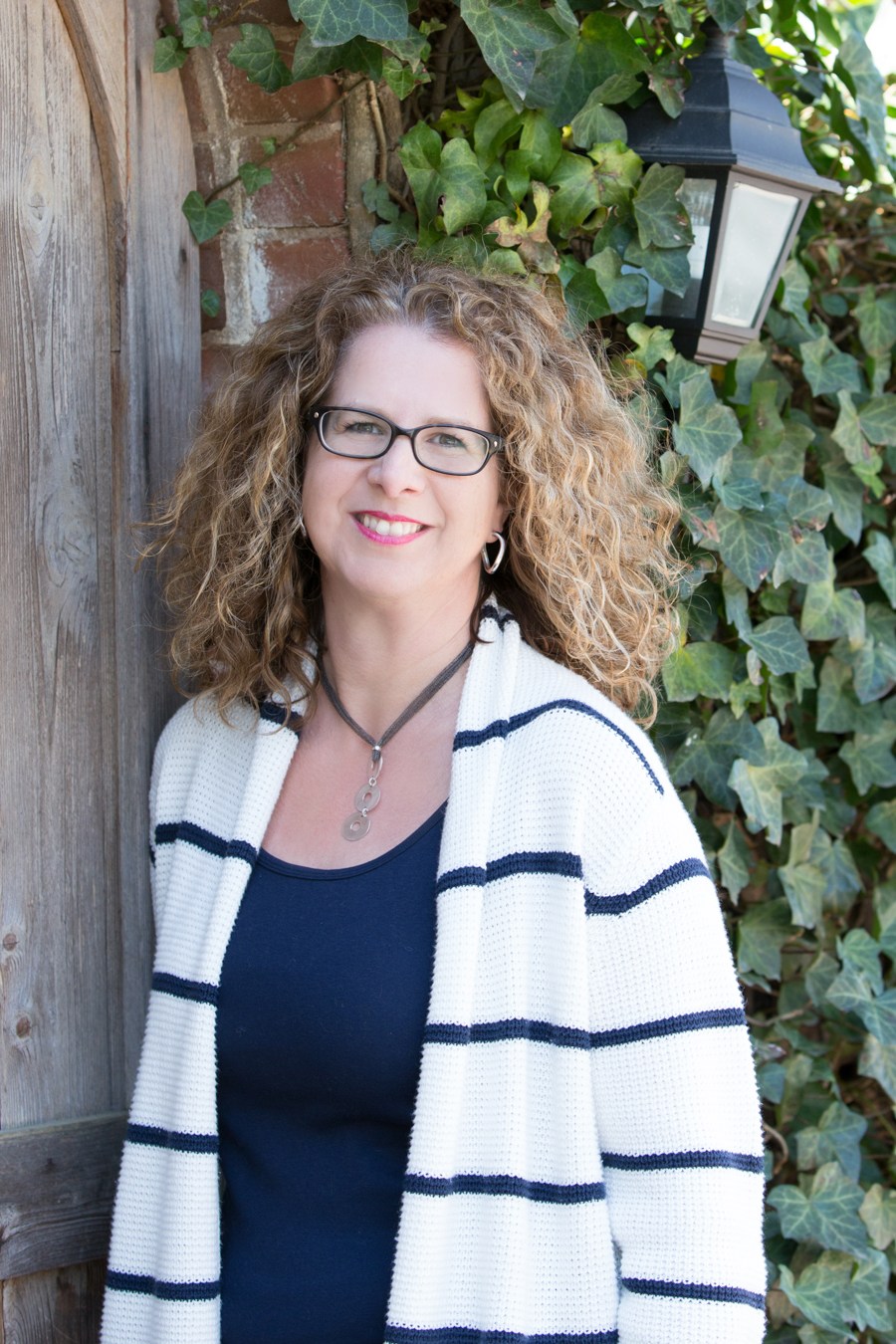
Kathryn Craft is the award-winning author of two novels from Sourcebooks: The Art of Falling, and The Far End of Happy. Her chapter “A Drop of Imitation: Learn from the Masters” will appear in the forthcoming guide from Writers Digest Books, Author in Progress, available now for pre-order.

Her work as a developmental editor at Writing-Partner.com, specializing in storytelling structure and writing craft, follows a nineteen-year career as a dance critic. Long a leader in the southeastern Pennsylvania writing scene, she leads workshops and speaks often about writing.

Twitter: @kcraftwriter
FB: KathrynCraftAuthor

Read More
How to Beat Your "Negativity Bias"

Tasha Seegmiller

When I was just starting on my writing journey, I attended a workshop where a children’s book writer and illustrator said something along the lines of, “If you like to do anything besides writing, do that.”

Writing is hard.

Writing takes grit.

But this is the case for lots of things in life. Parenting? Check. Marriage? Check. Quality friendships? Check.

And yet, there is something about creative endeavors that make them seem harder. I saw this when I was teaching high school English – students were much more comfortable writing research papers than writing about themselves. Why? Because that is a creation of self. I’ve never taken it personally when someone has told me I did a math problem wrong. Yes, I tried to reason through it, but my self-worth was not connected to my ability to solve that problem.

This doesn’t tend to be the case with writing though. Sure, a discussion of the nuances of grammar feels safe and logical and non-threatening. But if someone mentions not liking a character I made – one who I wanted to be likable? I must be a hack, a fraud, what-the-heck-am-I-thinking-trying-to-be-a-writer?

When the waves of self-doubt settle, then comes the berating of letting myself talk to myself that way. I know better. Mind over matter. And other self-love jazz.

The reality of reality is that we are programmed with a psychological and physiological predisposition toward negativity bias. Daniel Kahneman explains that “The brains of humans and other animals contain a mechanism that is designed to give priority to bad news. By shaving a few hundredths of a second from the time needed to detect a predator, this circuit improves the animal’s odds of living long enough to reproduce.”

That bad review that you got? It’s going to linger longer than the good. Your fear of someone hating your book before it even comes out? Not all the way your fault.

But that doesn’t necessarily mean that you will be able to dismiss this lingering evolutionary trait just because you know it’s there. And if you have a long-lasting memory like me, even things from DECADES ago and creep back in, agitating the flight-or-flight response and derailing productivity.

So what’s a writer to do?

A couple things.

1. Take some time to really get to know yourself.

How do YOU deal with the stress of negative feedback? Is it there and gone? Do you have physical side effects? Does it provide motivation for you to do even more and prove all the idiots wrong or will that one whisper of dislike send you in a spiral of fear-based procrastination?

Just like the ice cream in the freezer at ten o’clock at night might be kryptonite for some and a non-factor to others, keeping accessibility to these things that might trigger you IS something you can control. You don’t have to open the freezer for a midnight snack, and you don’t have to open review sites to read what people say about your book.

2. Get yourself a support team.

Ideally, your support team will develop into three groups: people who are working toward the same thing as you, people who are ahead of you on the publishing journey, and people who are behind you on the path toward publication.

Why?

You need someone to commiserate with when you get the rejection. And the next one. And the next one. You need someone who you can send a screen shot to when the rejection comes back as:

I’m not interested in this story.

Send from my iPad

(true story from my querying experience)

You need someone who is ahead of you so they can be the voice of keep going, and that is normal, and it’s worth it, I promise. You need someone who can send you pictures of their ARC and promotional material to remind you of the goal and the victory following the trenches.

You need someone behind you so you can see how far you’ve come. I have attended the same writing conference every year for five years, but about two years ago, I realized I had shifted from a person there to pull in as much knowledge and advice as I could to someone who could give some.

3. Keep track of the good.

I still have the emails from my beta readers. Why? They start like this:

“Wow. Just… wow, Tasha. What a beautiful story! And your writing style. Sigh. I was enraptured from the first word.”

And this:

“TAAAAASHAAAAA! I loved your book! Like, loved it so much I kinda went through sections where I didn't offer much crit because I got so sucked in!”

You’d better believe after the “Send from my iPad” rejection, I went back to these. I needed to remind myself that other people HAD liked my writing, that these other people were further on the path than me, knew more than me, and believed in me.

I recently did a “mock reading” where I pretended like my book was out and I read from it for five minutes to a captive audience also charged with critiquing. The comments I got back were strong, good, encouraging, and I’m putting all of them in an Evernote file for future reference.

I think we’re all aware of the amount of positive it takes to overcome negative. It is up to us to acknowledge when negativity is creeping in, and it is up to us to work toward defeating it. Because chances are decent, when you thought if there was anything you’d rather do besides writing, in the back of your mind, you answered no.

*  *  *  *  *  *

About Tasha

Tasha Seegmiller


Tasha Seegmiller is a mom to three kids and coordinator of the project-based learning center (EDGE) at Southern Utah University. She writes contemporary women’s fiction with a hint of magic, and thrives on Diet Coke, chocolate and cinnamon bears.

She is a co-founder and the managing editor for the Thinking Through Our Fingers blog as well as the Women's Fiction Writers Association quarterly magazine (Write On!), where she also serves as a board member. Tasha is represented by Annelise Robey of the Jane Rotrosen Agency.

Read More
Why I Still Participate in NaNoWriMo (After 8 Years and a Book Contract)

Jamie Raintree

I participated in my first National Novel Writing Month event in 2008. I had never written a novel before and had no idea what I was getting myself into, but I'd always loved a challenge. Up until then, I'd only ever written short stories, and any previous novel attempts had stopped at the very pathetic amount of about 5,000 words. I think mostly it was naivety that made me do it. I had no idea what it took to write 50,000 words, let alone 50,000 words in a single month. My ignorance was indeed bliss, and I signed up for that challenge and I wrote those 50,000 words and I kept writing until I finished the book.

I'll always be thankful to NaNoWriMo for one very big reason: it taught me that anyone really can write a book. No anointment required.

It's been 8 years since I could first call myself a novelist, and I've come a long way since then. I've finished two more books and am working on the next. I got an agent with one of those books. And this year, I signed my first book contract. (Yes--my debut novel started as a NaNo project!)

One might say I no longer need the challenge of National Novel Writing Month.

And one might be right.

But that hasn't stopped me from signing up for my 8th time.

A WRIMO FOR LIFE

It never fails--every year, when the temperature starts to drop, my subconscious knows that NaNoWriMo is right around the corner. I start setting my affairs in order for the month that I will be more or less dead to everyone who isn't doing word sprints with me.

It's not as easy as it once was to commit to NaNoWriMo, now that my schedule is not my own. I did have to skip 2014 because I was in the middle of edits on Perfectly Undone for my agent, and seeing everyone else letting loose with their novels while I sat woefully on the sidelines just about killed me. It convinced me that as much as it was in my power, I wouldn't skip it again.

My passion for NaNoWriMo may seem a little disproportionate for an online challenge where you win basically nothing for hitting your goal (except, of course, 50,000 words on your work-in-progress and some nice writerly coupons), but here are just a few reasons why I'm a committed Wrimo...

1. COMMUNITY.

Writing in Starbucks

I cannot stress this aspect enough. People who have never participated in NaNoWriMo think that the challenge is about hitting a certain word count. It's not.

What NaNoWriMo is really about is the energy of hundreds of thousands of people all over the world chasing the same goal together. The NaNo forums are abuzz with excitement and caffeine 24/7. And I can't tell you how many times I've chatted with other Wrimos well past midnight, cheering each other on to hit our word count goal for the day. I've even met some of my best friends at Write-In events.

There's simply no way to describe the electricity you feel of being so deeply tapped into the writing community. You have to experience it for yourself.

2. SERIOUS PROGRESS.

While community is the best part of NaNo, those high word counts are still priceless. It never ceases to amaze me when I look at my stats and see numbers like 15,467, or 25,008, or 42,124. In a matter of weeks! I know I'm capable of producing these kinds of word counts any other month of the year, but without the energy of NaNo, it's much harder for me. I love stepping back at the end of the month and realizing that I have an almost complete draft. It may need a lot of work, but I know so much more about my characters and my story once I've completed the challenge that all the future revising is worth it.

Whether you hit 50,000 words or 10,000 words, the motivation produced by NaNoWriMo will have you impressing even yourself. You'll accomplish writing feats you never thought possible.

3. TOTAL STORY IMMERSION.

Now that I have two kids in school, articles to write, workshops to plan, and deadlines to hit, it has never been harder to tap into my story. I get a solid 1-2 hours of writing in every weekday, but as soon as I close my computer, my mind is back on my to-do list and I'm off racing to the next thing. Yes, the book gets written, but I don't as often get to experience that thrill of the days when I would be unable to fall asleep because my characters had something to say, or I'd wake up with a plot issue resolved and I'd jump out of bed to write it down. My mind is simply spread too thin. During November, though, I set aside as many of my other responsibilities as possible (unfortunately, the kids still have to eat), and I eat, sleep, and breathe my characters.

That kind of connection to story is what we writers live for. But how often do you feel that immersed on a day to day basis?

4. THE HIGH OF CHASING (AND HITTING) A SEEMINGLY IMPOSSIBLE GOAL.

Sitting down on November 1st and staring a 50,000 word goal in the face feels impossible. No matter how many times I do it, it overwhelms me every year. It's like running a marathon--who actually does crazy things like that? Well, we do. Just writing a book is a crazy, impossible thing and yet, we do it over and over again. Because there's nothing quite like the high of an amazing writing day, and NaNoWriMo is a month full of days like that. Crossing the finish line, tired and delirious with effort, is a feeling like no other. Because you know you did something most people aren't brave enough to even attempt.

And celebrating with your NaNo community afterward makes the win that much sweeter.

Are you participating in National Novel Writing Month this year? If you're a seasoned Wrimo, what are your favorite aspects of participating?

*  *  *  *  * *

About Jamie

Jamie Raintree

Jamie Raintree is an author and a writing business teacher. She is also a mother of two girls, a wife, a businesswoman, a nature-lover, and a wannabe yogi. Her debut novel, PERFECTLY UNDONE, will be released on October 3, 2017 by Graydon House. Subscribe to her newsletter for more writing tips, workshops, and book news. To find out more, visit her website.

Website | Facebook | Instagram | Twitter | Goodreads

Read More

Subscribe to WITS

Recent Posts

Search

WITS Team

Categories

Archives

Copyright © 2026 Writers In The Storm - All Rights Reserved