Writers in the Storm

A blog about writing

storm moving across a field
5 Research Tips for Historical Fiction Writers

Susan Meissner

Every now and then I get a little jealous of the freedom that fantasy fiction novelists have to create a world and its history with such creative and even reckless abandon. Since I write historical fiction (emphasis on historical), I don’t experience the same level of artistic liberty. And while I love the genre in which I’ve chosen to work, I admit the research aspect of writing historical fiction can be ponderous; interesting and inspiring, yes, but still ponderous. The mining of old data and details to give the historical novel its context is not only time-consuming, but it often yields so much material that it’s easy to feel swamped by the amount of facts and figures you unearth.

Dictionary.com defines historical fiction as the genre of literature “comprising narratives that take place in the past and are characterized chiefly by an imaginative reconstruction of historical events and personages.” I love that bit about imaginative reconstruction because for me, that’s the perfect description. We typically don’t reinvent or rewrite history but we reconstruct its effect on humanity by creating fictional characters who experienced it.

Every writer of historical fiction has to decide how much historicity to fabricate, bend, or warp to tell their story. My personal goal is to get as much authenticity in the pages as I can, even down to the minute details. But even if you only care about getting the big stuff right, you will still need to spend a lot of hours finding out the truth of the big stuff. I have found that there are ways in this electronic age of ours to get what you need in a relatively quick fashion and be assured of its veracity.

Here are my top five tips on getting great information with less use of literary license:

1. Archived newspapers:

Many big city newspapers have digitized their old issues and you can view them online by getting an out-of-state library card. Old daily newspapers not only have the news of the day (obviously) but they also reveal what people were thinking, buying, and doing at that time in history. The social pages tell you as much as the front page, as do the advertisements and the obituaries. For the book I am writing next I need access to Philadelphia’s oldest daily newspapers. It only cost me $50 to get a non-resident card with access to them. Totally worth it.

SOSB_NEW_Final.indd

2. Historical societies:

The men and women who work or volunteer at historical societies care very much about the authenticity and preservation of the past or they wouldn’t bother with it. Many societies have websites with contact information. If you begin your email of inquiry with stating who you are, what you are writing, and that getting your facts straight is important to you, you will more easily get connected to someone who can answer your questions. When I was writing Stars Over Sunset Boulevard, I needed to know how my character would get from home to the Hollywood studio where she worked using a street car in 1939. There are no more streetcars in Los Angeles. But there is a historical society dedicated to them. I got my answer within a few emails.

3. Ordinary experts:

There are often people currently living who either experienced your historical time period or they know someone who did. Sometimes they will write a memoir of their experience and they might even publish it themselves with little editorial advice. The book itself may not be written in stellar fashion but that doesn’t mean the content isn’t helpful to you. Sometimes these ordinary experts have social media pages that you can follow or they are on Facebook, not as a public figure but just as an everyday member. I have reached out to such people on Facebook who know the time period or the environment about which I am writing and have humbly asked if I might ask them about it, letting them know that, again, getting the facts straight is important to me. I rarely get turned down.

4. Wiki’s fine print:

Wikipedia is a great place to start a research project -- not because it’s completely, and 100% trustworthy but because Wiki’s best articles are always cited. It’s those citations at the bottom of the article that can provide you the most factual information in pretty quick fashion.

5. Professors and dissertations:

When I dive into a new historical event that I know nothing about, I often look for articles or other scholarly work written by graduate students or professors. Oftentimes a professor will have been quoted in an article or documentary on the very topic I am researching. Most university professors have email addresses that are listed on the school’s online faculty directory. If I approach one, I always ask if I can ask and I am very careful to express my gratitude for any help they can provide.

Sometimes you can find dissertations online, or you might have a friend or family member who is a university student or faculty member who can access dissertations and other scholarly work. You may not have time to read an entire dissertation but you can always look to the author’s primary and secondary sources. The lovely thing about scholarly work is it’s trustworthy. It may not be riveting reading, but you don’t have to worry too much about its accuracy.

What I enjoy most about writing historical fiction is what my readers say they enjoy most about it; and that is, that we learn something new about the past. History is never appreciated more than when it is threaded into the fabric of a great story. If we can agree on that then I think we owe it to our readers to give them the most factually-based work of fiction we can. They are expecting it.

It’s a lot of work to get to the nitty gritty truth, but oh, so worth it. You might even find it more interesting, compelling, and evocative than what you could have dreamed up on your own.

So, WITS readers, do you have any other historical hunting tips for us?

*  *  *  *  *  *  *

About Susan

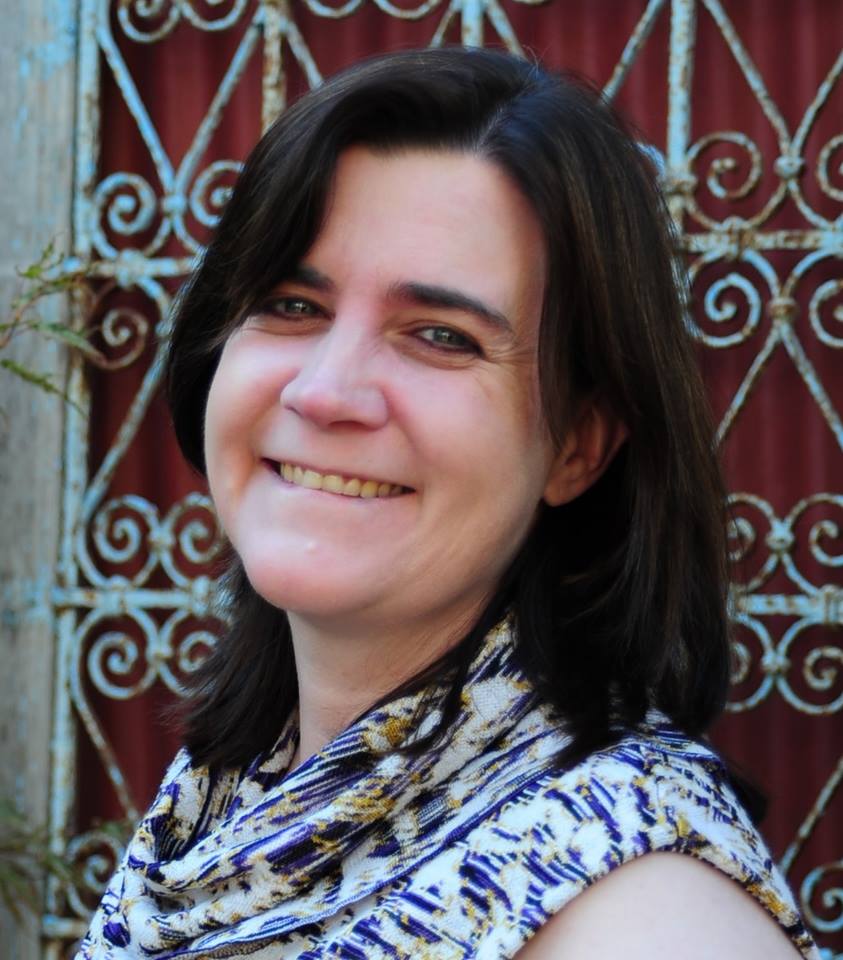
MeissnerHead2-1024x682

Susan Meissner is a multi-published author, speaker and writing workshop leader with a background in community journalism. Her novels include Stars Over Sunset Boulevard and Secrets of a Charmed Life, a Goodreads Best Historical Fiction finalist for 2015. She is also RITA finalist and Christy Award winner. A California native, she attended Point Loma Nazarene University.

Susan is a pastor’s wife and a mother of four young adults. When she's not working on a novel, Susan writes small group curriculum for her San Diego church. She is also a writing workshop volunteer for Words Alive, a San Diego non-profit dedicated to helping at-risk youth foster a love for reading and writing.

Visit Susan at her website: susanmeissner.com on Twitter at @SusanMeissner or at www.facebook.com/susan.meissner.

Read More
Deepen a Reader’s Emotional Connection to Your Story

Angela Ackerman

 We all know people read fiction for entertainment. There’s nothing like getting lost in a new world and living vicariously through characters: slaying monsters, solving murders, saving the family farm...even falling in (or out of) love.  But while this is going on, whether we consciously realize it or not, we also read for another reason: insight. We’re secretly looking for answers to life’s questions.

Why? Because none of us have a roadmap to this world of ours and we sometimes (okay, often) fumble through situations we’re not equipped to deal with. Our emotions can end up knotted and twisted like a basketful of yarn ends that we don’t know how to unravel. Storytelling provides a unique window into how someone else works through the challenges that the universe throws their way.

As authors, we can use the reader’s desire for insight to draw them deeper into the story. This is done by exposing them to a protagonist’s deepest emotions, allowing us to build empathy. But, to achieve this, authors must bring their A-game.

Creating bonds of empathy only happens when the writer knows their character inside and out, and can build a protagonist who feel like flesh and bone. This means digging deep to understand who the protagonist truly is, and giving them realistic human traits, good and bad, as well as needs and desires readers can identify with.

Pulling readers in so they empathize with the point-of-view character is all about creating a sense of “shared experience.” This is where an emotional moment is rendered so well an echo of the protagonist’s emotion is felt by readers.

Here are two techniques that facilitate shared experiences.

Unexpected Emotion

Several years ago I attended an all-day workshop with agent Donald Maass, who is a master of characters and emotion in storytelling. A lesson of his has stuck with me since: use emotional writing to give readers something new to experience. I wrote about it here in depth, but the cliff note version is that Donald encouraged us to take a highly emotional moment and dig within our character for something hidden, reaching past common emotional responses. We were to look for a feeling that was part of this moment, but one that a person typically might not dare voice or show in real life.

For example, take a hero who cared for his mother during an illness, one that slowly ate away at her strength. At the moment of her death, typical feelings would be a huge sense of loss and grief. But what else might be there? What else might he feel that he would never dare to voice to others present in the room?

Relief. And not just relief that his mother’s pain was at an end, but that his own pain was too--that the endless doctor visits, ambulance rides, medications, and sleepless nights listening for (and dreading) her struggling, hitching breaths were finally over.

This type of deep honesty pulls readers in because it is unexpected, but completely understandable (and maybe even brave to write about). After all, it’s not proper to say one is relieved that one’s parent has passed after having to live with the ordeal of illness for so long, but it doesn’t make it less true. Likely shame and guilt would quickly piggyback on the relief;  and echoes of these mixed feeling would wash over the reader as they remember a time when they felt relief even though it wasn’t proper to do so.

This shared moment brings readers in close, and they empathize deeply with the hero’s vulnerability and what he’s going through.

Sensory Description Triggers

Becca and I have created a Setting Thesaurus at One Stop For Writers that has the sights, smells, tastes, sounds and textures for over 220 different locations. We did this because one of the most powerful ways to pull readers into the story is through sensory detail.

Rich and layered, describing the smells or sounds or textures of a location not only can transport readers into the scene more fully, it can also trigger emotional memories, bringing them right back to a time when they experienced the same emotions (or situation) as the character. This creates that shared moment we’re striving to achieve, and results in readers becoming more emotionally involved.

Imagine a character who has just experienced a stillbirth at nearly full-term. She’s sitting alone in a hospital rocking chair, lights dimmed, cradling her bundled baby as she says goodbye. She’s been left alone for this private moment, and through her senses, everything is on mute: the sounds of the hospital around her, the smell of antiseptic, the movement of people striding past in the hall. It is only her and her son, and the silkiness of his hair as she runs her hand over it again and again. Written well, most readers will be brought back to a moment where they too were transfixed by a silken tuft of new hair, possibly their own baby’s. Through this powerful sensory detail that triggers memories and feelings, even a reader who has never experienced this type of loss can imagine what that raw heartbreak might feel like, and a shared moment is created.

When the character’s emotions join with the reader’s own through shared experience, it brings them closer, bonding them together.  Empathy is powerful and, once it grabs hold, it is difficult to break. Choose the right scenario, and dig for that hidden emotion, or look for the sensory trigger that will act as a hardwire connection to your reader’s own memories.

How do you create empathy? Do you use shared experiences? Let me know in the comments!

*  *  *  *  *  *

About Angela

Angela Ackerman


Angela Ackerman is a writing coach, international speaker, and co-author of the bestselling resource, The Emotion Thesaurus: a Writer’s Guide to Character Expression, as well as the bestselling duo, The Positive Trait Thesaurus: a Writer’s Guide to Character Attributes and The Negative Trait Thesaurus: a Writer’s Guide to Character Flaws. A proud indie author, her books are available in five languages, sourced by US universities, and are used by novelists, screenwriters, editors and psychologists around the world.

Angela is also the co-founder of the popular site, Writers Helping Writers, as well as One Stop For Writers, an innovative online library built to help writers elevate their storytelling.

Photo credit: https://www.pinterest.com/pin/564709240755086276/

Read More
The Yearning: Lessons from Gone with the Wind

Kimberly Brock

Before we get to the point, first you have to really understand where my love affair with Gone with the Wind began. It’s going to be hard for you to really grasp this if you can’t recall a day in your life before the VCR. My childhood years were measured by the yearly showing of Gone with the Wind on the local TV channel.

Once a year, I got to see Vivien Leigh flounce across the front yard in that white dress with the little red sash. I got to see her roll her eyes and purse her lips and sass and flirt and stomp her way through three hours of melodrama, doing all those Scarlet things that looked to me like getting away with a lot. And for a girl like me, who aspired to portray Mary holding the baby Jesus in my church’s yearly Christmas musical and never got away with anything, it should have been nearly impossible to like her or identify with her, let alone love her. Yet, I did.

Here’s how much I loved Scarlet: I spent almost every Saturday I can recall playing in my grandmother’s old square-dancing slip, fastened at my waist with a huge safety pin. It was white cotton, with flounces. Really flouncy flounces. Sound familiar? I rolled my eyes and pursed my lips and sassed and flirted with imaginary Ashleys and Rhetts. I stomped all over the farm, staking claim to our land.

And then I grew up and forgot all of this silliness, assigning it to the little box of cute childhood memories I sometimes trot out to make funny, southern-girl small talk with new writer friends who enjoy my twangy accent.

Margaret-Mitchell-House-And-Museum-27675

I’ve been to the Margaret Mitchell House in Atlanta for author events. I’ve wondered at her dinky apartment. I’ve smiled, knowing she was an eccentric, feeling connected or wanting to believe we might have been pals. Peg and me, we’re BFFs. (If really knew her like I do, you’d know that’s what we call her.)

If you pull up her Wikapedia page, it says, “An imaginative writer from a precocious age.” See, there. Proof we’re peas in a pod. Funny, that’s how I thought of Scarlet, too. I wonder if some writer will ever read what I’ve left behind and think the same of me. If you do, trust me. We would have been pals.

After I married, I tried to watch Gone with the Wind with my husband and it ended in one of our first fights. I found myself passionately defending Scarlet and condemning wimpy Melanie and whiny Ashley and all the rest. I was shocked that my dear spouse could not understand my love of the hateful, selfish, lying, conniving main character. And more than that, I was horrified to realize, on all counts in regards to Scarlet’s character – or lack, thereof – he was actually right on the money.

Still, I felt betrayed. It seemed to me that if he could not understand Scarlet or appreciate her plight, he could not understand me! Not that I had pined over my best friend’s husband or married and gotten my sister’s fiancé shot through the head, out on the Decatur Road.

I couldn’t put my finger on my undying devotion to Gone With the Wind. In the end, as usual, Rhett didn’t give a damn and I’ll be honest, I didn’t spend too much time inspecting my feelings once the film ended. I did not divorce my husband and life moved on. Fiddle dee dee.

However, I now realize a thing that should have been clear to me all long. (Yes, tomorrow is another day, but that’s not what I mean.) What I realize is this: It’s not about Scarlet. It was never about Scarlet. Not for me or for any of you, I’d bet. Oh, you think I’m wrong, I know you do. Because there’s that curtain dress in the horse jail! There’s those boys under the tree at the picnic! There’s the moment she finally, finally realizing she loves Rhett and it’s so real and raw and true and horribly doomed.

But it’s not Scarlet, y’all. And it took another Southerner to show me. (Is Southern California technically a Southerner? I’m going to go with that.)

Picture this: I’ve gone to one of my favorite Indie bookstores, Foxtale Book Shoppe, to hear one of my favorite people and writers, Susan Meissner, and she’s got this new novel out that’s set during the filming of – you guessed it – Gone with the Wind.

I sit at the back of the room, because I tend to stick to the back or slide around the wall at these things. And I listen with a smile, as reader after reader giggles and talks about her love of the book and the film. They are so entertained by Susan’s talk, as am I, and her knowledge of the film set. And they especially love telling her everything they know about Margaret Mitchell and all the places you can see and learn about Gone with the Wind around my home state of Georgia.

We might as well be fluttering our fans and eyelashes, we are all so in love with Susan and her story’s subject. And that’s where she got me! It’s where she got all of us, really.

Now, I know you’re waiting for me to veer off into deeper, more treacherous waters where I rattle cages about all the historical relevance of Gone with the Wind in regards to race or the confederacy or any number of embarrassing reminders of the awful truth about our American tragedies. But there was something else going on with Gone with the Wind back then when the whole country went wild for Scarlet’s story, and that’s the thing Susan reminded me of just a few weeks ago.

That’s what I want to talk about today. And honestly, I think it’s what we’ve all been talking about forever. It IS the conversation. It IS the reason we write.

Susan reminded us all of the scene – that iconic scene – where Scarlet’s father leads her to stand beneath the ancient oak’s spreading limbs and they gaze at a sunset over their beloved Tara. The orchestral theme swells. And we all know it is an important moment. We all know that none of it will last long. And our hearts break a little for that loss.

Now, don’t get me wrong. I don’t long for those days of plantations and Mammie and marrying my cousin. No, thanks.

But there’s something like grief that wells up in us when we experience those characters standing there on a precipice. There’s something that keeps us coming back to this story, reading and re-reading it. And because I love Susan and I suddenly felt, like everyone else in that bookstore, that I knew exactly what she meant, I raised my hand.

I found myself sharing a story. I didn’t mention my grandmother’s square dancing slip. I didn’t mention the argument with my husband about an unlikeable character I loved. I talked about dirt. I told the crowd about a memory of walking in a field beside my childhood home after my grandfather’s tractor had turned the soil, and the sudden, overwhelming love for that place, and the terrible knowledge that it was fleeting. I stooped and filled my hands with the red dirt and thought to myself, I couldn’t own the earth under my feet. It was too big, too ancient. When I stood, I’d grown up a little. Even as a young girl, somehow, I understood, that place and time and every thing and person I knew and loved, owned me. And I would lose it all.

I had a good old-fashioned, Southern Belle crying jag right there in the book store while Susan and the other readers looked on, horrified. I’m sure she thinks I forgot to take my meds. And I was honestly mortified.

But truth does that to us, reveals us and reminds us who we are. And that is the genius of Margaret Mitchell’s Gone with the Wind. It is the theme Susan Meissner’s new novel is built upon. It is the wisdom of Scarlet’s father. And it is what moved me to push my nervous hand high above the crowd to share a simple, poignant memory that broke me up and put me back together again in the blink of an eye.

Things change. I will change. How will love last, when nothing else does?

Every story we tell is searching for the answer to this ache inside all human beings since the beginning of us. It is at the yearning at the heart of Gone with the Wind, why we are a generation obsessed with Ancestry.com, even the origin of a terrible fear that is driving violence and uncertainty to a breaking point in so many ways in our country today.

And so I lead you, as Susan led me and Margaret led us all, to that hilltop beneath the sheltering oak. (I married under such an oak at my family home. Today, the tree is gone. So is the farm.) And I remind you of the beauty of what you do as storytellers, of what a gift it is to read the words of the seekers before you, and of the responsibility we have to remind one another with every precious word…It’ll come to you. Make no mistake, this love…

Home can not be lost. Love does not end. Both are safe inside of you.

Do you infuse your writing with life lessons and your yearnings? What are they?

About Kimberly

Kimberly Brock
Kimberly Brock

Kimberly Brock is the award winning author of the #1 Amazon bestseller, THE RIVER WITCH (Bell Bridge Books, 2012). A former actor and special needs educator, Kimberly is the recipient of the Georgia Author of the Year 2013 Award. A literary work reminiscent of celebrated southern author Carson McCullers, THE RIVER WITCH has been chosen by two national book clubs.

Kimberly’s writing has appeared in anthologies, blogs and magazines, including Writer Unboxed and Psychology Today. Kimberly served as the Blog Network Coordinator for She Reads, a national online book club from 2012 to 2014, actively spearheading several women’s literacy efforts. She lectures and leads workshops on the inherent power in telling our stories and is founder of Tinderbox Writer’s Workshop. She is also owner of Kimberly Brock Pilates.

She lives in the foothills of north Atlanta with her husband and three children, where she is at work on her next novel. Visit her website at kimberlybrockbooks.com for more information and to find her blog.

Read More

Subscribe to WITS

Recent Posts

Search

WITS Team

Categories

Archives

Copyright © 2026 Writers In The Storm - All Rights Reserved