

According to a recent New York Times article, users spend an average of fifty minutes on Facebook. Fifty minutes! And though this number includes Instagram and the Facebook Messenger app, you can bet that the lion’s share is still spent on their main platform. Now more than ever it’s really important to turn your Facebook Page into something that isn’t just getting you likes, but making you sales as well.
I don’t know about you but I sort of have a love/hate relationship with Facebook, when it works it works well but when it doesn’t work, well… crickets. The challenge is that Facebook is always changing and as it does, our strategies need to change as well. Whether you have a strong Facebook page, or want to try and up your engagement on an existing page let’s have a look at some of the new and exciting features Facebook offers.
Facebook Livestreaming
In the past few months many of you have probably seen the little icon for the new Facebook Live, which gives you the opportunity to do livestreaming video right onto your Facebook page. To start a livestream, open up the status bar as though you were going to write a new post and click the little head with the circles around it. This will push you into a cue to start your livestreaming. You will then be prompted to name your video feed and choose your audience, meaning you can choose to Livestream to everyone, or just selected followers. Once you do that, you’ll click the button to go Live and voila, you are now broadcasting to your Facebook audience. Also important to note, you can save the video if you decide you want to share it later – so perhaps add it to your YouTube channel, etc.
Tips for using Facebook Livestreaming:
- Ideal video length: 5 to 20 minutes
- Use a short, snappy video title. If you need to add a longer description, do it in the comments.
- After the live event be sure to add a little narrative to the post, a call to action and change up the thumbnail (Facebook let’s you pick 1 of 10 images)
- Tags will help folks discover your video so add any that tie into your topic.
- If you’re interviewing people in the video, you can also tag them under “edit video” (one note, you can’t edit the video yet on mobile, just on your desktop)
Facebook Ads
One of the trickiest things these days seem to be Facebook Ads. Facebook has pulled together an elaborate ads dashboard with seemingly endless choices. But for this piece, let’s have a look at some things you may be doing that could be amplified a bit, as well as some newer features you may not have considered.
Boosted Posts: These types of ads are often too go-to for most of us and while they’re easy to do, they are the single biggest ad-dollar suck of all the ads Facebook offers. Why? Because most people use these wrong. When Facebook invites you to boost a post, it’s generally because the post is already getting a significant amount of engagement but it could do better, at least according to Facebook’s algorithm. The key to successful boosted posts is to limit their exposure. When you boost a post to everyone, sure you’ll get into the stream of some new folks, but statistics show that boosted posts do better when they’re shared with fans only. Boosted posts from your timeline are automatically optimized for page post engagement – but specifically to your fans. So if you boost a post to everyone, you’re spending a lot of money on very little engagement. In fact boosted posts are some of the most expensive ads you can run if you’re focused on ‘everyone’ instead of your fan base. Also, when you do fans only, you can also limit your budget. I’ve run hugely successful boosted post campaigns for as little as $15.
Ads to Drive Newsletter Sign Ups : I see a lot of people doing Facebook Ads geared toward driving people to a Leads Page or some other sales page to sell product. This is often a pretty expensive endeavor actually because CPC is much higher when you’re driving people to a sales page. So what’s a budget-minded author to do? Drive folks to a blog post that invites your readers to sign up for something. The key is, you’d better have a fantastic blog post so let’s look at that first.
Blogs
A blog post that’s designed to drive engagement should be kind of epic and by epic I mean: how to, actionable, or a list post. Also, did you know that people love to share stuff that makes them look smart? So if your post does that, bingo!
If the idea of writing an epic blog post makes your head spin (what on earth would I write about?), think about the top three things that people ask you about your work.
Fiction Writers: Maybe for you fiction authors, it’s about how to get published. I always tell our fiction authors that 83% of Americans want to write a book and, guess what? These folks are probably also your fans or might want to learn more about your books. So while you don’t need to become a go-to publishing guru, sharing your experiences could be helpful.
Non Fiction Writers: For non-fiction authors, this is a no-brainer. You probably even know what your epic blog post might be about, even as you’re reading this article. To save time, if you already have a post that did really well, you can change it up a bit, maybe even update it and relaunch it.
Freebies: So people love free stuff like checklists, cheat sheets, etc. Maybe if you’re the author writing a blog post about becoming a writer, you give folks a list of your resources to get them started! Whatever kind of freebie you’re offering, make it irresistible. You may have to test a few to get a sense of what gets the most bounce. Think of something you would want, something you wouldn’t be able to say no to. But don’t overthink it and spend a lot of time on this type of blog. You don’t need to write an entire book to make it valuable. We have a simple Amazon Optimization checklist that’s literally just a one page list and our readers love it.
Blog Traffic and Delivery: AME uses a system called LeadsPages, which you can get for free or purchase the paid subscription. They have pre-set up templates and it’s easy to get started. The reason you want to use a system like LeadsPages is because if you get a flood of traffic to your blog (and that’s the goal!) you don’t want to be emailing each of these folks the giveaway and then manually adding them to whatever newsletter system you use. And, as I said, it’s a very simple system to use. In fact some pages integrate with MailChimp and other newsletter providers.
Once the page is set up, go back to your blog post and add the link to the bonus content in the middle of the post and again at the end.
Now you’re ready to do your Facebook ad!
Facebook Ad Tips
In general, Facebook ads work better when you don’t work so hard to create them. Using casual language on a Facebook ad tends to pull better than a formal, structured ad. So when you’re running ads, especially if you’re driving them to a blog post, keep it casual, as though you were doing a status update to your page.
Imagery: I don’t recommend using Facebook’s stock images. I would highly encourage you to use something that will really catch the eye. A lot of authors like to use their own image. This is perfectly fine if you’re doing an ad just to your fans, but if you’re doing an ad to drive more newsletter sign ups, you’re pulling in a lot of people who don’t know you. Having your image on there may not have as much pull for folks who don’t know you.
You can also just do text with a color background, I’ve tried that and in some cases it worked brilliantly. As a matter of fact, Yellow seems to be the power color if you’re doing just a color ad with text overlay.
I recommend Canva for ad design. The site lets you choose the exact size of the ad so you won’t wind up having to redesign your ad because of Facebook ad size limitations.
Optimizing Your Facebook Posts
Posts that aren’t related to ads don’t tend to do as well as they once did. But since I don’t like to be forced into the ad funnel, I wanted to do some research and find out if there was a better way to do posts that could drive engagement, without spending money. Here’s what I found:
Pictures: We all know that posts with pictures drive more engagement, but did you know that with the right picture you could boost your engagement by as much as 179%? But the key is finding quality images. So images with stunning views, lovely scenery, smiling faces, you get the idea. If you want some ideas, head on over to Trip Advisor’s page because they’ve really made an art out of using a simple, stunning image and creating a discussion around this. For example a beautiful picture of a waterfall with the simple phrase: “Caption this,” got over 251 likes and 30 shares.
Memes: A lot of folks think that funny memes are great for sharing and they are, but they don’t really help with your engagement. For example I shared a meme that got in excess of 300 shares (yeah, it was pretty darned funny) but it didn’t really boost my engagement overall. So stick with stuff that’s relevant to your market, or tied to your book. Also, make sure that you brand all your images so when that one post goes viral, your website address is on there so people know how to find you.
Posting Time: While this is often subject to your audience demographics, I find that that highest engagement is on a Sunday which tends to increase by 52.9%. The best posting time window seems to be 10-11am EST. I know that’s really for you West Coast and Hawaii people, but if you’re really trying to push engagement, it could be worth getting up early on a Sunday.
Talking points: I mentioned Trip Advisor’s simple “Caption this” on their image but did you also know that questions drive 162% more engagement. And I’ve tested this on both my personal profile and our Fan Page. Even asking something as simple as: “Do you agree?” can help to give engagement a significant boost.
Post length: Three years ago, shorter was better on Facebook, but that’s actually no longer true. Posts with 150-200 characters get on average 238 shares. Wow, right? After Prince died I posted this: “5 Things I Learned This Week,” which was really just about this odd new world we live in where rockers from our youth are dying off. I wrote it, figuring no one would see it or care but it got a lot of likes (I think in excess of 100) and a ton of shares as well.
Facebook is sometimes a monster that you feel you just can’t tame, but I promise you if you spend some time with these tools, you’ll turn your Facebook page from “blah” to “wow!” in no time. Wouldn’t it be nice to grab some of that fifty minute window for your page? Good luck!
What do you think, WITS readers? Any other tips for us?
* * * * * *
About Penny
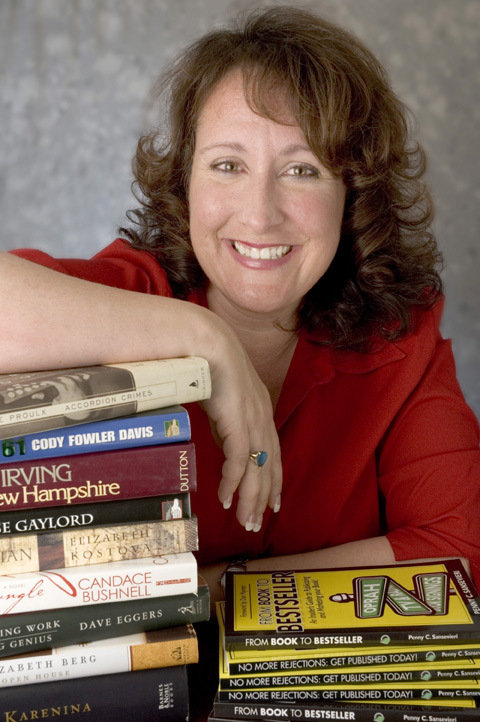
Penny C. Sansevieri, CEO and founder of Author Marketing Experts, Inc., is a best-selling author and internationally recognized book marketing and media relations expert and an Adjunct Professor with NYU. Her company is one of the leaders in the publishing industry and has developed some of the most cutting-edge book marketing campaigns. She is the author of fourteen books, including How to Sell Books by the Truckload. AME is the first marketing and publicity firm to use Internet promotion to its full impact through online promotion and their signature program called: The Virtual Author Tour™
To learn more about Penny’s books or her promotional services, you can visit her web site at http://www.amarketingexpert.com. To subscribe to her free newsletter, send a blank email to: mailto:subscribe@amarketingexpert.com
Copyright @2016 Penny C. Sansevieri
Top photo credit: MariaGodfrida - Pixabay




