Say you're a reader whose friend told you about an author they love, named “Great Author" (insert YOUR name here). So you, the reader, go to Google and you type in “Great Author”. Bam, there’s the authors website, they also have Facebook page, and there are some links to some books. You might click directly on the Amazon link to the book your friend recommended. But it is more likely that you will click on something with the author's name. So you click on the author's website.
First Impressions Matter
Have you ever looked for a product online, clicked on a store website, only to discover it looked amateurish and outdated, so you immediately closed that out and found somewhere else to purchase your item? If you have, why? Because you weren’t sure you would get a good product.
Well, your author website is the same. To instill confidence in the reader it should have a clean, updated look and should be properly branded. (You can read my post on WITS about branding here.)
What’s 'Above the Fold'?
Let’s forget branding for a moment and just look at the basics. We're going to look at the “above the fold” information on the front page. What does that mean?
Above the fold is whatever the visitor sees when the page first loads, without scrolling down. It is your first chance to grab the visitor and potentially turn them into a reader.
It should go without saying that your author name should be somewhere near the top, clearly visible (preferably in the header as the “title” of the website) so the reader knows they have reached the right place.
Every item in the 'above the fold' view of your website should be appealing to look at, informative, and clickable.
What is Clickability?
It’s a word I made up. It refers to how clickable your website is. Clickable means there are plenty of appropriately labeled links or images linked to other places on your website or to external websites. Why does that matter? Well, for one, you can’t have all of the information you need on one page. There has to be other pages, and your readers have to actually press their mouse (click) to get there. Clickability is just how “appealing” something is to make the visitor want to click, in addition to whether or not they CAN click.
Clickable elements in the top your front page can (and should) include:
Clear menus with appropriately labeled pages and individual book pages (as a submenu).
Social Media Links - preferably as icons, not word links.
Search button or field. This encourages a visitor to search for a specific book page, or blog post on your site.
Newsletter subscribe form. Give visitors a way to get more information from you.
An eye catching image. Whether it is book cover images or, my personal suggestion, an image slider with information about different books, or events. Whatever it is, it should click to a correlating page on your website.
Laura Drake was kind enough to let me assess her website in order to demonstrate a great first impression, with good clickability above the fold.
In truth, I wish she’d had more areas for improvement for the purposes of this blog. She got a solid A+ for first impressions. But she did get a B on clickability. Why?
She has an eye catching slider with images that represent the two genres she writes. That is great. The not-so-great is that other than branding, the slider serves no real purpose. It has zero clickability. And it SHOULD HAVE. As you see those images scroll through, your eye is drawn to them and you want to put your mouse over them and click to see what more you can find out. The images should each link directly to the correlating pages on the website, Women’s Fiction, and Romance.
The Bottom Line of Clickability
Clickability sells books. Because clickability means that your website was appealing enough to the reader that they wanted to learn more. They'll click for more information. And if your book pages are also clickable, then they will click your purchase links and then, ultimately, BUY YOUR BOOK. (You can see my anatomy of a book page series on the Author Branding Essentials Website, HERE.)
There are many more elements that make your website’s front page informative, clickable, and ultimately, help you sell books. But that is another blog post for another time. You can follow the Author Branding Essentials Blog to be notified when that, and other informative posts, are available.
More Examples of Above the Fold Clickability
To wrap up, I’ve grabbed screenshots of three of my favorite authors’ websites to show how they each have a great first impression with good clickability above the fold, and they each do it in their own, unique way.
About ABE
Author Branding Essentials is dedicated to offering comprehensive author centric branding and design services at competitive prices. As an Author, your name is your brand. Building your Author Brand is key to success. Many agents encourage authors to begin building that brand long before they are published. At Author Branding Essentials we understand the unique criteria it takes to build an author brand, versus another type of business. We can help you decide on the best options for your author brand and help you implement them.
Thrilled, honored, and all but speechless at the podium beside Sylvia Day, I accepted the once-in-a-lifetime 2013 Romance Writers of America Bookseller of the Year Award as Sylvia placed it into my trembling hands. To achieve this prestigious honor, to even be nominated, was more than the culmination of a progressive and rewarding career with the nation’s largest brick-and-mortar book retailer – a career that included contributing directly to several authors in both Romance and Mystery categories attaining status on the coveted New York Times and USA Today Best Seller Lists Adriana Trigiani, Sabrina Jeffries, David Rosenfelt, Carolyn Brown, and Barbara Longley.
The cherished RWA award represented more than the height of my career, and more than the recognition that I had desired and worked so hard to achieve. Perhaps more importantly than my prior accomplishments, this honor signified the road upon which I was soon to embark: the road that led me out of retail and onto the path that highlights my strengths; a full-service author concierge.
What does an author concierge do?
As much, or as little as you need.
The role and responsibility of a concierge is to represent and proactively support authors with the aim of bringing their work to broader and ultimately more profitable audiences, including publishers, consumers, and booksellers. The authors’ conundrum, on the other hand, is how to select a concierge best qualified as well as genuinely motivated to improve branding, and who has demonstrated quantifiable success in this area. This can be a daunting task!
In a word, your concierge is your champion; your advocate. A Tech and Social Media savvy partner who can steer through the daunting and time intensive jobs that you don't have time/expertise/motivation to handle.
A great concierge not only truly loves books and loves what she does, she has a well-established history of positive and productive relationships with those integral to an author’s career, including agents, editors, and Big 5 publishers.
A great concierge excels at “thinking outside the box” to conceive, organize, advertise, to run innovative and highly interactive promotional events, often on a shoestring budget.
A great concierge structures her services with extremely competitive pricing.
Finally, a great concierge cherishes and does her very best for each and every client, whether they aspire to first-time publication, are newly published, or are best-selling authors.
In your search for a quality concierge, beware of someone who promises you the world. The promises that I make are the ones that I stand by, and the ones to which my long list of well-respected references will attest. These include and are not limited to Terri Brisbin, Carolyn Brown, EJ Copperman, Laura Drake, Ann H. Gabhart, Nancy Herkness, Madeline Hunter, and Sabrina Jeffries.
If you are interested in further exploring my services and references in greater detail, kindly contact me directly via email cathy(at)cathygenna(dot)com or via my website www.cathygenna.com. I would love to have a meaningful conversation with you!
So what do you think, WITS readers? If you were to hire a concierge, what would you hand off? Do you have any questions for Cathy?
* * * * * *
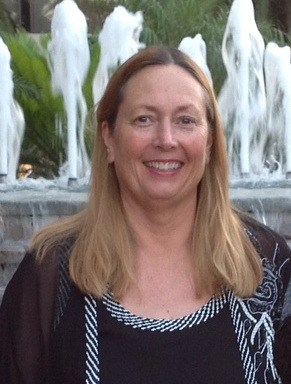
About Cathy
Cathy Genna helps authors make the most of their time, by providing core services that will allow them valuable free time to do what they do best - WRITE! In turn, the author gets an enthusiastic, creative and passionate team player with twelve years’ of knowledge and experience working as a Community Business Development Manager for a leading retailer of books.
Cathy lives in New Jersey, is an avid reader, a hockey fan, a chocolate lover and a long time rabbit advocate and animal rescuer.
Easter is drawing near. Please “Make Your Bunny Chocolate.”
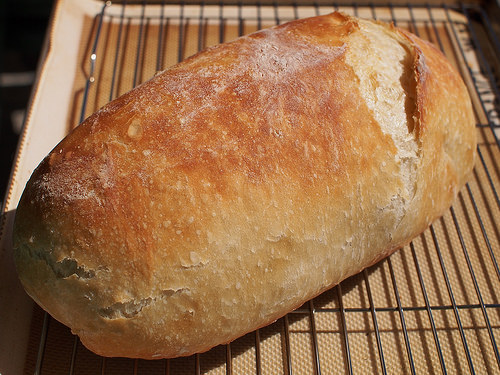
I haven't baked bread for over fifteen years. But I thought about making a loaf of sourdough this week-end. I never had a bread machine, so the idea of spending the better part of a day making a couple of loaves of bread caused my rational brain to engage. What was I thinking?
Bread is not my favorite food group. However, if that bread is homemade and right-out-of-the-oven hot and steaming with aroma, give me butter and a knife and I will make serious inroads into that loaf.
How did my bread fantasy lead to today's topic?
There are many steps to making even a simple loaf of bread, just as there are many steps to writing a novel.
1. Choose a recipe.Choose a genre.
2. Collect the best ingredients.
Build three-dimensional characters. Construct a believable plot with twists and surprises that will keep your reader turning pages. If you plot, then plot. If you're a pantser, think about your story, build a movie in your head.
3. Measure carefully.
Be a wordsmith. Make every word pull its weight. Don't overuse one type of construction or rhetorical device. Don't tell then show. That's called an echo, and it's a sure way to make a reader throw your book across the room.
4. Mix thoroughly.
Space out backstory. Add only what is necessary to understand character motivation or a goal at that point in your story. "Dribble" in character and setting descriptions as appropriate. Don't wax eloquent for a page about the cerulean tones of a fabric. If you must mention several glories about the color, give a couple from each character's point of view, showing how they see the color.
Write. Revise. Write. Revise. This is the muscle work. But this is what makes amazing bread—and a selling novel.
6. Put into a greased bowl, cover and let rise.
After a little time away from your finished book, go back and begin your editing passes for continuity and plot holes. Check for your personal "favorite" over-used words. Run computer checks for problematic words like "there", "just", "up", "down." Don't overdo this, because there are lots of specific words you can check for. Look for the ones you overuse and fix them.
7. Punch down. Knead. Replace in greased bowl, cover and let rise again.
Give the manuscript to your trusted beta reader(s) or critique group. Allow them the time they need to give you a thorough, accurate assessment of your work.
8. Punch down, place in a greased pan. Bake.
Review the feedback from your critiques for your final edits. Consider making several passes, checking first to streamline for snappy, realistic dialogue. Check for emotion on every page. This is what makes your readers connect with your characters. And makes them tell friends about your book. Find the tension in every scene. If there is no tension, why turn the page?
If the idea of multiple passes to edit your completed book makes your eyes cross, take your time going through once, with a checklist of what you're looking for. You probably have a good idea of what your strength as a writer is and what your weaknesses are. Look for those weakness and exploit the opportunity to fix them.
Remember, writing is like learning to play a musical instrument. It takes time in the chair to master the large then the subtle skills. Your second book will not have all the mistakes of your first. You will improve—and find more ways to improve your writing as you develop your craft.
Congratulations! You've finished a book and are ready to get on with the business of selling it. You've joined a very small percentage of people who have persevered to complete a book. You deserve to get that cube of butter and knife and dig in.
Which step causes you problems? What would you like to share or add to the "baking" process?
* * * * * *
About Fae
Fae Rowen discovered the romance genre after years as a science fiction freak. Writing futuristics and medieval paranormals, she jokes that she can live anywhere but the present. As a mathematician, she knows life’s a lot more fun when you get to define your world and its rules.
Punished, oh-no, that’s published as a co-author of a math textbook, she yearns to hear personal stories about finding love from those who read her books, rather than the horrors of calculus lessons gone wrong. She is grateful for good friends who remind her to do the practical things in life like grocery shop, show up at the airport for a flight and pay bills.
A “hard” scientist who avoided writing classes like the plague, she now shares her brain with characters who demand their stories be told. Amazing, gifted critique partners keep her on the straight and narrow. Feedback from readers keeps her fingers on the keyboard.