
Writers in the Storm

A blog about writing

storm moving across a field
Meaning What You Say, and a Bit More

Sonja Yoerg

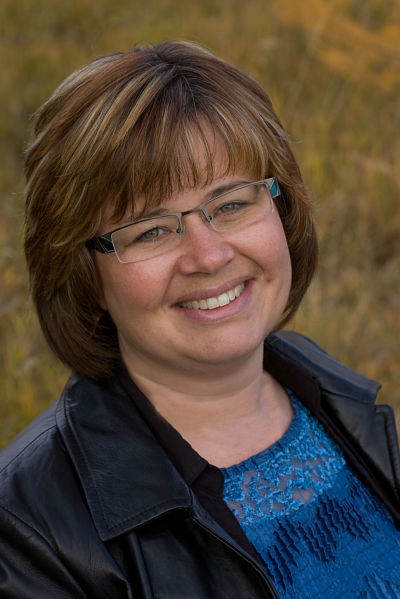
Sonja Yoerg headshot

The act of writing is an exercise in managing symbols. Every word, after all, is attached to a universe of meaning; the bit we formally agree upon is the definition. Everything else a word signifies exists in a web of personal memory, experience and emotion. If I write “moon,” your brain lights up along myriad pathways: full moons, night, mystery, howling, moonlight, tides, half-moons, lunar eclipses, Halloween, moon walks, and sticking your naked butt out a school bus window.

Slipping a telling detail into your story pins it to reality, and that’s a good thing. You want your reader to believe, and there’s nothing better than a specific, unique word or description to do the job. A symbol is the opposite of a telling detail. It spins the reader out wide, into the realm of other words, and older, bigger ideas. Symbols make a story thick with meaning.

Now you want some, huh? Okay, let’s see how you might go about it.

Symbols come in all sizes. How handy. Is the heroine’s dress red or white? Either way, it sends a signal, albeit small, so choose wisely. Larger symbols require more attention. If a single symbol is repeated throughout the book, it’s a motif, as with the numerous references to birds in Jane Eyre. My second novel, Middle of Somewhere, takes place along a hiking trail. Red tent stakes go missing and reappear. They are red. They are pointy. They are supposed to be holding things down. Woven into the plot, they mean more than a piece of gear designed to keep the tent fly taut. In this book, there’s also a symbol so large it refers to the entire story: the trail itself. I don’t indicate it directly (“Oh, life has its ups and downs!”) but rather let the reader figure it out—or not. You can’t completely control reader brain waves, but you can leave them a trail (ha!) of breadcrumbs for them to discover.

Symbolism is like sex: if you’re thinking about how you’re doing it, you’re not doing it right. Saul Bellow said, “Symbolism grows, in its own way, out of the facts.” That’s lucky, because you don’t have to plant the symbols, just recognize them. If you are planting them in the first draft, they will be obvious. Ray Bradbury, one of my favorite authors, put it well: “Good symbolism should be as natural as breathing, and as unobtrusive.” I take note of the symbolism that appears unbidden in the first draft and use the revision stage to deepen it. Or leave it as it is. Which brings me to my next point.

Symbolism is like drinking: if you’re wondering if you’re overdoing it, you’re probably already drunk and are about to fall down and hurt yourself. Less is more. If the symbolism is dead obvious, your story will feel like a cheap trick. When in doubt, leave it out.

Symbols aid the writer as well as the reader. One of my happiest moments as a writer comes from discovering elements in my story that make sense beyond what I had intended. It’s magical, a gift from my story to me. In the book I just finished writing, I found I had associated three generations of women with water: one with a lake, one with a river and a third, loosely, with the ocean. I sprinkled a little more ocean over the third character, and thanked my book for providing the title: Blue for the Water.

If you are open to it, your stories will help you understand them, often whispering through the mystery of symbols. Listen closely.

Do you consciously add symbols to your writing? If so, how do you decide on your symbol and its introduction into the story? Do you notice symbols as a reader?

Middle of Somewhere cover

Sonja Yoerg grew up in Stowe, Vermont, where she financed her college education by waitressing at the Trapp Family Lodge. She earned her Ph.D. in Biological Psychology from the University of California at Berkeley and published a nonfiction book about animal intelligence, Clever as a Fox (Bloomsbury USA, 2001). Her novels, House Broken (January 2015) and Middle of Somewhere (September 2015) are published by Penguin/NAL. Sonja lives with her husband in the Shenandoah Valley of Virginia.

Read More
5 Writing Lessons from Five Foster Kittens

I love how life hands me "lessons" when I most need them. And it's wonderful when those lessons are tied to a wish...

More than a year ago, as I played with my thirteen-year-old Siamese cat, Shogun, I thought, "I'll never have another kitten. Heck, I'll never live with a litter of kittens again." My childhood cat had given me one litter before she was spayed. I smiled at the memory and let my wish go.

Two weeks ago, I received a call from my local animal shelter, asking if I could be a first-time foster for a mother and her FIVE sixteen-day-old kittens. Of course I said yes. Then I freaked out.

I picked my family up the next day. And I've been learning every day since.

Lesson 1: You may think you're going to die, but you won't.

All six kitties were stressed with the move. I was afraid I'd lose one of them. I don't know a person who doesn't have fear going into a new environment, a new situation, with no skill-set.

I'm in the process of the final edit before I send out my YA to two agents, an editor and a publisher. My main character is facing the sudden loss of her father and a forced change in her life. She must depend on trusted friends and her wits, skill, and intuition to navigate each day. Just like my sweet mother cat. 

I'm not an emotion writer. I'm a plot-driven science fiction writer who joined RWA to learn how to write "relationships." So of course, Laura Drake, the queen of emotion in her stories, is always asking me, "Where's the emotion in this scene?" Uh, on Planet Xanadu?

I thought about my brave little mama (she weighs less than six pounds) and how she must feel. I thought about my fears. I tapped into the fear and desolation when my father died. Then I edited.

As writers, we use our own experiences to flavor our stories. The trick is getting the right blend of spices in the dish we serve to our readers. Sometimes we need to expose bits of those dark parts of us we'd rather leave in the back of the frig. Maybe that's what the adage "Write what you know" really means. We all know where we've hidden that stuff.

The Perfect Perch

Lesson 2: If you don't explore, you won't discover cool stuff.

As long as mom is close by, the kittens are brave explorers. But if I go into their room when mom is wandering the other parts of my house, the kittens run to their hidey-hole. It doesn't matter that they've clamored to be held, tried to climb my leg when I'm writing, or let me nip their claws.

When I write that first draft, I pour words onto the page. A new story is untraveled territory with unfolding characters. It's an adventure. It's fun. Actually, any time in your manuscript, especially if something just isn't working, is a wonderful chance to try a fresh technique, build a plot in a new way, or incorporate that brilliant idea from the last workshop you attended!

Enter a trusted critique partner, group, or mentor. I know if I get myself trapped on a ledge or wander off on a dead-end trail, my critique partners will scruff me and put me back where I belong.

If you don't have a cadre of trusted writer friends, join a group and find your support team. An interesting bonus: while you're supporting them, you'll learn in a way you can't get from articles or lectures.

Cream and Black

Lesson 3: Socializing five kittens (and characters) is a lot of work.

Yes, but someone has to do it. (*Huge smile*) Feeding, changing water and litter boxes, shopping for supplies, additional cleaning. It's a more work than I anticipated. but holding, petting, and brushing my charges more than makes up for the not-so-glamorous tasks.

If you knew how much work, how many hours, how much sweat, how many tears you'd shed over your first manuscript and your characters, would you have picked something different to do with your "spare" time? Obviously not.

We're writers. Because we have to write. Getting sixty thousand, or eighty thousand, or a hundred thousand words on the paper is a lot of work. And we haven't even started with time spent editing, re-editing, pitching, querying, or submitting.

We're human. We get tired. We lose faith. But the next time I want to "pick a different hobby" (yes, a previous friend offered that advice) I'm going to remember: Socializing five kittens is a lot of work.

Lesson Four: Sometimes you have to rear up on your hind legs and fight for what you want.

Cream
Cream

The kittens are now old enough to "play fight" each other. Picture two three-quarter pound little bears, uh-kittens-on their hind legs swinging with their front paws, throwing an occasional bite to the neck. And then a third one rams them and they all roll on the floor with tiny yelps.

You wrote it. It's your voice, your vision. You've already incorporated mountains of advice and ideas from your writer friends. Sometimes, though, a contest judge, an agent, an editor, or even a trusted critique partner suggests a change  that choke-chains you. To be fair, you think about it, even try to incorporate it. But the story, the characters, the pacing go off. You think and try again, with no success. You begin to doubt yourself.

This is the time my husband calls, "Fish or cut bait." Sometimes, you have to stand up for your work, even if it means passing on an agent or a contract. After all, you are the one responsible for your writing and your career. If you sell something that is not your voice, not your passion, will you want to follow up with more of the same?

Mom takes a break

Lesson Five: Purr.

Enjoy the choices you've made. Revel in your words. Live your own best story. And purr. When you finish that difficult scene, when you send off Query #415, when you capture that new idea. Just purr. You might be surprised how good it feels to let yourself enjoy each and every accomplishment, no matter how small. You're worth it. Purr.


Has life supplied you with writing lessons lately? Share your insights, tips, and purrs with us!

*  *  *  *  *  *

ABOUT FAE

Fae Rowen

Fae Rowen discovered the romance genre after years as a science fiction freak.  Writing futuristics and medieval paranormals, she jokes  that she can live anywhere but the present.  As a mathematician, she knows life’s a lot more fun when you get to define your world and its rules.

Punished, oh-no, that’s published as a co-author of a math textbook, she yearns to hear personal stories about finding love from those who read her books, rather than the horrors of calculus lessons gone wrong.  She is grateful for good friends who remind her to do the practical things in life like grocery shop, show up at the airport for a flight and pay bills.

A “hard” scientist who avoided writing classes like the plague, she now shares her brain with characters who demand their stories be told.  Amazing, gifted critique partners keep her on the straight and narrow. Feedback from readers keeps her fingers on the keyboard.

When she’s not hanging out at Writers in the Storm, you can visit Fae at http://faerowen.com  or www.facebook.com/fae.rowen.


Read More
Writing Doubt

Barbara Claypole White

I’ve always been comfortable in my own skin, and yet I’m a hot mess of insecurity about everything I write, including this blog post. Why? Because it matters to me. Writing is my passion, which makes it a soft target for that inner voice of worry. Doubt has been my constant companion through four manuscripts—one unpublished—and is now cutting its teeth on number five.

Earlier this month I came back from vacation rested, ready to detox from rum cocktails, and desperate to jump into my second draft. I hadn’t finished shaking sand out of the suitcases or putting away deflated pool floats before my work-in-progress was open on my laptop.

I steamed through a serious edit of the first fifty pages, which I’d already polished multiple times for my contract proposal, and then slowed to a turtle’s pace. The low point came when I wasted ten hours editing five pages…before I realized that I had the wrong POV.  You can figure out what happened next. Yup, anxiety pounced: I was never going to make my deadline; I’d have to return the advance; the manuscript was worse than crap; blah, blah, blah. To up the ante, I added a few personal catastrophes related to aging parents.

In the language of OCD, an anxiety disorder known as the doubting disease, this is called awfulizing. Your mind latches on to the worse case scenario and refuses to budge. When I reached page 125, I could barely hear anything beyond the ticking bomb of my deadline. Nevertheless, I turned up for work each day, even hauling my laptop to my OBGYN appointment. In the exam room—typing away in one of those natty, front-opening gowns—

something clicked: I wasn’t listening to doubt anymore. I was listening to my characters.

Here are some of the positive thoughts that helped me reach that moment:

  • Doubt is omnipotent for writers. I’m sure even Stephen King occasionally believes he produces crap. (Right?) Acknowledge the doubt; accept it. Acceptance doesn’t make you a quitter. It gives you power. Think of it as waving to a talkative houseguest and saying, “I can’t chat right now but feel free to forage for breakfast. We’ll catch up later. ‘Bye!”
  • Always keep writing. Writing through the bad days makes you a better writer. Others have said it before: writing isn’t for wimps. Lick your wounds until they heal, but always limp on.
  • Bad writing days end, and every tomorrow brings a fresh start. Corny, but true.
  • Anxiety isn’t logical, and logic is your best counter-attack. My family reminds me constantly, “You say this every time.” That’s the logic I grasp: writing isn’t easy, but I’ve completed four manuscripts. I can do it a fifth time.
  • One rejection, one bad review, one weak chapter can eclipse everything, but it doesn’t have to tarnish your writing for all eternity. This time last year, I returned from vacation to discover that my contract for THE PERFECT SON had been cancelled. My amazing agent landed me another deal almost immediately and foresaw great things with my new publisher, Lake Union. I tried to believe her, I really did. But I’d been dumped, and my inner voice whispered constantly that the manuscript was to blame. When THE PERFECT SON was chosen for Amazon’s Kindle First Program, I told her it would be their first dud. I’m happy to report that my doubting Thomas was wrong, and that second pub deal has turned into my golden egg.
    DSC02479
  • KBO, keep buggering on. This is my writing mantra, and I stole it from Sir Winston Churchill, who defeated the Nazis and won the Nobel Prize while juggling a learning disorder with undiagnosed mental illness. Go, Sir Winston!
  • The best way to reduce anxiety? Laugh. Repeat keep buggering on Laughing yet?
  • You can’t please every reader—including that voice in your head—so don’t try. Make peace with the realization that you are not, and never will be, everyone’s cup of Earl Grey. Reading is subjective. The end.
  • No one else can tell your story; no one else has your voice. You’re unique, baby! I write about mental illness and strangely functional dysfunctional families. Oh, and I use the f bomb. Combine those factors and I’m way outside many people’s comfort zones, but I’m writing what I want to write the way I want to write it.
  • When the crap of life pulverizes your writing focus, fold whatever crisis derailed you back into your story. Steal mercilessly from the potholes of your life. The great Lydia Netzer reminded me of this a few days ago. After an emotionally draining four-day visit with my 99-year-old father-in-law—around page 125—everything I wrote fell off the page, flat and boring. But I had all these great anecdotes about old people behaving badly in a retirement home. “Weave them into your manuscript!” Lydia said. I did, and I started having fun again.
White-ThePerfectSon-21053-CV-FT-v4jpg

My favorite weapon against doubt is a technique used to combat OCD. It’s called boss it back. This can be as simple as saying, “Go to hell,” or “Been there, done that, got the T-shirt. Tell me something new.” Boss back that worry and then write over the doubt.

Do you have a strategy to boss back the worry?    Please share with us!


barbara-1
English born and educated, Barbara Claypole White lives in the North Carolina forest with her family. Inspired by her poet/musician son’s courageous battles against obsessive-compulsive disorder (OCD), Barbara writes hopeful family drama with a healthy dose of mental illness. Her debut novel, The Unfinished Garden, won the 2013 Golden Quill Contest for Best First Book, and The In-Between Hour was chosen by SIBA (the Southern Independent Booksellers) as a Winter 2014 Okra Pick. Her third novel, The Perfect Son, was a Kindle First Pick for June 2015.
For more information, or to connect with Barbara, please visit barbaraclaypolewhite.com.


Read More

Subscribe to WITS

Recent Posts

Search

WITS Team

Categories

Archives

Copyright © 2026 Writers In The Storm - All Rights Reserved


