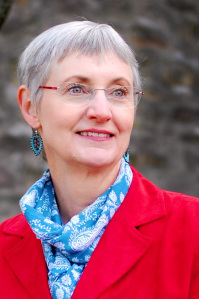
David Teague and Marisa de los Santos
Before we partnered to co-author “Saving Lucas Biggs” and the forthcoming “Connect The Stars,” we worked in far-flung parts of the literary universe. Marisa began as a poet, with the volume “From the Bones Out,” and eventually moved into literary fiction with such novels as “Love Walked In” and “The Precious One.” David initially attempted adult novels, found publishing success only after migrating to picture books, and then continued roaming until he found himself working with Marisa in the realm of middle-grade fiction.
Our writer friends sometimes ask if all this genre-crossing ever got difficult or confusing, which is an excellent question, because in the literary world, the concept of niche looms large in the eyes of agents, publishers, reviewers, and readers, and there’s a reason bookstores have all those sections. So it’s important to know where your book fits.
As it turns out though, in looking back at our writing process, we cannot remember ever saying the words “middle-grade” to each other while we were composing, and we never consciously asked “Is this vocabulary/sentence structure/point of view/narrative voice/plot development too difficult/too simple for our genre?” These questions didn’t come up at our initial lunch meeting, during which we traded stories we wanted to tell until we found two we could weave together, they didn’t come up when each of us created the narrator who would relate our half of the plot, and they didn’t come up when we imagined the conflicts our characters would face or the language they would use. When we wrote our middle-grades books, all we had to go on was the sound of our narrator’s voices: a thirteen-year-old boy named Josh and a thirteen-year-old girl named Margaret.
And so neither of us, as we wrote, worried about avoiding overly complex vocabulary, excessively complicated moral questions, or even disproportionate violence on a scene-by-scene, sentence-by-sentence, or word-by-word basis. We found it more helpful simply to listen to our thirteen-year-olds talk and to write down what they said.
This strategy enabled us to do a few things, we think.
One, our approach allowed us to use a tool most writers are innately familiar with, point-of-view, to negotiate terrain that is somewhat more unfamiliar: commercial publishing genres. In essence, we solved the problem of figuring out what it’s appropriate to say to sophisticated pre-adolescents by creating a couple and then letting them talk.
Two, our approach enabled us to capture material in our genre that stretched our writing abilities, and perhaps stretched the genre a bit, too. Bad things happen to our narrators. Margaret’s father is sentenced to death by a crooked judge for a crime he didn’t commit. Josh’s community is attacked by machine-gunners during a miner’s strike. The task of figuring out how to write these situations one appropriate word, one suitable impression, one acceptable reaction at a time would have been beyond us. But the fact is, some thirteen-year-olds do face huge injustices and awful violence, and they survive, and often thrive. So once we were able to place these challenges within the perspectives of such children, we were able to integrate them into the plot of our middle-grade book.
Three, our point-of-view-driven approach enabled us to relax. There is enough to fret about while writing fiction without also having to agonize over whether or not “equilibrium” is an appropriate vocabulary word for a thirteen-year-old. (Hint: it is. Read chapter three of “Saving Lucas Biggs” to find out why).
These observations might not be totally helpful for writers whose characters are vastly different in age or experience from their audiences. In other words, it might be more trouble than it’s worth to spend your time trying to imagine how to write a picture-book biography of Emily Dickinson in the voice of a six-year-old. But what we’ve found is this: it’s not hard to remember what it was like to be six, or thirteen, or nineteen, and rather than to consciously parse words, sentences, and scenes to decide whether they fit in the genre at hand, it’s more organic, natural, and enjoyable to inhabit the story and let the “rules” take care of themselves.
All of which raises a question we’re curious about. By focusing on the narrators of our stories, we were able to devote more thought to storytelling than to genre constraints, but doing so also directed our attention away from the question of audience more than a bit. How do other writers feel about this trade-off?

About David and Marisa
Marisa de los Santos has published three New York Times bestselling novels for adults, Love Walked In, Belong to Me, and Falling Together. Her fourth book, The Precious One, comes out in March. David Teague is the author of the picture book Franklin’s Big Dreams and the forthcoming The Red Hat. The middle-grades novel Saving Lucas Biggs is their first joint venture, and their second collaboration, Connect the Stars, will appear in September 2015. Married for over twenty years, Marisa and David live with their two children, Charles and Annabel, in Wilmington, Delaware.
You can find them online at: https://www.facebook.com/dteagueauthor and https://www.facebook.com/marisa.delossantos.writer