Writers in the Storm

A blog about writing

storm moving across a field
The Art of Collaboration

David Teague and Marisa de los Santos

Note from Orly: Last September, I was at a local SCBWI conference. The keynote speaker was David Teague. David was discussing his new middle-grade release Saving Lucas Biggs, co-written with Marisa de los Santos. Marisa was at another writing event that day but had taped some remarks to accompany David’s address. It was fascinating! Not only did you have two authors with different approaches coming together on a project, but they were husband and wife. Can you smell the potential conflicts? So when the WITS gals decided January would be our process month, I had to get David and Marisa to contribute.

Here’s what they had to say:

LucasBiggs_jkt_des1

In writing a novel together, we became superb outliners, if we do say so ourselves. Both our books—Saving Lucas Biggs and the forthcoming Connect The Stars—are told by two narrators, in each case a 13-year-old girl and a 13-year-old boy. The girls, Margaret O’Malley and Audrey Alcott, are voiced by Marisa. The boys, Josh Garrett and Aaron Archer, are voiced by David. In each book, the characters narrate their own chapters, and take turns telling the stories as the plots unfold. It’s also how we wrote the books: one chapter at a time, each handing the manuscript off to the other at chapter’s end.

So we both had our own “territory.” There was rarely if ever a case where we both worked on the same scene or the same sentence, because each of us had our own set of story and character tasks to fulfill, and our own space in which to fulfill them.

Also, we had the added plot dimension of time travel to contend with in Saving Lucas Biggs and a mystery to unravel in Connect the Stars.

Each of us had to know where we were in the story at all times, for both our sakes.

So David went from being a somewhat unfocused plotter (a scattershot approach involving post-its on a whiteboard, notecards, electronic notecards, notebooks from Walgreens full of “inspirations,” etc.) to a disciplined one. And Marisa went from being an avowed pantser to a devoted plotter, even now, outside our collaborations, in her solo work.

The collaboration couldn’t have worked any other way. It’s one thing to paint yourself into a plot corner and have to retrace your steps. It’s another thing to paint your writing partner into a corner—she can’t retrace your steps, because she wasn’t there when you took them. So we needed to be able to start one another in the proper place once a week, when the chapter hand-offs occurred, because we also wrote these books fast—proposal to galley in under a year each.

What we did was start by writing a twenty-page treatment for each book, devoting about five hundred words to each chapter. We tried to account for every single plot point in the storyline. We wrote complete sentences, complete paragraphs, complete actions. We tried to be as disciplined as possible about making the outline comprehensive and readable as a stand-alone document—no shortcuts or placeholders re: plot events.

Obviously, here and there, one or the other of us strayed a bit in the execution of the outline, because in telling a story, you have to, but spending a month of brainstorming and trying to anticipate every single plot complication paid off in the end: we wrote more efficiently once we actually started composing.

And we doubt if any of the aforementioned is particularly surprising—mostly it seems like common sense. Writing solo is a disorderly process. Writing with a partner tends toward the chaotic. Introducing into it every command and control structure known to humankind only makes sense.

But here are the things that really opened our eyes in all this:

As fiction writers know, it’s not enough to keep track of plot development. Character has to develop systematically, too. So not only did each of us need to know what our own narrator was thinking, looking at, capable of, incapable of, ready to say or to accomplish, or not ready to say or to accomplish at any given point in the story, we also needed to know the same things about our partner’s narrator.

And so we had to learn to speak in our partner’s voice. We needed to be able to enunciate the words of our partner’s character convincingly in our own narrator’s telling. This description is getting complicated. Much like the process itself.

Each of us learned to see through the eyes of our counterpart’s narrator, and act as he or she would act, and speak as her or she would speak.

We became ventriloquists.

It was great—in some ways, more eye-opening than any writing experience either of us has had to date.

And it all came from the outline—once we realized that we not only needed to know what would happen at every turn, but also how our characters would accomplish every turn, and perhaps more than anything, how each would describe it all.

Collaborating also ratcheted up discipline levels. Knowing that one’s esteemed writing partner will not only be reading a chapter immediately upon its completion, but also depending on its quality to go ahead with his or her own work kept us both honest.

Even more honest than we already were.

And lest it be lost in all this, the process of writing with an astonishingly talented partner was spectacularly fun.

Your turn, WITS readers—anyone have experience collaborating on a project? Did you have to change as a writer?

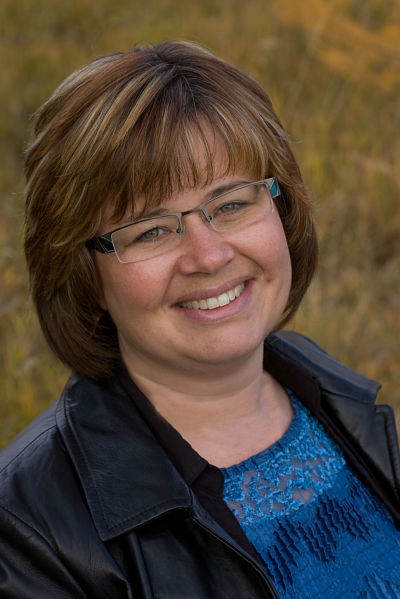
santoteague author photo color

About David and Marisa
Marisa de los Santos has published three New York Times bestselling novels for adults, Love Walked In, Belong to Me, and Falling Together. Her fourth book, The Precious One, comes out in March. David Teague is the author of the picture book Franklin’s Big Dreams and the forthcoming The Red Hat. The middle-grades novel  Saving Lucas Biggs is their first joint venture, and their second collaboration, Connect the Stars, will appear in September 2015.  Married for over twenty years, Marisa and David live with their two children, Charles and Annabel, in Wilmington, Delaware.

You can find them online at: https://www.facebook.com/dteagueauthor and https://www.facebook.com/marisa.delossantos.writer

Read More
Research trips: No passport required

Sierra Godfrey

Remember when you booked a flight to Marseille, France for research purposes? You toured Fort Saint-Jean, strolled around the Vieux Port, and lunched on bouillabaisse at a charming little café in Old Le Panier? Or how about the way the fishing boats sounded when they chug-chug-chugged into the harbor and the fishermen poured their catches into light-blue tables for people to come and buy right off the boat? Remember how you stepped back, wary of the fish heads and live eels slithering around?

Yeah, neither do I.

I haven’t been to Marseille, although I’d love to go—I hear their football team is quite good.

But just because I haven’t been is no reason not to send my characters there.

I don’t know how writers managed research before the Internet. Well, they probably went to places like Marseille. Experiencing a place and then writing about it is preferred, but if you’re like me and must save for several years to move an inch, then you’re glad we have the Internet. And luckily, there are several tools that make wading through information easier. Here are a few of my favorites:

Google Maps

Okay, you’re thinking, duh. Who doesn’t know about Google Maps? But did you know that you can create custom maps and save them to Google Drive? I love this feature. I wanted to track a character’s movement from Italy to France. Google Maps allows you to create custom pins. This was especially helpful in visualizing my character’s movement--so that I could see whether it made sense for her to travel from Rome to Marseille, and where she might stop along the way.

And nothing beats zooming in to the street view. I needed to be outside the Chanel shop in Paris (of course I did) and while that little Google car with its rotating camera hadn’t yet gone down the Rue Royale, they do have panoramic pictures from the street that I used, taken some other way (I don’t question The Google). I needed my character to come out of the shop after purchasing some gorgeous little ballet flats and have a look around the street where she may or may not have seen someone watching her from across the street. I assumed she would blithely look up and see him staring at her, but according to Google Maps, the Rue Royale is a busy street and there’s a ton of delivery vans, cars, and cyclists going by at any moment. So nobody was going to be staring at her without visual interruption. Good to know if you’ve never walked down the Rue Royale.

chanelshop

Pinterest

You probably already know about Pinterest, or maybe you’re wary of it and not sure what use it could be beyond repinning tasty-looking, professionally-shot food that you would never in a million years be able to replicate (I tried the cookie-in-a-bowl once and it looked like a sewer explosion).

Pinterest is simply a digital bulletin board, but it’s a bang up tool for people who are visual thinkers. For writers, pinning pictures of locations and people who look like their characters is priceless. Not just places, either, but fragments: an old barn. A shady strip of beach. A forest stream. Anything that evokes the feeling of the scene you want to write.

One of the best things about Pinterest is that it allows you to create “secret” boards, which means only you or people you invite to it can see it. In the manuscript I’m working on, I have a particular famous male in mind for the main love interest, and I need pictures of him in order to describe his face. But I don’t want people thinking I’m all fan-girl about him. Secret board! Or maybe the guy (or girl) isn’t a hot celebrity but someone in a different field. Maybe someone you know. Maybe someone you work with. Secret board!

Pinterest also has a robust word-search function, so that if you’re looking to see what the fishing boats look like when they come into the harbor in Marseille (the harbor that you learned about on Google Maps), then all you need to do is type in “fishing boats in Marseille,” et voila.

Marseillepinterest

Blogs

We don’t always think to look for insider blogs and they’re not always easy to find. They’re out there—personal travel blogs, ex-pat blogs, foodie blogs—and all offer personal looks into a place. I always think that travel blogs with personal experiences of a place (with photos!) is much better than an organized travel site. But know your location. I figured that Marseille probably gets a large share of UK tourists on account of its proximity. Therefore, UK media sites like The Guardian are likely to have features on Marseille—and they sure do. (http://www.theguardian.com/travel/2013/aug/20/top-10-restaurants-marseille-france)

When I was researching Stockholm for another story, I found the blog of an expat American who had married a Swedish man and blogged about her experiences learning about the culture—invaluable for an American perspective.

Travel books and sites

I’m including this as a caution. I find travel books to be hit or miss; a good way to tell whether they give a flavor for a location is to read about someplace you’ve been or live and see if it’s right. And you have to know what you’re getting. For example, Rick Steves guides are going to be geared toward budget experiences. For a city like Marseille, you often find travel info buried in larger tomes like a general France one, or Provence, so they may not be as broad or deep as you need. The best travel books I’ve found is the Wallpaper City Guide series published by Phaidon. They gives an obsessive level of information—that’s what we want—and they are focused on a full cultural experience. My copy of guide to Marseille is fantastic. They have an impressive library of these guides for major cities that aren’t always concentrated on, like Osaka and Sevilla, Spain. (http://www.phaidon.com/store/travel) I highly recommend them.

What about you? What tools do you use for research? Do you read books, search the web, or travel to places? I’d love to hear about your methods!

About Sierra

Sierra-Godfrey-180x180

Sierra Godfrey writes fiction with international settings and always a mention of football (soccer) or two. She is a member of the Women’s Fiction Writers Association and a quarterly contributor to the Writers in the Storm. Her non-fiction essays have been featured on Maria Shriver’s Shriver Report and Architects of Change website, and in the anthology, Nothing But The Truth So Help Me God: 73 Women on Life’s Transitions (Nothing But the Truth Press, 2014). She writes weekly for Football.com and other blogs, and is also a freelance graphic designer. She lives in the foggy wastelands of the San Francisco Bay Area with her family.

Come visit her at www.sierragodfrey.com or talk with her on Twitter @sierragodfrey.

Read More
Permission to Quit: Granted

Kathryn Craft

Turning Whine into Gold

When do we writers whine?

We whine when we feel put-upon by others, even when the obligations demanding too much of us are those of our own choosing.

We whine when our story will not behave; it demands craft and life experience we know nothing about. We feel unequal to the work of our own creation.

We whine when we don’t have enough time. So we lengthen our workdays, relying upon wine to induce sleep and, a few hours later, caffeine to shock us awake.

We whine when those we presumably love won’t stay out of our way. We whine when they fail to read our minds: they should fend for themselves for dinner and no you can’t explain why the pantry hasn’t replenished itself. Who needs nutrition anyway; you’ve been subsisting for weeks on trail mix from your bottom desk drawer.

We whine when constant sitting has removed us so far from our physical selves that the joy of human movement is but a memory and the only sensations of which we are aware are pinched nerves and aching backs.

We whine when we’ve sacrificed income to write and now we’re (again) skidding toward the mortgage payment with little in the bank.

We whine when we must market to our “target reader” and yet again when not every blessed soul on Goodreads appreciates our creative genius.

We whine when we have to write a synopsis and opening pages for a book we haven’t yet written, even though selling on proposal is an honor earned and so much more efficient than writing the whole novel first, and will help us complete the novel within the tight deadline that we’ll also whine about. We whine during final revision, when our brains are bruised and bleeding from eeking out five whole words (that we’ve added, then deleted, then added, then deleted).

We whine when we lose touch with the lives that once inspired us to write.

The writing life is tough. Its demands can be difficult for the sensitive creative soul to arise to again and again.

But that’s so hard to remember when we’re dug in deep and our inner well runs dry. What then is there to do but whine, and hope that a white knight will arrive to solve the problems you’ve been ignoring?

There is another way. The solution I’m about to share works for me 100% of the time. It’s super easy, and way shorter than the space it took me to present the problem.

FullSizeRender

Quit.

I don’t mean close out of your current document and start writing something new.

I mean give yourself permission to walk away permanently from the writing life. It is so darned freeing.

In whiner’s lingo, this is the big fat “You can’t make me.” You can’t make me (walk the dog, eat a square meal, go to the gym, finish this manuscript, give that library talk, revise this unwilling paragraph, write another book ever).

Quit. Just the word is so decisive, with its harsh consonants and slicing sound. It sends a clear message: I have taken action!

And done yourself a huge favor. Why become enslaved to a task that is so hard, so demanding, and that offers such uncertain rewards if constant misery is the result? Your whine was a cry from your soul: go pursue something that makes you happier.

If you’re anything like me, though, allowing myself to quit reminds me of a simple truth: this writing path was a choice. It turns out no one is making me do it!

Quitting allows me to shove away the load of obligation and commitment crushing my chest. Sweet air refills my lungs! My creative well refills! Love—a rush of pure, glorious love!—rushes back into my constricted heart.

I reconnect to the most fundamental emotion, the one every single writer needs to see her through: desire. It sparks again and soon its flames ravish me. I can’t possibly quit! I choose writing, again and again—and find the reserves needed to complete the dreaded task, fix a healthy dinner, and tweet about it all at the same time.

And those very challenges that yesterday felt thrust upon me? Now I say, Bring them on! These are the challenges I choose, that I relish, that promise a lifetime of inner riches. With renewed vigor I vow to find new ways to guard my physical, mental, and emotional health.

All because I allowed myself to walk away. When I quit, the whining stops and I fall in love again.

Do you need to reinvigorate your writing life? Permission to quit: granted.

About Kathryn

10685420_966056250089360_8232949837407332697_n

Kathryn Craft is the author of two novels from Sourcebooks: The Art of Falling, and The Far End of Happy, out May 5.

Her work as a developmental editor at Writing-Partner.com, specializing in storytelling structure and writing craft, follows a nineteen-year career as a dance critic. Long a leader in the southeastern Pennsylvania writing scene, she hosts lakeside writing retreats for women in northern New York State, leads workshops, and speaks often about writing.

Kathryn lives with her husband in Bucks County, PA.

Website: http://www.kathryncraft.com/

Read More

Subscribe to WITS

Recent Posts

Search

WITS Team

Categories

Archives

Copyright © 2026 Writers In The Storm - All Rights Reserved