Writers in the Storm

A blog about writing

storm moving across a field
Sometimes, Two Rights… Make a Wrong

Susan Spann

Exercise caution when reading the “Grant of Rights” in your publishing deal. The “grant of rights” designates exactly which rights the author is licensing (or “granting”) to the publisher, and in many cases it seems straightforward, but dangers and pitfalls often lurk in this part of the publishing contract.

Contract language varies widely from publisher to publisher, and even from deal to deal, but let’s take a look at some of the most common traps and pitfalls to beware in a grant of rights:

Pitfall #1: Grants of rights split across multiple paragraphs.

This isn’t a “trap” as much as a warning. Most publishing contracts contain a primary grant of publishing rights in the paragraph labeled “grant of rights” and then a grant of “secondary rights” in later paragraphs. Authors who aren’t paying close attention (or who don’t read every paragraph of the contract carefully) might miss the later grants, and not realize just how many rights the publisher is requesting.

Note: this isn’t usually an attempt to “pull a fast one” on the author. Legitimate publishers’ contracts are open about the places where rights are being granted. In most cases, use of different paragraphs to transfer different types of rights is merely a function of the way attorneys write contracts.

Solution: Read the contract carefully. If you’re having trouble keeping track of the rights, make a two-column list with “publisher” on top of one column and “author” (or “me”) in the other. Every time a right is mentioned, list it in the appropriate column. When you’re finished reading, you’ll be able to see exactly which rights you’re granting and on what terms.

Pitfall #2: Copyright grabs.

This occurs when the contract contains language stating the publisher will register copyright “in Publisher’s name” or otherwise states that copyright in the work will belong to the publisher. Legitimate publishing contracts do not contain an assignment of copyright. They contain “licenses” or “grants of permission” for publishers to make use of certain rights, but copyright always remains with the author alone.

Note: The publisher typically does own the copyright on the cover art and other art or graphics supplied by the publisher. That’s not the same as copyright in the book itself.

Solution: Never sign a contract that requires you to assign your copyright to the publisher. Make sure all contracts contain a clear statement that copyright in the work belongs to the author alone.

Pitfall #3: The contract takes more rights than the publisher needs.

Publishers need the rights to publish your work in as many formats as the publisher actually intends to publish. If the contract is for print and ebook, the publisher needs both print and ebook rights. Publishers usually ask for additional (subsidiary) rights as well, and it falls to the author to evaluate and decide which rights to grant and which to withhold.

As a general rule, authors should beware a deal where the publisher insists on film, TV, apps/gaming, and merchandising rights. These rights typically spring from the author’s work – not that of the publisher – and represent a windfall to the publisher. Most of the time, authors prefer to keep these rights for themselves, and many (if not most) legitimate publishers have no problem allowing authors to keep them.

Foreign sales and translation rights are a trickier issue, because many publishers have a foreign rights department that handles the sale of foreign and translation rights. The key is remembering that the publishing deal is a business transaction. Evaluate the offer and make the decision with your business mind—not your heart.

Note: Many times, publishers will agree to reversion of certain subsidiary rights and rights to publish in certain formats if the rights are not licensed or sold within a certain, specified time. That may be a good “middle ground” for rights the author would like to keep but which the publisher insists on making part of the initial deal.

Solution: Creative negotiation, willingness to compromise, and ultimately the willingness to walk away from a deal are the keys to success with broader rights requests. Evaluate the deal and decide what you are willing to offer (meaning, you, as opposed to what your mom/friend/cousin/person-at-the-market thinks you should do). Sometimes we have to compromise to make a deal happen—but never forget that a bad deal is worse than no publishing contract at all.

This post doesn’t cover all of the issues surrounding grants of rights, but it does hit the high points of some very important contract pitfalls.

*  *  *  *  *  *

And since we’re on the topic: what are your biggest rights-related concerns? I'll be answering your questions in the comments.

About Susan

SusanSpann_WITS

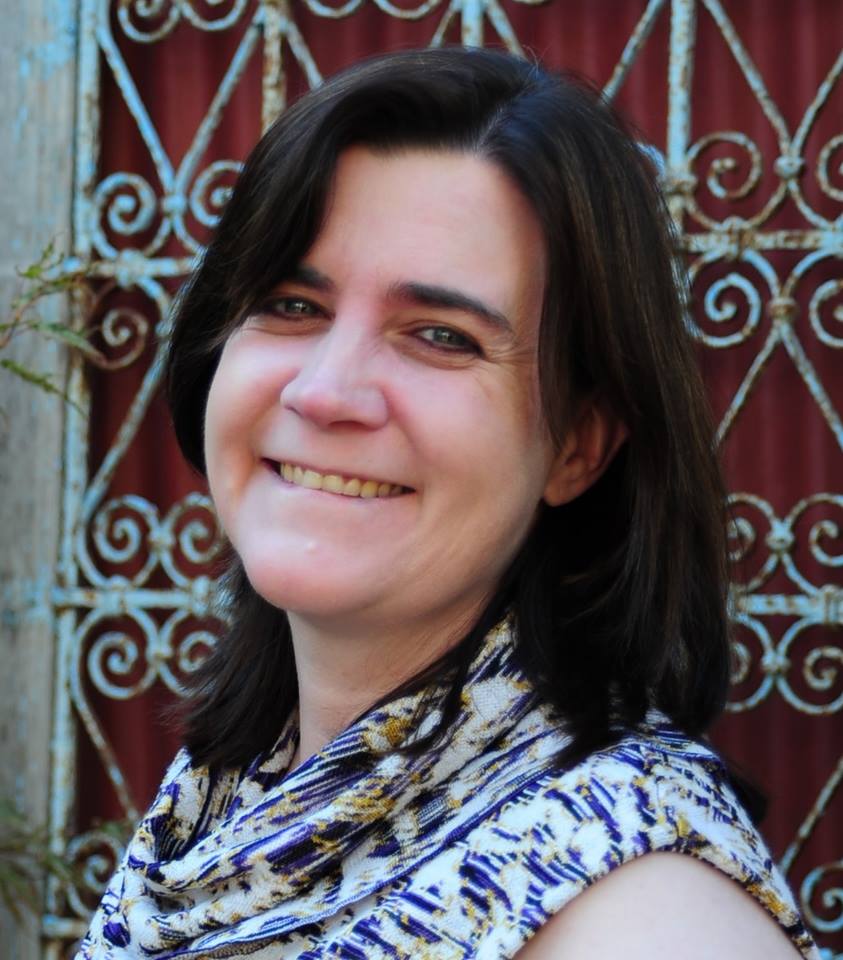
Susan Spann writes the Shinobi Mysteries, featuring ninja detective Hiro Hattori and his Portuguese Jesuit sidekick, Father Mateo. Her debut novel, CLAWS OF THE CAT (Minotaur Books, 2013), was a Library Journal Mystery Debut of the Month. The second Shinobi Mystery, BLADE OF THE SAMURAI, released on July 15, 2014.

Susan is also a transactional attorney whose practice focuses on publishing law and business. When not writing or practicing law, she raises seahorses and rare corals in her marine aquarium.

You can find her online at her website, http://www.SusanSpann.com, and on Twitter (@SusanSpann).


Top photo credit: LOSINPUN via photopin cc

Read More
Three Gold Nuggets for Plotting from Everyday Life

Two months ago I wrote about writing lessons I learned in the Galapagos Islands. I've been thinking about that post. After returning from a week floating on a lazy river in Mexico, I've got more ideas on the subject, especially since I now have characters and a plot for another brand new book. (I can't travel anymore, my brain might burst if I get any more book ideas!)

As a math teacher, I'm always on the lookout for new, better ways to help my students understand abstract concepts. As writers, I believe we're all on the lookout for new characters and fresh plots because, unfortunately, compelling characters and plots rarely materialize out of thin air. I'd like to share three gold nuggets for crafting your humdrum experiences into amazing stories.

1. What task are you grumpiest about in your daily routine? Amplify that activity and figure out who would be willing to complete that activity every day of their lives? Why would that person be willing to do that probably-thankless job?

Example from Fae's life: A couple of years ago I decided to do my first "cleanse"–twenty-one days of protein powder drinks and protein (not sweet energy!) bars. After the first week I decided I was crazy, but I wanted to finish what I'd started. By the end of the second week, I wondered who would knowingly ever agree to do what I was doing. Easy, only a prisoner in jail would survive indefinitely on my "diet." Only a terrible crime could sentence a person to such a facility, which would have to be inescapable. Riots by prisoners would be useless. (This is obviously how I felt every time I turned on that cursed blender.)

My YA prison world was born. The whole farthest-away-from-Earth planet was the prison for the losers of a planetary war. To the young people born on the world, protein drinks and bars are normal. They don't relate to their parents' stories of a barbecued burger or ice cream.

2. Think of your last vacation or week-end trip. What was the best part–the location, the people you were with, something you planned to do, or something that was spontaneous and not under your control? Whether it's a contemporary, historical, paranormal, or futuristic, you can morph that experience into something for your characters to enjoy, something where they can connect.

Iguana

Example from Fae's life: Last week I floated down a lazy river, looking at the iguanas on the edge, the palm trees surrounding the river, listening to conversations of others who raced past me. I bobbed down little rapids, swam out of doldrums, ducked under waterfalls. By the third day I was reveling in what great–and necessary–R & R this trip was after the stress of the previous month. And the seeds for a new book emerged.

Okay, I write science fiction, so I'm looking at an R & R planet with outdoor activities, including my lazy river, a casino, and other leaning-to-the-corrupt options. An excursion to the countryside would work for a historical. A paranormal could have wonderful possibilities in such a setting. Perhaps one of the characters would own the property.

3. Think of the last really bad thing that happened to you, either physically or emotionally. Yep, make it happen to the character that will have the most trouble handling it.

Puerta Neuvo

 Example from Fae's life: Last week, I went down a waterslide for the first time in my life. It's not that I'd been afraid, but as a former lifeguard, I was always the one to catch the kids at the end of the slide. I climbed the three stories of stairs and watched kids throw themselves down the chute. I did the same. It was exhilarating. It was fun. Right until I landed on my knee at the bottom of the shallow water at the end of the slide.

Luckily I was traveling with my friend who is a physical therapist, so I was confident she was right that nothing was broken. But the pain was terrible, and the movement and icing were brutal. Two days later I was back in the lazy river, protecting my leg from the rafters passing me, worrying if I'd be able to exit the river when I got tired. I walked like a peg-legged pirate and couldn't sit or stand without groaning–an improvement from swallowing screams the first twenty-four hours.

And guess what? My  SEAL-type hero of the new R & R book, well, he does something stupid, hurts his knee and is incapacitated for 24 hours. Only he's not just in excruciating pain, he's in jeopardy. Heck, if I hurt, I can make my characters hurt. And the best part is, since I felt it, I can get the words down on the page to help my readers feel it, too.

Do you have an example from your life that you've used as inspiration for a scene or a whole book? Is there something you'd like to use but haven't figured out how?

About Fae

Fae Rowen

Fae Rowen discovered the romance genre after years as a science  fiction freak.  Writing futuristics and medieval paranormals, she jokes  that she can live anywhere but the present.  As a mathematician, she knows life’s a lot more fun when you get to define your world and its rules.

Punished, oh-no, that’s published as a co-author of a math textbook, she yearns to hear personal stories about finding love from those who read her books, rather than horrors of algebra lessons gone wrong.  She is grateful for good friends who remind her to do the practical things in life like grocery shop, show up at the airport for a flight and pay bills.

A “hard” scientist who avoided writing classes like the plague, she now enjoys sharing her brain with characters who demand that their stories be told.  Amazing, gifted critique partners keep her on the straight and narrow. Feedback from readers keeps her fingers on the keyboard.

When she’s not hanging out at Writers in the Storm, you can visit Fae at http://faerowen.com  or www.facebook.com/fae.rowen


Read More
Margie’s Rule # 6: Make Your Opening Pop!

Margie Lawson

I’ve talked to dozens of agents and editors about what makes them stop reading submissions. We’ve chatted on planes and on yachts, in several countries, on several continents. We’ve chatted at luncheons and dinners and late nights in bars.

Some agents and editors shared general ideas regarding why they quit reading.

They said things like:

  • First paragraph didn’t impress me.
  • Story didn’t hold my interest. I wanted to skim.
  • Couldn’t connect with characters.
  • The writing was amateurish.

Many shared the dreaded, “I don’t know why, but it didn’t work for me.”

Aack!  Not useful for writers.

Writers need to know what to avoid doing, and what to do. They need specifics. I teach writers how to make their writing stronger.

I compiled a fifty point list about openings that includes points from agents and editors as well as deep editing points from me. We’ll look at my top ten.

Margie’s Top Ten Reasons Why Agents and Editors Stop Reading
  1. Didn’t get locked in POV character’s skin in first or second sentence.
  2. No setting. No idea where we were. Floating heads.
  3. No hint about a story promise.
  4. Boring blocks of backstory.
  5. Voice wasn’t distinctive.
  6. Flat writing. Didn’t use structure and style to make the read cadence-driven.
  7. Opened with a dream or flashback. Fooled the reader.
  8. Confusing. Stuff happened, but I didn’t know why, so I didn’t care.
  9. Too nicey-nice. No tension.
  10. Overwritten. Writerly. Trying too hard to impress.


I’ll share two openings in this blog. The first is the opening from Katie McGarry’s debut novel, a YA, Pushing the Limits.

Pushing the Limits, by Katie McGarry, Margie-Grad

Pushing the Limits McGarry

"My father is a control freak, I hate my stepmother, my brother is dead and my mother has, well, issues. How do you think I'm doing?"

That's how I would have loved to respond to Mrs. Collins's question, but my father placed too much importance on appearance for me to answer honestly. Instead, I blinked three times and said, "Fine."

Mrs. Collins, Eastwick High's new clinical social worker, acted as if I hadn't spoken. She shoved a stack of files to the side of her already cluttered desk and flipped through various papers. My new therapist hummed when she found my three-inch-thick file and rewarded herself with a sip of coffee, leaving bright red lipstick on the curve of the mug. The stench of cheap coffee and freshly sharpened pencils hung in the air.

My father checked his watch from the chair to my right and, on my left, the Wicked Witch of the West shifted impatiently. I was missing first period calculus, my father was missing some very important meeting, and my stepmother from Oz? I'm sure she was missing her brain.

Katie McGarry’s strong writing put me in her POV character’s skin in that high school counselor’s office. Her writing also made me smile.

I’ll flip my top ten list now and make it what to do, not what to avoid.

Margie’s Top Ten Checklist for Openings

1. Locked reader in POV character’s skin in first or second sentence.  Yes.

2. Shared setting.  Yes.

3. Shared hint about a story promise.  Yes. Dealing with her brother’s death and father and step-mother.

4. No boring block of backstory. Correct. We learned a lot about the POV character, but the backstory was shared in a fun way.

We learned she’s seeing her high school counselor, and has a long history of counseling. Her father is a control freak, her brother died, she has a wicked step-mother, and she’s probably a junior or senior, and smart, because she’s taking calculus.

5. Distinctive voice.  Yes. Several humor hits. Fun style.

6. Empowered writing. Used structure and style to make the read cadence-driven.

She used three rhetorical devices: alliteration, eponym (Wicked Witch of the West, Oz), and mesodiplosis.

Mesodiplosis -- repeating a word or phrase at the middle of three or more subsequent clauses.

7. She did not open with a dream or flashback or try to fool the reader.

8. Clarity ruled. I knew what was happening to whom, and why.

9. We had tension.

10. Nothing was overwritten or writerly.

Writerly is my term for those words and phrases and sentences that don’t sound like natural thoughts or natural dialogue. They sound like a writer wrote them.

 ~  ~  ~  ~

The second opening is from Laura Drake. 

Sweet on You, Laura Drake, 2014 RITA Winner, Margie-Grad, Immersion-Grad

Sweet on You - Laura Drake

Chapter 1

Kandahar Air Field, Afghanistan

Another night of blood and adrenaline.

Katya Smith pulled her shower-wet hair into a bun. The weight of exhaustion tugged at her, but the fine hum of tension running just under her skin warned that she wouldn’t sleep.

Yet, beyond that, resting close to her heart, was a firm pillow of satiety. They’d saved two soldiers’ lives last night.

Being alone in the small, fake-wood–paneled room of the Quonset hut was an odd occurrence, given her three roommates. But Role 3 hospital inhaled medical personnel. They must be working a shift. The army was so desperate for medics that Katya had been transferred from physical therapy to triage medic two years ago.

She took the few steps to the American flag-draped wall and the small chalkboard beneath it, almost covered in chalk lines. Neat bundles of five, representing men that they’d saved from the enemy. She picked up the chalk, to add her night’s conquests, but hesitated. Keeping score against the bad guys only made sense if you were clear that there was an actual bad guy.

That’s not right. The enemy they fought in the ER wasn’t the Afghani insurgents.

It was death.

Laura Drake always delivers powerful openings, and powerful books. Masterful writing. If we used my checklist above, we’d have every point covered.

Laura shared a hint about the story promise. We expect a trauma, probably a death. The full story promise is revealed within a few pages.

~  ~  ~  ~

Review the list. Which of those ten points can you control?

The writer can control all those points! No excuses. You can learn how to make your opening pop!

Remember—this post just shared my top ten out of fifty teaching points about openings.

I teach a month-long online class through Lawson Writer’s Academy: A Deep Editing Guide to Make Your Openings Pop! I’ll teach Make Your Openings Pop online next May. But the lecture packet (over 130 pages of lectures) is available through my website all the time.

BLOG GUESTS:  IT’S YOUR TURN! Say Hi!  Or – share what makes you stop reading. 

Post a comment and you could win an online course from Lawson Writer’s Academy!

Check out the courses we’re offering in January:

1. Screenwriting Strategies for Fiction Writers, Instructor:  Susie McCauley

2. From Blah to Beats:  Giving Your Chapter a Pulse, Instructor:  Rhay Christou

3. Virtues, Vices, and Plots, Instructor:  Sarah Hamer

4. Creating Reader’s Guides for Young Adult and Middle Grade Books, Instructor: Koreen Myers

5. 30 Days to a Stronger Novel, Instructor:  Lisa Wells

Thank you for your time. See you on the blog!

All smiles................Margie

Want to read Margie's other five rules for bestselling writing? Click here.

*  *  *  *  *  *

About Margie

Margie Lawson

Margie Lawson —psychotherapist, editor, and international presenter – teaches writers how to use her psychologically-based editing systems and deep editing techniques to create page turners. Margie has presented over eighty full day master classes in the U.S., Canada, Australia, and New Zealand. Writers credit her innovative deep editing approaches with taking their writing several levels higher—to publication, awards, and bestseller lists.

To learn about Lawson Writer’s Academy, Margie’s 4-day Immersion Master Classes (in Colorado, Atlanta, Philadelphia, Columbus, Dallas, Seattle, San Antonio, Houston, Jacksonville, Washington, D.C., and on Whidbey Island), her full day Master Class presentations, keynote speeches, on-line courses, lecture packets, and  newsletter, please visit www.margielawson.com.

Read More

Subscribe to WITS

Recent Posts

Search

WITS Team

Categories

Archives

Copyright © 2026 Writers In The Storm - All Rights Reserved