Writers in the Storm

A blog about writing

storm moving across a field
5 Steps Toward Your Truest Contribution

By Kathryn Craft

Turning Whine Into Gold

The lament of the modern author, whose writing must now compete for purchase with every other book, from classics like the Iliad to the newest self-published odyssey, all of which will now be preserved digitally for all time: how do you add to that in any significant way?

The answer is to write the book that only you can write.

To uncover “your” material you must embrace the wonderful, formidable creation that is you. Here are some ways to accomplish that.

1. Journal. On the pages of your journal you are free to write about whatever crosses your mind. Note, over time, what tends to cross your mind. No one told you to write about this, it simply drifted to the surface. It is important to you. Look for common themes among your dreams, memories, and current concerns. You will learn something.

2. Make lists. This activity differs from journaling in that it is more focused. In her wonderful book The Creative Habit: Learn it and Use it for Life, choreographer Twyla Tharp says that when she choreographs a new piece she begins by walking into the studio, which is essentially the writer’s “blank page.” But while she is alone in the room, she is alone with her body, ambition, ideas, passions, needs, memories, goals, prejudices, distractions, and fears. Those could be great headings for lists. What does your body tell you? What are some of your favorite memories? We all have prejudices—what are yours?

3. Every now and then, let movies, shows, concerts and books surprise you. Don’t read about the experience at all; go with no expectations. My sons and I used to go to the cheap movie theater in town, no matter what was showing. We were constantly learning about what we liked, what we didn’t like, and why.

4. Put yourself in situations in which you fully expect to be uncomfortable. Much of the best writing is done through the perspective of an outsider—someone trying to figure out the keys to the kingdom, so to speak. Put yourself in that position afresh. Two years after my husband’s suicide, our new next-door neighbor killed himself. I felt compelled to support his young widow, but it was intimidating: in order to get to the funeral I had to cross through a line of bikers protecting the place. My neighbor had been one of their ranks. You could have picked me out in a heartbeat—I was the only woman without tattoos and a doo rag in the place. But it was a powerful, new experience. The bikes proceeded to the interment two-by-two, each biker wearing a black cloth pinned across the club insignia on their jackets—and I was surprised by my tears when my deceased neighbor’s bike took the lead, ridden by his best friend and wife. Witnessing it, I accessed a new little pocket of my humanity.

5. Try to communicate with someone who doesn’t speak your language. It’s interesting what you learn about your own cultural suppositions when trying to span an even trickier gap. I think here of the way my Danish niece and I invented a non-verbal game by taking hands in the stairwell and going up and down the stairs in different rhythms. Or of the way my stepdaughter’s Hungarian husband met me for the first time, sitting in our living room so straight and formal in his wedding suit and little cap—not on the comfy couch, but on the hard piano bench, honoring me as stepmother by struggling to prove, with his broken English, that he was equal to this new role—and the way he had to turn away to hide his tears after I shared my approval of their union.

What other methods have you used to learn more about yourself?

Your best contribution to the world’s growing body of literature is to write a story born of your soul.

Discover it. Own it. Write it.

About Kathryn

11-13 AofFgiftcards

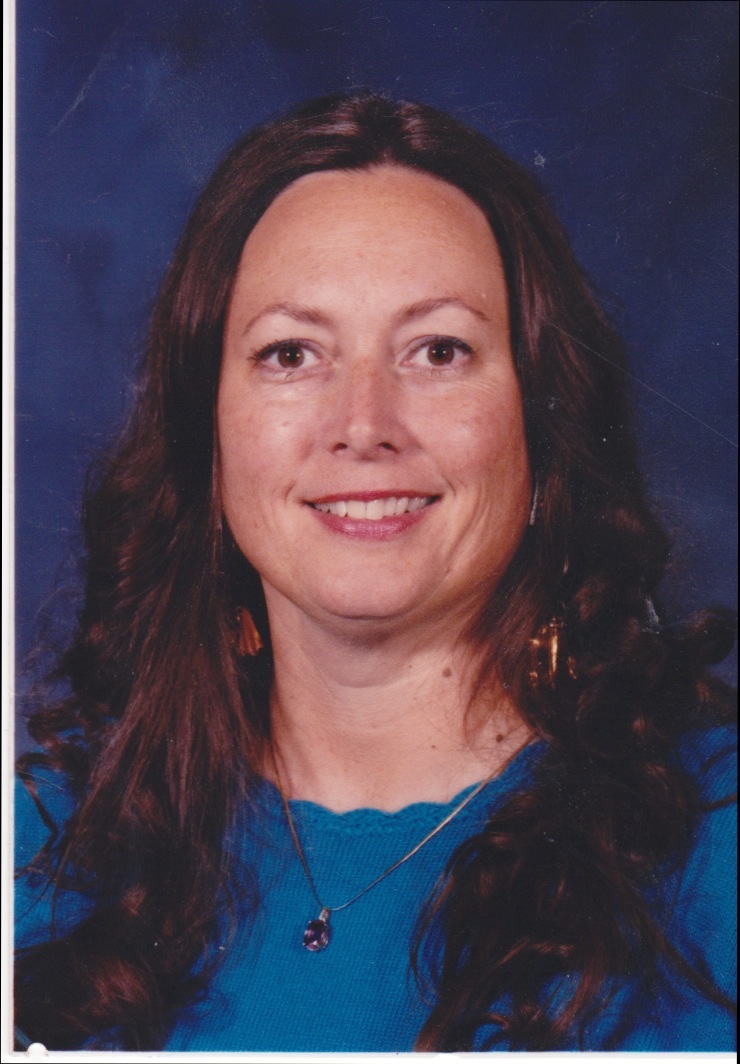
Kathryn Craft is the author of two novels from Sourcebooks: The Art of Falling, which was released on January 28 and has already gone back for a second printing, and The Twelfth Hour (due Spring 2015). Her work as a developmental editor at Writing-Partner.com, specializing in storytelling structure and writing craft, follows a nineteen-year career as a dance critic. Long a leader in the southeastern Pennsylvania writing scene, she now serves on the board of the Philadelphia Writers Conference and as book club liaison for the Women’s Fiction Writers Association. She hosts lakeside writing retreats for women in northern New York State, leads workshops, and speaks often about writing. She lives with her husband in Bucks County, PA. Although a member of The Liars Club, she swears that everything in this bio is true.

Read More
Unleash Your Inner Writing Child: Word - Play

By Laura Drake

Think back. Waaaay back, to when you first decided you wanted to write. You sat down, maybe at a computer, maybe with a pen and napkin, or even (in my case) on the back of a motorcycle, and wove a story in your head. Remember how excited you were? Everything seemed possible. You had the time to play. Play with plots, characters, words.

It was summer vacation for that little kid who still lived in your brain. Remember? You wrote that story, and I'll bet you had a ball.

Then, reality hit. You decided you wanted the world to read your story. Whether you chose NY publishing, small press,  or self-publishing, the world now intruded on that playground.

NY or Small Press? You had to get a query together, get savvy on the market, agents, etiquette. You got requests! Or not. You wait. You got an agent! Then you're on submission, and wait some more. You sold! You wait some more. You have deadlines. Revisions. Deadlines. Self-publish? Even more homework. You need to learn copyrights, publishing options, book cover design, social media, book bloggers, Amazon, Smashwords, etc., etc. And then you wait. Somewhere in all that, you lost the fun.

What happened? Summer vacation was over. Writing became

A JOB.

And that little kid inside that loved the stories? The one who played with that book? He/she doesn't want a job. They want to have fun.  So they do what kids do - they sulk.

medium_2879104247

I think this is why many writers give it up. They either quit writing, or only write to please that little kid in their head.

But I wanted both. I've always been a 'cake and eat it too' kinda person, and I'll bet you are too. If you want to write AND sell, you have to let that little guy play. Orly Konig Lopez reminded us to relax in a recent post. You can read it here.

I've found a way to relax and allow that little kid to have fun - tap back into my love of writing. I play with the words.

I'm endlessly fascinated with the English language. I love playing with the subtle shading of words - it's like letting that little kid loose with tempura finger paints. Every single day I write, I have the thesaurus open on my browser bar (Thesaurus.com ROCKS!)

I use it to find the perfectly shaded word. Like yesterday, I was trying to describe how a grief-stricken heart feels. Of course, the first word I come up with is an everyday word; a black-and-white word.  SAD. That gave me somewhere to start. I went to the thesaurus and it gave me 46 synonyms (shades), but that's only a beginning. Those gave me other ideas, and I was off, chasing threads of different words, different colors. The line I ended up with was:

Her heart swelled, ponderous with sadness.

I also use the thesaurus to freshen cliches.  I had a young woman with a party-girl BFF. I wanted to freshen the cliche, 'Walk on the wild side." Following threads led me to, "Dance on the wild side".

Sometimes, I let that kid inside to go crazy. This is what she ended up with from one thesaurus session:

His confession stretched on the table between them like a pregnant porcupine – bloated, awkward, and prickly.

medium_4493948465

Letting that child play is how I find my way back to the joy of writing. And hopefully, I'm entertaining my readers at the same time!

I'd love to see your word play! In the comments, post your original line, then the results after you've let that little kid loose!

About Laura

Cover - The Sweet Spot SMALL

Laura is thrilled that her first book, The Sweet Spot, was recently  named a Romance Writers of America®   RITA® Finalist, in both the Contemporary and Best First Book categories.

She'll have two releases in August: Sweet On You, the final book in her Sweet on a Cowboy series, and The Reasons to Stay, the next in her Widow's Grove small town series.

This year Laura realized a lifelong dream of becoming a Texan and is currently working on her accent. She gave up the corporate CFO gig to write full time. She's a wife, grandmother, and motorcycle chick in the remaining waking hours.

http://LauraDrakeBooks.com
https://twitter.com/PBRWriter
https://www.facebook.com/LauraDrakeBooks/info

photo credit: ex_magicianvia photopincc

photo credit: cytoon via photopin cc

photo credit: Tanozzo via photopin cc

Read More
Using A Crowd To Create Tension In Your Story

By Sharla Rae

Personally, I dread crowds.

They make me feel a bit claustrophobic and oh, the noise! Perhaps this comes from working in my nice quiet office all day; I don’t know. I strive to hit a mall or grocery store on weekdays and not at end of the day when hungry, tired, short-tempered 9 to 5ivers race from work to do a quick and dirty grab for whatever they need. We’re talking lots of negative energy here and these scenes aren’t pretty!

There are many kinds of crowds, though and some are full of energy, the kind that makes excitement bubble beneath your skin and vibrates right down to the bones. This type of energy is contagious. You can literally feel and hear the high voltage zinging through all the people. Think favorite plays, concerts and sporting events. It's exhilarating. The rushing crush to reach the parking lot afterward – no so much.

So what does this have to do with writing about crowds? We often forget how to use a crowd situation to our best advantage.

A crowd mentioned in passing like a piece of scenery, may have no purpose other than as a backdrop. That’s easy enough to write and in some cases that’s all that’s needed. But most of the time everything in a scene plays a specific part, even the scenery.

A Crowd is a great tool to create tension, good and bad. It can also be used to highlight character personality quirks. Consider some of the following.

  • A crowd might block a character from his immediate goal
  • An angry group of protesters brings out the character's own emotions on the subject
    IMG_1538
  • Shoppers lined up at the cash register make the character desperately late
  • Family huddled together anticipating the arrival of a loved one who is late
  • People milling about waiting for good or bad news
  • Character amid a church goers who make her feel guilty or angry at their self-righteousness
  • Party guests mingling -character is a wallflower or the bell of the ball
  • The character hates the noise and jumps at every brushing touch, fearing the hidden enemy.

There as many crowds descriptions as there are kinds of people. Below are just few types of groupings. Keep in mind that both real and figurative meanings can be applied. Using figurative descriptions are a great way to show mood.

 1. It’s fairly common to see crowds of people described in terms of a collection of animals or birds. A fun site using animal groups is Fun With Words-Collective nouns.

Examples:

  • A crowd compared to a stampeding herd of wild-eyed cattle
  • People compared to a swarm of angry bees? [A cliché but a good example]
  • One of my favorites: a congress of baboons (yes, that’s what they are called and think of the fun you can have with that one!)
  • A rabble of butterflies—think of the Legally Blond heroine with her friends.

2. Military terms: A platoon, corps, forces, brigade, battalion, squadron, regiment, troop etc.

3. Business or Professional: conglomerate, guild, night shift, a trust, alliance, executive branch, middle management, scientists, engineers, gardeners, flight attendants, etc. Example: a conglomerate of stiff-necked bores.

4. School Terms: faculty, class, fraternity, sorority, study group, teachers’ union etc.

5. Age and Gender: Grown women giggling like lovesick teens, Children mimicking their parents, senior citizens, daycare graduates, Yuppies etc.

6. We can also classify groups in terms of inanimate objects: trees, sticks, flowers in a garden, clay pots etc.

7. Race, ethnicity, and religious groups

Especially when using figurative descriptions make sure they fit the scene’s emotional atmosphere and/or the POV character’s opinion and emotions.

 If we used “a congress of baboons,” we’d expect the writer to be referring to a group of ridiculous people, since the connotation of calling even a single person a baboon, usually refers to silly or uncouth person. The description definitely sets a tone and expresses the POV characters opinion.

 Now here’s a list of phrases using adjectives and verbs to describe crowds. Enjoy.

A caucus of four
A clowder of greedy wildcats attacked the sales table.
Assemblage of peacocks at the opera
Battery of bullies in the making
Bored party guests
Bus swelled with all manner of humanity
Carried along by the flow of people
Caught in a clutch of
Children swarmed the ice cream truck
Clustered around the teacher
Congested hallways of the high school
Corralled like piglets in a playpen
Crush of teens at the burger joint
Enclave of artists
Exhilaration in simply being among them
Falling into a snake pit
Field hands, mill workers, and townies rubbed elbows
Flash mob
Fled the city in droves
Flock of ladies who glittered like jewels
Galaxy of movie stars
Gang parted like the Red Sea
Gawkers stood by like judge and jury
Good country folks at a hoedown
Herded people into
Hippy communes giving way to yuppie excutives
Hordes of bargain seekers
Host of loose-limbed little bodies
Huddle of plotting teens
Hustle and bustle of last minute shoppers
In yellow slickers like a caravan of ducks
Incredible din of chatter and laughter
Knot of dissatisfied union workers
League of mean girls
Legions of roaches
Like a night shift of sleepy-eyed custodians
Masses of people struggled to reach
Mean filthy lot
Militaristic faction of skinheads
Milling herd of cattle
Mingled conversations at the party
Mobbed the train depot
Not a gathering, but pure mayhem
Outfit from Red Rock Ranch
Pack of mad dogs snarling
Passel of teen rabble
Piranhas after a bit of meat
Playground jungle gym teemed with
Publisher’s author stable is full
Retinue of boot-lickers
Sandwiched our bodies among
Sea of heads bobbed and dipped
Secretarial pool
Shoulder to shoulder, stepping on toes
Squeezed into the elevator
Swamped with applicants
Thronged around the entrance of
Traffic jams blocked the

Links

General names for Groups of people

Groups of People who work together

CC-Final-Small-

Sharla has published three historical romance novels: SONG OF THE WILLOW, LOVE AND FORTUNE, and SILVER CARESS. SONG OF THE WILLOW, her first solo effort, was nominated by “Romantic Times Magazine” for best first historical.

When she’s not writing and researching ways to bedevil her book characters, Sharla enjoys collecting authentically costumed dolls from all over the world, traveling (to seek more dolls!), and reading tons of books. You can find Sharla here at Writers In The Storm or on Twitter at @SharlaWrites.

Read More

Subscribe to WITS

Recent Posts

Search

WITS Team

Categories

Archives

Copyright © 2026 Writers In The Storm - All Rights Reserved