If you're a North American parent with a child in 3rd grade or beyond, it's a pretty sure bet you've heard of Flat Stanley. Just in case you haven't, here's a quick summary:
The Flat Stanley Project
In 1994, Dale Hubert began the Flat Stanley Project in Ontario, Canada. Hubert had the brilliant idea of having children create their own Flat Stanley paper cutouts and mailing them to friends and family around the globe, in order to foster authentic literacy activities for kids and get them excited to write about Stanley's adventures.
Today, the Flat Stanley Project encompasses more than 6,000 schools registered in 88 countries around the globe, and is included in the curriculum for more than 15% of elementary schools in the US.
I've been emissary to at least two Flat Stanleys, helping them to move on to ever-wider circles of adventure. The one you see above is my nephew's Flat Stanley that arrived in the mail from Kansas City, MO.
[Me being me, I immediately photocopied him and laminated him, just in case I lost him.]
Flat Stanley went all through Orange County, down to San Diego and up to ride the Metrolink in Los Angeles. Then one of my friends was kind enough to take him all over Washington D.C. Flat Stanley even met a girlfriend in D.C.
I've posted some pics below so you can see some of Stanley's amazing adventures.
Flat Stanley at the doctor's office in the O.C.Flat Stanley with Hoshi, my first "Baby Girl."Flat Stanley with Writers In The Storm - from L: Jenny, Laura, Sharla, Fae (this was before we had Orly)
I had tons of fun with Stanley and so did all my friends. My flat pal inspired this list:
10 Ways I'd Love My Books To Be Like Flat Stanley
1. Everyone passes them on to a friend.
2. At the end of their journey, I'll know exactly where they went and what they did.
3. Everyone welcomes them at the table (or in the bath, or the backyard, or their boat).
4. People want to be part of their story.
5. They unite strangers around the world.
6. They can travel in any vehicle and provide people with a good time.
7. People can color them with tons of imagination.
8. They'll be recognized with a single glance.
9. They will bring a smile to your face.
10. You'll remember them long after you pass them on.
Have you ever met a Flat Stanley? What sorts of adventures did you have together? What experience would you like YOUR books to give to others?
Jenny fills her nights with humor: writing memoir, women’s fiction, chick lit, short stories (and chasing after the newly walking Baby Girl). By day, she provides training and social media marketing for an accounting firm. After 15 years as a corporate software trainer, she’s digging this sit down and write thing.
When she’s not at her blog, More Cowbell, Jenny can be found on Twitter at JennyHansenCA and here at Writers In The Storm. She's also the author of the Risky Baby Business posts at More Cowbell, a series that focuses on babies, new parents and high-risk pregnancy.
NOTE: Our very own Laura Drake is teaching an online course on "Fearless Pitching," June 10-July 7. Click here for more information.
Now, Let's welcome back Shannon Donnelly!
First lines fall into three categories—hooks, lines, and sinkers.
The sinkers are pretty obvious—they’re the dud lines, the lines that don’t help a reader into the story. They’re when you start with a cliché (everyone at a funeral), or with the weather, or with description that doesn’t sing. They’re when you’re tap dancing around the story instead of starting the action.
So let’s talk about hooks and lines.
A hook is just that—it’s something so interesting going on that the action or idea hooks the reader. You just have to have more. But you can also start with great lines. As in beautiful writing, an evocative phrase, or a line that happens to set the perfect mood.
But you have to be careful here—a great hook, or first line, can also backfire on you. If all you have is a fabulous first line (and nothing else to go with it), the reader is going to figure that out fast and put down the book. Also, if you polish and create a fabulous hook, or a wonderful first line, but the rest of your book doesn’t live up to the promise, that’s a problem. And, if the first line doesn’t match the tone of the story, you’re in trouble. As in, if you want funny, you want to start that way and stay that way—same thing goes for sexy. Start as you mean to go on.
Let’s get back to those first lines, and look at some classics.
Ralph Ellison starts with a hook—I am an invisible man. (And, yes, the book is The Invisible Man.) That is definitely starting with the right tone and a idea to hook the reader.
William Gibson in Neuromancer offers up both a hook, and a beautiful line—The sky above the port was the color of television, tuned to a dead channel. That’s a line that invites the reader into the book, setting the tone for what is to come. And it’s just beautiful writing—clean, crisp, with a great image.
Doddie Smith in I Capture the Castle (a charming book), starts with a hook that leaves the reader wondering—I write this sitting in the kitchen sink. And why she’s sitting in the sink—not at it—is part of the story.
Jill Shalvis uses dialogue in her first line of At Last to hook the reader—“I’m not lost,” Amy Michaels said to the squirrel watching her from his perch on a tree branch.
So how do you get to a hook or a great first line? There are many approaches.
Questions.The Cardros Ruby starts: Des Cardros was tempted to toss a coin—would his brother shoot him on sight, or simply toss him out of the ancestral home? A question is a great hook—either a direct question or one implied. The question still needs to set the tone and overall pace of the book—are we in more of a character study, or a fast paced action thriller?
The question can be implied not direct, as in Paths of Desire, which starts: I can’t do this, Thea decided, her fingers cold and fretting the ties of her brocade dressing gown. Here the reader is left with a couple of questions--what is it she can’t do, and why is she in a dressing gown?
Dialogue. This is a favorite way of mine to start a book—it gets you right into a scene, and sets a fast pace. “Beauty ain’t required, but she’s got to catch the eye,”Theodore Windslow said, striding across the small salon, one hand fisted behind his back and the other gesturing in the air. That’s the start of A Proper Mistress, and sets the tone of the book right off. It’s not a strong hook, but it’s a good line—good enough to pull the reader forward into the rest of the scene, and that scene is the book’s overall hook.
The Writing. This is where you go for a line that might capture a reader—it’s not the strong hook, it’s the softer allure of the writing. As in the start of Edge Walkers—Nothing could dampen the sweet rush of anticipation singing in her veins. This book was a new departure for me, so I wanted strong writing and a strong voice—and I wanted that to show up in the first line of the story.
Action. This is where you throw the reader into the story in the middle of things happening. Working with people who killed demons for a living had its downside, and Mackenzie Solomon was staring at six of them. That’s the start of Riding in on a Burning Tire, and the pace is set from the first line—there’s a lot of action. The tone is also set right away as well—you can tell this is not a Regency historical romance.
Philosophy. This is one I don’t often use, but Jane Austen famously creates one of the most quoted lines when she opens Pride and Prejudice—It is a truth universally acknowledged that a single man in possession of a good fortune must be in want of a wife. This is a brilliant line, offering wit and style—as does the rest of the story. This line is an invitation to settle back and enjoy.
And that, ultimately, is what you want your first line to do—to evoke the right feeling for the book. The feeling that this is a taut thriller, or a scary ride, or a delightful romp. You’re making a promise with that first line—and you then have a story to deliver that fulfills the promise.
So what are your favorite first lines?
About Shannon Donnelly
Shannon Donnelly’s writing has won numerous awards, including a RITA nomination for Best Regency, the Grand Prize in the "Minute Maid Sensational Romance Writer" contest, judged by Nora Roberts, RWA's Golden Heart, and others. Her writing has repeatedly earned 4½ Star Top Pick reviews from Romantic Times magazine, as well as praise from Booklist and other reviewers, who note: "simply superb"..."wonderfully uplifting"....and "beautifully written."
Riding in on a Burning Tire, the second book in the Mackenzie Solomon, Demon/Warders Urban Fantasy series is just out from Cool Gus Publishing. And her latest Regency romance, The Cardros Ruby, a RWA Golden Heart finalist, came out this May.
Note: Congratulations to Robin Kramme, winner of the giveaway by Melissa Cutler! Writers In The Storm is thrilled to welcome Steena Holmes.
There’s one key aspect to writing that authors either love or hate. Promotion. We either find it exciting and can’t wait to dive in or we fortify ourselves with pots of coffee followed by bottles of wine all the while wishing our books would magically appear on the bestsellers list with no effort on our part.
I’m one of those authors who fortify myself with a fresh pot of coffee and some of my favorite chocolate before I dive in. But I’m not relying on magic. I have a Street Team!
A street team is made up of readers who love your storytelling and want to help get the word out about your book(s).
Why have a street team? Simple – promotion! By banding together readers who love your stories, you’ve expanded your sphere of influence to reach more potential readers. The best form of promotion after all is word of mouth.
Creating a street team
First, I had to get over the “Who in their right mind would want to join my street team” angst, I’d seen several authors spam their way through social media trying to get people to join their team. Not the way I wanted to approach this.
The objective for me was not to get more sales, but gain new readers.
How?
I redirected attention off me and focused on my books. Through social media (Goodreads, Twitter, Facebook, etc) I connected with readers.
I redesigned my website so that it would be more appealing to readers.
I created Steena’s Secret Society. Who can resist a “secret society”?
I built up my newsletter following and sent out a special invite to join my Secret Society.
That’s it. I didn’t fill up my friends timeline with multiple requests to join my street team. I didn’t create a group and then invite all my friends and all the authors I knew. I didn’t join Goodreads discussions or visit the kindle boards and entice strangers with free books.
In other words – all I did was ask the readership I had built up if they’d like to be part of my secret society. I didn’t want to inflate my street team with people who ONLY wanted free gifts. I wanted people who loved my stories and would support me as an author.
I expected to garner only a handful of readers who were interested. I was surprised at the responses and found myself needing to cap it to a level I found manageable for the beginning.
Once I created my group I had one focus. NOT to promote myself.
Weird, right?
Counter productive? No.
I don’t want just a street team. I want a community. I want it to be a place where my ‘sisters’ feel like they belong. Where they feel a personal connection not only with me but with each other.
Why?
Because I write stories that touch women’s hearts. If I’m going to connect with them personally, then I need to connect with their hearts as well. I don’t want a group that will only promote me if I’m throwing gift cards or free books or other items their way. I want them to want to promote me – because we’ve built a connection, because they love my stories, because they want to see me succeed.
What about the free stuff?
Of course I offer free stuff as well. They get swag for being part of my group and then I offer gift cards and chocolates here and there as a way to say thank you for all the promoting they do. But I’m the type of person who likes to be part of their lives – so when they lose a loved one, when there is a wedding, Easter, Christmas, birthdays...they are not JUST my street team – they have become my friends.
And to me, that’s the key. I’m connecting with my readers in a personal way. My street team are my readers. My team will grow and will continue to bond as a community, as a family.
It’s probably why it started out as Steena’s Secret Society and my group now calls themselves Steena’s Secret Sisters.
Have you started a Street Team? What worked for you? Or are you part of a Street Team and what made you join?
About Steena
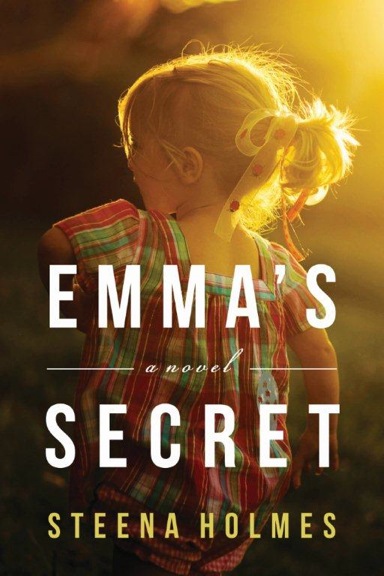
Chocoholic. Reader. Wife. Chocoholic. Mother. Author. Chocoholic. Living a life full of passion is the only way to live – especially if you have coffee on hand. Author of Bestselling Finding Emma, Steena snagged a 3-book deal with Amazon Publishing after thousands of readers fell in love with a little girl and grandfather from her story. Emma’s Secret is coming out June 25th! Visit www.steenaholmes.com to find out more.