Writers in the Storm

A blog about writing

storm moving across a field
Lessons I've Learned About Memoir Writing

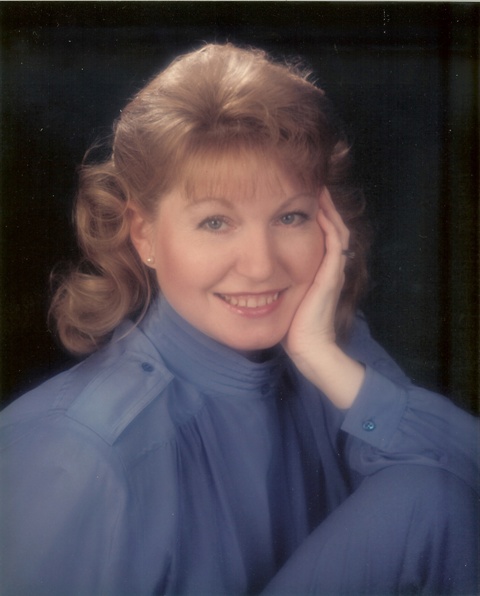
by Jenny Hansen

In my wildest dreams, I never imagined I’d write a memoir.

Like most of you, I’ve written as long as I can remember, and from the very first day, I’ve lived solidly in the fiction camp.

Before we get any farther, let’s make sure we’re all speaking the same language.

What is a memoir?

The best definition I’ve found of memoir and how it differs from autobiography can be found here. In case you don’t have time to read that fantastic post by Barbara Doyen, here’s a quick summary:

A memoir is a special kind of autobiography, usually involving a public portion of the author’s life as it relates to a person, historic event, or thing. The text is about the personal knowledge and/or experiences of the author.

It’s my personal opinion that memoir writers are made, not born.

  • You need to feel strongly enough about the events in the book that you’re willing to lay them out for the world to see, with none of the anonymous padding that fiction provides.
  • You must be well-versed in 3-Act Structure and story mechanics.
  • You need the objectivity to slice and dice your experience until it fits neatly into this 3-Act Structure.

What motivated ME to write a memoir?

In 2005, I survived a massive bout with blood clots – two big ones (one in each leg) became a swarm of them in my lungs. They call those pulmonary emboli, but really, they’re all blood clots. 1% of the people who experience what I did live through it.

When my treatment was done (after 4 months in bed and 9 months on blood thinners), I found out I have a blood clotting disorder called Factor V Leiden. Many things about my daily living habits had to change to accommodate this disorder.

Was the experience memoir-worthy? I don’t think so. It simply wasn’t universal or compelling enough. I lived and I was thankful, and I had to make some lifestyle changes. End of story.

But what about when I threw pregnancy into the mix?

The four main causes of a blood clot are cancer, obesity, a previous blood clot and a genetic disorder. Obviously, I fit several of these risk criteria. I couldn’t just decide to have a baby, I had to visit the high risk OB and ask permission just to try.

Pregnant women gain four pounds of blood, which increases the risk of forming a blood clot by 8 times. Yowza.

My pregnancy journey was rocky, to put it mildly – infertility, shots in the stomach twice a day, worries about late-term miscarriage and fetal demise.

Was the pregnancy itself a big enough theme to support the frame of a memoir? By itself, probably not.

Memoirs must have themes that speak to a wide audience.

These aren’t how-to books, and they’re not autobiographies. As Barbara Doyen says in the “what is memoir” post I reference above:

A memoir does not contain everything from this particular slice of the author’s life, but rather, events are selected and examined for meaning relative to the purpose of the book.

The author has questioned what happened and come to some kind of new understanding or lesson learned by it. The author shows us how he or she was affected by this experience, how it has profoundly changed the way he sees the world.

And by extension, reading the book will change the way the reader sees the world.

I worried about whether I could make my book universally compelling.

All the writers here at WITS will tell you, I spend a lot of time and effort on theme, whether it's their books or mine.

To me, a book works like this:

  • Plot is the train that drives your book.
  • Theme is the track the plot runs on.
  • Characters are the ones who populate the train and make things interesting.

One of the reasons why memoirs are so tough is that your plot and characters are already in place. All you have left to work with is theme. Your theme (or themes if you're lucky) are what really hold a memoir together and make it a journey worth taking.

A deep soul-search for themes in my memoir yielded more than I thought:

  • Survival: What if I showed how the lessons learned with the blood clot scare helped save the day during my pregnancy?
  • Self-worth: What if I discussed the guilt and depression that women feel when they can’t conceive?
  • Fear: What if there were things that I knew that could help other women, and their family members, have an easier time through their own rocky journey?

This last is at the heart of why I would put my fiction aside.

I was compelled to write about high-risk/high-worry pregnancy because these women feel so terrified and alone. They’re not experiencing the joyous, “fluffy cloud” type of pregnancy so many of their friends and family tell them about. Worst of all, the end-game isn’t guaranteed and they're scared.

High-risk mommies have all the information overload of “regular” mommies, but there’s a whole lot more. Shots, bed rest, miscarriages, endless doctor appointments. These women spend some or all of their pregnancies wondering things like: “Will I get to keep this baby?” and “Will I die?”

I spent my entire pregnancy wondering, "Where's the book for THIS kind of pregnancy?!" I simply could not rest until I wrote one.

In my opinion, this sort of compulsion is the only thing that will sustain you through the hassle of fact-checking, research and structuring of ANY book. But the memoir factor adds an extra dollop of a pain. It’s hard to figure out how to break a true story into 3-Act structure – we simply can’t see our own lives clearly. Still, you MUST do it, the same as you would any other novel.

A quick note on 3-Act structure:

Many, many writers don’t have a clear concept of it. I know I didn’t until I saw Stephen Cannell (creator of the Rockford Files and like 40 other TV shows) give a talk. If you want to read an entire post on this topic, click here. In the meantime, here’s a quick summary of 3-Act Structure using Stephen Cannell’s words – feel free to skip this if you’re a 3-Act Pro:

“When I ask young writers what 3-Act Structure is, they say it has a beginning, middle and an end. This is not the answer. A lunch line has a beginning, middle and an end. The Three-Act structure is critical to good dramatic writing, and each act has specific story moves.”

Take the movie, “When Harry Met Sally.”

The First Act is all about the hook, or the premise. In this case, it’s that “men and women cannot be friends.” So you’ve got the set-up where they meet and then decide they’re not going to be friends.

Act Two opens with Harry and Sally meeting up again in the bookstore and slowly becoming friends. Their friendship becomes the single most important thing in their lives and the worst thing in the world would be to lose it.

The scene in the wedding is the dark moment climax of Act 2 because it is the end of their friendship as we know it. The curtain closes on Act 2 because the WORST thing has happened…the two of them are no longer friends.

Act Three is the “clean up” act, the resolution to your story. In this case, it’s all about Harry trying to get back into Sally’s good graces so the two of them can be friends again, just as they were. Sally’s having none of it.

Finally, on New Year’s Eve, Harry has his turning point and we get the final scene of the movie where he runs through New York City to get to Sally before midnight. When he sees her at the party, he gives his now famous I-Love-You speech.

When I heard this talk, the light bulb turned on for me. Hopefully, it did the same for any of you that were iffy about why there’s such a time disparity in the three acts.

Just remember the 25-50-25 rule:

  • Act 1: First 25% of your story – the hook
  • Act 2: Next 50% of your story – ends with the black moment
  • Act 3: Last 25% of your story – the resolution of the black moment, leaving your main character with a new understanding.

To see Stephen Cannell’s “official description” of 3-Act Structure click here – he does a fantastic breakdown of the movie, Love Story.

I'm going to turn the floor over to you now...

Are you attracted to memoirs, either as a reader or a writer? What interests you the most about this genre? What do you dislike about it? Feel free to ask any questions or share any insights you have in the comments. We’d love to hear from you!

Jenny

*  *  *  *  *  *

About Jenny Hansen

Jenny fills her nights with humor: writing memoir, women’s fiction, chick lit, short stories (and chasing after her young daughter). By day, she provides training and social media marketing for an accounting firm. After 18 years as a corporate software trainer, she’s digging this sit down and write thing.

When she’s not at her blog, More Cowbell, Jenny can be found on Twitter at JennyHansenCA or here at Writers In The Storm.

Read More
Smart Writers Expand Time - From Margie Lawson!

By Margie Lawson

A BIG THANK YOU to Mega-Talented Laura Drake for inviting me to be her guest blogger today!

Writers are all powerful. Well, in their fictional worlds they are all powerful.

Two of the 74,386 story dynamics that writers control are expanding time and compressing time. Today we’ll focus on the most fun of the two, and the one writer’s sometimes neglect, expanding time.

When would you want to expand story time?

When scene events justify zooming in on the POV character’s experience, minute by minute, or second by second.

Maybe even picosecond by picosecond.

You’ve got to love that word. A picosecond is one trillionth of a second.

In real life, people can send and receive up to 10,000 nonverbal cues in less than one minute.

Yes. That’s a true statement.

We can process up to 10,000 nonverbal cues in less than a minute. Such a shocking number, and cool too.

When what’s happening in your scene is critical or crucial, decisive or dangerous, life-changing or life-threatening, you want to expand time, big time. Don’t hold back. I recommend writing it bigger than you normally would, then rein it back in until it’s just right.

I’ll share two examples of expanding time, and a few examples just for fun. All examples in this blog are from Margie Grads.

My first example is from Joan Swan’s debut paranormal romantic suspense, FEVER, released in March.

Joan has taken all my writing craft classes online, and she finished her second four-day intensive Immersion Master Class with me in Colorado on Monday.

The Set Up: Alyssa, a radiologist, just completed a scan on a prisoner named Creek.

Joan Swan, FEVER, Excerpt from Chapter 1

The hair on her neck barely had time to lift before heat washed her back.  Creek’s hard body closed around her.  What the hell?  A cool chain cut across her throat.  No.  She sucked air.  No. Her fingers clawed at the metal.  No!

“Don’t make a sound.”  He spoke soft and slow, his chin on her shoulder as he bent over her and pressed his cheek against hers from behind.

Her brain finally came back online.  Air wisped into her lungs and fed the new baseline of fear.  When Creek straightened, he rose ten inches above her.  And she now registered not only his size, but the sheer strength in all that corded muscle she’d been admiring.  His movements controlled, purposeful, almost zen-like in confidence.

“You idiot…”  She barely breathed the words, the metal and pressure restricting her vocal chords.  “Let go—“

The chain jerked once, cutting into her trachea.  “Shut.  Up.”

Pain cut off all thoughts but sheer survival.  Air.  Breath.  Air.

She wedged her skull against his collarbone to allow a fraction of relief on her airway.  Oxygen wisped through the stricture.  In. Out. In. Out. Her gray matter slugged back to work, edged with hot, sharp panic that threatened to invade every crevice and drive her insane.

The officers’ boots were still visible beneath the curtain where they stood in the hall, but she couldn’t draw enough air to speak let alone scream.  And the links of metal weren’t cool anymore.  They burned, as if Creek’s body heat streamed through the metal.

I SKIPPED A FEW PARAGRAPHS:

  • THE GUARDS CHATTER ON THE OTHER SIDE OF THE CURTAIN
  • CREEK GOT SCISSORS OFF HER DESK

Jesus.  “Put…those down.” A spurt of terror gushed up her chest. Her fingers searched for a millimeter of leverage between the chain and her skin.  “You’re…burning…me.”

Creek’s head tilted down, his whisker-roughened chin scraping her cheek. “Fuck.”

The pressure eased and Alyssa ran her cool fingers over raw skin, choking in blessed air.  Her relief was short-lived as the rasp of metal on metal sounded in her ear.  A hard blade pressed against her neck.  Her eyes squeezed shut.

“Not another sound,” Creek whispered, “or I’ll cut your throat.”

“All right.”  The older guard sounded relaxed and jovial as he swooshed the curtain aside.  “Are we all done in—?”

The room went completely still.  The extended, shocked moment expanded, taking on weight and mass and volume like one of the cancers Alyssa fought so hard to find and fight in her patients.

Kudos to Joan Swan!

What techniques did she use to make expanded time work?

1.    Visceral Responseshair on neck lifted,  spurt of terror gushed up her chest

2.    SpecificityOne of dozens of examples: She wedged her skull against his collarbone to allow a fraction of relief on her airway.

3.    Body Languagethroughout

4.    Dialogue Cues

  • He spoke soft and slow
  • The older guard sounded relaxed and jovial

5.    Power Internalizationsthroughout

6.    Power Words –  cut, fear, strength, muscle, confidence, restricted (airway), pain, survival, air, breath, oxygen, hot, sharp, panic, invade, insane, skull, airway, screamed, burned, terror, pressure, raw, choking, blade, cut your throat, shocked, cancers

7.    BackloadingPower words at the end of sentences.

8.    Cadence, cadence, cadence!

Rhetorical Devices: 

1.    Asyndeton – His movements controlled, purposeful, almost zen-like in confidence.

2.    Polysyndeton –  . . . taking on weight and mass and volume . . .

3.    Simile –  . . . like one of the cancers . . .

4.    Onomatopoeiawhooshed, wisped, rasped

5.    Alliteration – throughout

Wow! Look how Joan powered up her expanded time passage.

FYI:  The Kindle version of FEVER is on sale for $3.99 through May.

Our second example of expanding time is from Writer’s in the Storm’s Laura Drake. Laura is a multi-multi-multi-Margie-Grad, and an Immersion Grad too.

FYI:  In case you don’t know Laura Drake’s publishing news, in January, she landed a 3-book deal with Grand Central for her series set in the world of professional bull riding. And last week, she picked up another contract for a Superromance!  Congratulations Laura!

Laura wrote this zoomed in version of expanding time after Immersion class. It’s from a Woman’s Fiction tentatively titled, A Day Made of Glass.

The Set Up:   Harlie saves a Pomeranian from being pummeled by a bull.

Yipping in triumph, the dog shot like a flaxen arrow to the center of the arena and faced Patrice with a panting grin.

The bull stood in front of the gates, snorted, threw his head up and with white rimmed, rolling eyes, regarded the irritant. Harlie watched, frozen. The bull strutted, looking around, deciding.  It might have walked to the open exit gate if the Pomeranian hadn’t challenged it with a cascade of furious yapping.

The bull wheeled to the center of the arena, dropped its head, and with a heavy snort, charged. The dog held his ground, barking at the charging one-ton animal like a drunk with little-man syndrome.

Why isn’t anyone doing anything? Besides Patrice, who shrieked from the bleachers.  Harlie’s hands jerked from the pole fence. The dog was a pain in the ass, but it was about to be pummelled to a bloody rag under the bull’s hooves.

She didn’t think. Ducking between the poles, she judged the bull’s trajectory and ran on a diagonal that would allow her to scoop up the dog without getting stomped.

Maybe.

She barely heard the shouts of the onlookers. Instead, she focused on the speed of the bull, gaining, gaining.

No way she’d make it to the fence.

The sweet rush of adrenaline hit her like a heroin-mainlining junkie. Just as strong, just as welcome. It sang through her veins, lifting her, making her impervious -- superhuman. She sped up, heart thundering in her ears -- or maybe that was bull’s hooves.

Everything seemed to slow. Details stood out in perfect focus: the shine of spit on the dog’s bared teeth, the whorl of hair at the center of the bull’s forehead, a small scar next to its white-filled eye.

In full stride, Harlie reached the center of the arena, snatched the now cowering fur ball by the nape, and kept moving. The ground shook with pounding hooves. She tensed her muscles for impact, but felt only a sliding rub of horn on her butt and the rush of air at her back as the bull passed. Clutching the suicidal mutt in a death grip, Harlie sprinted for the fence.

She’d only taken a couple of steps when the panicked yells of the onlookers penetrated the swelling chorus of the adrenaline song in her head. Harlie didn’t have to look. She knew bulls. The animal had wheeled, and from the vibrations in the soles of her fancy cowgirl boots, was bearing down to gore her.

No time. She heaved the dog toward the open-mouthed, red-faced men on the opposite side of the fence.  Harlie’s brain registered a stop-action photo of the little dog, hair blown back, flying through the air, mouth open. She hadn’t known that dogs had an expression for terrified, but this one sure did. It hit the ground running and streaked for the line of boots at the fence.

Harlie spun on her heel. The bull was farther away than she’d guessed, but closing fast. She shot a glance to the fence. It seemed as if she were seeing it through the wrong end of a telescope. A bull will beat a human in a race, every time. She’d never make it.

No choice.

Tension zinged through her. The timing had to be just right. Failure would come in the form of lunging horns and bone-snapping hooves. Head down, the bull came on.

Decision made, the fear in Harlie’s chest lay down before a rising exaltation of knowing. Crouched in a marathon runner’s stance, she shook the jitters out of her hands and gauged the bull’s closing speed.

One more step –

Harlie exploded, launching herself straight at the bull.

She took two long-jumper strides.

The bull charged in, lowering its head to hook her.

On the third stride, perfectly timed, her foot came down in the center of the bull’s broad forehead. He threw his head up and she was launched, flying over the beast’s back

It seemed she rose forever, her stomach dropping, shooting the sparkly fireworks of a roller coaster’s first hill. A quiet, high-pitched sound escaped her lips. It might have been a giggle.

When the arc finally began its downward tail, Harlie looked for a place to land.

Wow. Pacing. Pizzazz. Passion. Power.

That’s the kind of writing that earns contracts.

Kudos to Laura Drake.

Blog Guests: What did Laura Drake do to make her expanded time piece work?

Hint: Review my deep editing points for Joan Swan’s passage – and fill in content from Laura’s excerpt.

I’m sharing a few more examples. SHORT examples.  I want to spotlight examples from unpublished, not-yet-contracted Margie Grads too.

Diane Wied, Immersion Grad -- Haunted Memory

“Where would you like for me to start? The part where we ran off the road?   The part where the psycho chased us?  Or the part where I lost a six year old child?”

Diane used anaphora to pick up pace, deepen character, and give the scene a cadence boost.

Alex Ratcliff, Immersion Grad -- Undercover

Cooper’s mind skidded to a mental stop. The Sheriff. What was he doing here? Cooper heard the harsh rap of knuckles on the glass over Ella’s head. There was a five second pause that seemed as long as the Jurassic period.

Alex gave the reader a cliché twist, and an uber-fresh pause.

Kimberle Swaak, Immersion Grad -- Shadows of Doubt, 

Two fresh dialogue cues, amplified.

1. “Well, laa-tee-daa.” She stretches out her words, loads them up with an extra serving of Tennessee twang. “Don’t that sound fancy.”

2. Her tone takes a serious turn, matching mine, and her voice and vowels soften into the more generic timbre she perfected in college. Less country hick, more Southern belle. Unlike me, Lexi can turn her accent on and off like a faucet.

Note:  Perfect cadence throughout.  

Bronwen Jones, Home to the Lake

NOTE:  The POV character is in her mid-eighties, still lives alone. Lyn, her niece, the old woman’s only relative, shows her a pamphlet.

It’s a pamphlet, and she smooths it out on the table, leans on the back of the chair again. There’s a picture of a smiling silver-haired couple, a woman dressed in a beige jersey frock and pearls, and a man in a knitted cable jumper the colour of the sky on a clear winter’s day. I’m greatly taken with the contentedness that shines in their handsome faces.

I look to Lyn for a hint and am thrown by what I see there. Something akin, I’m sure, to what Jesus saw in Judas. Something dark moves within me and my own expression changes—I feel my face moving—to that of an old bitch who knows she’s to be put down.

Bronwen’s short expanded time excerpt is loaded with power, including description, eponym (what Jesus saw in Judas), a POV character’s changing expression, and a power internalization. And the whole piece is cadence-driven.

BLOG GUESTS:  POST A COMMENT AND YOU MAY WIN a Lecture Packet  or one of my online courses from Lawson Writer’s Academy!

I’ll post the name of the LUCKY WINNER tonight, 9PM Mountain Time.

Online Classes offered by Lawson Writer's Academy in June:

1. Fang It to Me: Writing Vampires, Fantasy, and the How-to’s of World-Building ~ Instructor: Mario Acevedo

2. Write YOUR Way with Liquid Story Binder ~Instructor: Lisa Norman

3. Fab 30 in 40 Days: Advanced Deep Editing, A Master Class
Instructor: Margie Lawson

4. Defeat Self-Defeating Behaviors, Power Punch 1 ~ Instructor: Margie Lawson

Margie Lawson—psychotherapist, editor, and international presenter—developed innovative editing systems and deep editing techniques used by writers, from newbies to NYT Bestsellers. She teaches writers how to edit for psychological power, how to hook the reader viscerally, how to create a page-turner.

Thousands of writers have learned Margie’s psychologically-based deep editing material. In the last seven years, she presented over sixty full day Master Classes for writers in the U.S., Canada, Australia, and New Zealand.

For more information on Lawson Writer’s Academy, lecture packets, full day master classes, and the 4-day Immersion Master Class sessions offered in her Colorado mountain-top home, visit:  www.MargieLawson.com.

Read More
What Does Your Writer Space Say About You?

By the WITS Bloggers

Did you ever wonder, looking at someone, what their house looks like? I have - especially the coworker who leaves her dishes in the office sink overnight. (Yuk.)

A writer's space is, to us, sacred ground. I have a couple of friends who are going through home remodels right now, so they don't have an office. Another one I know has her desk set up in the living room, with the TV blaring, kids and dogs running rampant. Both of those scenarios make me shudder. Oh, I know, I'm sure I'd get used to it if I had to. Or maybe there'd be bodies buried in the back yard. Let's hope we never have to find out.

Well, the WITS bloggers are laying themselves bare to their readers once again . . . this time, we're sharing what our writer spaces look like. Each of us took photos of the space we write in, and wrote a few descriptors we felt described how we felt about them.

Laura's Office:

Classical music, organized, quiet, peaceful.

Yes, that IS a bull screensaver.
Meet Harlie. She likes to type.
She's not good at it.
Memories Board

Fae's Office:

Comfortable, everything within reach, sunny/light, creative, lucky, fave music, homey, happy, kitty friendly.

Fae's workdesk
Mitzi has her own mouse pad.
Fae's view


Jenny's Office:

In the middle of it all, busy and noisy (so I can tune it out), and always with a view of the world and my flowers. :-)

The portable office, at the dining room table...
When the writing stalls, I go to Starbucks...
When all that fails, I play with Baby Girl for inspiration!

Sharla Rae's office:

Cozy, Fun, rabbits, expansive, quiet, MINE, inclusive, moods, business, creative, hidey-hole

Historical = Research. Ya think?

We found it fascinating...we all write different genres, and our writing spaces are very different. Coincidence? Hmmm.

Your turn. Describe your genre, your writer space, and a few descriptors about how it makes you feel. We could be onto something here!

Read More

Subscribe to WITS

Recent Posts

Search

WITS Team

Categories

Archives

Copyright © 2026 Writers In The Storm - All Rights Reserved