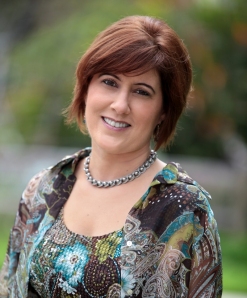
By Monthly Contributor, Shannon Donnelly
We’ve all heard “show, don’t tell” and there is value in that advice. If all you do is tell a story, how does the reader participate with his or her imagination? However, a book is not a movie. While a movie requires everything to be shown (or an often awkward voice over to be added if it’s not showing enough), a book has the luxury of being able to use narrative. And that’s where I usually get folks who are utterly confused.
Narrative seems to have gone out of fashion. It's not often taught, and no one seems to really get what it is. So let’s make it easy.
Merriam-Webster gives us the root for narrative/narrating as the “Latin narratus, past participle of narrare, from Latin gnarus knowing; akin to Latin gnoscere, noscere to know.”
This means it’s basically the author telling the reader the information the author knows, which the reader also needs to know. And now you ask, what does the reader need to know, and when does the reader need it, and how much does the reader need. This is where narrative becomes an art.
There is no exact formula for what is enough telling. However, readers always need to know:
* Where are we? (Place and world – the reader needs to be placed into the scene, otherwise it’s confusing to the reader. Do not throw your readers into the deep end without giving them some help.)
* When are we? (What’s the era, the time of the year, the month, the day, the hour? We need everything that helps the reader settle into the scene as if this moment in time really exists.)
*Who is here? (An introduction to the characters, particularly to the main characters for that scene, and for the story.)
* Why are we here? (This doesn’t have to be greatly detailed information, but you need enough details to make a reader care. Think of it this way—too little and you starve the reader’s imagination; too much and the reader quickly fills up and drops the book down.)
All this needs to be woven together, stitched in with careful threads, not dumped on the reader in big clumps. Or, to put it another way, feed the reader your telling—your narrative—with a teaspoon, not a soup bowl.
Good narrative does a lot of things for you:
* It condenses information, which helps keep the pace of the story moving forward.
* It weaves in backstory and plot exposition, so you don’t have to have huge info dumps.
* It allows touches of your author voice to add atmosphere and mood to a story.
* It allows you, the author, to set the scene for the reader, thereby setting expectations about the story—you’re basically setting up the reader to enjoy the story (and not have to work too hard).
Bad narrative also does a lot of things for you, but worst of all, poor narrative is awkward, verbose and tends to make a reader put down the book.
So how do you know if your narrative—your story telling—is working?
* Have someone else read the story—and just have them make an X on the page every time their attention starts to wander. That’s a place where the telling is probably getting to overload.
* Look at the balance of action (showing) to telling—go through with a colored marker and make sure you’re not telling too much.
* Use the story telling to move into and out of scenes (for transitions.) Within a scene, cut the telling and only show your characters in action. Only tell if you must to clarify action, intent, or motivations (and even then look for better ways to show this instead of tell).
Most of all, if it works, don’t fix it. But if it doesn’t work, time to get back to edits to make the story work for the reader.

Shannon Donnelly regularly teaches an online workshop on Show and Tell: An Interactive Workshop. She’ll be giving this workshop again in June 2012 for Celtic Hearts Romance Writers. Shannon Donnelly's writing has won numerous awards, including a RITA nomination for Best Regency, the Grand Prize in the "Minute Maid Sensational Romance Writer" contest, judged by Nora Roberts, RWA's Golden Heart, and others. Her writing has repeatedly earned 4½ Star Top Pick reviews from Romantic Times magazine, as well as praise from Booklist and other reviewers, who note: "simply superb"..."wonderfully uplifting"....and "beautifully written."
Her latest Regency Historical Romance, Paths of Desire, can be found as an ebooks on Kindle, Nook and at Smashwords, along with her Regency romances. Shannon is a regular speaker at writing conferences, and will be speaking at the 2012 RWA National conference in Anaheim. She gives online workshops and is the author of Story Telling; Story Showing, an ebook that compliments her popular online class Show and Tell: An Interactive Workshop.