Writers in the Storm

A blog about writing

storm moving across a field
THROWDOWN: Write What You Know vs Write What You Don't Know

By Laura Drake

I’m probably the poster child for the "Write what you know" side of the throwdown.

Why?  I’ll out myself at the end of this post. Let me answer the easy one first.

How?

For the last ten years I’ve had an obsession (yeah, another one.) Pro Bull Riding. I never miss it on TV, and when it’s not televised, I’ve been known to sit on Twitter for hours, waiting for people at the event to Tweet the rider’s scores. I’ve attended all local events, and been to the finals in Vegas twice -- once in a cast and a wheelchair because I broke my leg.

No way I was going to miss it.

Everyone knows I’m a bull riding geek. My boss even bought me a poster of Chris Shivers for my office.

I’ve written and sold three books, all set in the world of Pro Bull Riding. Did I do it because I knew it, or because I love it? Probably both.

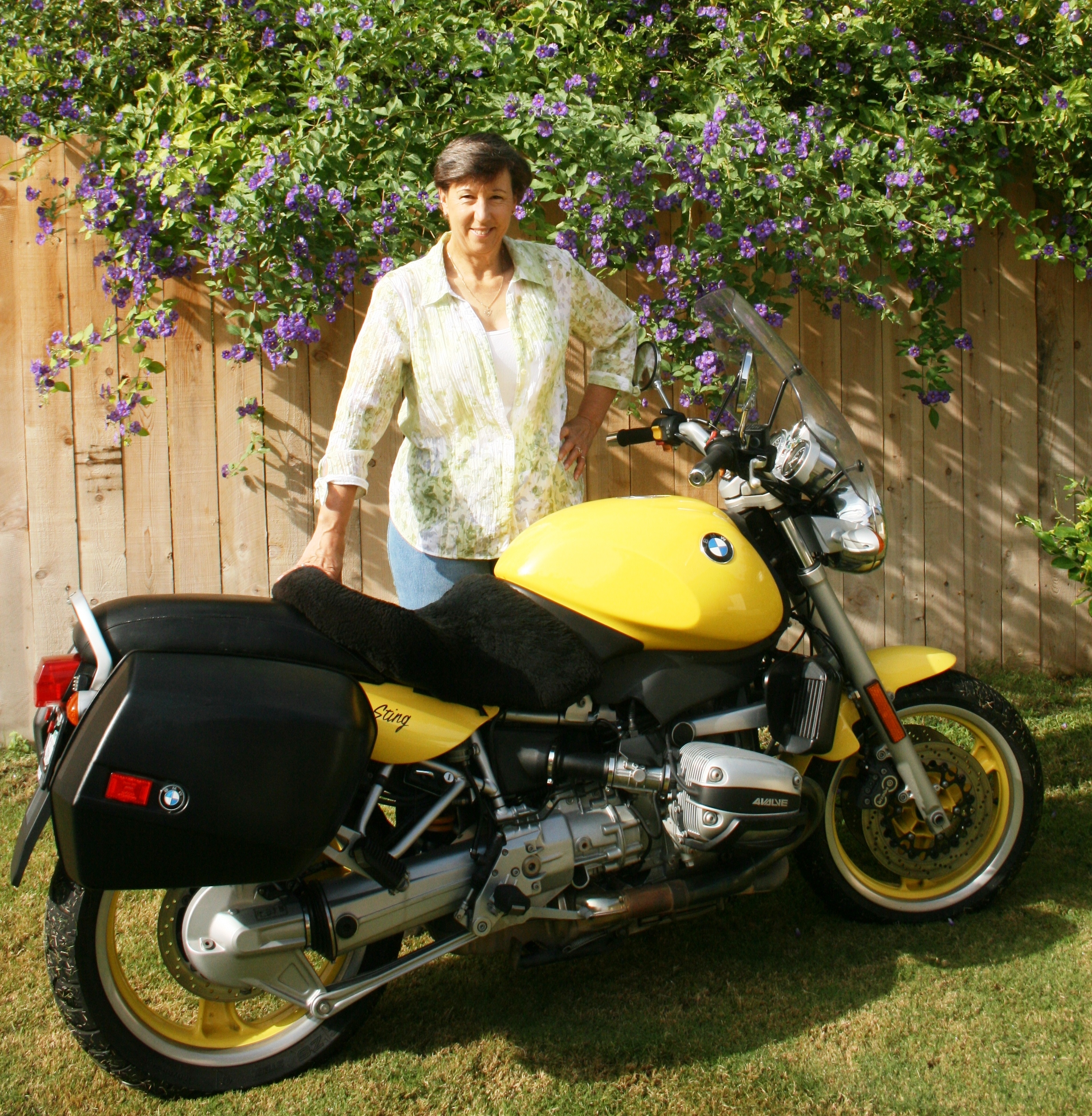
I also ride motorcycles. I rode behind my husband on his for 100,000 miles. Then I learned to ride.

I now own two and have logged 100,000 miles of my own.

I wrote a novel about a girl who rides across the country on her motorcycle.

Okay, now the embarrassing part -- Why do I write what I know?

The same reason I could never be a teacher. And why the mere thought of writing Historical novels makes me break out in a sweat.  I have this secret fear that someone is going to discover that I don't know what I'm talking about. They're going to point at me, out me as a poser, and prove that I'm a fraud.

If I teach a class, you can be sure I know a LOT about the subject, because I live in fear of someone raising their hand and asking a question I can't answer. I know it's dumb. I don't expect a teacher to know everything. I don't expect any expert to know everything.

Only me.

I don't get it ether, but there it is.

So, here's where it gets fun -- we love to see which side of the throwdown you're on, and why. Do tell!

Read More
Place Descriptions: It's About Atmosphere Not a Travel log

By Sharla Rae

When I first started writing, the one thing my critique partners complained about most was my lack of descriptions. I hated doing them. Only the action and characters interested me. Who cares what color the sky is? Who cares if the river was muddy or sandy? Just tell the reader where the character is and you’re good. Right?

Oh boy, did I get an earful. And every day I thank my lucky stars for it.

First a disclosure: If you’ve been reading my blogs you might have guessed that this one includes a descriptive list. No, you cannot skip to that part yet. Keep reading.  Please.

Good place descriptions are movies or paintings in words.

  • They show atmosphere
  • They show location or setting
  • They frequently show something about a character’s nature.

Location and atmosphere descriptions always hold hands. Actually they’ve always been married.

Perhaps the easiest example is a horror story. Saying a house is old and creepy is boring, but the right description can send chills down the spine. Peeling paint, a sagging porch, creaking doors, dirty opaque windows, and unexplained noises “show” the reader what old and creepy looks like and infuses the story with a mysterious or scary atmosphere.

Place descriptions may offer insightful clues to a character’s personality.

A simple example: If Joe lives in a shabby house, he might be poor. But if the house is also clean and neat as a pin, he might also be a very proud man. If the house is slovenly and the garden overgrown, the owner might be depressed or lazy. But wait, maybe the inside contradicts the outside. Maybe the character wishes to appear one thing when he’s really something else entirely. You see where I’m going with this.

Where to Start?   

Describing a place we’ve personally experienced isn’t as hard as describing one we haven’t laid eyes one. This is where research comes in.  Oops, a warning light is blinking. Don’t fall into the travel log trap, descriptions that sound like ads for Travel-R-Us. Think atmosphere. If we’re describing a desert, make the reader feel the dry heat, see the bleached blue of the sky, taste grit on parched lips.

Where are the best place descriptions found?

The answer is . . . everywhere. But I’ll simplify.

Books and websites for research are unending. My personal favorite for settings around the world and situations such as disasters like hurricanes, tornados and floods is National Geographic Magazine. Their descriptions of different landscapes and situations are phenomenal, often to the point of poetic. You can find hard copies at the library or visit their web site and watch videos. For different areas within the States, try state magazines, like Arizona Highways. The well-written articles describe interesting places all over the state right down to the local atmosphere. You’ll also find somebackground history.

Another favorite resource of mine, especially for landscapes like forests, rivers, mountains etc. is poetry. Don’t laugh. One of the very best is Hiawatha. The great thing about poems is that they utilize all five senses.

The five senses are essential to description of any kind because they instill atmosphere.   

  • Smell: Old houses are musty; a field of flowers is fragrant. Maybe the character smells the neighbor’s forgotten garbage can.
  • Sight: Keep in mind, colors inspire moods and atmosphere. Is there a sunset, a vase of cheerful flowers on a dresser, maybe a cracked vase of long-dead daisies? Perhaps a majestic green forest grows behind a mansion?
  • Touch: Does the character feel cool grass between their toes, the rough bark on the tree they’ve leaned against, the cold chill of mountain air?
  • Sound/Hearing: What does the character hear? Birds, growling animals, traffic, airplanes, children at play, the bickering couple next door or the sizzle of bacon?

Sometimes it’s fun to personify places and things, giving them a description that might be attributed  to people. The tree stood like a crooked old man, head bowed, skinny arms flailing about its body. This method may of course be reversed when describing a person, but that’s another blog.

There’s one more thing I need to mention. Definitions. Definitions are by nature a description. Don’t discount them when searching for ways to describe anything. You’ll find some examples below at the end of the list.

I’ll be posting a few of my descriptive lists over the next few months. The list in this blog holds words and phrases that might be used to describe trees, forests and wetlands. Use it, make up your own and add to it. Enjoy and share with the rest of us.

Trees/ Forests/Wetlands

 Air even smelled green
Air-dropped a retardant over the forest fire
Bears eating wild blackberries
Bed of pine cones and needles
Branches weighted with 4 or 5 inches of snow
Bush fire/wild fire
Chatter of chipmunks
Conservationist
Crashing of trees echoing through the woodlands
Dank wetland forest
Decked out in rich green raiment
Deep in the wilds
Deer trail on the soft pine floor
Densely tangled ground growth
Dots of orange in the orchard
Flapping birch leaves sounded like the patter of rain
Foliage/verdure/herbage
Forest fires
Fox creeps from his den at night as the raccoon leaves his hollow
Fringe of the forest
Gnarled tree roots
Growing with lawless abandon
Heart of the forest
High whine of sawmill saws
Howl of wolves
Hunters wearing red
Interminable forest
Jungle of smelly peat bogs and gaiters
Leafy plumes of green bowing overhead
Lizard clinging to the bark of a cypress
Majestic Douglas fir
Mantle of cool green peace
Maze of mangrove in the Everglades
Mice nesting in the tree roots
Moss growing on trees
Mucked through gluey mud
Mushrooms growing in the damp soil at the base of trees
Palm fronds
Papery bark of the birch
Park ranger sat in his tower over the forest
Paul Bunyan and Babe the Blue Ox
Peaceful aerial cities (birds & animals)
Peat bog
Pine sent, balsam
Pinery (common name for the white pine area in MN)
Place of shadowy dreams and visions
Pliant branches gave way at the soft passing of
Populous trees of the grove
Pristine
Ringing axes
Roots heaving above ground in a snarl
Rough bark
Sapling (seedling), too weak to withstand
Scraggly gray locks of Spanish moss draped
Scraped raw of trees
Sea of brown saw grass in the Florida Everglades
Secluded pond in the shady cool
Sighing of the wind through the boughs
Smelled like Christmas year round
Smokey the bear
Soft succulent vines shivered
Solitude reigned supreme
Sound of marsh creatures
Spicy evergreen feathered the sky
Splashed with festive color by mother nature
Spongy, root-webbed forest floor
Spread their boughs like a canopy
Squirrels frisked in the tree
Stand of sugar pine
Sunlight seeped through
Swamps infested with mini dive bombers (mosquitoes)
Swatted at carnivorous bugs
Timbermen, lumberjacks, loggers
Tranquil woods
Treacherous wetlands full of quicksand
Tree bled sap
Treetops shrouded in foggy mist
Tropical rain forest
Uninterrupted silence
Unpeopled and untouched
Verdant glen
Wet ground was spongy
Where birds build towns in the trees
Whispering through the
White blanket of egrets covered the mangrove island
Wild boar took refuge in a copse
Wind blowing through the leaves sounded like clapping hands
Wood nymph, wood spirit, Sprite
Wood ticks
Wooded ravine and rank standing water
Woodland paradise
Woody scent
Zip lining over the rainforest canopy

Some Definitions

Arbor: enclosed by trees
Bottomland Hardwood:  Riverine forested or occasional shrub/scrub areas, usually occurring in floodplains, that are seasonally flooded. Typical trees: oaks (overcup, water, laurel, swamp chestnut), sweet gum, green ash, cottonwoods, willows, river birch and occasionally pines.
Candle: A standing tree with a broken top which continues to burn after the main fire front has passed. Usually they send up a fountain of sparks and burning embers which may travel some distance and be of concern if near the unburnt side of a control line.
Cloud Forest: wet mountain forest or jungle; may be shrouded in mist
Conifer: trees that bear cones such as evergreens, pines, firs and spruce. It is soft wood and easily worked
Coppice or copse: thicket or small trees
Crown fire: A fire that advances from top to top of trees or shrubs, usually independent of a surface fire.
Crowsnest: When one tree falls and lodges against another
Diana: Roman goddess of the woods
Duff: Layer of decaying forest litter consisting of organics such as needles, leaves, plant and tree materials covering the mineral soil.
Everglade: swampy area
Hardwood: wood from trees bearing broad leaves vs needles; harder and denser than softwoods. Some hard wood trees: Ash, Bird’s Eye Maple, Sycamore, Birch, Oak, Beech, Teak, Walnut
Hardwood Flat:  Poorly drained interstream flats not associated with rivers or estuaries. Seasonally saturated by high water table or poor drainage. Trees vary but often include sweet gum and red maple.
Huldre: Norwegian female forest troll. She entices woodsman beneath the earth never to be seen again. Although cloven hoofed she’s very beautiful  but her backside is hallow insinuating her beauty is hallow as well.
Maritime Forest: Forest area characterized by stunted growth due to its proximity to salt spray from the ocean. Typical vegetation includes live oak, red maple and swamp tupelo.
Pollard: (n) tree with branches cut down to the trunk to stimulate thick growth of foliage  and new root growth. (v) act of doing the above.
Resin: Type of tree sap that secretes from conifers. Found in soft woods but not hardwoods. Resins are used in many products such as varnish and adhesives.
Satyr: Greek deity of woods.
Slash: Debris resulting from such natural events as wind, fire, or snow breakage; or such human activities as road construction, logging, pruning, thinning, or brush cutting. It includes logs, chunks, bark, branches, stumps, and broken under-story trees or brush. Soft Wood Trees: conifers, Western Cedar, Mahogany, Elm
Swamp Forest:  Poorly drained riverine or non-riverine forest or shrub/scrub areas that are semi-permanently flooded. Typical trees include cypress, black gum, water tupelo, green ash and red maple.
Thicket, bracken:  shrubs, bushes, trees growing thick, brush
Deadfall: tangled mass of fallen trees and branches
Grove: small wooded area or trees growing close together
Heath: shrubby evergreen plants covering tract of open land
Shinnery: dense growth of small trees esp. scrub oak
Weald: forest wilderness; rolling upland region of woods; Wold

Read More
Invasion of the Bees--and a Writing Lesson

by Fae Rowen

This morning I walk into the kitchen for a drink of water and see a large fly on the window.  Turns out to be a bee.

Well, with the diminishing numbers of the honeybee, I don't have the heart to smash it, so I try to "guide" it out the door.  Dumb human.

I get a small glass vase and cover the bee, thinking it will walk up the side of the vase.  Well, when I think my arm muscles can't take it anymore, the bee finally crawls along the vase and I pull it away from the window.  I slap a piece of paper over the neck of the now-empty vase, because a bee is much faster than me and a piece of paper is very flimsy.

Now I am fully engaged in the battle.  I get an acrylic block that I've been using to stamp some cards.  I have the right tools, and I cover the bee with the neck of the vase and wait.  That bee must be tired, or it's a fast learner, because in no time it climbs into the vase.  I pull it just enough away from the window to slide the acrylic sheet over the glass rim, walk to the closed door (so the cats won't get outside) and wonder if I wiggle my nose the door will open. Doesn't work.

But I have a human brain, much larger than a bee's. I turn the vase upside-down with the block underneath it and put it on the counter.  Now that I think of it, I didn't need to invert it, did I?  Okay, a stressed human brain.

Door open, vase at arms length, acrylic removed, the bee is free to the outdoors.

I rarely find an insect in my house, but occasionally one gets in through a briefly opened door.  I was feeling proud at saving a bee.  Hoping it wasn't one of those crazy African killer bees.  I see something move out of the corner of my eye.  Another bee flies to the window.

This time I am much more efficient at removing the insect.  But I listen and hear a disturbing loud buzzing noise.  The doors are closed.  I think about calling my neighbor to see if he has a beehive near our shared fence, but the buzzing is definitely inside my kitchen.  Lots of buzzing, not just one bee.   In the screen-covered non-working fan above my stove to be exact.

I look to see if there was a hole big enough for a bee to get through.  Nope.  But, oops--a bee appears at the end of the hood.

I grab two large papers and swat-guide the stunned bee outside.  It never made it to the kitchen window.

I go back to the stove and listen.  That tunnel above my range must be the site of a bee convention, because they are really buzzing now.

I've never been stung by a bee.  Don't know if I'm allergic. But I know I'm not going let bees have free access to my castle to attack my seventeen-year-old seven-pound Siamese cat.  After a ten-second struggle with the desire to sit down and cry for my absent husband or father to fix the bee problem while I read in another part of the house, I go to the garage to find weapons of war.

Trashbag and a roll of wrestling mat tape in hand, I approach the stove and another bee somehow makes it through the thin mesh.  This one I have to trap against the window and release before I try to cover the entire fan area with the trashbag.

You guessed it.  Just as I am attaching the first piece of tape, a bee escapes right next to my face.  I scream and drop everything.  Catch and release the bee.

Hey, bees don't like smoke, right?  (Love that human brain!) I get some matches, light a couple and hold them under the fan.  The buzzing increases, two bees fly out of the grill and I almost start a fire.

I catch and release those bees then debate about making a call to the exterminator, only to remember that they don't deal with pests with stingers.  Found that out with last summer's hornet's nest.

I have visions of a huge beehive, complete with a rack of dripping honey in the vent over the stove.  I check my cooktop for a small sticky mess.  None.  Yet.

What is it going to take to get them out of there?  Okay, lots of money, but how bad will the mess be?  Will my newly remodeled kitchen be damaged?

At this point I really want to feel sorry for myself and have a good cry, but I know I can't leave the kitchen.  I stand by the fan and wait for the next escapee.  Sure enough, antennae, head and body squeeze through between the edge of the fan screen and the hood.  I let him fly to the window and slap a couple of feet of wrestling mat tape (that stuff is wide!) over the whole length of the fan.  I wait.  And watch.  After five minutes there are no new escapees.

I go to the window, catch and release the last fugitive and finally get my drink of water before I check the taped edges.  Nothing.  No, really.  No bees.  No buzzing.  Magically they've all disappeared.

An hour later, still nothing.

And I started thinking about the experience as a lesson.  Heck, I had to get something out all that excitement, right?

If I'd just swatted the first bee and gone back to the computer, my kitchen would have been buzzing with the creatures by the time I took another break.  As writers, if we just swat at what doesn't work in our writing and continue doing the same thing, by the time we look at our WIP, it will be one buzzing mess.

Effective, compassionate action, on the other hand, can force us to become more engaged in the process.  The more bees I captured and released, the better I got at it.  The more words I put on paper, the better writer I become. The more tools I acquire and practice I get with them, the stronger my writing is.

When we take the time to pay attention and practice to master skills, we become even better at recognizing a problem in our work and looking for a solution.  If the first attempt at a fix fails, we can try another approach, and another.  The more writing skills we accumulate, the less problems we write for ourselves.  We become invested in making our work the best it can be and, eventually, we solve any problems we've encountered with the scene or the plot or the characterization. And we sell a book.

It's about doing whatever it takes.

The weird thing is, I have no evidence of the bee invasion.  I'm sure it did happen, but I have a few friends who'll think I'm just regaling them with a funny story when I tell them about my morning.  Of course, I won't be telling them about the writing lesson I got from the bees.  That story is only for you.

Have you had an interesting life experience that taught you something about writing?  Share it with us so we can all learn from it.

Read More

Subscribe to WITS

Recent Posts

Search

WITS Team

Categories

Archives

Copyright © 2026 Writers In The Storm - All Rights Reserved