
Your Voice Is the Point. Stop Toning It Down
By Jenn Windrow
I was on vacation in Vegas celebrating my daughter’s 21st birthday, and suddenly I was tagged in a post. A review popped up that I had been waiting a year for. One I had given up on. But there it was. This reviewer was known to be blunt and honest, but not brutal. My little author heart started pounding, my hands were shaking, and I wasn’t sure I wanted to click and read. But curiosity won out over anxiety, so in I went.
And this is some of what it said…
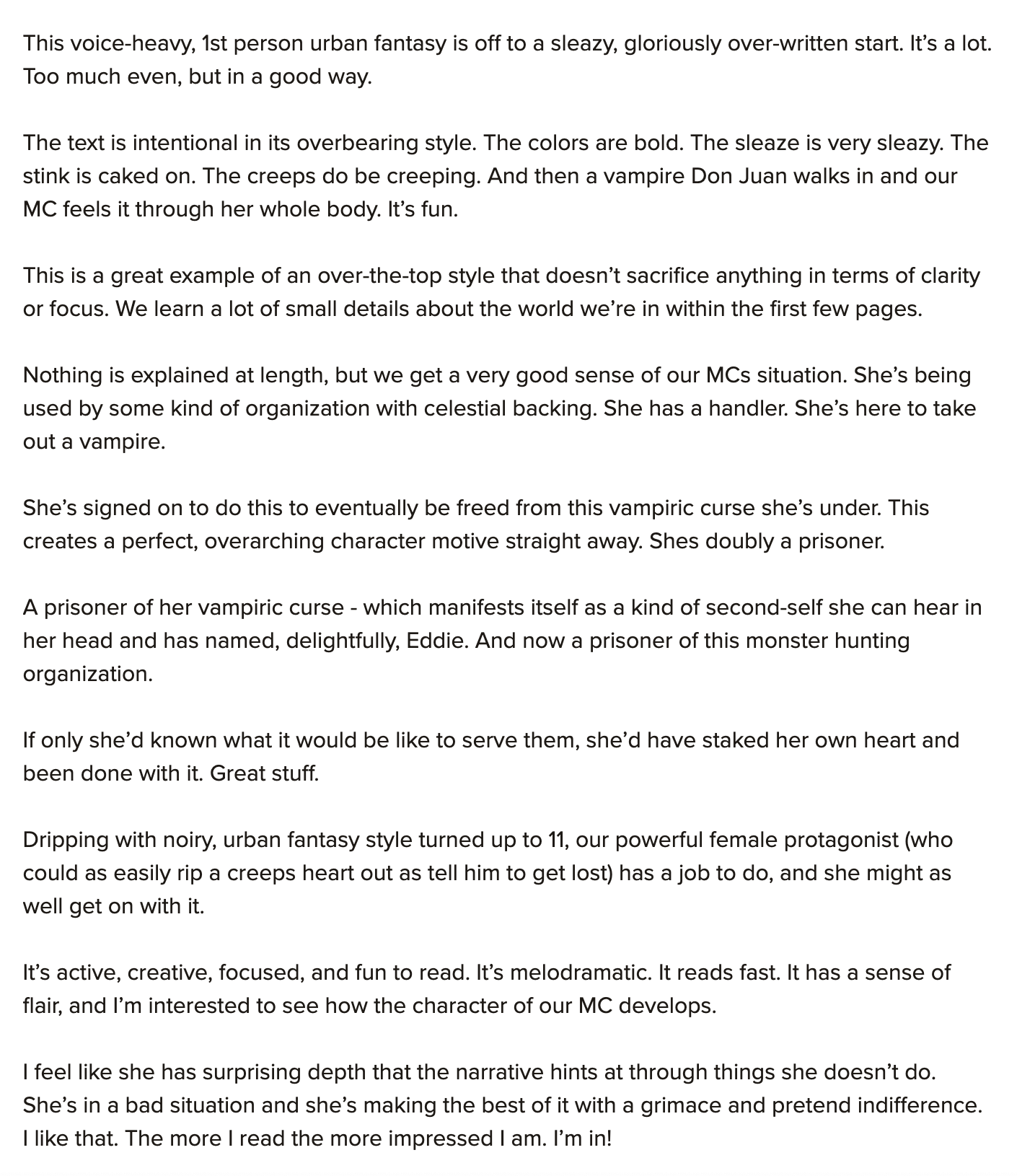
“This voice heavy urban fantasy is off to a sleazy, gloriously over-written start. Too much, even, but in a good way.”
“The colors are bold. The sleaze is very sleazy. The stink is caked on.”
“It’s melodramatic. It reads fast. It has a sense of flair.”
While I was reading, my smile grew until my face hurt. Not just because of the positive review, but because it nailed something I care about deeply as both a writer and a developmental editor.
My author voice.
My voice is probably the single most important thing to me when it comes to writing. I work hard to make sure that the words on the page reflect me as a writer. My sass, my snark, my attitude, and well, just me. And this reviewer not only saw that, but he appreciated it.
And here’s the part that mattered even more.
It showed me that being authentic to my author voice doesn’t hurt me.
What “Voice” Actually Is
You author voice is so many things. Word choice. Cadence. Rhythm. Style. But it is also the way your narrator sees the world and how they respond to it. What they notice, dismiss, judge, and believe to be true.
That’s why two writers can describe the same scene and land in completely different places. They’re not just choosing different words. They’re telling different truths. They see things differently.
My voice is quirky and sassy and sarcastic. My characters have sharp edges and even shaper tongues. And I like it that way. I don’t write in a world of black and white, I like to explore the grey areas in between.
I guess you could say your “voice” is your author signature. It’s a promise to a reader right from the start. It gives them an idea of what kind of ride they are going on. Funny, serious, quirky, gothic.
What That Review Really Said
On the surface, that review talks about style. Sleaze. Over-the-top prose. Noir turned up to eleven. Melodramatic.
Some of those words could have sent me into a tailspin of depression, I mean, who wants to hear that their writing is melodramatic? Over the top? Sleazy?
(raises their hand) ME!
Because that is how I write. I put it all on the page and leave nothing behind. And when I read the review, my brain was going check, check, check, and check.
But it was what was underneath those words, the deeper meaning of the review that really caught my attention. That showed me that even though my voice is irreverent on the best of days, my very LOUD voice is not taking away from the story itself.
And here is the proof in a few other lines that were mixed in as well.
“It doesn’t sacrifice anything in terms of clarity or focus.”
And this one:
“We get a very good sense of our MC’s situation.”
That’s voice holding the line. That’s a narrator who knows exactly what she thinks about her situation, even when the prose is big, loud, and unapologetic. That’s control.
Strong Voice Gives You Range
When your voice is anchored, you get to make bold choices. You can push your prose. You can lean into tone. You can be dramatic, sharp, messy, or restrained.
Let’s look at modern authors known for unmistakable voice:
- Colleen Hoover leans hard into emotional immediacy. Her narrators feel everything in real time, and that intensity is the voice. Strip that out and the books stop working.
- Sarah J. Maas writes with a sweeping, immersive intensity that blends internal emotion with high-stakes fantasy. The voice is declarative, emotional, and deeply committed to the character’s experience.
- Leigh Bardugo shifts voice depending on POV, but each one is anchored in a clear worldview. Kaz Brekker doesn’t sound like anyone else because he doesn’t think like anyone else.
- Tamsyn Muir in Gideon the Ninth is chaotic, irreverent, and wildly specific. The voice is so strong it borders on polarizing, and that’s exactly why it works.
- Rebecca Yarros drives voice through urgency and emotional stakes. Her narrators are grounded in what’s at risk right now, and that perspective shapes every line.
None of these authors are playing it safe. And none of them would benefit from someone “toning down” their voice.
Why I Don’t Edit Voice
As a developmental editor, I will tear apart your structure. I will push on your pacing. I will question your character choices and motivations. I will tell you if you a messy mid-point. But I will not rewrite your voice.
Because voice isn’t a problem to solve.
It’s the part of your writing that is entirely yours. The part no one else can replicate, even if they tried. It’s what makes your writing, well…you.
And the second an editor starts smoothing that out? You don’t have a stronger manuscript. You have a safer one. And safe is forgettable. Safe is boring. Safe gets skimmed instead of sucking a reader into your world.
No one wants to be safe.
The Real Danger: Flattening Your Voice
A lot of writers try to fix their voice. They tone it down. Clean it up. Try to make it sound more professional or more polished. They try to write like other authors in the genre in order to fit in.
But in the end, they strip out the very thing that made their writing theirs.
I see this when writers chase:
- Cleaner prose
- Safer sentence structure
- “More lyrical” language
None of those are bad. But they come at the expense of you being you on the page. You’re not improving your voice. You’re diluting it.
Right now, I am working on a romantasy. A genre that is wildly different than my normal urban fantasy series. And while I understand that romantasy is less punchy, and fast moving and sarcastic, I learned switching my voice so that I wrote like other romantasy authors was hurting the book more than it was helping it. In fact, I put the book aside because there was something off about it.
Then I figured it out. It was my voice, it was gone, and my writing was flat.
I decided I would rather stand out than fit in.
I am taming my voice a touch, cutting out cuss words, smoothing out the prose, but I am leaving in the sass and snark and melodrama that makes me…me. And now that I have stopped worrying about voice, the story is flowing again and I am happy with the outcome.
If You’re Worried About Your Voice
That means you care. That you have something to say, and you know exactly how you want to say it.
Lean into it. Learn to love. And stop worrying about fitting in, and allow your words to shine.
The Takeaway
Voice is not the thing holding your manuscript back. It’s the thing that will make it stand out.
So, protect it. Develop it. Let it be bold. Let it be specific. Let it be a little too much. Because the right readers aren’t looking for safe. They’re looking for something they can’t get anywhere else.
They’re looking for the authentic you.
Which authors make you feel their voice instantly, and why?
About Jenn Windrow

Jenn Windrow once attempted to write a “normal” book—and promptly bored herself into a coma. So now she sticks to what she does best: writing snarky, kick-butt heroines, broody supernatural men, and more sexual tension than a vampire in a blood bank.
She’s the award-winning author of the Alexis Black novels and the Redeeming Cupid series, where the undead never sparkle and the drama is always delicious. Jenn moonlights as a developmental editor, helping other writers wrangle their wild plots and tangle-free prose.
When not arguing with her characters or muttering about Oxford commas, she can be found binge-watching trash TV, wrangling the slew of animals that live in her house (husband and teenagers included), or telling herself she’ll only have one more cookie.
You can find her at jennwindrow.com or lurking on social media where she pretends to be an extrovert.
Photo by Hussein Abdullah on Unsplash
Leave a Reply
28 comments on “Your Voice Is the Point. Stop Toning It Down”
Tagged as:
Subscribe to WITS



Recent Posts
- The Best PR Bait Is NOT Your Book
- Make Your Setting Work Harder
- Why Does My Story Feel Broken?
- The Mirror Is Not Your Friend
- How to Write Powerful Scenes that Engage Your Readers
Wonderful post. Love it.
Thank you!
If it sounds "writerly", I cut it.
A comment after one of my first presentations to a group was, "You talk just like you write." I took that as a compliment.
Exactly. It’s an huge compliment! And if you spent any time with me, you’d see that I write just like I talk!
Great writing rule to live by, Terry!
Great post! You've tackled the subject and made it submit to your will. Bravo! I personally struggled with understanding "voice" for many years. It was only when I stopped trying to create one that I found mine. I wish this post had existed twenty years ago. It would have made things so much easier. Looking forward to more from you.
I think when people struggle, the perfect thing to do is story trying, like you said, and then all of sudden, there it is.
I am so happy you found the post useful!
I love everything about this post, Jenn! Especially that great review. 🙂
I have the humor-meter of a 15 year-old boy, and it definitely shows on the page. It also shows that I grew up in the inner city in a black and Jewish neighborhood, but also with a Midwestern Southern-ish family.
I've never even considered smoothing those things out, because those things are what make writing fun. On the page, we get to romp and play and reconnect to all the stuff we giggled about before we had to "adult."
And 15 year old teenage boy humor sure does have an audience! I grew up in the midwest and find my self using words that are very midwestern, so yes, where you grew up plays a huge role in the way your voice is shaped.
I guess when I say smooth, I mean remove the cuss words, which I like to apply like sprinkles in my UF books. But, fantasy is more refined, which means less f-bombs!
But f-bombs certainly have their place with some characters.
🙂 🙂 🙂
Very encouraging, but I think it's important to differentiate between author voice and character voice. I will edit voice if it feels off for the character even if it sounds like the author (assuming the POV is first or close third). Our characters should not be us as you said.
Author voice and character voice a very different things. Each character should sound like an individual on the page. But the way you write, the cadence, the sentence structure, the words used, can still be the same in the section, especially if you are writing in first person POV. If you are writing in third, then, yes, the second POV should have a different voice for sure, but not so different, that your author voice is missing.
Sometimes a voice that works well in a short story becomes tiring in a novel. I discovered this to my dismay after self publishing two novels using my short story voice. It's ok to modify your voice to suit the story and format. This is tricky of course and a matter of judgement like all of art!
This is true. But, you can still mix plain writing in with your voice in a novel. I do it all the time and it works well. Little sprinkles of you on the page, and larger sections of just plain text to give the reader a moment to breathe.
So refreshing to read this post! I write spooky slapstick for kids, with snarky dialogue, some gross humour and characters who don't pull any punches. This doesn't always appeal to parents, but if I were to tone down my voice I wouldn't enjoy writing it. And if you don't enjoy writing a book, readers are unlikely to enjoy reading it.
You said it perfectly. If you try to soften who you are as a writer, it will show in the writing, and now always in the best way. I say have fun with what you write!
Strange, but voice is the thing I've never struggled with.
I can only write as only I can write. Which may change a bit as I get older, but not because it isn't already me.
I had a moment of crisis when I sent the first chapter of Pride's Children: LIMBO, the final volume of the trilogy, to my wonderful beta reader, who was with me through the first two books, but now has a lot more responsibilities as a full time professional and mother of two littles.
I was prepared to LISTEN to anything she had to say, wasn't sure I could USE her feedback, and it turned out to be worrying about nothing - she loved it, even the parts that were very hard for me to write, and had no trouble saying so.
I guess I'm all me.
It’s a wonderful feeling when your voice comes natural to you! It does for me as well!
Oh, Jenn - I love this. Joseph Lallo is one author that I love his voice and it shows up so strongly.
This is one of my weakest points. I tend to pull punches and tamp down on my voice. And then spend years editing it back in. LOL
Getting that first draft down, and then editing in your voice is not a horrible way to do it. It at least ensures that you know the best place to really add your voice.
What a fantastic article. Thank you. I have fought for and still do, to use my authentic voice when I write.
Thank you! And just keep working at it, I am sure one day it will just suddenly appear, and once it does you will be so happy.
Great post. I am a big believer in VOICE. It enhances the personality of the writer onto each page.
It really does. It makes each book you write uniquely yours.
I wonder if genre plays into this too. My voice is firmly woven into my chapter book series, but not so much in the historical fiction manuscript I'm revising. I will ponder this further.
Great post!
The author of Midnight's Children,Salman Rushdie.
Every sentence was beautiful, as if more important than the story, more important than the plot. Each word adds to the poetry.
I'm currently working for a client on what's supposed to be just a copy and line edit of his manuscript. What do you do when the author's voice is word salad? It's a mashup of sentence fragments, a *lot* of run-on sentences, too few dialog tags, and otherwise incomprehensible bits that I have to read three times to discern what he means. He's a native English speaker, so it's not a matter of struggling with a new language. I'm pretty sure he didn't work with a developmental editor before he sent the manuscript to me. Like you, Jenn, I strive not to touch an author's voice, but this one definitely needs help.
Love this post.