
What Ten Years Did to My Publishing Process
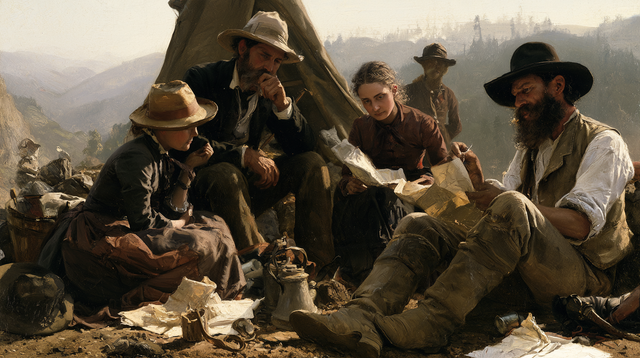
by Lisa Norman
I started my publishing company in 2011, when the general instructions I read started with, “Don’t even try.” In 2016, after five hard years of learning, I published a series of books about indie publishing. Everything I knew at the time, five volumes of it, written for others so they could avoid the headaches I’d had.
This year I finally had time to bring them all up to date.
I expected to need to change a ton of things, and I did, but what surprised me was how much I deleted. Publishing is a lot easier now than it was before.
After I cleared out all of the obsolete information, I had time to think more about the new gold rush that we're in the midst of.
Alex Newton of K-lytics, who has been tracking the Kindle marketplace since 2014, calls it Gold Rush 3.0. According to Alex, the first rush was the Kindle launch. The second rush lasted through the pandemic. This rush arrived with generative AI, and you can measure it in supply: the number of new thrillers published on Kindle each month has gone from around a thousand to over seven thousand. (I read this in Jane Friedman’s newsletter, where Newton talks through his numbers every summer. If you aren't subscribed, you may want to! Jane's newsletter is brilliant.)
Have you seen the get-rich-quick ads posted on your social media feeds? Build your cozy mystery empire. Write an entire book from one keyword. And they’re about as accurate as those original gold-rush ads were.
Those ads brought a lot of starry-eyed miners west with a pick and no plan. Many of them died of pneumonia because nobody had told them that after a day working in a stream, they should dry off before going to bed at night.
What I Cut from my Publishing Plan
One of those books had a worksheet walking you through installing Joomla so you could have an author website. Yes, it was THAT old. Step by step, patient, thorough, and long. In 2016, an author who wanted a website had to become a practicing geek first. Then we moved to WordPress, and there were still a lot of technical bits to learn.
Today? Gone. Most of that technical website time wasting geekiness is no longer needed. We have much better tools. Friendlier tools.
I had worksheets for uploading and publishing to six different stores, each with its own click-path. Every one of those paths has since changed, and most of them don’t exist anymore. Now I can skip the click-paths entirely, because they go out of date before anyone has time to take a screenshot. The steps have changed and they're so much simpler.
We no longer have to format for mobi, because Amazon retired the format.
The social media chapter walked you through Google+, which Google shut down. The print worksheet walked you through CreateSpace, which folded into Amazon’s own program. Whole platforms are gone while others have grown, and the way we interact online has changed fundamentally in those ten years.
Two of the five books lost about forty percent of their length.
What Didn’t Change
I opened the technical volume, the HTML and CSS tutorial, and braced myself. Ten years of web technology. Surely that one was rubble. Maybe I'd delete the whole thing.
I changed some tool names, but that was mostly it.
HTML (the language of the web) is still HTML. An ebook is still a zipped-up little website in a trench coat, and knowing how to look inside is still the difference between waiting three days for a support ticket and fixing it yourself before lunch.
The chapter on telling gold from iron pyrite came through nearly whole. So did the one on pricing, and the one on where your money sits between the sale and your bank account.
The Publishing Geology Is the Same. The Equipment Changed.
The basic things we need to do haven't changed in a decade. You still have to know who you are and what you write. You still have to stake a claim somewhere you own, make the book, price it, and watch where the money goes.
The tedious middle processes, though, those are now often done for you.
The formatting you used to do by hand is just a button press now. The website that needed a weekend and a database now takes an afternoon. The distribution maze used to need a map to find your way through. We have fewer choices now, and they aren’t nearly as complicated.
Every one of those worksheets gave instructions for a chore. The chores are gone, simplified, automated. The craft of storytelling is right where it always was. In some ways, craft is becoming more critical and fascinating, but that’s for another post.
Why The Publishing Industry Isn’t Get-Rich-Quick
So the wall got lower. It’s easier to write and publish a book than ever before. And no, that statement doesn’t sell a lot of classes.
Because a lower wall lets everybody over it.
That’s what Alex Newton’s supply numbers are. Not readers appearing. Writers arriving to what they expect to be a publishing gold rush, and a great many of them showing up with a tool that writes fast and a course that promises an empire.
Making a book got easier. Being found got harder.

Somebody Already Wrote This Down in 1849
I’ve been quoting a miner’s handbook in my classes for years. It’s 177 years old and still wise. Here’s what it says about a rush:
Much time is lost by miners because they listen to every rumor of exaggerated success. They leave a passable claim to seek a better spot… These stories are often made up by traders in the new place trying to lure customers to their stores. I have noticed that those who remain in one spot are most successful.
Read that again: Traders in the new place, trying to lure customers to their stores.
Think about that the next time you see an advertisement stuck to your social media saloon wall.
The people shouting loudest about the new gold field are, with remarkable consistency, the people selling passage to it. That was true in 1849. It was true in the Kindle boom and it is extra true this year.
Your existing claim is still valuable. It may be the most valuable thing you own right now, precisely because everyone else keeps abandoning theirs to chase the shiny bits downstream.
Putting Things Down
In July, I wrote about not picking up every skill that gets waved at you. You only need the next small step rather than the entire collection of skills.
This is the second part of that concept.
Some of what you’re carrying was necessary once. You learned it because it was genuinely required. You were right. But it may have stopped being required while you weren’t looking.
It's okay to put that load down.
Those of you who always meant to get to those things “someday” can also put down the guilt about never getting to them. You can even quietly consider yourself efficient for not wasting that time.
I wrote those worksheets. Taught those processes for years. Watched many authors succeed following them. Deleting them meant admitting that a great deal of careful work was simply no longer required. That felt weird. And yet good, too.
Let it go.
Three questions for our discussion:
- What are you still doing by hand that has a button now? Formatting is one example, but there are many others.
- Is there something you learned, something maybe you’ve been wanting to do, that comes from a source that is more than five years old? Distribution advice ages badly.
- And what have you been avoiding because the version you learned was miserable? That’s usually the one that got fixed.
Hope on, hope ever
There’s another story from that handbook: A man dug part of his claim, hit water, got discouraged, and walked away. Three others went in behind him and pulled out nearly twenty ounces in a few hours.
The advice that follows is “Hope on, hope ever.”
Your writing claim is still good. It’s the same claim it was ten years ago, still with the same gold buried within it. You just don’t have to dig it out with a spoon anymore.
Now, go bank some gold.
* * * * * *
The class those books came from is open again, updated for 2026, rebuilt with the same goal in mind, but showing you a much easier path to get there. The books are back too, wherever you buy your ebooks, shorter than they were and priced accordingly. I even have the entire set out in one print book.

About Lisa:
Lisa Norman has been working this claim through two of these rushes now. She writes fiction as Deleyna Marr, owns Heart Ally Books, LLC, and teaches writers the technical side of publishing at her school, NoStressWriting.com.
Her book, The Work of Joy, is for when you need a little joy in your life. She's also at deleyna.com. And on Substack.
Images from Deleyna via Midjourney.
Leave a Reply
18 comments on “What Ten Years Did to My Publishing Process”
Tagged as:
Subscribe to WITS



Recent Posts
- Struggling with Character Voice? Check Your Point of View
- Conflict in Fiction Writing, 7 Main Types
- Author Blind Spots: The Gaps You Can't See
- When Is It Okay to Quit a Story?
- Living at the Corner of FEAR and FINE
I also found that things have changed since I last self-published in 2016. What hasn't changed is the amount of people wanting to make money off authors who just want to tell stories. As in the 1800's, everybody has something to sell.
Absolutely true, Tinthia. More than ever before.
Interesting article on the technical part of the industry. And the one thing that hasn't changed--how hard it is to get seen.
Ugh. That part is so hard! I got a chance to talk to one of my favorite authors and he was telling stories of earlier days. He thought that was the hardest thing these days.
I've tried to make a ton of changes this year to put less friction in my days. I finally implemented a Calendly booking system, so I didn't have to go back and forth with 5 different kinds of clients by email, and I incorporated payment for each level of engagement. I just finished ghostwriting a book that I used NotebookLM (now Gemini notebook) from start to finish. Life. Altering. I don't regret learning what you taught me about websites for all those years. I'm so grateful for that background knowledge as I step out into new and easier platforms. LOVE JournoPortfolio, BTW. So breezy. I'm still fighting Mailchimp. I actually dislike it, but I realize the free version has so much more than I give it credit for. And for the first time this year, I did a publish assist on an audiobook. It was amazing. I don't know where the fear came from. It feels like it should be hard, but I'm so proud of myself. From finding a local studio and producer for my client to worldwide distribution. I've learned that fear means you're on the cusp of leveling up, and joy is just on the other side. Thank you for being part of my gold mining journey, Lisa. Much love 💜
I love all of this Laura!!! Leveling up indeed! Congratulations on new adventures!
Lisa, this info is awesome! I have acquired the rights back to six of my previously published books and want to convert them to Amazon so they can still be available to my readers, but the task seems daunting. You have given me hope, and I will definitely look into this further. Thank you!
Christine, set that fear aside as obsolete! You can absolutely do this! And you'll find ways to reach even more new readers. Have fun with it. Experiment.
And if you are comfortable with AI, try asking it for the steps. It'll break it down for you and you'll be delighted how fast you can do this.
Here's to much success!
I need to find that formatting button you mentioned!
An issue I have is, I don't know what I don't know. A common problem to be sure.
The advice in that Miner's Handbook sounds golden, and reminds me about good advice for trading stocks.
Great article, Lisa, thank you for sharing!
Thanks, Ellen. That format button is on something I've built but you can also use things like Vellum or Atticus.
I love your California gold rush metaphor! Because it fits and because I have been planning my next historical romance series to take place during that time in the 1850s. I keep asking myself if that would be a popular enough time period, though, or if maybe it might become the next popular trend, like the Regency period once was, etc. etc. But that kind of thinking is kind of like looking for gold in all the places everyone else is looking, isn't it? I need to go find my own place to pan for gold and just keep at it and not keep looking around at what other people are doing.
Fun insight... thanks, Lisa!
Maggie, I love all of those miner essays because they're shockingly relevant! Enjoy. And you've already got a nice claim you've been working at!
[WARNING: Incoming Novel...]
Lisa, THIS one hit home.
Probably because you and I have both been doing this long enough to remember when “being an indie author” apparently required becoming a part-time programmer, web designer, formatter, distributor, marketing department, troubleshooter, and sacrificial offering to the not-so-great gods (lower 'g') of Amazon.
I remember spending ridiculous amounts of time learning things that had almost nothing to do with telling stories.
HTML.
CSS.
Website systems.
Formatting.
Image sizes.
File types.
Distribution requirements.
Why something worked perfectly yesterday but had apparently developed a personal grudge against me overnight.
And we learned it because, like you said, WE HAD TO.
There wasn’t a button yet.
That’s why your experience deleting forty percent of those books really landed with me.
You weren’t deleting bad information.
You were deleting information that had DONE ITS JOB.
That’s different.
Those were real skills, solving real problems, for writers working in a very different publishing environment.
I’ve had the same experience with my own work.
I’ve spent years building Wanted Hero, Life of Fiction, my websites, products, books, reader experiences, and all the machinery behind them. There are things I once spent WEEKS figuring out that I can now accomplish before my hot chocolate gets cold.
And occasionally I catch myself doing something the old way simply because...
well...
THAT’S HOW I LEARNED TO DO IT.
Then I discover there’s now a button.
A BUTTON, Lisa.
Where was this button when I had more hair??
LOL.
But your article made me think about something even bigger.
You and I **didn’t** waste those years.
That’s the important part to me...and it's what you have reminded me countless times when I get to that frustrated, exhausted place.
It would be easy to look back at all those technical skills we had to acquire and think, “Well, THAT was a colossal waste of time.”
It wasn’t.
Those skills got us HERE.
They allowed us to build when building was difficult.
They taught us how the machinery underneath publishing actually works.
And, maybe most importantly, they gave us enough experience to recognize when we no longer need to carry certain tools.
That may actually be one of the privileges of having been around awhile.
We know the difference between the MINE and the SHOVEL.
The shovel can change.
The mine is still the mine.
And that’s why your 1849 quote is probably my favorite part, because I have watched the rushes too.
Blogging.
Kindle.
Facebook.
Twitter.
Kickstarter.
Patreon.
NFTs.
TikTok.
AI.
Every few years somebody comes sprinting down the mountain screaming that there’s GOLD OVER THERE and writers start packing up everything they’ve built to chase it.
Meanwhile, some of us stubborn old miners are still standing on the same claim saying:
“Ummm...there’s gold right HERE.”
That doesn’t mean I’m against new technology.
Good grief, you know me better than that.
I LOVE new tools.
I’m probably halfway down the hill examining the new shovel before everybody else has finished reading the instruction manual.
But I want the new shovel working MY claim.
**I don’t want the shovel deciding where I *****dig*****.**
That distinction has become increasingly important to me.
AI is a perfect example.
I use it.
I experiment with it.
I’m fascinated by what these tools can make possible for independent creators.
But the technology isn’t the asset.
The STORIES are the asset.
The worlds are the asset.
The characters are the asset.
The relationship with readers is the asset.
That body of work we’ve been building year after year?
THAT is the claim.
And the longer I do this, the more convinced I become that longevity itself creates value.
A character I created years ago can become somebody’s favorite character TODAY.
An article written years ago can introduce a new reader to my work TODAY.
A fictional world can accumulate history, artwork, stories, maps, products, experiences, and generations of readers.
The work COMPOUNDS.
Which makes your warning about constantly abandoning the claim even more important now.
Because this latest gold rush has made producing things incredibly easy.
But producing more THINGS isn’t the same as creating more VALUE.
Seven thousand thrillers instead of one thousand?
Okay.
That doesn’t mean there are suddenly seven times as many unforgettable characters.
Seven times as many stories people recommend to their friends. Seven times as many authors readers trust. Seven times as many fictional worlds people desperately want to return to.
Making words got easier. Making somebody CARE didn’t.
If anything, I think THAT became more valuable.
Putting things down may be the part writers most need permission to hear. We accumulate obligations the way garages accumulate unidentified electrical cords.
“I might need this someday.”
No, Jaime.
You owned the device that cord belonged to in 2009.
LET IT GO.
There is something wonderfully liberating about asking: “Does this still need to be difficult?”
Because sometimes the answer is no.
Sometimes somebody finally made the button. And when they do, I don’t think we should feel guilty about using it. I think we should push that beautiful little button and take the hours it gives us back...
...and spend them creating something only WE can create.
More stories.
Better characters.
Deeper worlds.
Stronger connections with readers.
That’s where I think your article ultimately landed for me.
After all these years, we’re still mining the same thing.
Human imagination.
The equipment just got a WHOLE lot better.
So **yes**:
Keep the claim.
Upgrade the shovel.
Ignore the guy downstream selling maps to his “SECRET GOLD MINE.”
And if there’s a button that eliminates six hours of miserable technical work...
FOR THE LOVE OF ALL THAT IS FICTION, LISA...
PUSH THE BUTTON.
DANG it.
I try to use html to do bold and italics, and it's doesn't work.
Then I try BBcode...and now it looks stupid.
Ah, well...I tried.
(couldn't find the 'button')
See, ya know too much geeky stuff and ya got yerself in trouble.
Oh, Jaime, you know I'm pushing that button. Any day. Every day. And when there isn't a button? I'm building one.
Because I want every hour for creativity that I can find.
Your 1849 gold rush analogy is brilliant! And so is the statement: "Making a book got easier. Being found got harder."
Ain't that the truth. Love this blog post! Practical and wisdom-filled. It solidifies what I'm doing is right for me, regardless of the rhetoric saying otherwise.
I love the miner analogy for writing. Glad it resonated for you! And yes, follow your instincts!